Verena Prinz works as a finance & HR manager in Lebanon. She shares how the sound of drones shapes her daily life – and what the tension does to people.
Verena (on the right) with her colleague Alice at her workplace in Nabatieh, Lebanon
“I’m not afraid of the booms. The only thing I want is to sleep in my own bed,” says the three-year-old daughter of my colleague here in southern Lebanon.
A child who is no longer afraid of bombs as long as her mother is with her. A child whose greatest wish is to never have to flee from airstrikes again. Simply to be at home. In peace.
The uncertain background noise
I live and work in Nabatieh, a city in southern Lebanon, about 15 kilometers from the southern border. Officially, there is a ceasefire here – but the sky is rarely quiet.
The war last year hit the south of the country hard. Since then, despite the ceasefire, there have been constant airstrikes and drone flights in the border region.
For the civilian population, they mean a constant background noise of uncertainty. People here call it “routine.” To outsiders, it sounds like constant insecurity – and both are true.
With mobile clinics to the patients
Our project in Nabatieh is still young. We launched it in April 2025 to provide medical care to people in this region. Here, the public healthcare system is weakened by years of economic crisis and the aftermath of Israeli attacks on healthcare, and the fear of escalation shapes everyday life.
Drones can be heard almost daily, and airstrikes in the surrounding area occur regularly.
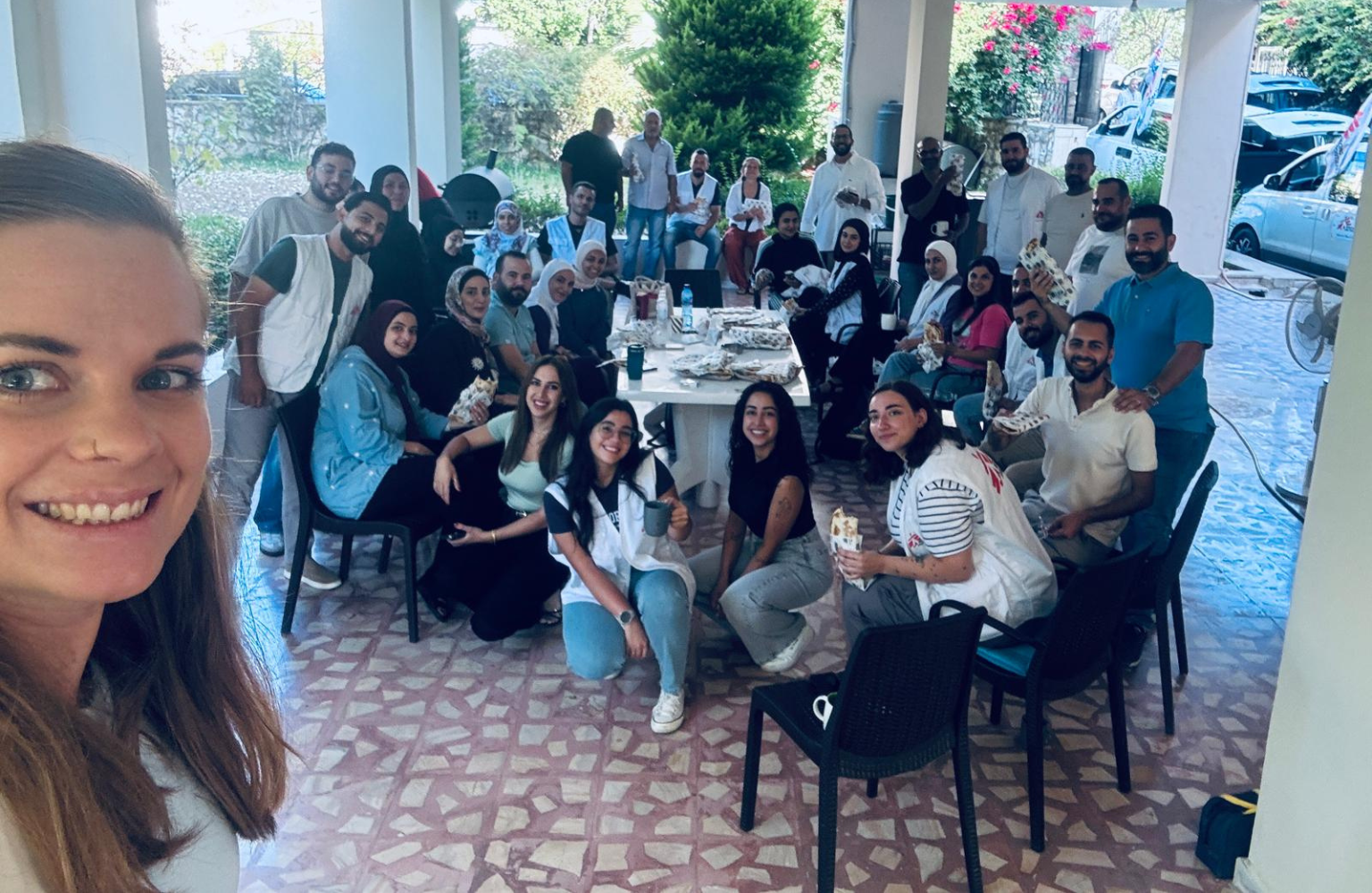
As a finance and HR manager, I am part of the core team here. My job is to ensure that our teams can work effectively. I handle everything from recruiting new colleagues to salary systems and the small, everyday structures.
Currently, we operate three mobile clinics, among other things. Every day, we drive to different communities in the region to help people. Our teams treat patients, provide consultations, and offer psychological support.
Despite everything, the mood in our team remains calm, carried by the awareness of how important each of these outreaches is.
Each journey and every outreach mission require organization, coordination, and taking responsibility. Sometimes we have to improvise when plans change spontaneously due to security situations, roadblocks, or staff shortages.
The background noise in everyday life
While the sky hums, our day begins. We meet for a briefing, discuss plans, and assign tasks. The mobile clinics set off for villages where there is otherwise no medical care. For many, it’s an ordinary day. For us, it’s a day where routine and reality quietly wrestle with each other.
Everyday life functions. The monotonous hum of drones has become part of the environment – like the ticking of a clock in the background, only noticed when silence falls. Sometimes it’s distant, barely audible. Then again louder, sharper, closer.
Routine in an exceptional situation
And then there are the sounds of fighter jets. Our conversations falter, glances meet, and the air stands still. In case of an airstrike the pressure wave can shatter windows and lead to injuries. We open the windows slightly to mitigate the risk of broken glass. We listen, wait, and count the seconds.
Then comes the impact. This time it’s fifteen minutes away – so “far away.” Far in a relative sense that has taken on new meaning here.
Life goes on because it has to. But I can sense how deeply this constant tension affects my colleagues.
A few minutes later, our teams give the all-clear. Everyday life resumes. A child needs antibiotics, transport is organized, someone laughs at a bad joke in the office.
A brief sigh of relief
Some of my colleagues say they feel a moment of relief when a drone has hit its target. Not because it’s over, but because they know: today it wasn’t close to us. They themselves call it absurd and paradoxical.
But at the moment the impact happens, for one breath, our tension eases. For seconds, calm returns, a deceptive relief sets in.
The choice to help
Between the sound of drones and normality, between tension and composure, our work plays out every day. We work, help, laugh, plan – and yet we know how fragile everything is.
I have the choice to help, and that’s why I’m here. It’s our responsibility to look, listen, and help wherever we can.
![[Verena (on the right) with her colleague Alice at her workplace in Nabatieh, Lebanon]](https://msf-lebanon.org/wp-content/uploads/2025/12/Article-Inside-Image-1.png)