No Way Home: The Scars of War in Syria Remain

No Way Home: The Scars of War in Syria Remain

News & Events > News & Stories > No Way Home: The Scars of War in Syria Remain

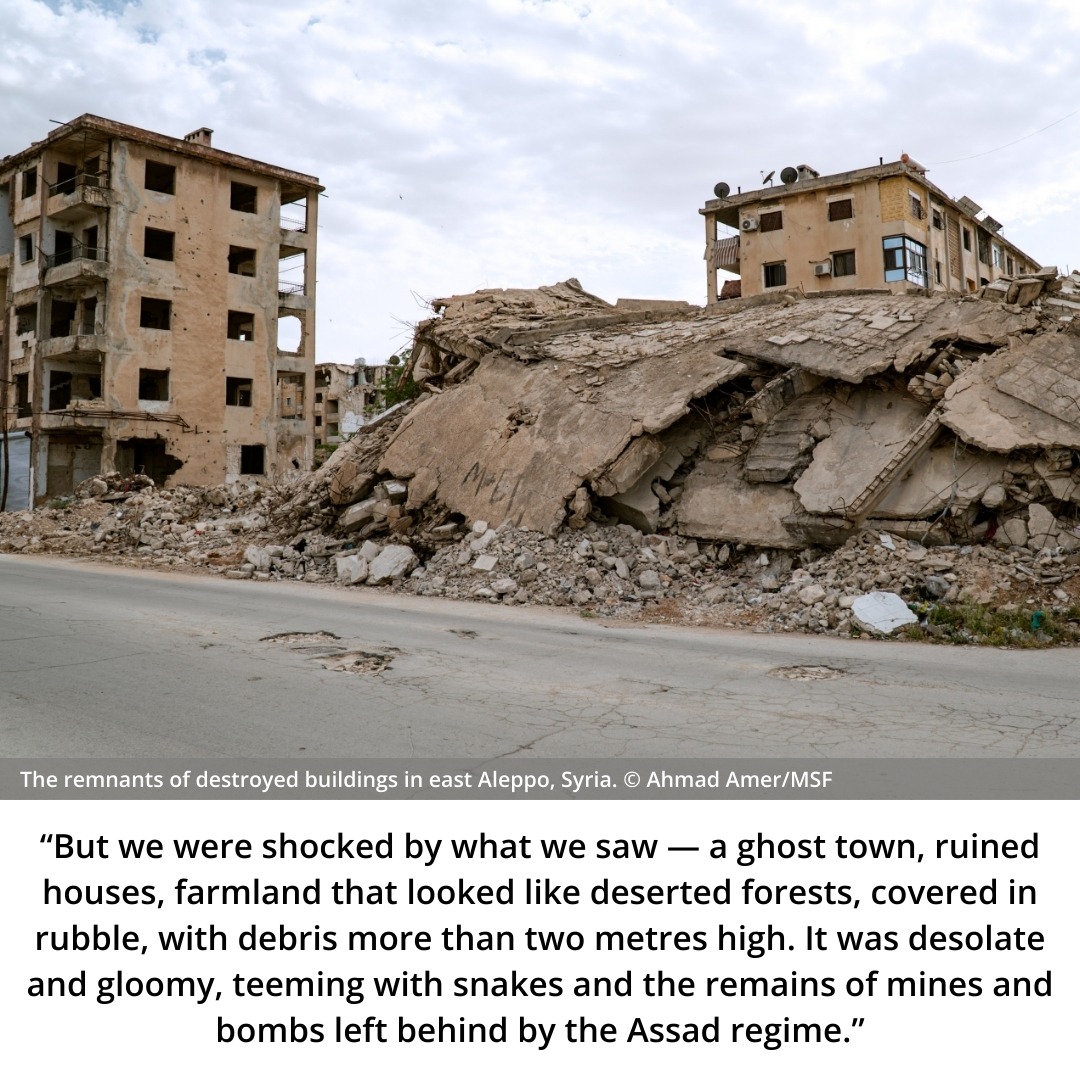
Leaving the ancient city of Damascus, destruction lines the desert road heading north; streams of rubble smeared across the suburbs, bullet holes scattered across the few crumbling facades that remain.

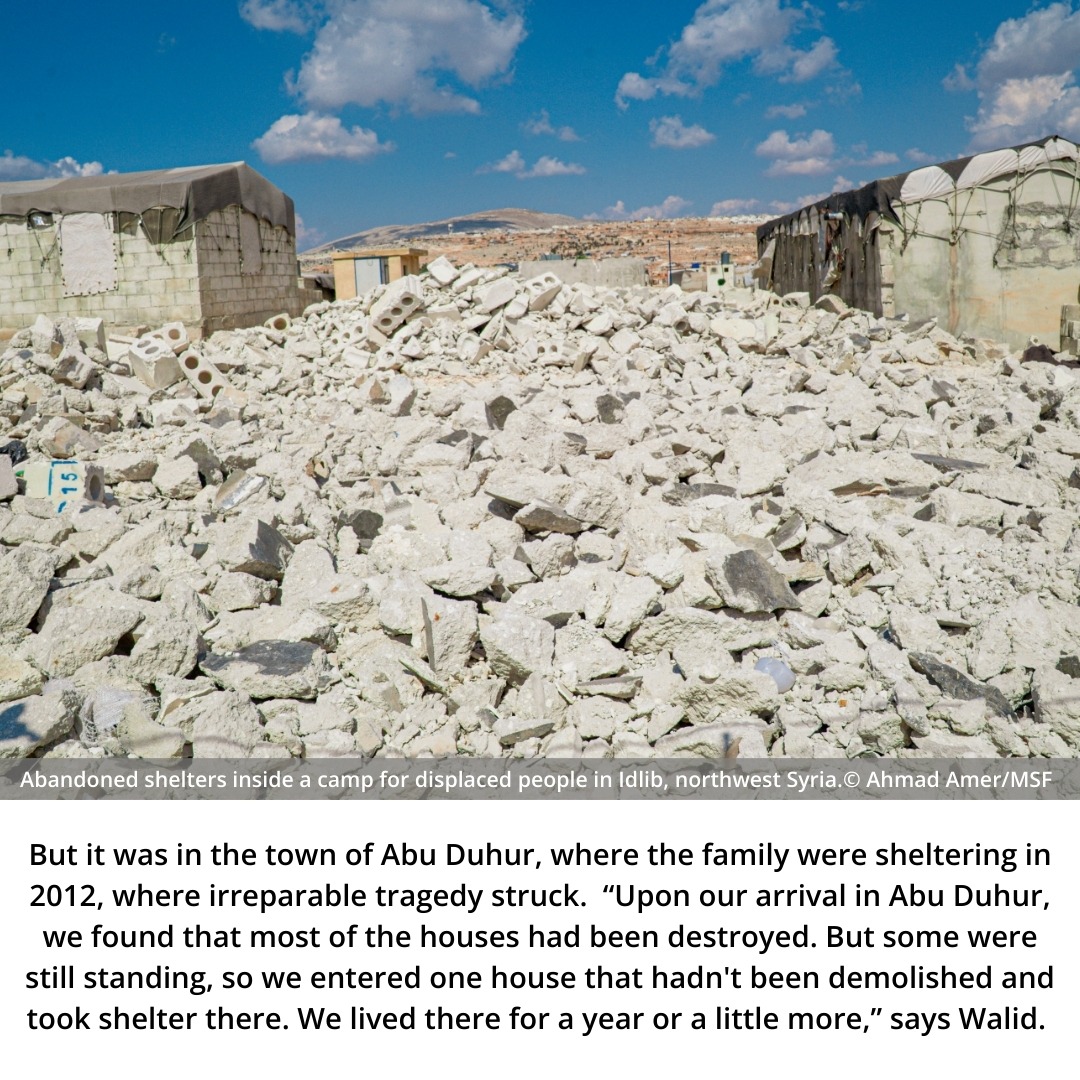
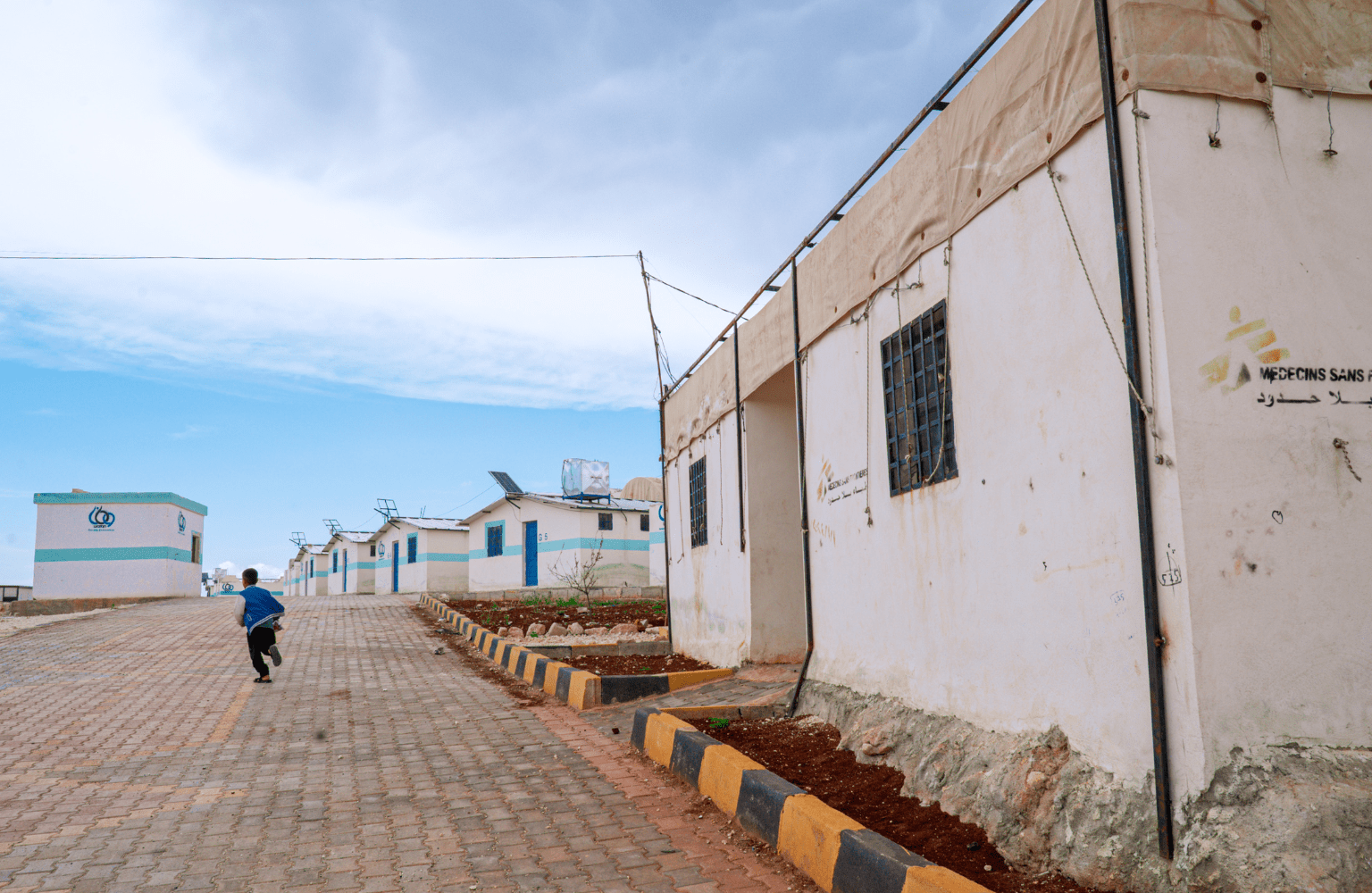
In Idlib, in northwest Syria, the ruins are gradually replaced by towns made up of tents and semi-concrete structures, dotted randomly amongst the waves of olive groves that stretch all the way to the Turkish border.

All the tents and shelters that have no roof are now vacant, they’re the lucky ones – their homes are still standing, so they’ve packed up and gone home. Many people have tried to go home since the Assad regime fell, but there are still millions of people who have stayed here in Idlib in these informal camps. Some have returned only to find their homes gone, their towns barren, with no services.
Yahya Abboud, MSF health promoter

After the war began in Syria, over 14 years ago, millions of people were displaced both inside and outside the country. Although the former Assad regime fell in December 2024, there are still approximately 7.2 million people displaced in Syria.

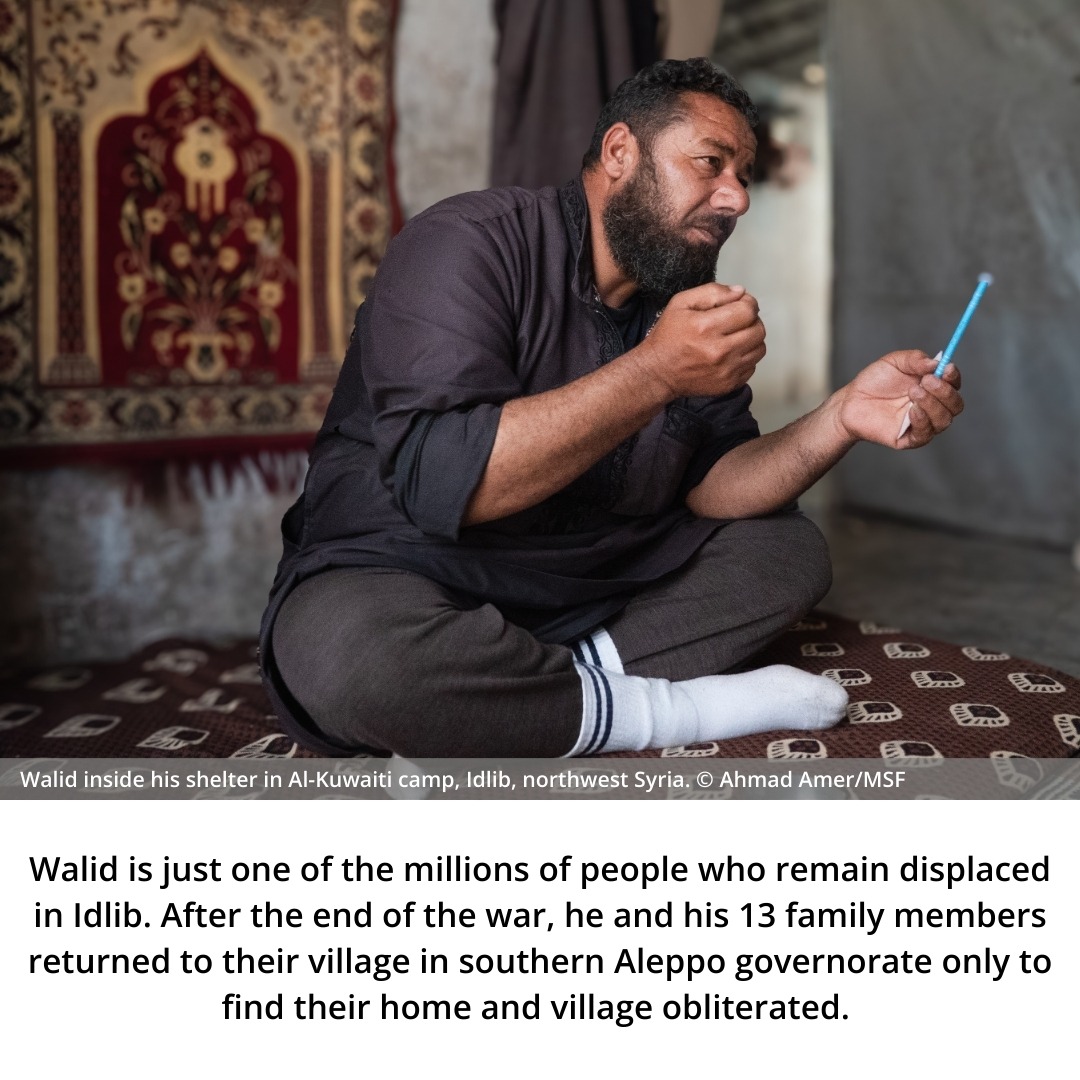
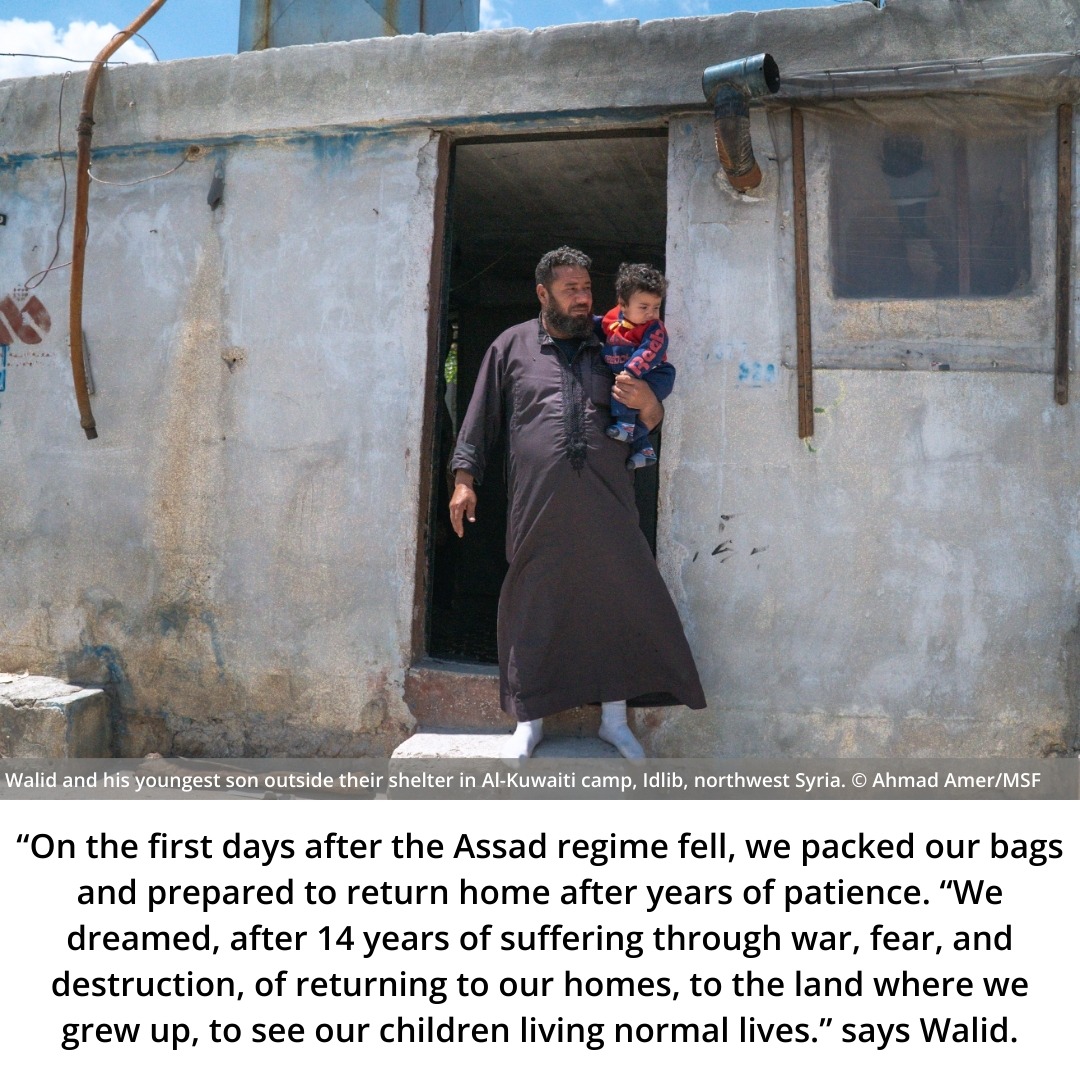
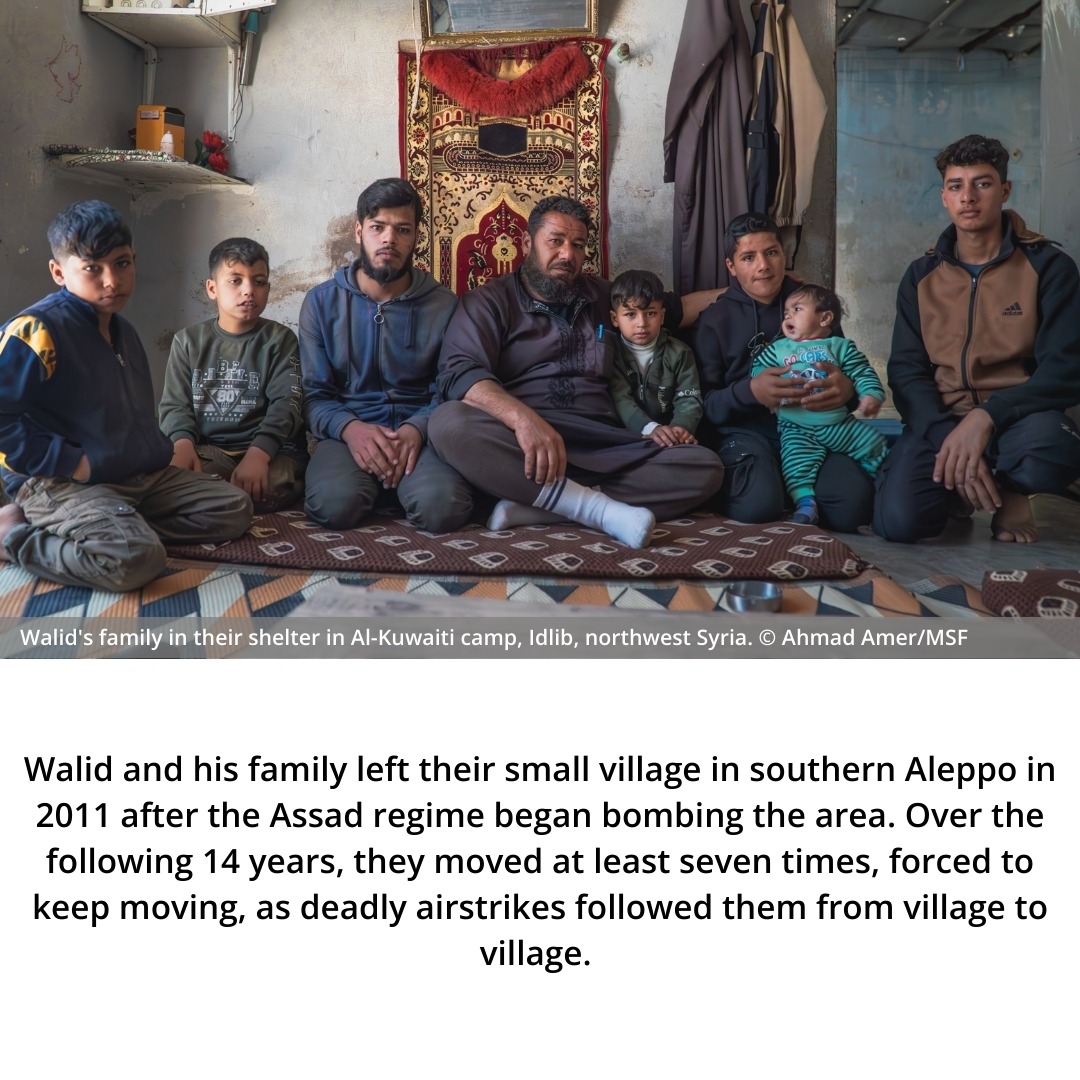
14 Years of Displacement - Walid's Story

Services Dwindle for Millions in Need

Due to a lack of funding and a healthcare system destroyed by war, specialised medical care in Syria has become a luxury. MSF is one of the few medical organisations who offer free healthcare in the camps, which host millions of people in Idlib and Aleppo governorates. The MSF mobile clinics provide basic healthcare, sexual and reproductive health and mental healthcare, however, for more specialised care people have to travel to major cities.

But it’s not just medical care that is scarce in this mountainous and vast farm country. Water and other basic services have also dwindled, especially since the fall of the Assad regime, as many aid organisations have left for larger cities such as Homs and Aleppo.

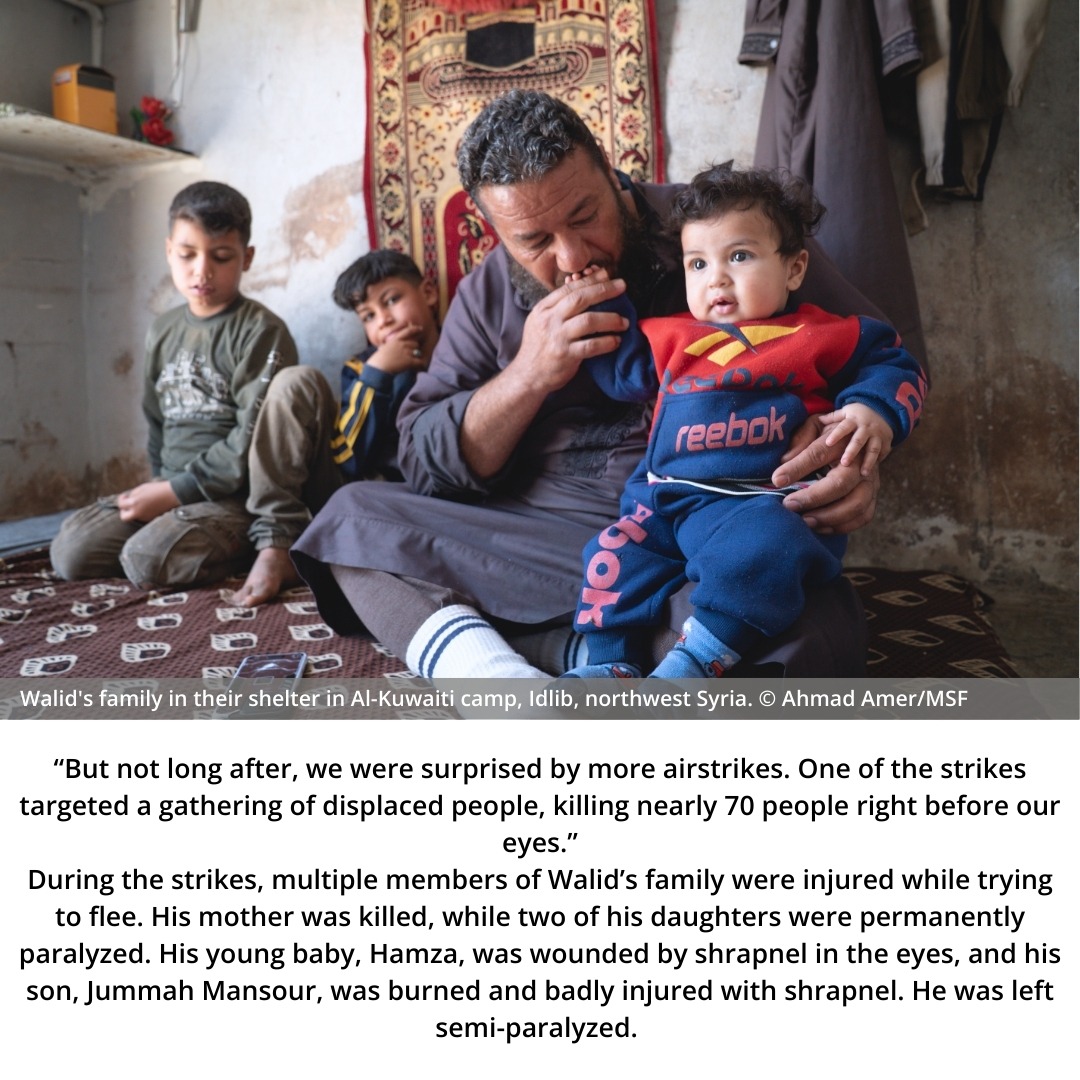
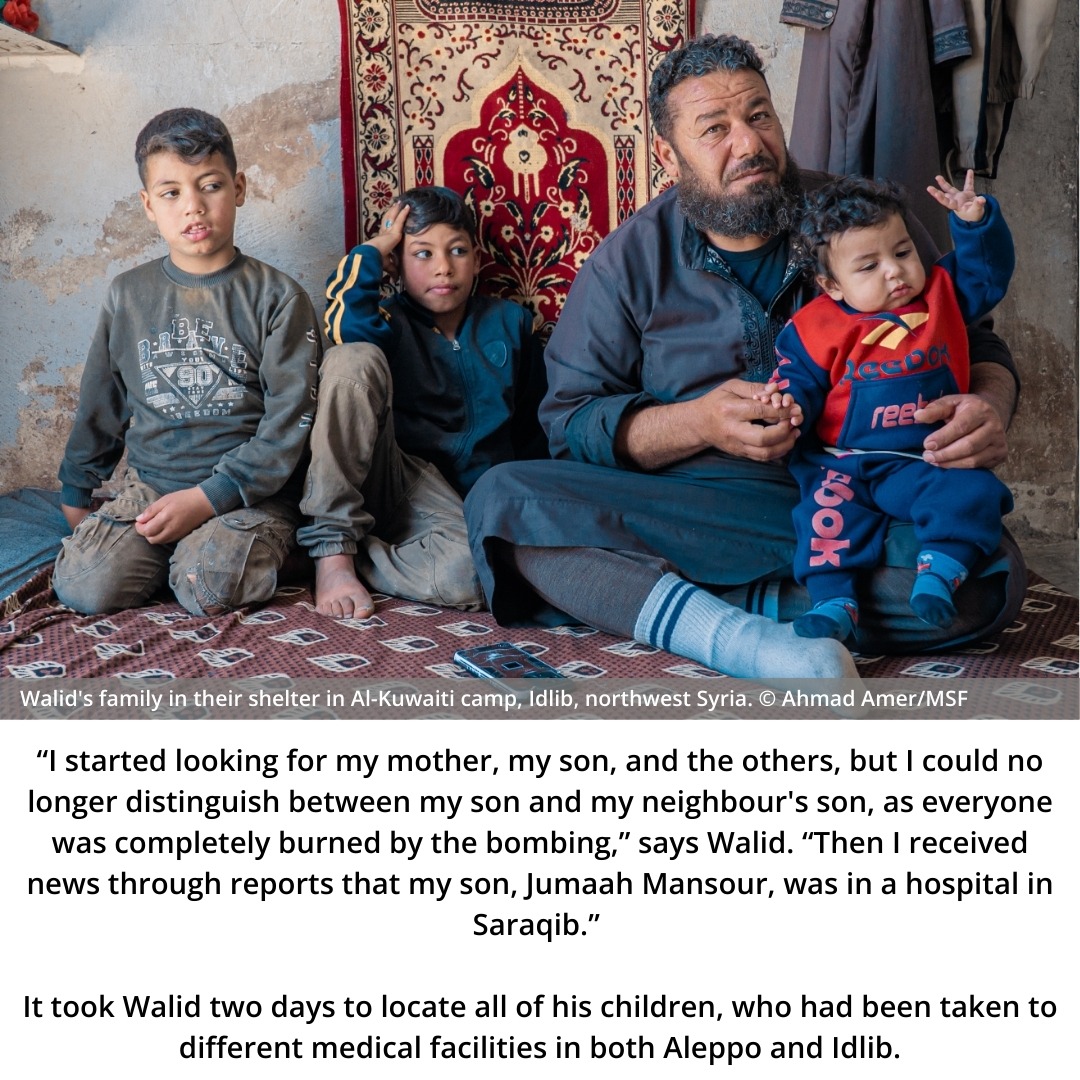
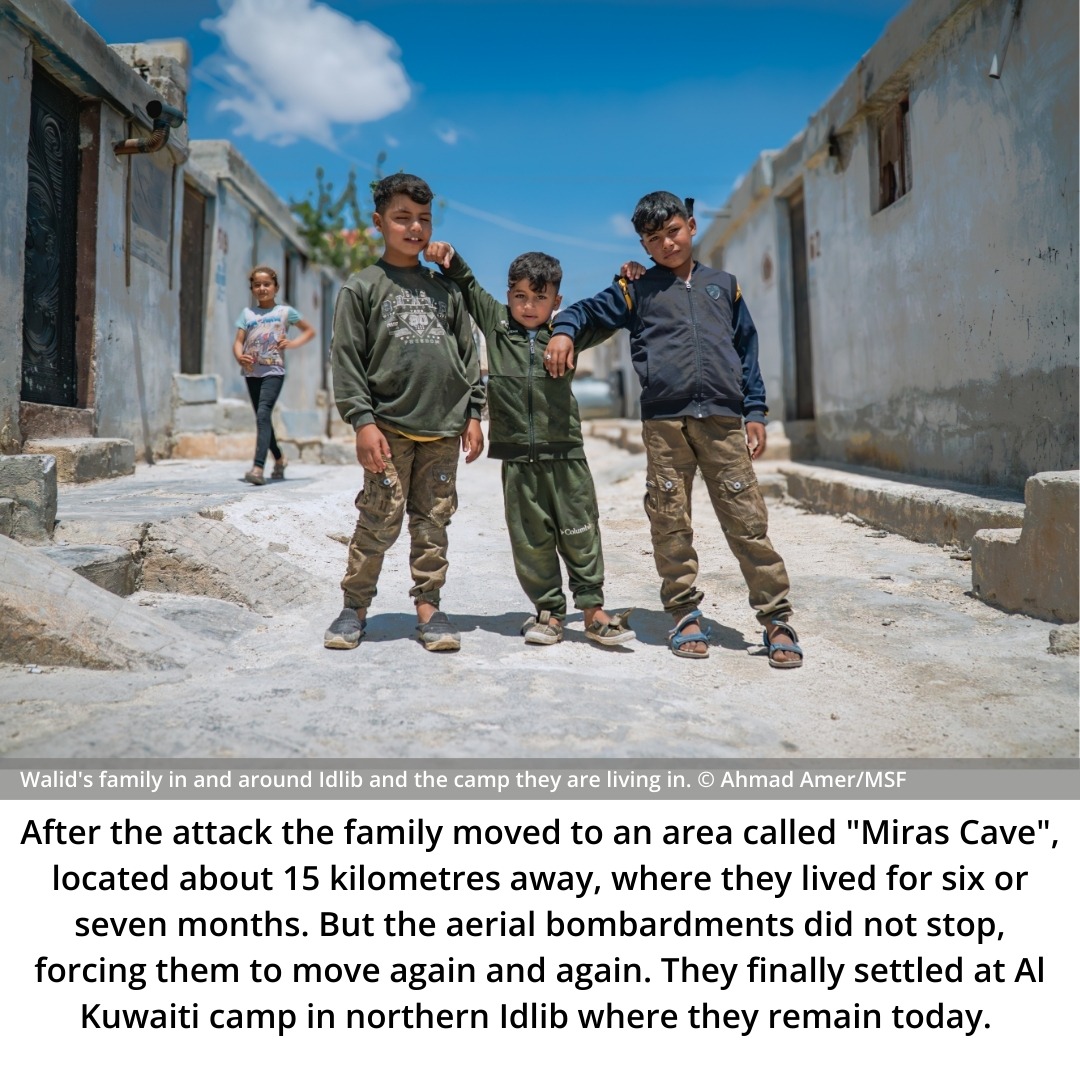
For Walid, the lack of specialised care available in the area weighs heavily on the 44-year-old father. Two of his daughters, Raghad and Ghofran are disabled and bed-ridden, while Jummah Mansour and Hamza remain permanently affected by their injuries.

“Currently, we can barely meet our basic needs. The average worker’s daily income is no more than 150 to 200 Syrian pounds, barely enough to buy nine loaves of bread.

“Previously, the garbage removal process in the camp worked well, and everything was organised. However, after the liberation, we began to face several problems, the first of which was the decrease in the amount of water available, as its supply became extremely limited.”

In addition to the already dire living conditions in camps, funding cuts by the US government have added to the suffering, severely limiting people’s access to medical care. These funding cuts have had a direct impact on the suspension of medical activities in northwest Syria. 

According to WHO, as of May 2025, people in all 14 governorates in Syria have been affected by United States funding cuts that have forced more than 280 health facilities to reduce capacity or suspend activities completely. This includes 41 hospitals, 149 primary healthcare centres, 41 mobile teams and 49 specialised centres.

While over half of Syria’s pre-war population remains displaced, the highest level since 2011, 16.7 million Syrians require life-saving aid according to the UN. But despite the bleak situation, Walid remains hopeful for the future of Syria.

“Our hopes were fulfilled, and the era of injustice—the reign of that tyrant [Assad] under whom we had suffered for so long—ended,” he says.

“We hope that our budding children will complete their studies, learn and rebuild a new life for themselves. God willing, they will make us forget the days of fear and terror that we have gone through, in addition to the destruction, displacement and humiliation we have lived through.”

Facebook
Twitter
LinkedIn
WhatsApp
Print