




Also Available in

Ahmet*
Ahmet recounted the day she arrived in Lebanon from Bangladesh eight years ago. Her travel papers were arranged by an agency back home, and two people picked her up from the airport in Beirut. They claimed that they’d apply for residency for her but ran away with all of her money.
That’s when the reality hit her. She would not have a visa to live or work in Lebanon, she must have a sponsor whom she would most probably have to live with. She would not be free to choose the type of work that suits her and would have to go into housework. She was promised a better life in Lebanon but that quickly vanished out of sight.
Ahmet started taking odd jobs where she could find them, mainly ironing and dishwashing. Things looked up for her when her husband made the same journey into Lebanon a year and a half after her.
“My husband made good money working in a hotel, we were able to cover my [childbirth] delivery in a private hospital,” says Ahmet. “Around a year ago, he was arrested for not having a valid work permit. He spent four months in jail in Lebanon before he was deported to Bangladesh.”
Ahmet suffers from chronic heart problems which became worse after delivering her 2-year-old son. She went from doctor to doctor before they were able to diagnose her. Her medications are expensive and not available in any health centre. She struggles to buy them from the pharmacy, so her husband sometimes sends them from Bangladesh.
“Seeking health care while unemployed has been a challenge for me,” she said. “I am currently burning through our savings and accepting help from others to stay alive. I need health care expenses, rent, bills, milk, and diapers for my baby. This past year—without my husband and having lived through a war—has been very tough for me.”
Ahmet and her son live in a small rooftop apartment with seven other people. Her house is on the seventh floor so she can’t walk up and down the stairs easily.
“I have freedom, but I feel like I’m in prison. I don’t know anything about the outside world," she says. “My mind is constantly turning. I worry about everything. If my heart gives out, what will happen to my son?”
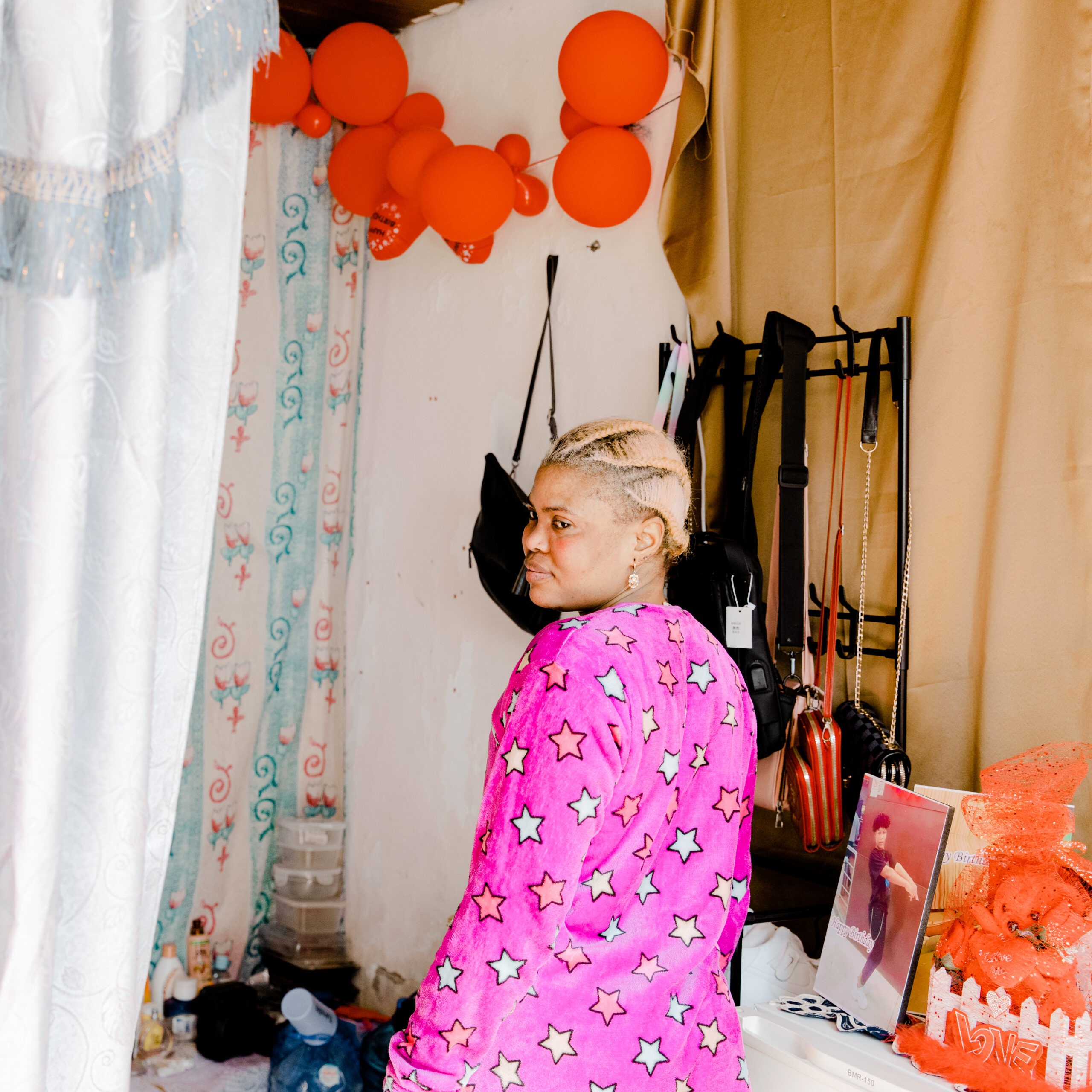
Beatrice
In the southern suburb of Beirut, Beatrice struggles to walk up the stairs leading to her house. On October 6, 2024, during the intense two-month Israeli bombardment of Lebanon, Beatrice was at work, cleaning a house. Her employer had locked her inside. She saw a bomb falling on a building close by, so she followed her instinct to jump from the balcony and run away. She broke both of her ankles and needed urgent medical attention.
At her house, she told her story over the sound of the Israeli reconnaissance drones, triggering memories of the day she was injured.
“At the first hospital they told me if I don’t have any money they will not attend to my condition,” says Beatrice. “My friends called an organisation to see if they can support me with the treatment. In the end, that organisation along with MSF covered [the cost of] my surgery, medication, and two-month recovery period at the hospital.”
Beatrice, 29, is from Sierra Leone. She came to Lebanon in 2022. Her two children live with her mother back home. She is the sole provider for her family, but much like other migrant workers in the country, she is overworked and underpaid. She can barely manage her own payments for basics like food and rent. The $50 US left of her paycheck is barely enough for her family to survive.
Beatrice spent her first three months in Lebanon living with her employer and their family. She was supposed to take care of three kids on top of cleaning three houses regularly.
Unfortunately, Beatrice hasn’t been able to work since her injury, and debts are piling up to pay for rent in a house that she shares with three other migrant women. Despite the tough situations she was put through, Beatrice likes being in Lebanon. Her dream is to have enough money to build an orphanage in Sierra Leone to help children get the shelter and education they deserve.
“I’m scared to get out of the house. Other than for work, I don’t go anywhere. If I face a problem this is not my country and my family can’t help me.”
“My employer would yell at me,” she said. “When one of the kids was acting up and I had to say no to him, she threatened to kill me. She used to say, ‘African kids are not like Lebanese kids’, but aren’t we all people, just with different skin colours?”
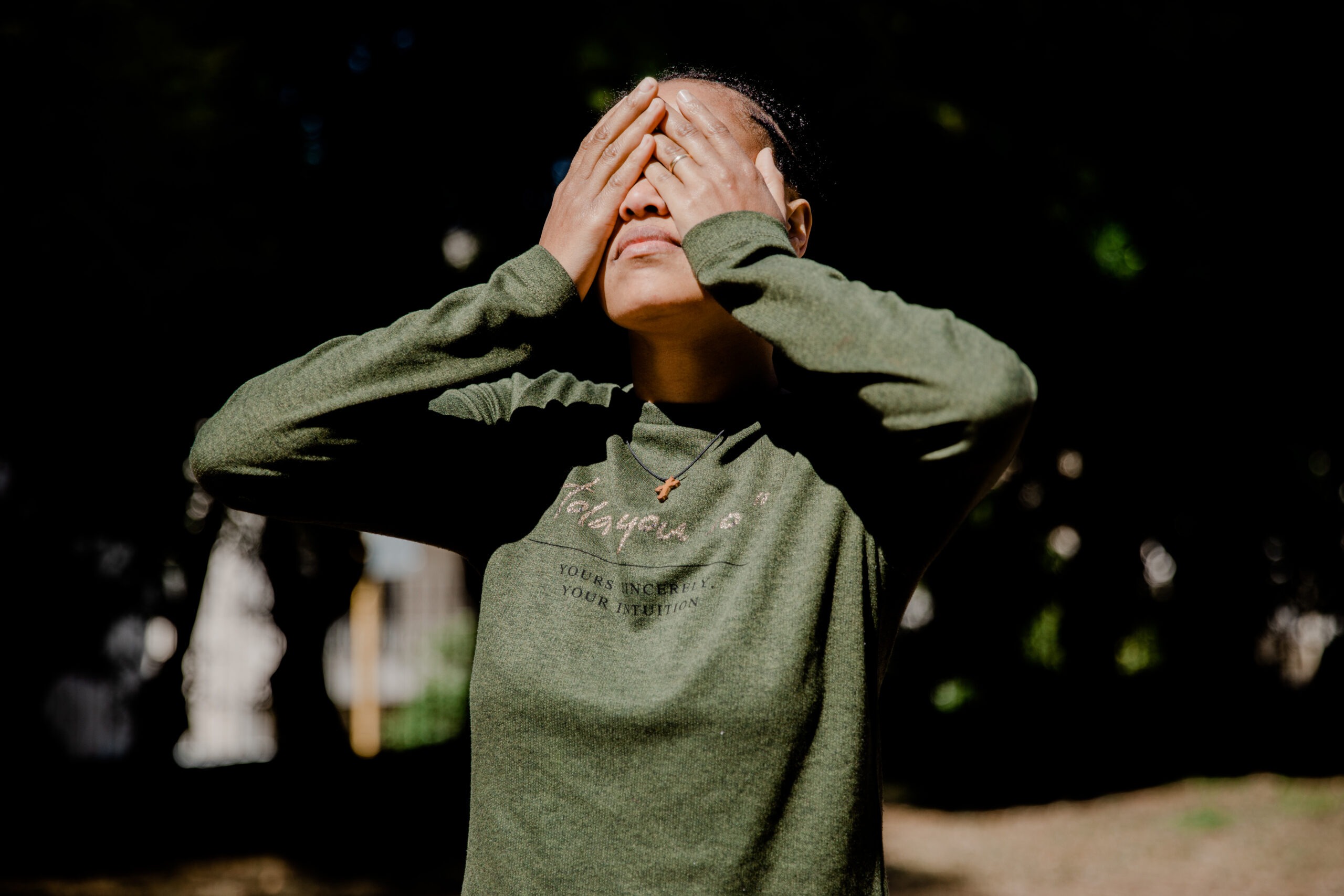
Martha*
Originally from the Tigray region in Ethiopia, Martha moved to the capital Addis Ababa hoping to provide for her family. She was working in a hotel during the day and studying management at night. One day she lost her job, so she decided to travel to Lebanon.
A year and a half ago, directly after she arrived in Lebanon, her employer sent her to live with their elderly parents and their caregiver. For the three months she lived in that house, Martha endured sexual harassment from the caregiver, but no one believed her.
Even after she recorded a video of the harassment the perpetrator was not held accountable, and her experience was dismissed. She was then sent to live in her employer’s house along with other migrant workers.
“My employer would yell at me if I asked her for anything or asked her a question,” says Martha. “She mistreated me, often delaying paying me my salary. She did not believe I was experiencing sexual harassment. She even did not believe me when I told I her I was sick.”
Martha fell ill with severe kidney pain, and once again her pain was dismissed. At first, her employer refused to take her to a doctor. When a mediator tried to convince the employer that Martha was indeed sick, her response was, “She’s under my name [legally], she’s mine, I will take her wherever I want.” When Martha was no longer able to walk, she was finally taken to a doctor. She was supposed to go back to the doctor’s clinic for a follow-up, but the employer denied her that right and her sickness returned.
“The house was always guarded; I could not run away. I told my employer I needed to renew my passport, so she took me to the embassy, and I never went back. I’ve been in this shelter for a month now. I want to go back home.”
Despite the hardships she faced, 25-year-old Martha does not hold a grudge. “I have suffered, yes, but I say I learned from my experiences. I have not one dime on me, but at least I saved my family from going hungry. No matter what happens, I will always have love in my heart, which is what I like the most about myself,” she says.

MAKDES*
Makdes, 22, sits in the dining room of the shelter she has spent the last four months in. A broken door keeps slamming in the wind, and with each slam her heart drops and she jumps in her seat.
When Makdes and her family were saving up money to start their own project in Ethiopia, the money they had was not enough. She knew people working in Lebanon, so she decided to make the same journey hoping to earn enough money to support her family.
The first family she lived with in Lebanon made her work under impossible conditions. “In my culture, you have to be offered food to eat,” said Makdes. “But they never cared or even asked if I’ve eaten.” It was a big family who would all eat together, and Makdes was supposed to clean before and after each meal on an empty stomach. “For the 15 days I spent in that house, I would wait until everyone was asleep to sneak some bread or an orange. I was living on scraps.”
For the last three days of working there, she was bedridden with exhaustion. Her employer locked her up in her room since she didn’t “want” to work. After that, they took her to the agency that brought her into the country, and she was matched with another family.
Unfortunately, her experience with the second family was tougher for her. Her employer would always yell at her, slap her hand to “teach” her tasks, and scare her for fun.
Makdes recounts, “My second employer always scared me. She would tell me ‘Look how they discarded their migrant worker, I will do the same to you’. During the war, she would make me watch news of airstrikes on television and threaten to dump me in the targeted areas. She constantly swore at me and humiliated me.”
That employer refused to allow her to call home, claiming “she’s just a maid, she shouldn’t be spoiled.” She forbade Makdes from wearing the clothes she brought from home. She even forced her to go to the bathroom and cut a significant length of her hair without her consent.
“My hair was long. My employer cut my hair multiple times without my permission. I’m scared of what my family back in Ethiopia will think. In my culture, this means I’ve had an affair or worse. I will have a very bad reputation.”
After all she’s been through, Makdes just wants to go back home. She sought the help of her embassy and she’s awaiting repatriation at the shelter. “In Ethiopia, I was never scared of anything. After my time in Lebanon, I jump at the simplest incident. Now, when I get scared or nervous, my heart starts beating so fast until I lose consciousness.”

TIGIST*
Tigist has been a migrant worker for more than a decade. When she was just 14 years old, she migrated from Ethiopia to Sudan hoping to support her family. After spending five years there working in a restaurant, she wasn’t making any money anymore, so she headed to Lebanon.
At just 19 years of age, Tigist spent four months living with the family of her employer. She was allowed a small amount of food and water and only after many hours of working hungry and thirsty. She was given sandwiches that her employer forced her to eat quickly so that she could continue working. She was denied any rest periods or days off—so she ran away.
After that, Tigist pursued freelance work as a cleaner, which means she was not under any contract. With no sponsor she was at risk of being arrested and deported.
Tigist is now 30 years old, having spent 11 years in Lebanon. Around five years ago, she fell in love with a Sudanese man and married him. All she hoped for was a companion, a support system. But after she delivered their now 2-year-old son, her husband became abusive, especially when drunk. He would beat and mistreat her regularly, until one day he kicked her and their son out of the house, and so they became homeless.
Tigist had hoped to see better days if she settled down, now she hopes her son sees better days where his needs are met and she doesn’t feel helpless. She’s spent the past six months in the embassy shelter. She just wants to go home.
“I want to open my own restaurant in Ethiopia if I manage to have enough money. I haven’t seen my father in a really long time, I really miss him. I hope to provide the best life for my son. I work hard and never give up or give in to hardships.”
“I haven’t been able to support myself and my son,” said Tigist. “We rely on external help, from the embassy or organisations. No one is giving me any work because I can’t take my son with me. I feel scared and abandoned, as if having a baby is a fault. Everyone gave up on me after I delivered my child. This world doesn’t see us [migrant workers] as human.”