What is Hepatitis C?

What is Hepatitis C?

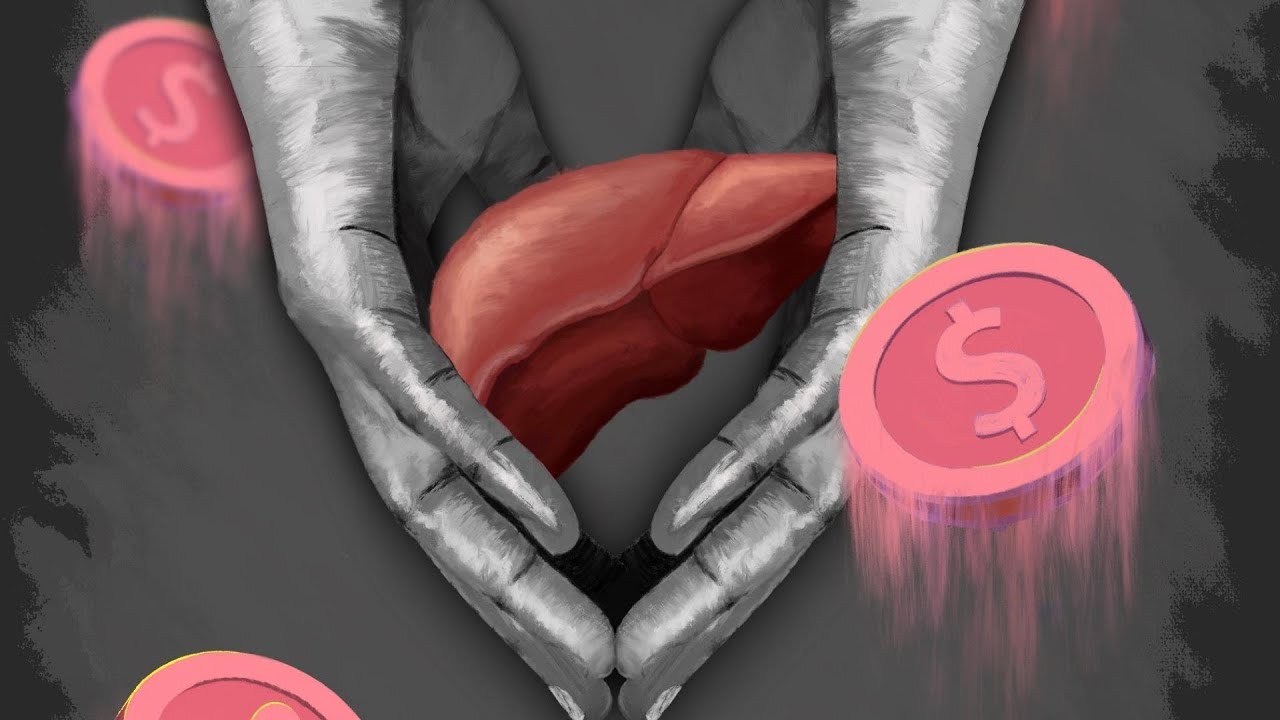
An estimated 58 million people around the world live with the Hepatitis C virus (HCV). Although HCV is a curable disease, millions don't have access to proper treatment due to high prices, which leads to the death of hundreds of thousands each year as a result of liver complications. Pakistan suffers from the second highest rate of HCV infections in the world. Since 2015, MSF has been running a Hepatitis C programme in its clinic in Karachi’s Machar Colony informal settlement.

Published on August 10, 2022

August 4 2020, A scar that will leave a permanent mark

August 4 2020, A scar that will leave a permanent mark

After Beirut was hit by the massive blast, our teams provided medical and psychological support to many patients, and treated hundreds of injuries. However, many wounded hearts were left untreated.

Published on August 4, 2022

Q&A with Mario Fawaz, Emergency Communications Coordinator in Ukraine

Q&A with Mario Fawaz, Emergency Communications Coordinator in Ukraine

Watch the Q&A with our colleague Mario Fawaz, Former Emergency Communications Coordinator for MSF activities in Ukraine sharing his experience from the field.

Published on July 20, 2022

What is Field Communication?

What is Field Communication?

Not many people know that communication is an essential part of MSF’s work. Thanks to it, we spotlight MSF’s activities and tell our patient’s stories. Discover what field communication is with our colleague Mario Fawaz.

Published on July 8, 2022

A Hospital on Rails A glimpse of my journey on board MSF’s medical train

A Hospital on Rails A glimpse of my journey on board MSF’s medical train

By Yasser Kamaleddine*

I began writing these thoughts one month after completing my mission and returning to Cairo. During this time, I managed to rearrange my thoughts and recall the events of the five weeks I spent in Ukraine. Out of the ten years I spent doing aid work, this mission was my shortest time in the field. Yet, it offered me some of the richest experiences ever.

On May 13, I made it to Lviv in western Ukraine after a long journey. I traveled from Cairo to the Belgian Capital Brussels, then to Poland, before completing the journey by road to western Ukraine. I spent the journey thinking of the medical train that I heard so much about during the few weeks preceding my mission. This train is one of a unique medical activity. It was unlike anything I’ve ever seen during my experience working in conflict zones and elsewhere. The medical train and its several denominations such as “hospital on rails” and “the escape capsule” spirited me to embark on the journey as if it was my first mission.

Lviv is a beautiful small city located near the western Ukrainian border with Poland. It was very calm and did not echo the seriousness of the war described by some as World War III. I saw people wandering the streets, moving between restaurants and shops as if the ongoing events had no impact whatsoever. I was suspicious of this deceptive calm, but before the end of the day, the alarms set off all over the city to warn of a possible Russian air strike. Restaurants closed their doors, some people went home quietly, while others wandered the streets and gave no caution to the alarm.

I had previously witnessed people’s resilience to the horrors of war in Afghanistan and Iraq. However, after only a few weeks of the outbreak of the war, I expected the situation to be more severe. It wasn’t long before I learned that the sound of the alarms was too familiar for the residents. It goes off daily to warn the residents of possible danger and get them to evacuate the streets and shelter from a possible raid. The alarms go off even though Lviv is located within a thousand kilometers of the clashes in the east of the country.

A journey of 40 to 60 hours on board the medical train

I spent one night in Lviv before joining the team to take the famous medical train. After each trip, the team spends the night in the city to rest and shower before setting off on a new evacuation journey. One trip takes about twenty hours from Lviv to the eastern frontline cities such as Kharkiv, Dnipro and Donetsk. While the total round trip takes between 40 to 60 hours, it may take longer if we send patients to more than one destination or shorter if the train is heading from the frontline cities to Lviv.

Before my arrival, I heard from my colleagues in Brussels that the country has one of the most complex and large train networks on the entire continent. The idea was simple and genius at the same time. From the outside, the train looked as usual as it could be with nothing out of the ordinary. It looked like a typical passenger train, but on the inside, it was equipped to cater to the needs of the medical team and transport about 30 patients from and to the eastern and western sides of the country.

The daily struggles of the “babushkas” during the war

The team on board consists of doctors, nurses, a logistician, and a translator. I was the field coordinator on board. Part of the team rests in Lviv, while 18 to 21 team members work on board during each trip.

The train served as a small mobile hospital equipped with 30 beds prepared for the care of the patients during the long journey. The MSF logistics team turned a full cabin into an intensive care unit with a bed capacity for five critically ill patients. This unit had most of what exists in hospital care units, such as two respirators and an entire network to produce and deliver oxygen.

Preparations for the trip begin upon receiving a notification from the Ukrainian Ministry of Health and the hospitals around the front line. One of our fellow doctors residing in a city nearby conducts an exploratory visit. We determine the approximate number of patients who need to be transferred to Western Ukraine with a full description of their medical state and needs. The number of patients may decrease or increase during the trip. Once this information is collected, the team is notified to prepare for a new journey. We’d meet at the train station half an hour before the trip to take the medical train as soon as it arrives. When the train heads to pick up the patients, the team prepares the train to receive patients in all five cabins designated for this purpose. On the first night of the trip, two or three MSF staff members share the same cabin, knowing that the next night would be restless as the medical staff shares nighttime shifts to monitor the patients. In short, sleeping was hard throughout the trip.

I have not met a team this wonderful during my career. Most of the members had other jobs that they suspended to work on the medical train and save the lives of people fleeing the war. Based on the conversations I had with the team members, I realized that their decision stems from their belief that everyone has a role to play in times of disaster. The team feels so much pride in what they’re doing despite the challenges and dangers of the war. The members met people from their hometowns while being evacuated by the medical train. It also turned out that some members and some patients share mutual acquaintances and friends. Most of the team members were affected by the war on different levels. They or their families had to flee their cities and villages to safer places. The train was an art scene displaying the human stories shared by doctors, nurses, and patients throughout the evacuation journey.

During my time on the train, we managed to evacuate around 200 patients. Most patients suffer from war wounds caused by explosions or shrapnel. The team called most of our patients “babushka”, which means “grandmother” in Russian and Ukrainian. We often set off on a train full of babushkas. These grandmothers were struggling to fight the daily repercussions of this war. Most of them had refused to leave their homes when the war began but had to leave them as patients after being injured. During that period, most of the residents of the villages around the frontlines fled their homes. Only those who did not have enough money to flee or relatives to host them stayed. Most of the Babushkas refused to leave their birth towns. “I will go home as soon as possible. I never wanted to leave my house in the first place, but now I have to,” one of the babushkas told me.

A rabbit that costs an arm and a “leg”

Some patients told me how the war changed their lives and stole their loved ones. We met a patient who used to work as a construction worker. He is in his late forties and comes from a village in eastern Kharkiv. He had lost his father and mother before the war and was left alone in his home. He did not plan to leave his small house even as clashes approached and rockets roared. With no wife or children to fear for, his house and the little land around it were everything he had. One day, he heard a bang, then a closer one, before an explosion drove him several meters away and broke his arms. He recounted what happened in detail as if it were the story of another person.

“I didn’t know what to do to shelter from the shells,” he said. “I had seen what happened to my neighbors. A father, a mother, and their four children had died in the basement of their house. The shells had buried them under the rubble. I did not know if I was safe in the open, but I was sure I don’t want the same ending.”

Another war-wounded patient was joking about what happened as she sat on the bed with one leg amputated and the other injured by an explosion and shrapnel. “I was bringing a rabbit from the barn to prepare dinner for my friends,” she joked, “that was the most expensive rabbit I had in my life. It cost me a leg.” She smiled even though she was in obvious pain even after taking painkillers. Her seventy-year-old dad accompanied her on the journey. He looked at her with a mixture of sadness and pride as she described how she ended up on this train. “We’ll pass through this crisis. She is a strong woman, she got her toughness from me,” he told us as we moved away from her bed.

Neutrality and Impartiality

Neutrality and impartiality fall under the fundamental principles of the humanitarian work established by the battle of Solferino in 1859. This battle is considered an inspiration to international and humanitarian organizations active nowadays, even though the reality today is more complicated and less ideal.

As an aid worker, I constantly think about the living conditions of the people in need on both sides of the frontlines anywhere in the world. It has always been challenging for workers in the humanitarian field to deliver crucial humanitarian aid to the people in need regardless of their ethnicity, religion, or political affiliation during the wars.

In the context of the Russian-Ukrainian war, and despite the presence of MSF in Russia since 1992, to date, MSF teams are unable to reach people in areas controlled by Russia and groups supporting it in Ukraine. The scope of aid work during wars is constantly narrowing all around the world. Accessing people in need and saving the lives of those affected by armed conflicts without discrimination is becoming more and more challenging.

I spent five weeks in Ukraine before packing my things to return to Cairo. On the night of my travel, I attended a small party prepared by the team to bid me farewell. That night, I shared my feelings with them and told them how each of them has impacted how I see the reality of suffering during wars. I expressed my fascination with the wonderful souls of all the team members on board the train.

Despite the distance between Egypt and Ukraine, the war was the focus of all media attention. Therefore, many questions came to my mind as I was packing. How can the geopolitical analysis and the breakdown of the causes and repercussions of the war (from the NATO membership and the oil trade to the loaf of bread) ever explain the suffering of the people I met on the train? I could not come up with an answer. I will content myself with the good memories, the rich experience, and the relationships I made. These will never leave my mind. And now, here I am, saying goodbye to the team and returning home, while I wait for my next mission.

*Yasser Kamaleddine is a pharmacist and aid worker from Egypt. He joined MSF in 2012 and assumed managerial roles in aid operations such as project coordinator and head of mission. He worked in several missions in Egypt, Lebanon, Iraq, Afghanistan, Syria, Greece, Kenya, and Ukraine. Yasser is currently the head of mission in Egypt. He holds a master’s degree in pharmacy from the University of Cairo and a master’s degree in anthropology from University College London.

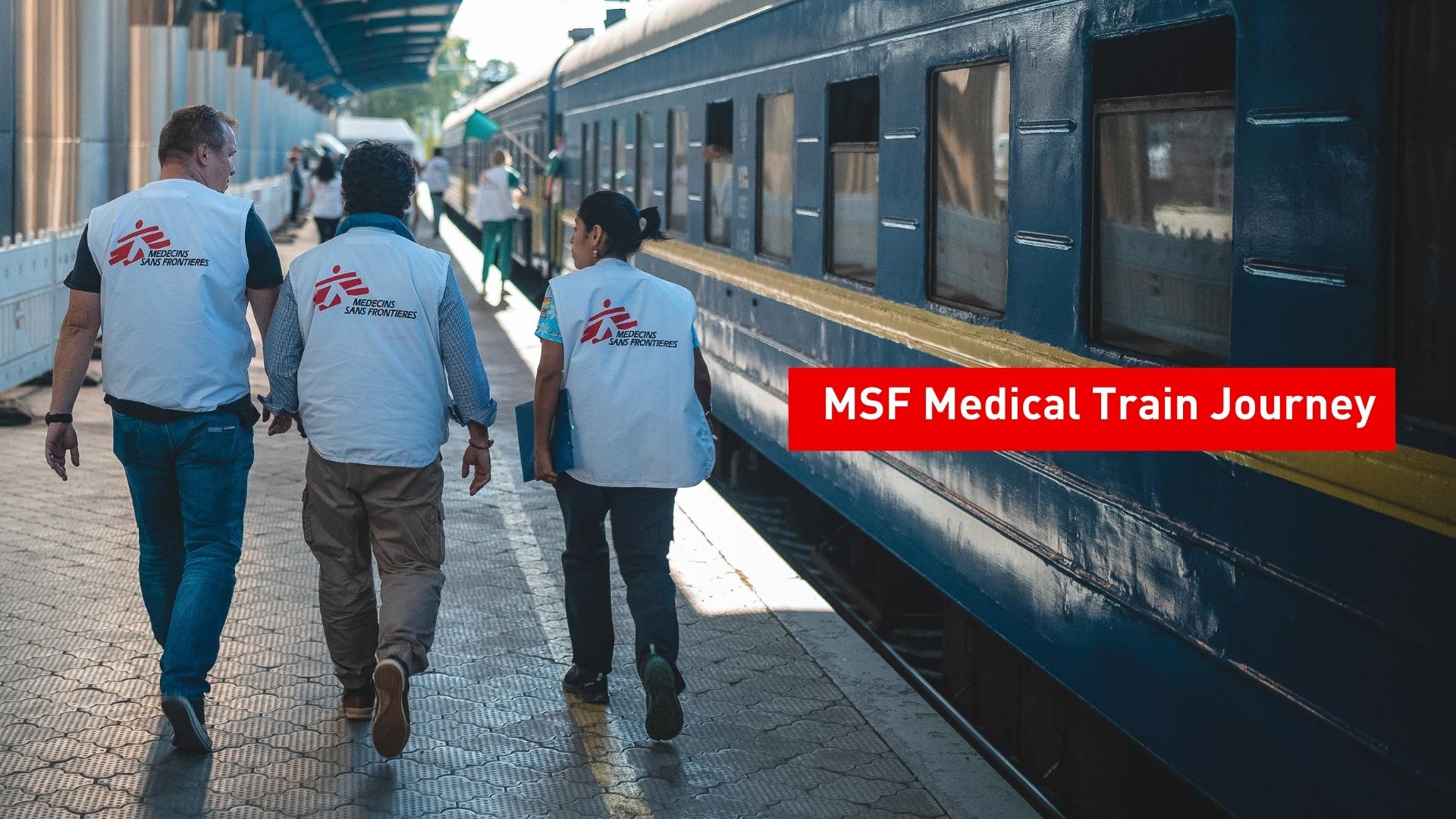
MSF medical train journey from Kharkiv to Lviv

MSF medical train journey from Kharkiv to Lviv

MSF's medical train transports patients from hospitals areas near to the heavy fighting in the east of Ukraine to hospitals further west. Since 31 March 2022 we have transported more than 600 patients.
Published on June 24, 2022

After seven rescues from the central Mediterranean, 470 people need a place of safety

After seven rescues from the central Mediterranean, 470 people need a place of safety

Beginning on the morning of 9 May and over the following 72 hours, Médecins Sans Frontières (MSF) teams have rescued 470 people from seven boats in distress in the Libyan and Maltese search and rescue zones and brought them on board our search and rescue ship, the Geo Barents, operating in the central Mediterranean sea.

Over the course of three intense days, the boats in distress were spotted from the bridge of the Geo Barents after alerts received from Alarm Phone, the Mediterranean monitoring organisation, and with the support of Pilotes Volontaires, a French-based non-profit organisation providing aerial observation in the central Mediterranean. None of the boats were identified by the relevant maritime rescue coordination centres.

Early on the morning of 9 May, our team spotted two rubber boats in distress carrying a total of 204 people. Among them was a nine-month-old boy named Mohammed who was carefully pulled from the crowd along with his mother by MSF teams and handed to safety on deck. All survivors on the rubber boats were soon transferred to Geo Barents.

More than 24 hours later, MSF received an alert about another overcrowded rubber boat, this time with 59 people on board. Geo Barents headed to its location with the guidance of a Pilotes Volontaires’ airplane and carried out the rescue.

Late in the day on 10 May, two new email alerts from Alarm Phone landed in MSF’s inbox, indicating that two more boats were in distress nearby. The rescue speedboats on Geo Barents were launched at around 9 pm and, after an intense five-hour search conducted in darkness, the team finally found the two boats drifting near an oil platform. The 111 survivors on board these vessels were rescued and transferred onto Geo Barents at around 2 am, ending the longest rescue since the beginning of the ship’s operation.

On 11 May, further alerts from Alarm Phone indicated that more boats were in distress, this time in international waters under the search and rescue responsibility of Malta. With the help of Pilotes Volontaires, Geo Barents navigated to the exact location of the first boat, where our team found 67 people drifting in a wooden vessel, all looking terrified, exhausted and disoriented. A few hours later, all the survivors were brought on board the MSF rescue ship.

“When the rescuers came I was almost unconscious,” said a 26-year-old woman from Syria. “I couldn’t understand what was happening. By that time, we were at least 48 hours at sea. I was sure I would die.”

The long day of rescues continued with another boat carrying 29 people, which was drifting in the Maltese search and rescue zone. Once again, no action was taken by the Maltese authorities.

“It’s incomprehensible that, after all these years of deadly migration journeys in the Mediterranean, private organisations like us are taking on the major burden of saving lives at sea,” says Juan Matias Gil, MSF head of mission for Search and Rescue operations in the central Mediterranean. “At least 24,000 people have officially drowned or gone missing since 2014, yet Europe is still turning a blind eye to what is happening on its southern borders.”

“We were again appalled by the inaction of the Maltese and Italian authorities while almost 100 lives were hanging in the balance. The Maltese armed forces, who are primary responsible for rescues in the Maltese search and rescue zone, were informed at the same time as us, but they remained silent and inactive, neglecting their legal obligation to provide or coordinate assistance. They also ignored our request for a port of safety,” says Gil.

Most of the survivors on board Geo Barents have experienced physical abuse of various forms, including sexual violence and forced labour. Four embarked on their journey across the Mediterranean with fractured bones, the result of injuries inflicted during their time in Libya.

One survivor currently on board Geo Barents has diabetes and is dependent on insulin but has been without his vital medication for what is likely to have been weeks. Two other survivors have suffered psychotic episodes on board. All 470 survivors on board Geo Barents are either physically or mentally vulnerable and need to disembark to a safe place as soon as possible.

Despite our six requests, the Italian authorities, also responsible for search and rescue activities in the Mediterranean, haven’t granted us permission to disembark the survivors to a safe place.

Intersecting crises: Climate change and access to medicines

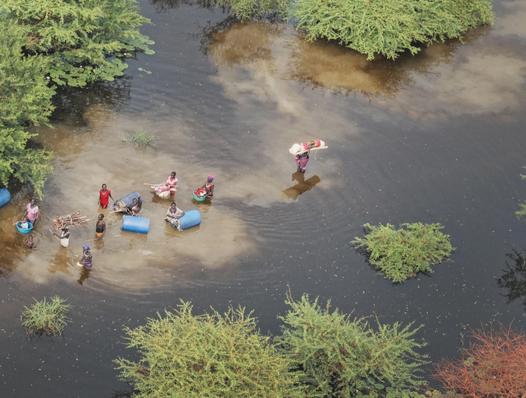
عائلات تتجه إلى أرض جافة في بنتيو. تضرر 835000 شخص بشكل مباشر من الفيضانات.

Intersecting crises: Climate change and access to medicines

عائلات تتجه إلى أرض جافة في بنتيو. تضرر 835000 شخص بشكل مباشر من الفيضانات.
Climate change has been described as the biggest threat to global health in the 21st century. Médecins Sans Frontières (MSF) has responded to some of the world’s most dire medical and humanitarian crises for more than 50 years. Many of the places where we work are in the most climate-vulnerable settings in the world. Our teams provide care for people experiencing the health impacts of the climate emergency first-hand. It is very clear this crisis hits people in the most vulnerable situations the hardest.

The climate emergency, together with lack of access to medicine, aggravates existing vulnerabilities and humanitarian situations. For example, in Niger, changing rain patterns are impacting food production and infectious diseases such as malaria. This comes on top of recurring epidemics and food insecurity linked to demographic pressure and land use, as well as violence and displacement. The deadly combination of malaria and malnutrition takes a heavy toll on children under five.

As MSF continues to work with communities facing humanitarian crises, we reflect on the intersection between climate change and access to medicines through two lenses: vaccine equity and intellectual property.

The climate crisis and the COVID-19 pandemic have both shown the world what it means to face a direct existential threat. We have seen the measures we need to take – for COVID-19, equitable access to vaccines for all – and the resources we need to mobilise to face such a crisis.

What this means is that countries with higher vaccination rates, like the UK, have been able emerge from the pandemic earlier, and open up their economies once more, while many countries around the world are still in the midst of the crisis. Their vulnerable populations and healthcare workers remain at risk, while rich countries have chosen to hoard vaccines and prioritise their own populations while others have been forced to depend on promises of donations.

The second lens through which we look at the intersection between climate change and lack of access to medicines is intellectual property. Specifically, its impact on access to medical technology. The same laws that feed the access to medicines crisis – enforcing drug and other medical technology patents through the World Trade Organization – apply to innovative green technologies.

These technologies are concentrated in rich countries yet are urgently needed by all countries to adapt their economies and reduce carbon emissions. Green technologies include renewable energy sources; transition technologies to limit the environmental impact of existing sources of emissions; hydrogen cell devices; medicines for new illnesses that arise due to climate; and new crops needed for changing weather patterns.

It is clear that, as with access to medicines, our critical need to share innovative green technologies to address the climate crisis requires us to explore fully the impact of intellectual property law on our research and development system and how it impacts on access to these vital technologies.

Much remains to be explored in the interaction of the climate crisis and access to medicines, what we can learn from the responses to both crises, and how the many injustices stem from common causes rooted in the way global systems and power structures are built.

Humanitarian organisations respond to crises regardless of the cause. But their efforts in responding will not make up for the failures to act on the causes of some of these crises by our political leaders. Concrete political action to implement solutions to limit global warming and remove barriers of accessing medicine is needed to prevent disastrous humanitarian consequences and hopefully end injustice in access to medicine and green technologies so that people can live in health and well-being.

MALARIA: “HOPE IS VITAL, IT’S WHAT KEEPS YOU GOING”

MALARIA: “HOPE IS VITAL, IT’S WHAT KEEPS YOU GOING”

Her father laid her carefully on the bed in the emergency room. She was unconscious, barely breathing. The medical team began the assessment immediately. A little girl, around eight years old. They said she’d been having seizures Before we’d even done any tests, we all thought the same thing. Malaria.

Malaria is endemic in this region, and in my time as a paediatrician in the MSF hospital in Agok – in the Abyei Administrative Area between Sudan and South Sudan – it was rare for us to have a patient who didn’t have it.

Seizures can easily be fatal if not stopped in time

The rainy season creates pools of stagnant water, perfect breeding grounds for the mosquitoes which carry the malaria parasite, infecting people in such high numbers that we’d had to erect tents to act as overflow wards.

A brain in overdrive

The little girl’s family had walked for two days to get to us. They lived in a rural area and we were the only health facility for miles.

This long journey (they’d had to spend a night on someone’s floor until it was light enough to start walking again) meant that she’d been in a critical condition, rapidly deteriorating, for at least 48 hours.

Somehow, one of our nurses managed to place a cannula and we started her on fluids, strong antibiotics, strong antimalarials and antiseizure medicines. She was moved to the high dependency ward, where the sickest children are cared for. Although the rapid work of the ER team had stabilised her condition, she was still in a coma, and she was still having seizures.

Seizures can easily be fatal if not stopped in time.

During a seizure, the brain is in ‘overdrive’ and doesn’t get enough oxygen or sugar, which can cause brain damage. Another danger is that children can easily stop breathing during a seizure, which can have the same consequences.

All this meant we had to get the seizures under control.

Too severe to survive?

The high dependency team were incredible. In the UK, where I’m from, this little girl would have been cared for on an intensive care unit, probably intubated, with electronic monitoring. She would have had a CT scan and multiple blood tests to understand what was going on. None of this was available to the team in South Sudan. All they could do was simple, structured care.

The girl needed many medications at specific times, and each dose was carefully documented so we could get the balance right. She needed round the clock care to ensure she was hydrated and fed through a tube into her stomach. Even simple things like her position in the bed were important for lowering the pressure in her head.

Still, she didn’t wake up.

Hope is vital, it’s what keeps you going in situations like this. Everyone redoubled their efforts.

A lumbar puncture confirmed that the child had meningitis as well as cerebral malaria.

We told ourselves that if she got to 14 days in the coma, we would have to accept the possibility that we might lose her.

Sometimes we have to switch the focus from trying to save a patient’s life to trying to make them as comfortable as possible, realising that the condition is just too severe for the patient to survive independently.

Filled with hope

On day 13, she opened her eyes.

Suddenly, we were all filled with hope again. Hope is vital, it’s what keeps you going in situations like this. Everyone redoubled their efforts.

All this time her family had been with her. And we had had a lot of conversations with her father, in particular, explaining that even if they wake up from a coma, not all children survive.

Those who do may have very high levels of impairment, while others, with care and a supportive family, would be able to get back to a decent level of functioning.

This little girl’s family were inspiring. The hospital has a physiotherapist, which is amazing for somewhere so remote. He worked with them with real compassion and skill, explaining how to interact with their daughter to help stimulate her brain to start working again.

At first, she was still super sick, unable to move by herself. Her father would sit with her on his lap, talking to her, lifting her hands as if she was waving at the people on the ward. Her mum and grandmother would get involved.

Together they did more than we ever could.

Gradually she started moving her arms a little, and then her legs. And then one day I came on to the ward and found her father supporting her as she walked with her straight, stiff legs. All the other families beamed as they went by.

It had been less than two weeks since she’d woken from the coma.

A team of teams

As I watched her, I thought about the team who had worked to get her to this point.

There was her family, who had been dedicated throughout. There was the team in the ER who gave her that vital initial care. The diligent staff in the high dependency unit who had literally kept her alive day-to-day.

There were the doctors who treated her convulsions, the lab staff who identified she had meningitis and malaria, the nutritional assistants who provided her special feeds, the physio who worked on her mobility, the counsellor who supported the family.

And none of that direct work would have been possible without the logisticians, the administrators, the myriad support staff, and of course the donors, who make all of those steps possible.

Twenty-eight days after she’d first arrived, the little girl was able to go home with her family. She was walking, eating sweets, smiling.

“Nothing will stand in my way”: Pharmacist, student and pregnant in a pandemic

“Nothing will stand in my way”: Pharmacist, student and pregnant in a pandemic

MSF pharmacist Ola Barakat shares her determination to follow her own path and to go where her skills are needed most.

My motto has been: If I don’t follow a path of development, I will end up a miserable woman and a grieving mother.
Ola Barakat, Pharmacy Supervisor

First of all, I am a woman.

I am also a mother of two children, Ayham (four years old) and Adam (eight months old).

From a professional standpoint, I am currently a pharmacy supervisor with MSF in Jordan.

My journey

I’ve worked as a humanitarian with Médecins Sans Frontières / Doctors Without Borders (MSF) for nine years now.

Being part of a humanitarian organisation means you are witness to human suffering, and this experience has made me strong and caring at the same time.

This combination has helped me advance in my career with love and passion and to fulfil my ambitions although this has meant breaking with some of the customs and traditions of my community in Jordan, that can limit the realisation of a woman’s dream.

My journey with humanitarian work helped me fight all my battles, succeeding without hesitation or fear.

Rising to the challenge

Before starting my job as a pharmacy supervisor, I worked in Zaatari and Azraq refugee camps, which are about 85 km away northeast of Amman, the capital of Jordan.

This daily trip was my first challenge as a working woman in a traditional society. I know I was talked about by both the women and men around me, and I was bombarded by questions daily.

I was sure that I was doing what I wanted in both my mind and heart.

“How do you travel alone for such a long distance?” or “how do you keep away from your children in order to work?”. “How do you walk around as a woman among the refugees?” and “are you not being bullied or even harassed?”

All of these questions did not bother me at all. I was sure that I was doing what I wanted in both my mind and heart.

Pregnant in the pandemic

With the spread of COVID-19, pharmacists were fighting on the frontlines of the pandemic. We stood by people who desperately needed us, especially the most marginalised.

Under the general lockdown, when most people were at home, we were on the ground facing the pandemic.

When COVID-19 swept the world, I was seven months pregnant. And, I had three difficult months going back and forth between work and home.

I do not deny that I was afraid, because pregnant women are more at risk of severe forms of the disease, but I took all the necessary preventive measures out of fear for myself and my children.

Disinfection has become a routine daily task.

Balancing life

My days are not easy, between work, family and studying, but I have been able to establish a balance as I am currently pursuing my graduate studies.

My daily working hours in the pharmacy are from eight in the morning until five in the afternoon. I allocate my children three hours of my time, and my studies, too. Given the current situation, most of my studying is online.

I am a master’s student, pursuing a degree in Humanitarian Practices at the University of Manchester in the UK.

I was able to pursue this thanks to a scholarship granted by MSF, which I was able to land through my work with the organisation. I applied to the scholarship, and soon after my application was accepted after I passed an exam.

After my return from Lebanon, many of my female Jordanian colleagues told me they were inspired and encouraged to take on travel assignments.

This is how I became a worker, mother, and student in the most difficult period in history.

This came as a shock to people who surrounded me in our Jordanian society. Everyone considered me weak for being a woman:

“As a woman, you cannot work, raise children and learn. We are men and we cannot do everything you do,” they would say.

I used to get a lot of comments such as “you exhaust yourself”, or “what do you want from this world”, “take care of your home and your children”, and “do not take your role and the role of others”.

But I grew stronger and stronger the more I heard this negative feedback.

Detachment and inspiration

My work at MSF presents many challenges, one of which is the subject of travel or what is known as “detachment”, meaning the experience of working for a certain period outside your country.

The organisation paved the way for me to go on an assignment to Lebanon. I applied with many others to the vacancy and was finally selected.

I was over the moon when my visa was accepted. My assignment was in a pharmacy in one of the organisation’s hospitals, in eastern Lebanon, specifically in Zahle, in the Bekaa governorate.

This assignment was the talk of my community back in Jordan, and it was a shock to them that I would be travelling for six months, leaving my family for work. They considered my behaviour as a mother unacceptable, they never looked at my successes and my ambitions.

After my return from Lebanon, many of my female Jordanian colleagues told me they were inspired and encouraged to take on travel assignments – that was a huge achievement for me.

Ambition without limits

Partnership is one of the main things that help a marriage succeed. My husband is my greatest supporter, and he encourages me to be adventurous, unlike most of the men in our society, stressing that he would be by my side in the good times and bad.

My husband works in the field of journalism and has a PhD in Arabic literature. He is an open and confident man who appreciates my work, cares for my happiness and nurtures my ambitions. It is important to note that few of the men around him support their wives to advance, learn and study the way he has supported me.

I can’t deny that the pressures and responsibilities are great and many, between work, studying and fulfilling family duties. But, all of these tasks make me a successful woman, full of life, and my ambition knows no limits.

My motto has been: If I don’t follow a path of development, I will end up a miserable woman and a grieving mother.

So, instead, I put my career on one hand and my family on the other, and will always find a balance.