MSF warns of Mass displacements in northern West Bank take a dramatic toll on Palestinians

MSF warns of Mass displacements in northern West Bank take a dramatic toll on Palestinians

JERUSALEM – Médecins Sans Frontières (MSF) warns that tens of thousands of displaced people in the northern West Bank, Palestine, are without proper shelter, essential services, and access to healthcare. Following the January 2025 ceasefire in Gaza, Israel launched the “Iron Wall” military operation in the occupied West Bank, forcibly displacing thousands and leaving them in an extremely precarious situation. Israel must immediately halt the forcible displacement of Palestinians in the West Bank and the humanitarian response must be scaled up and reach those in need.

“This scale of forced displacement and destruction of the camps has not been seen for decades. People are unable to return to their homes as Israeli forces have blocked access to the camps, destroying homes and infrastructure. Camps have become ruins and dust” explains Brice de la Vingne, MSF director of operations. “Israel must stop this, and the humanitarian response needs to be scaled up”.

Since the war in Gaza broke out in October 2023, Israeli forces have increased the use of extreme physical violence against Palestinians in the occupied West Bank, as MSF highlighted in its report “Inflicting harm and denying care”. In total, 930 Palestinians have been killed including 187 children according to the World Health Organization (WHO). Access to healthcare has been severely hindered as confirmed by MSF teams on the ground who have witnessed the systematic pattern of oppression by Israel on health workers and patients. The situation further deteriorated since the ceasefire in Gaza and Israel’s “Iron Wall” operation which has effectively emptied the three main refugee camps of Jenin, Tulkarem and Nur Shams in northern West Bank forcibly displacing over 40,000 Palestinians according to OCHA.

“The [Israeli] army raided our house and ordered us to evacuate. We weren’t allowed to take anything with us – not even our documents. All we received was the warning: ‘Get out’,” explains Issam, 55, MSF patient who was displaced from Nur Shams camp. “Displacement is suffering, a silent anguish, a deep pain in the heart for everyone. You see the tears in people’s eyes, but we hold them back.”

The mental health situation is alarming, with many patients suffering from stress, anxiety, and depression due to the violent and unpredictable nature of incursions and displacement. “People don’t know what has happened to their homes and have suffered immense losses, including their sense of purpose,” says Mohammad, 30, an MSF community health educator.

“Drones were flying over the houses, ordering the residents to get out.  They always destroy things,
 but nothing like this has ever happened before” according to Abdel, resident of Jenin camp.


MSF previously offered support in the three camps but had to adapt activities given the security risks and displacement of the populations. MSF teams now operate daily mobile clinics in Tulkarem and Jenin to provide medical care to displaced people. Our teams are treating chronic conditions such as diabetes and hypertension which have worsened due to lack of access to medication; respiratory infections, and osteo-muscular disorders among others. MSF teams also distribute hygiene kits and food parcels to support those who were forced to leave their homes without resources or belongings. MSF is providing water to the Khalil Suleiman hospital, the main hospital in Jenin, to mitigate frequent supply shortages due to damage from the military operations.

MSF continues to respond to the urgent needs, but the scale of displacement and the escalating humanitarian crisis amid the inadequate international response present an immense challenge and needs in the West Bank are only getting worse.

Claire Magon: We call for an immediate return to the ceasefire and an end to the siege on Gaza

Claire Magon: We call for an immediate return to the ceasefire and an end to the siege on Gaza

We are horrified by the attacks launched by Israel today on the people of Gaza, shattering the nearly two-month-old ceasefire. Out of the hundreds killed, according to the Ministry of Health, MSF received 75 dead on arrival and scores of wounded in just three of the facilities we support.

Our staff were completely taken by surprise and found themselves once again having to deal with influxes of mass casualties, many of whom were children.

In line with the tactics that the Israeli authorities have applied since October 2023, they have once again chosen to collectively punish the people of Gaza – with the explicit approval of their closest ally, the United States – striking with an intensity not seen since the early stages of the war. For over 15 months, before the ceasefire, people in Gaza were indiscriminately killed, mutilated, wounded, and displaced.

Israeli forces undertaking these latest ruthless attacks and evacuation orders make us fear that a new phase of military operations in Gaza is about to begin. Palestinians in Gaza will simply not be able to withstand this, neither physically nor mentally. Their hopes of recovering at least part of their previous lives are being shattered.

Since the ceasefire came into effect on 19 January, people have been struggling to restore the basics of their day to day lives after a drawn out, devastating military campaign, which has annihilated the very fabric of society in Gaza. Israel has once again cut access to humanitarian aid and basic goods.

MSF calls for the ceasefire to be immediately restored and for Israel to not restart its campaign of destruction and the nightmarish, massive bombing on the people of Gaza. MSF also calls for the blockade to be lifted, and for people to regain unrestricted access to basic supplies and aid. Injured people and patients requiring urgent medical care should be allowed to seek care outside of Gaza, provided their right to a safe and dignified return is granted.”

Claire Magone, General Director of MSF France

Yemen’s: Over 35,000 malnourished children treated in MSF-supported facilities from 2022 to 2024

Yemen’s: Over 35,000 malnourished children treated in MSF-supported facilities from 2022 to 2024

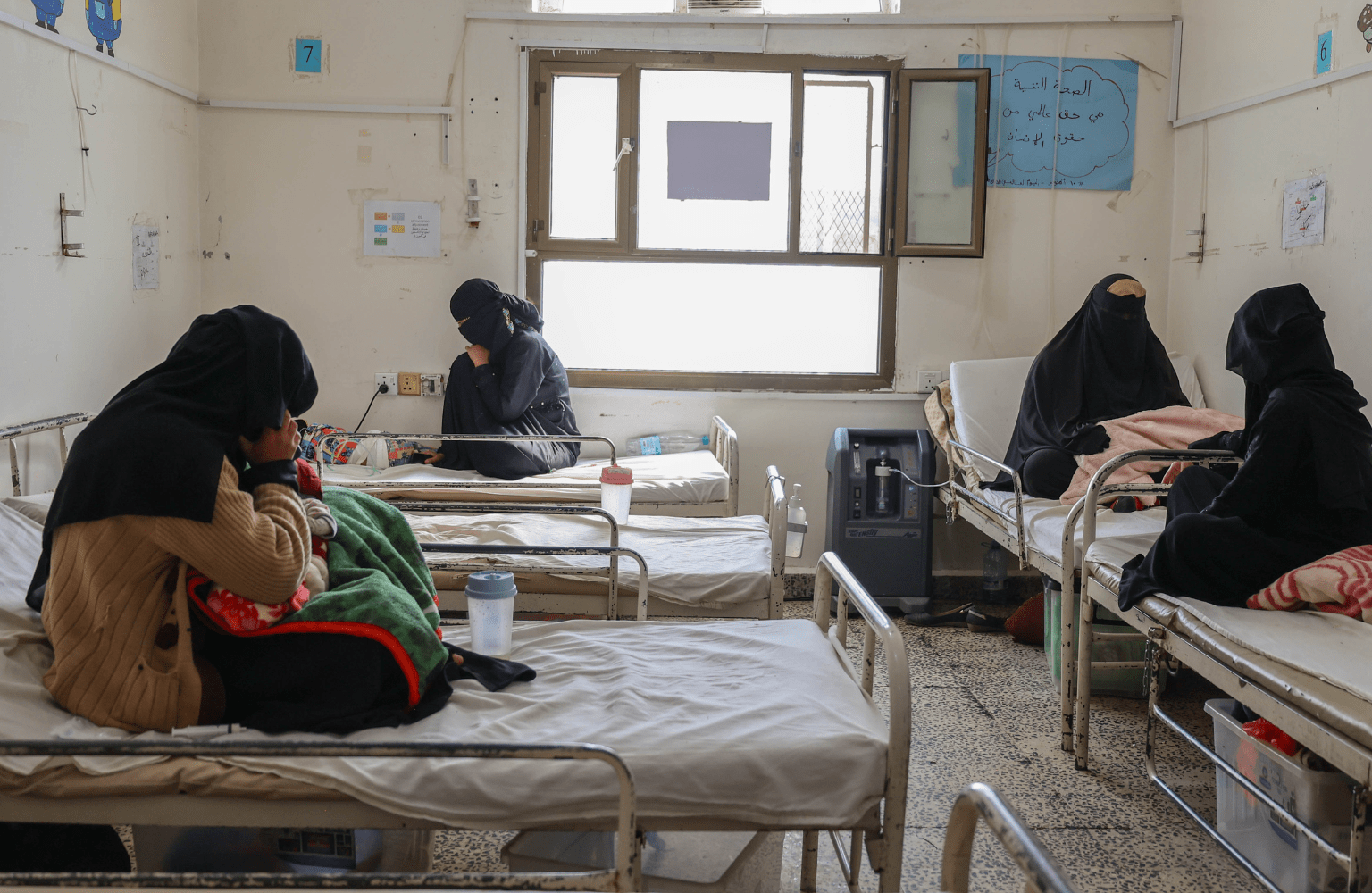
Aisha sits by a bed in Al Salam hospital in Khamir district of Amran governorate, Yemen. She has come to seek lifesaving care for her five-month-old daughter, Zahra’a. At the Médecins Sans Frontières (MSF)-supported facility, staff are monitoring the child’s temperature, carrying out tests and providing her with oxygen and milk.

“I travelled more than two hours, spending 15,000 Yemeni riyals [approximately $61 US] to reach here.” says Aisha. “We’re living in dire conditions, with little money for our daily needs, and the nearest health centres don’t have specialized departments to treat malnutrition. A doctor nearby where I live finally referred us here.”

Health promotion messages about malnutrition on a wall outside the MSF-supported ITFC in Ad-Dahi hospital in Al Hudaydah. Yemen, March 2025. © Leah Cowan/MSF

Before arriving, her daughter suffered from fever and was frequently crying due to pain in her ears. “I tried breastfeeding and powder milk, but nothing helped,” she says. “We have one breadwinner in our family of 12 and he can’t cover all our expenses.  My daughter is still tired and her weight hasn’t changed so far. I am afraid to lose her, she is the only girl in the family. I hope she recovers soon and I hope more organizations will come here to support people, especially those who do not have enough food or income.”

Malnutrition cases soar across Yemen

Unfortunately, Aisha’s story is far from unique in Yemen. It is a rapidly growing crisis, where the needs are far outstripping the existing treatment capacity. Last September during the annual peak malnutrition season, bed occupancy rates in MSF-supported facilities reached extremely high levels in most facilities. In Al-Salam hospital—designed for 23 to 51 beds—bed occupancy rate soared to 254 per cent the same month, indicating extreme overcapacity. Staff are often forced to provide care for patients in crowded hallways and makeshift spaces. This dramatic rise in malnutrition is consistent with what our teams have seen over the past three years. Between January 2022 and December 2024, MSF-supported facilities in five governorates—Amran, Saada, Hajjah, Taiz, and Al Hudaydah—treated 35,442 malnourished children under the age of five. While these numbers do not encompass all of Yemen, they show the daily struggles families face when access to healthcare and adequate food is severely restricted.

Yemen has been engulfed in conflict, instability and prolonged fighting for nearly 10 years, pushing the healthcare system to the brink of collapse. According to the World Health Organization, as of April 2024, nearly 46 per cent of health facilities in Yemen were partially functional or completely out of service. Delayed referrals and a lack of access to general healthcare leave families no choice but to seek help when it is almost too late.

A view of the MSF-supported ITFC in Ad-Dahi hospital in Al Hudaydah. Yemen, March 2025. © Leah Cowan/MSF

Families struggle to keep up with follow-up care because they lack food assistance or face excessive difficulties in accessing routine healthcare and immunizations. As a result, even after being discharged from a healthcare facility many patients relapse. This intensifies their health risks and leaves them even more vulnerable. Low vaccination rates also increase susceptibility to preventable diseases such as measles, cholera and acute watery diarrhea, leaving children even more vulnerable to malnutrition.

Many families not only face overwhelming healthcare expenses but also struggle to afford proper meals. A woman whose one-year-old son has been admitted at the MSF-supported facility in Ad-Dahi hospital in Al Hudaydah governorate says, “My husband can’t work because of his physical disability. I try to earn money but it is never enough. Providing decent meals is a struggle and we only have meat twice a year—during Eid, when other people share it with us. That’s the only time we taste meat all year.” In 2023 and 2024, over 10,000 children received treatment at this facility.

Scale-up of healthcare across Yemen vital to curb malnutrition

In 2024, the Abs hospital in Hajjah governorate which has a capacity to expand upto 120 beds during peak malnutrition season, recorded bed occupancy rates for malnutrition as high as 200 per cent in September and 176 per cent in October—its highest levels in six years. At the inpatient therapeutic feeding centre (ITFC) in the hospital, Asia is seeking medical care for malnutrition for her one year and three months old daughter Ayana Ali. Ayana was admitted with moderate malnutrition and complications which are exacerbating her condition.

MSF-supported ITFC in Al Salam hospital in Amran, Yemen. March 2025. © Majdi Al Adani/MSF

“She arrived a few days ago and was having acute watery diarrhea and high temperature,” says an MSF nurse at the Abs general hospital. “She was admitted and is under treatment. Ayana is recovering and getting better day by day.”

Ayana is Asia’s only daughter and Asia is deeply attached to her, fearing she might lose her. In order to afford the journey to

 for her daughter’s treatment, Asia sold some of her household items. The treatment was recommended by neighbours whose child had been successfully treated at the facility.

MSF has been actively responding to malnutrition in Yemen since 2010 by operating ITFCs in collaboration with health authorities in five governorates—Amran, Saada, Hajjah, Taiz and Al Hudaydah. These centres provide specialized treatment for children under five suffering from severe and moderate malnutrition with complications. Our teams partner with local health authorities to train staff, strengthen referral pathways and support early detection of malnutrition at the community level.

MSF’s admission records show most malnutrition cases are children under five, with infants under six months especially at risk. Pregnant and breastfeeding women also make up a large share of cases, as many arrive with moderate or severe malnutrition. As a result, they also struggle to feed their children.

“Many mothers can’t even produce the milk to feed their children because they are malnourished themselves,” says an MSF nurse at the ITFC in Ad-Dahi hospital in Al Hudaydah. “Whenever a mother cannot produce her own milk she replaces it with cow’s milk and dilutes it. This is contributing to malnutrition in their babies.”

In view of the sudden and drastic reductions in humanitarian funding to Yemen, sustained donor engagement and flexible funding from major donors—is crucial to address Yemen’s escalating humanitarian crisis. Adequate and consistent funding, along with stronger partnerships between the Ministry of Health, donors and implementing partners, will help revive healthcare centres and ensure they effectively serve local communities and the most affected locations. MSF urges these stakeholders to expand community-based vaccination efforts in order to curb preventable diseases like measles, cholera and acute watery diarrhea.

A mother with her child at the MSF-supported ITFC in Ad-Dahi hospital in Al Hudaydah. Yemen, February 2025. © Konstantinos Psykakos/MSF

There is also a need for urgent improvements in targeted food distribution programs. Efforts like these will ensure pregnant and lactating women as well as children under five receive the nutrition they need before their health is threatened. Without swift collective action, the most vulnerable people in Yemen people will suffer under an overburdened health system and rising malnutrition rates. 

Lives On the Line: Drought and funding gaps deepen Somalia’s malnutrition crisis

Lives On the Line: Drought and funding gaps deepen Somalia’s malnutrition crisis

Somalia is facing a dire malnutrition crisis that has been worsened by prolonged droughts, ongoing conflict, economic instability, and a fragile healthcare system. The Baidoa and Mudug regions, where Médecins Sans Frontières (MSF) works, are examples of the crisis unfolding across the country, with thousands of children at immediate risk of severe malnutrition and its life-threatening consequences.

Chronic funding shortfalls have crippled humanitarian efforts, forcing vital nutrition programs to scale back or close. The looming threat of a La Niña-driven drought in 2025 could push an already vulnerable population to the brink. Médecins Sans Frontières (MSF) is urgently calling on donors and humanitarian organisations to take immediate action to prevent widespread suffering, as the consequences could be catastrophic.

A father’s last hope to save his children

Kalimow Mohamed Nur had no choice but to take a desperate gamble. With his twin sons weak from hunger, their tiny bodies frail from repeated bouts of vomiting and diarrhoea, he borrowed enough money for a single day’s journey—an amount he would take months to earn—and set out on a gruelling trip to Baidoa. The road was long, the heat relentless, but the promise of free medical care at Bay Regional Hospital was his last hope.


An MSF nurse measuring the Mid-Upper Arm Circumference (MUAC) of an 18-month-old child at the MSF supported decentralized outreach center near Afmadow IDP camp in Baidoa.

“I had to take a loan of about $130 and travel 300 kilometres to Baidoa to find free medical care,” says Kalimow, whose twin sons received treatment for severe acute malnutrition at the Bay Regional Hospital supported by MSF. “They were so small, and we could barely afford enough food. They kept falling ill.”

Kalimow’s story—marked by poverty, distance, and the absence of local services—echoes the harsh realities that prevent countless families from accessing care. In Somalia, life-saving treatment has turned into a privilege accessible to only a few.

Malnutrition has become a year-round crisis in parts of Somalia

In Baidoa and Mudug, malnutrition has become a persistent, year-round crisis, not a seasonal challenge. “We’re seeing high malnutrition rates, not just during the usual lean seasons,” says Jarmilla Kliescikova, MSF’s medical coordinator in Somalia. “This is a chronic crisis that demands sustained intervention.”

MSF Staff explaining to the mother about how to feed Ready-to-use nutritious supplement to her baby, in the decentralised outreach centre run by MSF near Elbet-I camp, Baidoa- Somalia.


In 2024, MSF teams treated 18,066 severely acute malnourished children across its projects in Somalia, a significant increase from the previous year. In Mudug, admissions to outpatient nutrition programs surged by 250 per cent, driven by both rising need and expanded outreach efforts. Baidoa also saw a rise throughout 2024 in admissions, underscoring the growing desperation of families seeking care. Yet, these efforts barely scratch the surface. According to the UN Office for the Coordination of Humanitarian Affairs (UNOCHA), an estimated 1.7 million children faced acute malnutrition in 2024, including 430,000 suffering from severe acute malnutrition. MSF’s interventions, while critical, reached only about one per cent of the total malnourished population, highlighting the overwhelming vast scale of the crisis and the pressing need for broader support.

Conflicts and climate change have driven massive displacement, forcing people into regions with already scarce resources. Repeated droughts have devastated agriculture, leaving families who once depended on farming and livestock unable to sustain themselves. In the displacement sites, the prevalence of severe and moderate malnutrition is alarmingly high, while overstretched health centres struggle to cope.

Funding gaps are forcing critical programs to scale down

Adding to the crisis, funding shortages have dealt a devastating blow to the humanitarian response. According to UNOCHA, only 56 per cent of Somalia’s humanitarian funding needs were met in 2022—a figure that plummeted to just 40 per cent by 2024. In Baidoa for example, several nutrition programs have scaled down since 2023, and across both regions, essential services like therapeutic feeding centres and primary healthcare are being reduced or discontinued.

“The closure of these programs has left a devastating gap,” says Mohammed Ali Omer, MSF’s Head of Programs in Somalia. “Children in desperate need of life-saving therapeutic food are being turned away. And only a few communities benefit from vaccinations leaving them vulnerable to preventable diseases leading to vicious cycle of malnutrition. This is not just a crisis—it’s a catastrophe unfolding in real time.”

As Somalia struggles with ongoing dry spells, an even greater threat looms on the horizon: a La Niña-driven drought expected in 2025. La Niña is a climate phenomenon that cools ocean surface temperatures and disrupts global weather patterns, often leading to reduced rainfall in East Africa. With water sources depleted, and food production crippled by previous droughts, the impact could be catastrophic forcing more families from their homes and driving malnutrition rates even higher. As droughts become more frequent and severe, the window for recovery shrinks, while soaring food prices push survival further out of reach for the most vulnerable.

A looming crisis that the world still has a chance to prevent

Without immediate and sustained support, thousands of children face not only starvation but also weakened immunity, increased vulnerability to diseases, and irreversible developmental harm. The healthcare system, already struggling under relentless demand, risks total collapse as outbreaks and complications surge. MSF urgently calls on donors and governments to act now—before the 2025 drought strikes. There is an urgent need to scale up nutrition treatment, expand food distribution, and strengthen healthcare services to save lives while there is still time.

“Humanitarian assistance in Somalia is already dangerously low, and now, with reports of further funding cuts—including reductions in U.S. support—the situation will only worsen, putting more lives at risk,” says Mohammed Ali Omer. “The cuts to the nutrition programmes are coming at the worst possible time. Malnutrition rates are soaring, displacement is rising, and the need for aid has never been greater. Reducing support now is not just irresponsible—it’s deadly. The time to act is now. For the children of Baidoa and Mudug, every moment counts in giving them a chance to survive.”

MSF briefs UN Security Council on Sudan: A catastrophic “war on people”

MSF briefs UN Security Council on Sudan: A catastrophic “war on people”

NEW YORK, March 13, 2025—Christopher Lockyear, Secretary General of Doctors Without Borders/Médecins Sans Frontières (MSF), briefed the United Nations Security Council today on the humanitarian catastrophe caused by war in Sudan, calling for an end to violence against civilians and a new commitment to deliver lifesaving aid.

MSF provides medical care in 11 of Sudan’s states, on both sides of the conflict, according to humanitarian principles.


The war in Sudan is above all a “war on people,” Lockyear said. The Sudanese Armed Forces have repeatedly and indiscriminately bombed densely populated areas. The Rapid Support Forces and allied militias have unleashed a campaign of brutality, marked by systematic sexual violence, abductions, mass killings, the looting of humanitarian aid, and the occupation of medical facilities. Both sides have laid siege to towns, destroyed vital civilian infrastructure, and blocked humanitarian aid.

MSF provides medical care in 11 of Sudan’s states, on both sides of the conflict, according to humanitarian principles. MSF teams in Sudan have warned of alarming levels of malnutrition in many areas, while infectious and vaccine-preventable diseases are rising. The coming rainy season underlines the urgency of ensuring that people in war-torn areas receive food and medical supplies.

MSF’s message to the Council is that the war in Sudan cannot continue to be waged with shameless disregard for civilian lives. After nearly two years, the international response has been far too limited due to obstructions by the warring parties and a lack of accountability, resources and leadership.

“While statements are made in this chamber, civilians remain unseen, unprotected, bombed, besieged, raped, displaced, deprived of food, of medical care, of dignity,” Lockyear said. “The humanitarian response falters, crippled by bureaucracy, by insecurity, by hesitation, and by what threatens to become the largest divestment in the history of humanitarian aid.”

Lockyear called instead for a new commitment to protect civilians and meet humanitarian needs.

“The crisis in Sudan demands a fundamental shift away from the failed approaches of the past,” he said. “Millions of lives depend on it.”

Israeli authorities must stop collective punishment of Palestinians and use of aid as a tool of war

Israeli authorities must stop collective punishment of Palestinians and use of aid as a tool of war

JERUSALEM – Médecins Sans Frontières (MSF) strongly condemns the Israeli-imposed siege on the Gaza Strip, Palestine, which is depriving people of basic services and critical supplies, including access to water by cutting electricity supply on 9 March.  Israeli authorities have instrumentalised humanitarian needs by using it as a bargaining chip, such as cutting the electricity supply to the Strip and preventing all aid from entering. This policy, which amounts to collective punishment, must be immediately stopped. MSF calls on Israeli authorities to respect international humanitarian law and uphold its responsibilities as an occupying power, and to end this inhumane blockade of the Strip. 

Israel’s allies have purposefully ignored this grave violation of international humanitarian law and normalised this conduct. MSF also urges Israel’s allies, including the United States, to refrain from normalising such actions and to act decisively to prevent Gaza from plunging further into devastation.

“Israeli authorities are yet again normalising the use of aid as a negotiation tool. This is outrageous. Humanitarian aid should never be used as a bargaining chip in war,” says Myriam Laaroussi, MSF emergency coordinator. “The blockade on all supplies is inevitably hurting hundreds of thousands of people and is having deadly consequences.” 

At a moment in which the ceasefire should mean a scale up of the humanitarian response, the Israeli authorities have brought the entry of all aid to a screeching halt. The last supplies our teams were able to get into Gaza were three trucks of mostly medical supplies on 27 February. MSF has several trucks that were planned to cross into the Strip before the blockade.

MSF teams are trying to scale-up the response in Gaza, especially in the north where people have been deprived of basic needs for months.

“Gaza is now left without entry of fuel,” says Laaroussi. “Our hands are tied, and with no supply pipeline it makes it even more difficult to assist to the people of Gaza once our stocks run out. A ceasefire without scaling up humanitarian aid is contradictory.”

At the same time, the Israeli government’s suspension of electricity supply to the Strip has already forced the main water desalination plant in Khan Younis, southern Gaza, to run on fuel. The plant has dropped its production from 17 million to 2.5 million litres per day. This decision to cut electricity will therefor gradually severely impact the public water supply.

Israel’s siege that started on 9 October 2023, left hundreds of thousands of people in Gaza without power, food, or fuel, causing a humanitarian catastrophe. After 15 months of bombings, displacement, and disease outbreaks, aid efforts remained restricted by mandatory pre-clearance requirements from Israeli authorities, or else rejection, of so-called dual-use items.

“Like all humanitarian organisations, MSF is forced to adapt to conditions imposed by Israeli authorities as part of a system designed to maintain the blockade of Gaza,” says Laaroussi. “Although more trucks have entered during the ceasefire, the Israel authorities’ goods entry system, systematically used to obstruct humanitarian aid, has made it impossible for us to scale-up properly, even before this blockade.”

This system, which is conducted with no transparency, systematically obstructs and restricts the entry of lifesaving supplies including scalpels, scissors, oxygen concentrators, desalination units, and generators. Even when approved, the process takes a long time and continues to be a complex bureaucratic impediment.

Through her art: Tales of displaced women 

Through her art: Tales of displaced women 

Four women from the Middle East and North Africa share their stories of unimaginable hardships, including displacement, loss of family members, and inadequate medical care. 

In 2024, wars in Gaza, Lebanon, Sudan, Syria, and beyond forced millions to flee, leaving destruction and despair in their wake. Women, often bearing the heaviest burden of displacement, have had to navigate violence, loss, and uncertainty—all while caring for their families and communities. 

For International Women’s Day on 8 March, four artists have brought to life the stories of four displaced women, as shared by MSF staff in war-affected zones. Through art, they have transformed these experiences into powerful visual narratives. 

Ezdihar and Maya: Fear passed across generations in Lebanon  Ezdihar Al Diqar, 39, fled the southern suburbs of Beirut with her two children after an imminent airstrike warning by Israel during the war in Lebanon in September 2024. Their first night was spent on the streets before moving to the Azarieh shelter in downtown Beirut. For weeks later, she was still living in fear, as explosions continue just 2 km away. Her 14-year-old daughter, Maya, has been forced to grow up too fast, shaped by war and uncertainty.  Lebanese illustrator Maya Fidawi reflects on Ezdihar’s story through the lens of her childhood, having grown up during Lebanon’s civil war. Her artwork captures the haunting cycle of fear passed from mother to child.
View this post on Instagram
Amina and Amani: A journey of endless displacement  In the dead of night, Amina—a Syrian grandmother—fled Homs on a motorbike with her son, guiding her eight family members across a river for six gruelling hours after the announcement of the fall of the previous Syrian government on 8 December 2024. Out of fear of violence and uncertainty, many Syrians and Lebanese living in Syria crossed to Lebanon. Amina was forced to urgently leave her home and to discard their clothes and blankets along the way. While crossing the river, they arrived in Lebanon with nothing but fear and exhaustion.  Syrian illustrator Amani El Ali brings Amina’s story to life, reflecting on 13 years of war and displacement that have uprooted millions of Syrian women. Her illustration speaks to the collective trauma of those who continue to search for safety.
View this post on Instagram
Khadija and Safaa: Five minutes that changed their world in Gaza  Khadija*, a mother from Gaza, believed her family was in a safe place—until the tanks arrived. In an instant, a shell exploded between them, leaving her son severely injured. At the hospital, she held back tears as her son asked, “Mama, why are they covering Baba’s eyes?” Her husband was gone. Her son, in shock, didn’t speak for 10 days.  Palestinian artist Safaa Odah, who also survived the war in Gaza, channels the grief and terror that mothers in Gaza have endured since October 7, 2023. Through her art, she captures the unrelenting cycle of loss that countless Palestinian families continue to face.
View this post on Instagram
Amira and Aya: A wounded mother in Sudan  As war broke out in Khartoum, Amira* was days away from giving birth. Three days into the conflict, she delivered her baby in a hospital in Bahri, Khartoum North, only to lose him hours later. Weakened from a painful caesarean section and left without medical care, she resorted to cleaning her wound with hand sanitizer—her only option for survival.  Jordanian artist Aya Mobayedeen illustrates Amira’s silent agony, shedding light on the overlooked crisis in Sudan, where mothers face war, grief, and the collapse of essential healthcare.
View this post on Instagram
*Names have been changed for privacy.  

From Nicaragua to Lebanon: finding strength amidst war

From Nicaragua to Lebanon: finding strength amidst war

“Hi human!”

When someone greets you that way, you’d feel serene. That someone sees the human in you irrespective of anything and everything. That someone is called Luis Montenegro.

Luis, who is always tempted to ask if people know where his country Nicaragua is on the map, embarked on a journey to Lebanon in May 2024. He had accepted a mission to work as a doctor for non-communicable diseases in MSF’s project in Baalbeck-Hermel, northeast of the country.

The Lebanon mission recruited the right person for the job. Not only does Luis greet you as a human, but he also treats you as a human. Put that in our professional setting, you’ll find a doctor who pours his heart into helping people heal, irrespective of anything and everything.

The situation in Lebanon was deteriorating by the day. Luis could hear Israeli airstrikes somewhere in the valley that would shake the windows.

On 17 September, I was taking a week of leave. I was saying goodbye to everyone in the Hermel clinic then we headed to Beirut. We got the information that something bad happened, but we didn’t know what at first. We thought it might have been an airstrike. That was the day of the pagers attack. What else was going to explode and where? We had no clue.
Luis Montenegro, former MSF Medical Activity Manager in Lebanon

What Luis didn’t know was that this escalation of hostilities was going to be pivotal in his life. What was waiting for him is a position he had to step up to in the midst of the hardest times Lebanon was passing through.

And so came the infamous 23 September, and with it came the intensified Israeli bombardment on Lebanon. MSF launched an emergency response to support thousands of displaced people. We need to provide healthcare and the needs are huge. People’s access to healthcare was disrupted. They left home with nothing, of course they won’t remember their medical prescriptions.

Luis assumed the position of medical activity manager, so he was responsible for all medical activities in Beirut and Mount Lebanon. Okay, a lot of people need healthcare in a big geographical area, we need more teams! One team turned five in five days, until there were 7 teams of doctors, nurses, counsellors, psychologists, and community health workers.

The thing I appreciated the most during my time in Lebanon was the commitment of the teams, every single person of them. It’s not an easy job to see a lot of patients per day, especially when you hear airstrikes while doing the job. It’s not easy to comfort other people while going through the same thing yourself. Let alone doing all that while displaced yourself. They never stopped trying to provide care while having to deal with a lot. They came with a smile every day. Their dedication inspires me.
Luis Montenegro, former MSF Medical Activity Manager in Lebanon

The dedication Luis speaks of speaks for itself. Until the ceasefire took effect on 27 November, the teams in Beirut and Mount Lebanon alone provided: 11,326 medical consultations, 1,732 group mental health sessions, 1,148 individual mental health sessions, and 1,157 health promotion sessions.

After the ceasefire, many returned to their homes or communities, but many found their homes damaged or destroyed so they remain displaced. That’s when the teams had to reorient their services to the new areas where people need healthcare. One team is now operating in Beirut, and the other six were made into four teams operating in Nabatieh governorate.

When I came to Lebanon, I thought I would find despair. Instead, I found a lot of hope and light even when everything was darkness. Displaced people in the shelters were helping us do our jobs or giving us coffee and water. There was a lot of collaboration between them. They were stuck, but they were stuck together. They cooked together. They cleaned together. They survived together.
Luis Montenegro, former MSF Medical Activity Manager in Lebanon

***
Between 23 September and 27 November 2024, during the intensified Israeli bombardment of Lebanon, MSF deployed 22 mobile medical teams which were operating in several governorates including Beirut, Mount Lebanon, Baalbeck-Hermel, Bekaa, Akkar, North, South, and Nabatieh. We provided more than 31,000 medical consultations, 2,700 individual mental health consultations, and 3,600 group mental health sessions.

After the ceasefire came into effect, our teams reoriented the medical services to the most hard-hit areas of Lebanon where people have returned to their homes or communities. Today, our 16 teams continue to operate in Beirut, Bekaa, Baalbeck-Hermel, South and Nabatieh governorates.

Facebook
Twitter
LinkedIn
WhatsApp
Print

Crossing the border: Palestinians’ journeys of war and survival

Crossing the border: Palestinians’ journeys of war and survival

The road leading south to the city of Rafah, near Gaza’s border with Egypt, is lined with destruction. Wherever you look, the scene is unrecognisable. Most people in Gaza have been displaced multiple times, forced to leave one shelter after another in the hope that the next place would be safe. But nowhere was safe. Many staff members from Médecins Sans Frontières/Doctors Without Borders (MSF) made the journey from their homes in Gaza to Rafah, and some crossed the border into Egypt to seek refuge there or elsewhere. Here are some of their stories.

7 October: When it all started?

Following the unprecedented attacks by Hamas on 7 October 2023, when up to 1,200 people were killed and around 250 were taken hostage, Israeli forces pursued an all-out war on people in Gaza. The slaughter was unmitigated, and the Israeli bombings spared no one and nothing – not even medical facilities or humanitarian safe zones.

Nisreen carries her life in a bag

Early one morning in October, MSF health promoter Nisreen Abu Rouk had a feeling that something frightening was about to happen. At first, she thought it was the sound of skirmishes, which she was used to hearing, but it soon became clear that this was much more serious. Forced to leave behind her husband and her home in Gaza, she fled south, carrying her son in her arms and one hastily packed bag. This is her story, in her own voice.

Shattered lives: Ghazali’s journey

As the war intensified, displacement became a cruel part of life. Families fled their ruined homes, seeking refuge wherever they could – schools, mosques, even the open streets. MSF physiotherapist Mohamad Ghazali joined the people fleeing in search of safety. On his journey, he faced many challenges, including relocating seven times. This is his story.

Faced with a hard choice: will Ruba stay or leave?

Many people faced difficult decisions about whether to stay or go. For MSF doctor Ruba Al Kurd, the decision was made for her when she was obliged to leave for Egypt at a moment’s notice as caretaker for her medically evacuated son. This is her story.

Getting back to normal: is it possible?

MSF nurse Mohamad Darwish dreams about returning to his old life before the war. But after everything he and his family have been through, do you think it’s possible? This is his story.

The day after: what’s next for Dawoud?

A ceasefire is in place, but for those who crossed the border to Egypt or elsewhere, the journey is far from over. Now our colleagues, including MSF maintenance supervisor Dawood El Sayed, face another agonising decision: to return to the rubble of their homes and rebuild, or to stay on in the place where they found refuge and try to build a new life? Dawoud lost 36 family members during the war but is adamant that he wants to return to Gaza. Is it truly a choice? This is his story.

Act NOW!

This is the journey that some MSF staff members from Gaza were forced to take. After years working with MSF to serve their communities, to stand beside them through every hardship, they found themselves caught up in the same desperate search for survival. The war took almost everything from them – but not the responsibility to bear witness.

For people in Gaza to rebuild their lives, and for those Palestinians who left to return, an immediate and massive humanitarian response is needed now.

What will you do to help them?

Facebook
Twitter
LinkedIn
WhatsApp
Print

Ukraine: People bear the burden of 3 years of war

Ukraine: People bear the burden of 3 years of war

Kyiv, 24 February 2025 – Three years after Russian forces invaded Ukraine, dramatically escalating an international armed conflict that began in 2014, people continue to bear the burden of the war’s devastation as seen through their lost lives, lost limbs, and lost homes. The resulting medical humanitarian needs are clearer than ever. The strain on Ukraine’s medical services has only increased, exacerbated by frequent attacks on hospitals, ambulances and medical structures.

Since 2022, Médecins Sans Frontières (MSF) has seen more patients with war-related trauma in need of early rehabilitation, namely post-amputation physiotherapy. There is also an increase in the number of patients requiring treatment for post-traumatic stress disorder. In areas close to the frontlines, daily shelling means that some of the most vulnerable, including older people and people with chronic conditions, have extremely limited access to medical care.

MSF runs an early rehabilitation project with centres in Cherkasy and Odesa, where people receive early post-operative physiotherapy, mental health support and nursing care following incidents of violent trauma. MSF treated 755 patients in 2023 and 2024. From one year to the next, there was a 10 per cent increase in the number of patients requiring post-operative care for leg amputations.

In 2024, half of all patients in the project were diagnosed with either post-traumatic stress disorder, or depression. The need for mental health support in Ukraine is significant. In addition to the centres in Cherkasy and Odesa, MSF has established a project focused on post-traumatic stress disorder in Vinnytsia.

The ferocity of this war has not diminished, and the medical humanitarian needs have only grown more complex. Even if the war were to end tomorrow, hundreds of thousands of people would require years of long-term physiotherapy, or counselling for post-traumatic stress disorder. Ensuring this care requires an ongoing humanitarian commitment.
Thomas Marchese, MSF Head of Programmes in Ukraine

Today, Ukraine’s healthcare system faces immense pressure, balancing emergency responses with the ongoing needs of patients affected by the war. For three years, drone and missile attacks have been a daily occurrence, in some cases striking cities more than 1,000 kilometres from the frontline. Medical facilities and systems have been forced to adapt to treating patients in bunkers or basements, as well as to frequent power cuts from attacks on energy infrastructure.

In response to this, MSF operates ambulances, transferring patients from overburdened hospitals near the frontline to medical facilities in central and western Ukraine with greater capacity. Over the past three years, MSF ambulances have transferred more than 25,000 patients, more than half of whom had injuries caused by violent trauma.

In 2024, MSF mobile clinic and ambulance teams working near the frontlines saw a significant increase in referrals for patients with chronic diseases such as cardiovascular issues, diabetes, and cancer. In 2023, these cases accounted for 24 per cent of all referrals, rising to 33 per cent in 2024. However, regular shelling and strikes mean that the access of MSF’s teams is not guaranteed. Many of those living with chronic conditions are older, and less mobile, in some areas, people have begun living in their basements or in bunkers, due to the intense shelling.

For some of the most vulnerable people, relocating isn’t an option. Not everyone is able to leave their homes and start their life again, but the continued fighting means that these people are frequently cut off from medical care, just as MSF medical teams are sometimes unable to travel to certain areas due to ongoing shelling.
Thomas Marchese, MSF Head of Programmes in Ukraine

As the war in Ukraine enters its fourth year, MSF’s teams witness how the medical humanitarian crisis deepens every day. The strength of the Ukrainian health system in the face of extreme violence is clear, but the need for sustained medical care and mental health support is greater than ever. Even if the war were to end tomorrow, the long-term effects on people —physical and psychological— will linger for years to come. Ukraine’s infrastructure has also sustained staggering damage, with hospitals coming under direct attack. Hundreds of thousands of people will require ongoing care, rehabilitation, and therapy for trauma long after the last bomb falls. MSF continues to work in Ukraine, close to the frontlines and further afield, but more support is required.

Facebook
Twitter
LinkedIn
WhatsApp
Print