Sudan: 16% of war-wounded patients at south Khartoum hospital children

Sudan: 16% of war-wounded patients at south Khartoum hospital children

KHARTOUM/BRUSSELS. Approximately one in six war-wounded patients treated at the Bashair Teaching Hospital in south Khartoum since January 2024 have been under the age of 15, medical organisation Médecins Sans Frontières (MSF) said today. Many suffered gunshot, blast and shrapnel wounds. Doctors are also concerned about the spike in children arriving at the hospital severely malnourished.

MSF teams working alongside hospital staff have treated more than 4,214 patients for trauma injuries caused by violence, including gunshots and bomb blasts. Of these, 16% were children under 15 years. This is one of the last functioning hospitals in south Khartoum. It provides emergency and surgical care as well as maternal healthcare services.
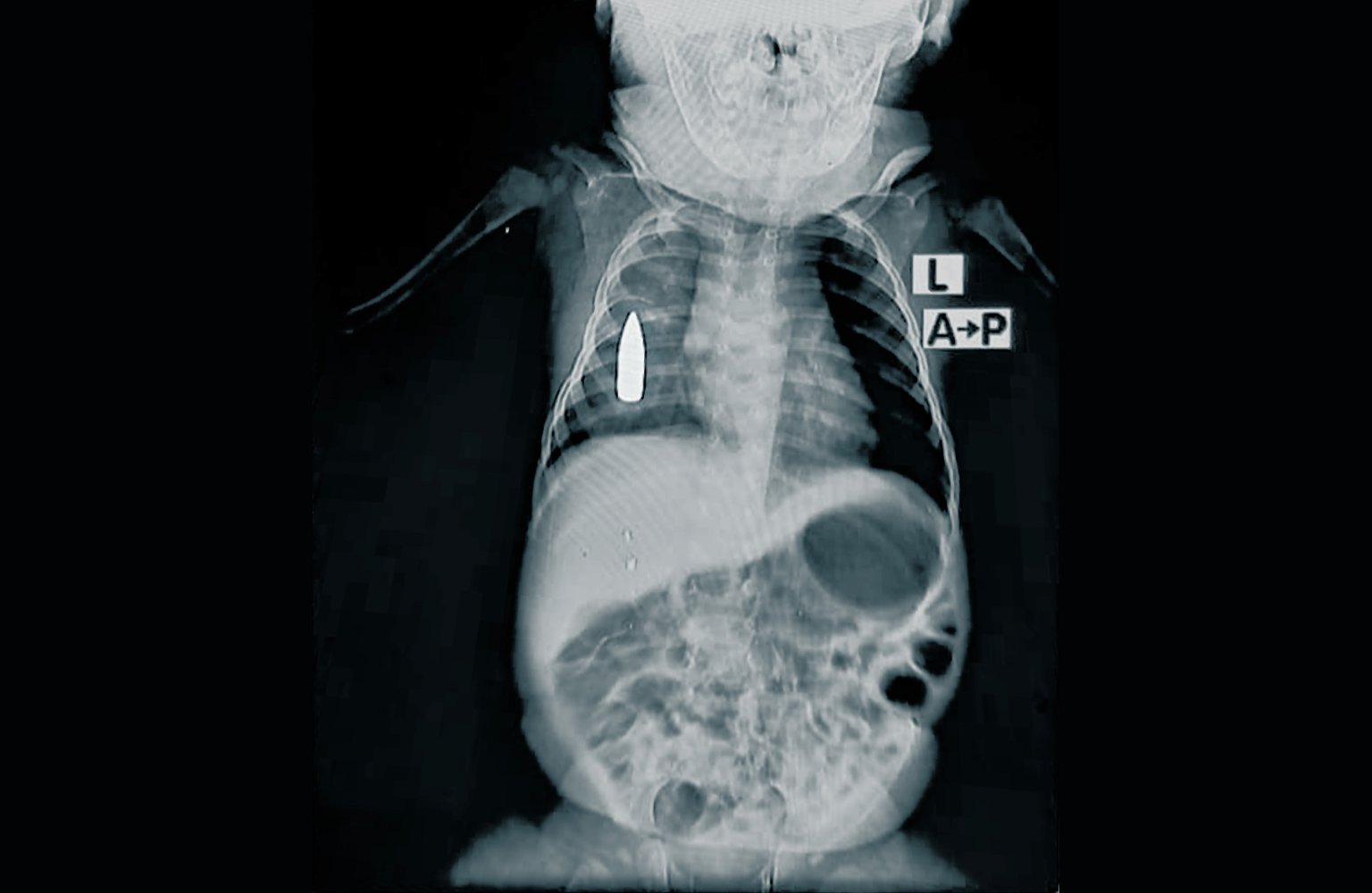
“18-month-old baby Riyad was brought to the emergency room after a stray bullet struck his right side while he was napping in his family’s home,” said Dr Moeen*, MSF medical team leader. “The medical team fought for four hours to stabilise him. Due to the heavy loss of blood, the chances of him surviving the surgery were fifty-fifty.”

The team was able to stop the bleeding however the bullet remained lodged in his chest. It is unclear how long it will be before anything can be done about this. The hospital does not have advanced surgical capacities, partly as a result of a systematic blockage on sending surgical supplies since October 2023. Referring patients out of area is also very difficult as transport routes are either destroyed or far too dangerous. Riyad is one of the 314 children treated for gunshot and blast wounds in 2024.

Deliberate blockages on the transport of medical supplies and medicines also mean that some procedures, such as treating severe burn injuries, are not possible. This is worrying as there is no fully functioning burn centre left in the city and civilians are increasingly victims of bomb blasts.
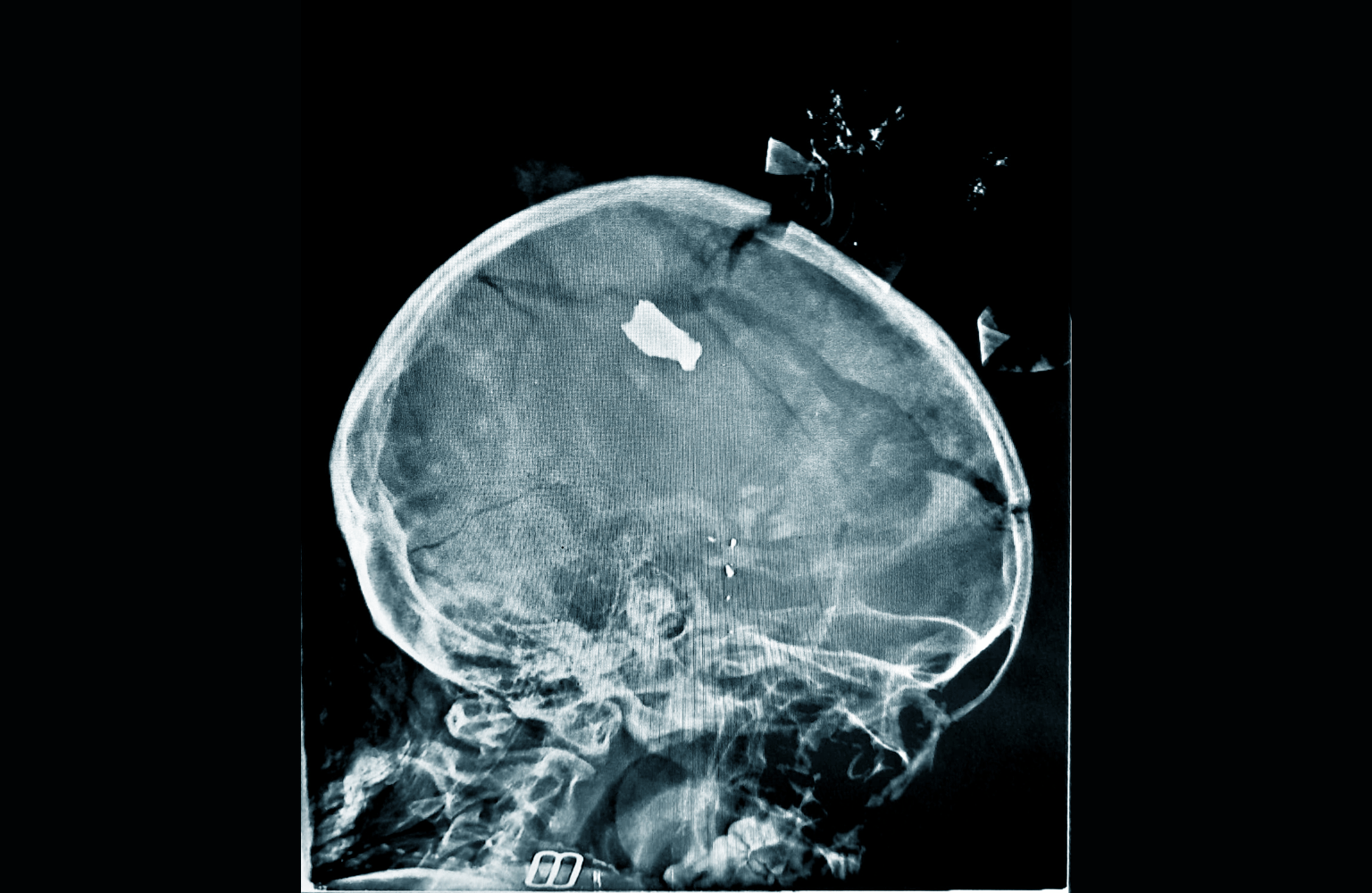
In late October more than 30 war wounded patients were rushed to Bashair Hospital in one day following an explosion at a market less than one kilometre away. Twelve of those brought to the emergency room were children under 15. Many had suffered burns and trauma wounds. One girl of 20 months came in with shrapnel deep in her head. While the team carefully laid her on the x-ray table, part of the tiny head’s fragile skullcap fell onto the table. “Cases like this are common,” Dr Moeen* says. “Thankfully that little girl survived. Others are not so lucky”.

Mass casualty events like this – where a large number of patients arrive in a short space of time – have become more frequent as the fighting in the city has intensified, Dr Moeen* explains. The few hospitals that continue to function are under immense pressure and medical staff are struggling to manage all the needs.

At the same time, the hospital has begun to see an increase in the number of children and pregnant women arriving at the hospital acutely malnourished. Without treatment, acute malnutrition can be life-threatening. Of the 4,186 women and children screened for malnutrition between 19 October and 8 November 2024, more than 1,500 were suffering from severe acute malnutrition and 400 were moderately malnourished.

These figures of violence and malnutrition show the nightmare people, including children, are experiencing in Khartoum. Parties to the conflict must ensure civilians are protected. Medical supplies should be allowed to reach all hospitals in Sudan.
Claire San Filippo, MSF Emergency Coordinator

Since the outbreak of the conflict in April 2023, over 500,000 people have sought medical care in Médecins Sans Frontières (MSF) supported hospitals, health facilities and mobile clinics across Sudan. MSF is supporting and working in more than 12 health facilities in conflict-afflicted areas, including in Khartoum, sites of high intensity clashes since the beginning of the war. Between January and September 2024 MSF treated a total of 6,557 war wounded in all our facilities in Sudan. With over 11 million people displaced Sudan has become the largest displacement crisis in recent memory. MSF is active in 11 of 18 states to deliver free medical aid to those who need it most.

*To protect the individual in question the name of the doctor was anonymised.

Facebook
X
LinkedIn
WhatsApp
Print

The Broken Lens: Antimicrobial Resistance in Humanitarian Settings

The Broken Lens: Antimicrobial Resistance in Humanitarian Settings

Antimicrobial resistance (AMR) poses a growing threat in humanitarian and low-resource settings, particularly in conflict-affected regions where fragile health systems, access barriers to healthcare, and environmental contamination amplify its impact. Since 2014, Médecins Sans Frontières (MSF) has made reducing the AMR burden a key priority, integrating it into its broader medical humanitarian efforts.

This report follows on from the second UN High-Level Meeting on Antimicrobial Resistance, held on 26 September 2024, which aimed to “review progress on global, regional, and national efforts to tackle antimicrobial resistance, identify gaps, and invest in sustainable solutions to strengthen and accelerate multisectoral progress, building a healthier world based on equity and leaving no one behind.” While the new declaration acknowledges the significant gaps in addressing AMR in humanitarian and low-resource settings, there remains a lack of concrete, practical steps to translate these commitments into tangible actions.

Paving the way forward this report draws on nine operational case studies from Gaza, Afghanistan, Mozambique, north Syria, Ukraine, Sierra Leone, South Sudan, and Bangladesh. These case studies illustrate the critical drivers, challenges and consequences of AMR in a range of contexts where MSF works—conflict-affected regions, areas disproportionately impacted climate change, countries with underfunded health systems, and displaced populations. This report highlights the
pressing need to develop a context-adapted approach to AMR for vulnerable groups such as newborns, malnourished children, those who have sustained trauma injuries, and women and girls living in humanitarian settings. 

Facebook
Twitter
LinkedIn
WhatsApp
Print

Lebanon: Surviving war with community-led care

Lebanon: Surviving war with community-led care

As the war in Lebanon casts a shadow of devastation for millions of people across the country, community-led initiatives and local efforts are testament to the surviving solidarity and hope among Lebanese society.

In the heart of Beirut, one such initiative is providing a lifeline for people housed in the Al Azarieh building—once a bustling commercial centre, now a shelter for more than 2,500 people who have been displaced by Israeli bombardments and incursions.

Médecins Sans Frontières/Doctors Without Borders (MSF) is supporting the implementation of a kitchen project that is providing free meals for people here, launched by local NGO, Ahla Fawda, and restaurant, Barzakh.

“We started from scratch,” explains Khodor Al Akhdar, Barzakh’s operational manager. “Since the beginning of the war and the influx of displaced people [to this area], we have worked closely with Ahla Fawda to provide food. This project aims not only to provide meals but to also supply ingredients, while training the people living here in Al Azarieh to prepare and cook the meals themselves, with a focus on food safety and hygiene.”

To get the kitchen project running, the MSF logistics team transformed a previously vacant space in Al Azarieh into a fully operational kitchen, while Ahla Fawda and Barzakh equipped the facility to meet hygiene and safety standards, training local residents to prepare the meals themselves using the free ingredients provided. The kitchen now serves around 2,500 meals daily.

Since the beginning of the war, community-led initiatives have been impressive in Lebanon. Encouraging these efforts fosters connections and a collaborative atmosphere that is much needed and ensures sustainable responses [to the war].
Elena Fernandez Tajadura, MSF’s Emergency Logistics Coordinator

Lebanon has faced a series of crises in recent years, including the devastating Beirut port blast in August 2020 and an economic collapse that ranks among the worst in the world. Israel’s recent escalation of attacks in the country, has displaced over a million people since October 2023, leaving many in precarious living conditions. Adding to the prolonged multi-crisis, it has pushed the entire population to the brink.

Initiatives such as the kitchen project in Al Azarieh represent practical methods of community-based care and survival for people, and offer a sense of hope and warmth.

“I am proud to be part of this kitchen,” shares Aziza, who was displaced from south Beirut and is now a resident of the Al Azarieh shelter. “Many people here have lost their jobs because of the war or have spent their last cents on essential needs over the past months. They have no money left to survive. When I learned [the kitchen] needed an extra hand, I volunteered. Together, we’re doing what we can to navigate this situation. Hopefully, if God wills it, this situation will soon end and things will improve.”

MSF has also supported other community-led initiatives (with a focus on food provision) across Lebanon, including in Saida and Tyre in the south of the country. Since the escalation of Israeli bombardments on 23 September 2024, MSF has provided a total of 7,432 meals, 7,342 blankets, 6,050 mattresses, 79,504 litres of drinking water, 8,013 hygiene kits, and 6,678,000 liters of water supplied to shelters across Lebanon.

MSF Supporting a Kitchen Project in Azarieh Shelter
Facebook
Twitter
LinkedIn
WhatsApp
Print

“We are the people of Baalbek, we honour our guests, with whatever means available.”

“We are the people of Baalbek, we honour our guests, with whatever means available.”

  • Testimony collected on 1 November from a school sheltering displaced people in Bichwet, Baalbek-Hermel governorate, Lebanon.

On 23 September, after nearly one year of cross-border attacks along Lebanon’s southern border, Israel escalated its bombardment of Lebanon, causing waves of mass displacement that have surpassed the country’s ability to provide adequate shelter.

*

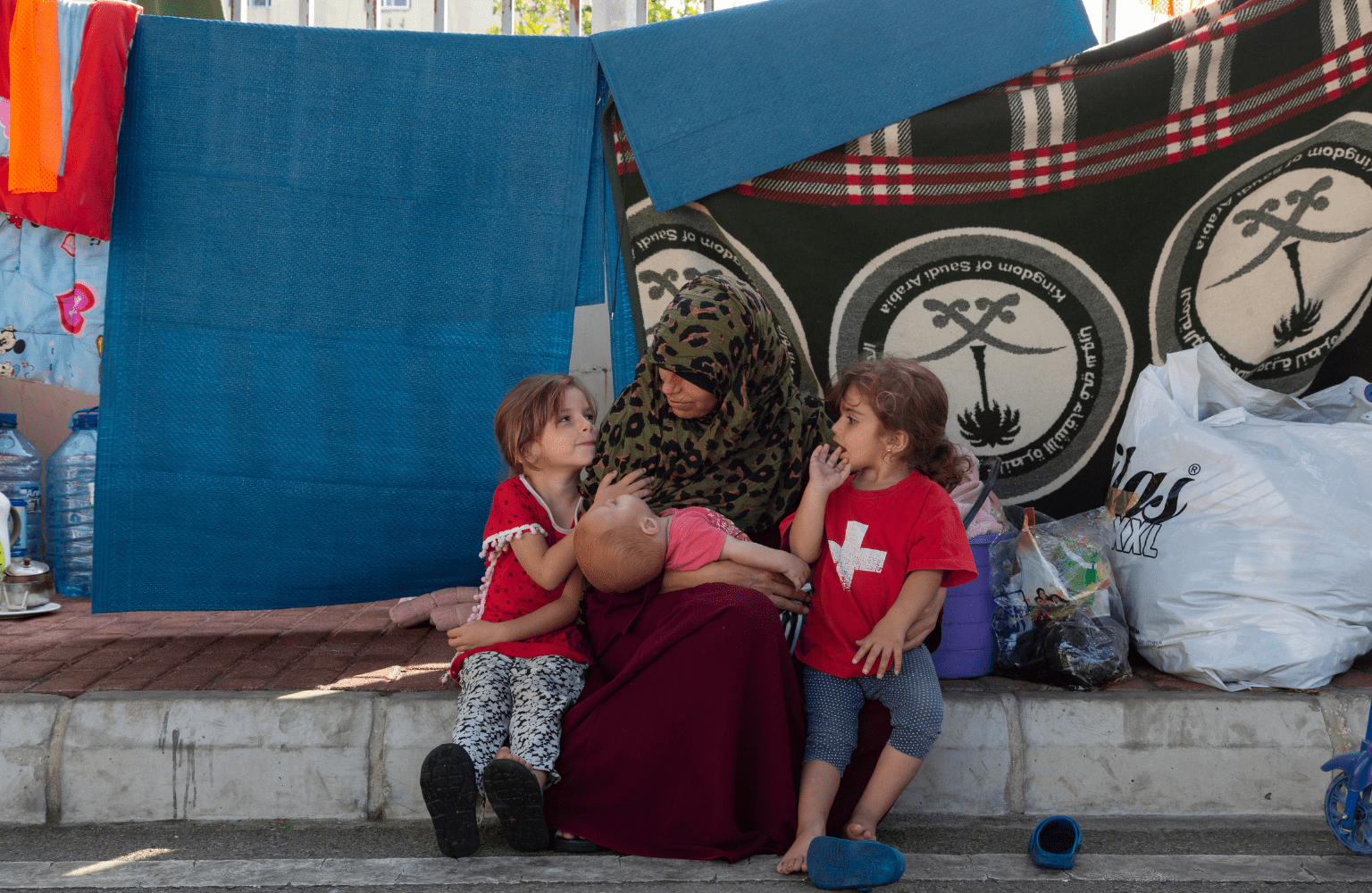
Fatima’s vibrant smile slowly fades away after entering the classroom. Desks and chairs are stacked on one side of the room, making room for the mattresses laid out on the floor. She’d rather be at a school to seek education for her three children, not to seek refuge. “I didn’t want to leave our home, I really didn’t,” says Fatima, who is 43 years old. “The day we were forced to leave was the toughest day.” On 29 September, Fatima quickly collected a couple of mattresses and blankets and headed out of the house under the bombing. Some five minutes later, her neighbour’s house in Kfarden was bombed.

“I am grateful I saved my children,” she says. “My husband and I live for them. We’re well physically, but not at all mentally. We muster patience and wait for the war to end.”

Fatima wipes her tears and puts a coffee pot on a portable stove. Her vibrant smile returns as she says, “We are the people of Baalbek, we honour our guests, with whatever means available.”

Iqbal knocks on the door and enters. The 60-year-old woman was forced to leave her town, Boudai, and arrived at the school on the same day as Fatima.

“We couldn’t sleep all night because of the constant bombing all around us,” says Iqbal. “When the sun came up, we fled with nothing. We didn’t even know where we’re going, we just ran for our lives.”

Iqbal managed to get a few mattresses and blankets for herself, her father, and her three siblings.

“We know nothing about our house,” she says. “I miss home so much, and the things I took for granted before. It’s dangerous to go back home; it’s undignified to stay here.”

As they’re sipping coffee, their chats are filled with a shared sense of nostalgia for the recent past. Fatima does something that Iqbal hasn’t dared though; she risks her life every few days to go back home.

“There are no showers in this school and the weather is freezing here in the mountains,” says Fatima. “We can’t afford to heat up water on the stove. We also can’t afford to have our children get sick. I have succumbed to the fact that this is our life now.”

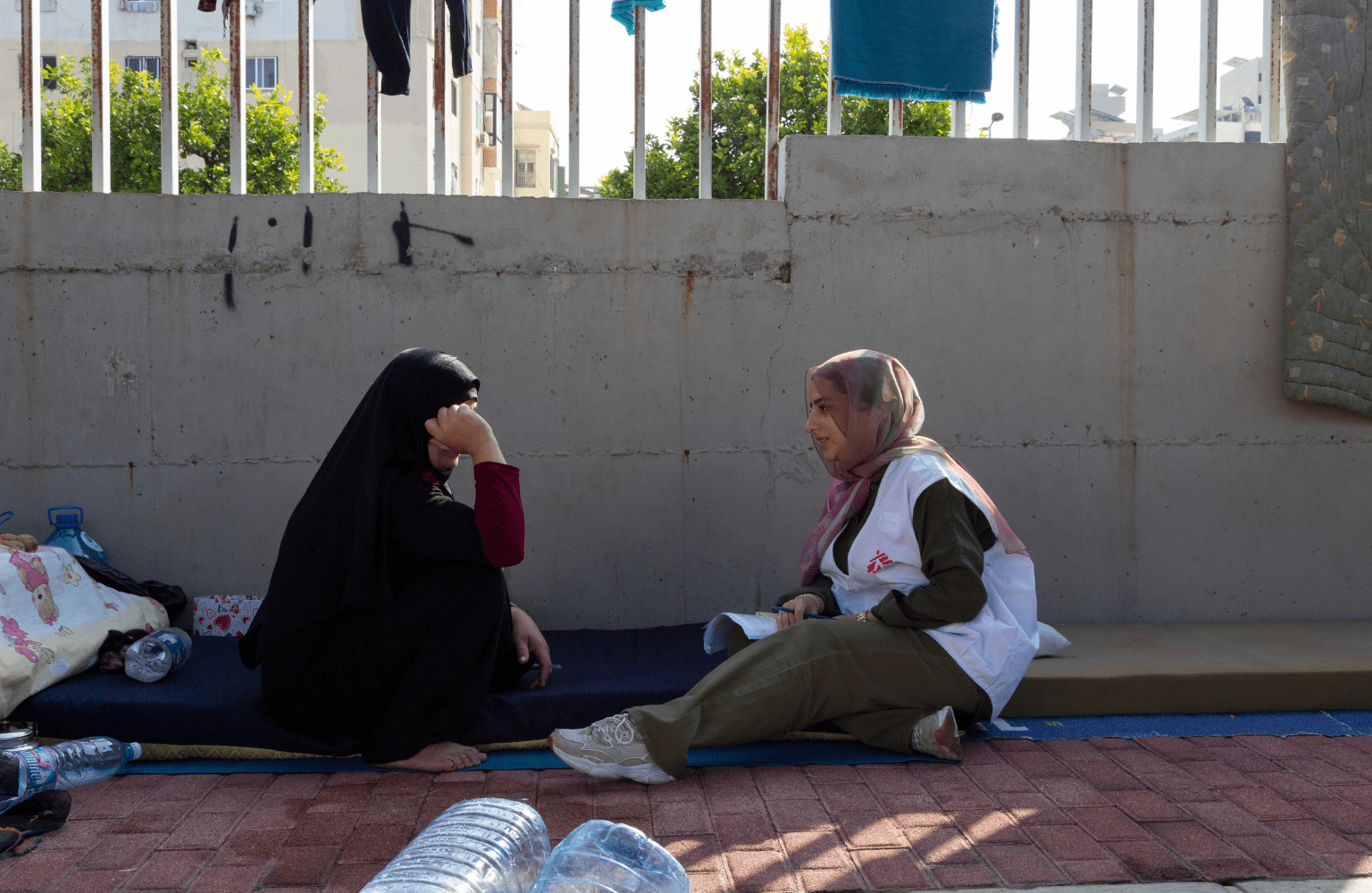
In Deir al Ahmar, Arsal, and other parts of the governorate, MSF teams are actively responding—providing essential items like mattresses and blankets, along with medical care and mental health support—to help those affected by the ongoing attacks.

MSF response in Baalbek-Hermel governorate
Facebook
Twitter
LinkedIn
WhatsApp
Print

Treating Open Wounds in Tulkarem, West Bank

Treating Open Wounds in Tulkarem, West Bank

It’s a sunny morning in Nur Shams refugee camp, in Tulkarem, West Bank. Over twenty women are filing into a room set up by MSF staff, sitting in a circle and chatting over Arabic coffee. In the middle of the room, there is a table with gauze, tourniquet devices and charts explaining blood flow in the human body. This is MSF’s “stop the bleed” training. Most women gathered in this room have little to no medical training, but trauma wounds and severe bleeding are not new to them. They are here to learn how to care for wounds, apply tourniquets and provide basic first aid to family members and neighbours until they can reach medical care during frequent military incursions by Israeli forces.

“We suffer from raids, bombings, and injuries from shootings,” says Saeda Ahmad, a participant in the training from Nur Shams camp. “We often have an injured person right in front of us. In such situations, it’s important for us to have the knowledge and background to properly administer first aid. During raids, it’s extremely difficult for ambulances to reach the scene. That’s why everyone in the camp needs to have some knowledge of first aid. So that we ourselves can help the injured person.”

Here, military raids by Israeli forces are becoming increasingly frequent, and blockages of access to healthcare are part of the modus operandi. Roads are blocked, ambulances cannot move, healthcare workers are harassed and targeted or otherwise hindered, and wounded people often cannot reach hospitals.

Incursions from Israeli forces are also increasing in violence and intensity; on October 3 2024, 18 people were killed in an airstrike on Tulkarem refugee camp. The use of drone strikes, air strikes and other bombardments by Israeli forces, in often densely populated areas and refugee camps, has become increasingly common. Incursions are also increasing in length, and not only here; last August, in Jenin, north of Tulkarem, Israeli forced launched a large-scale military incursion that lasted nine days.

In this context of constant violence and insecurity, people in the camps have spoken with MSF mental health staff of the deep psychological impacts of these raids. Military incursions by Israeli forces reshape the lives of people, stripping them of normalcy and any sense of safety. People are always in the aftermath from the last incursion, rebuilding torn up streets and destroyed houses, while holding their breath until the next military raid. MSF is also providing psychological first aid to residents in the camp to address the significant mental health issues stemming from the impact of these incursions, which affect all residents but particularly children.

The situation is very difficult. The children in the camps are afraid to go to school, as they fear a raid might happen while they are there. In their home life, stability has vanished. People remain on edge. Children have stopped playing in the alleys. They spend most of the time at home and are not able to go out. They can’t even go out to buy what they need because their parents won’t let them out of fear that a raid or incident might occur while they’re outside. There are children whose entire playtime has become centered around the violence they have experienced.
An MSF community health educator for MSF in Tulkarem

In a context of fear and insecurity, it becomes impossible for people to live a normal life or plan for the future. Trainings like “stop the bleed” can provide some sense of control over the situation, by giving residents the tools to act in a medical emergency during an incursion, but their very existence highlights the direness of the situation in the West Bank. In this room, as participants practice wrapping gauze around each other’s arms, emotional wounds also reveal themselves. Participants share stories of the violence they have experienced, in conversations, stories, and photos of killed family members on a phone’s lockscreen. The psychological wounds, also, are deep. And mending them takes more time than applying pressure or tightening a tourniquet.

Facebook
Twitter
LinkedIn
WhatsApp
Print

“Whatever we lose, we will come back”

“Whatever we lose, we will come back”

Amid the ongoing Israeli bombardment and incursions across southern Lebanon, countless families have been uprooted, many seeking refuge in the coastal city of Saida. Médecins Sans Frontières’ (MSF’s) mobile medical teams have been visiting several locations in the southern city, offering general healthcare, medication, and mental health support to people displaced by the violence. Here are some of the testimonies of our patients there:

Hasan Kheir Eddine

“There’s nothing like living in your own home,” reflects Hassan Kheir Eddine, 67, an internally displaced Lebanese man with hypertension. He and his wife fled Kfar Melki, in the south of Lebanon, after nearby Israeli bombardments, leaving with only the clothes on their backs. “My sons are also displaced, scattered across the country. That alone is a struggle, but what we are going through is similar to what everyone else is.”

Having been uprooted three times during the recent escalations, Hassan, a retired employee who lost his pension and savings in the 2020 economic crisis, reminisces about the olive harvest and his deep connection to the land he was forced to leave behind.

“There is nothing quite like the south,” he says. “Wherever we go, whatever we lose, and whatever we are offered, we will always come back. I lived through the 1982 Israeli invasion and remember the airstrikes on southern villages then. As we returned to our homes then, we will now.”

Khadija

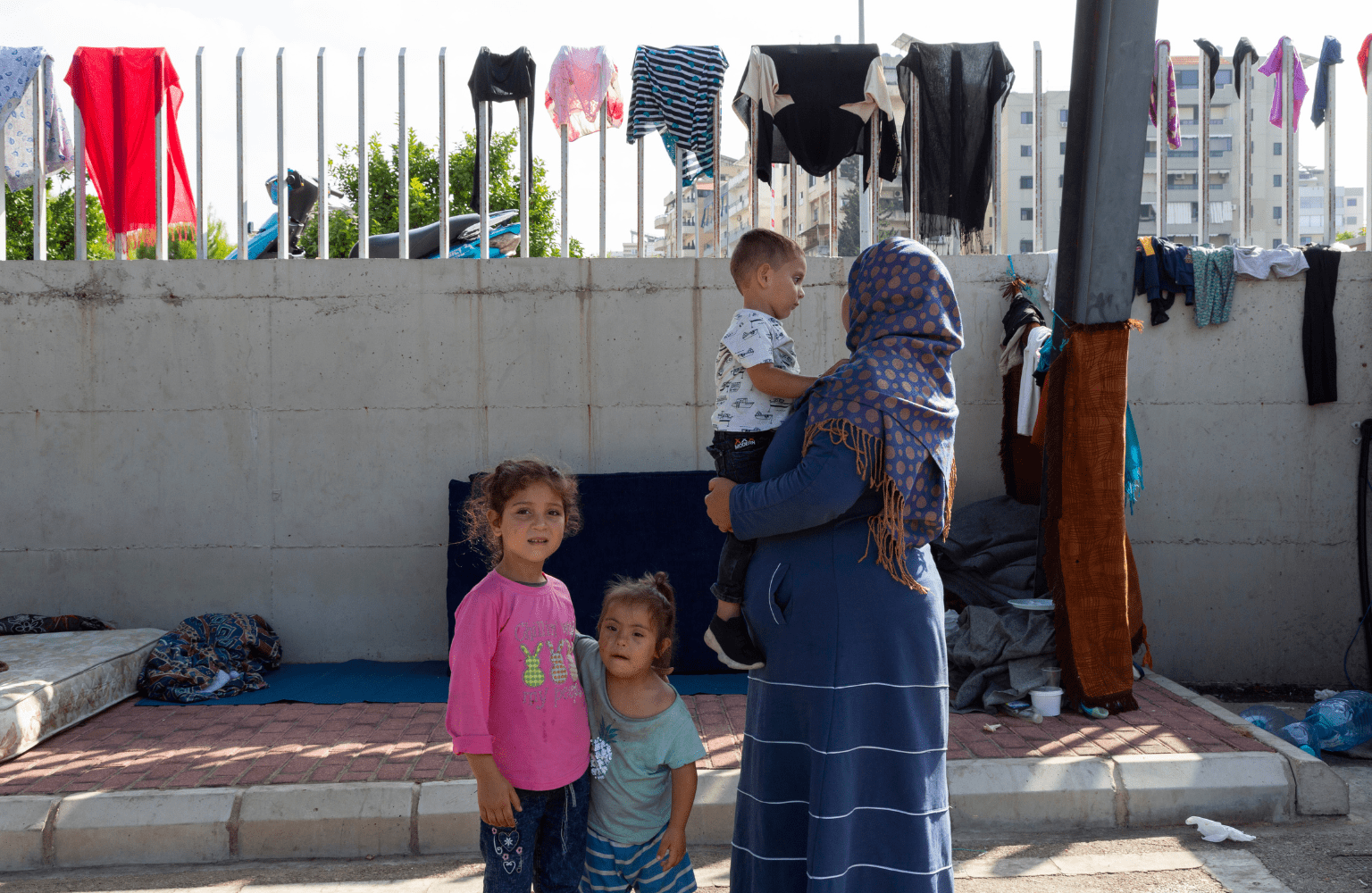
A Syrian refugee and mother of five, was displaced from Nabatieh with her family. “She’s fading right before my eyes,” says Khadija, pointing to her seven-year-old daughter, who she says suffers from stunted growth. She describes the harsh conditions in the open parking lot by the Saida coastline where they’ve sought refuge.

“We never feel clean. People are competing over food here, and we don’t have enough clean water to wash. We go to the sea to relieve ourselves, but there are often men around.”

Her children are battling various health issues and it’s breaking her spirit. “Sidra, 13, has asthma, Hiba, 7, weighs barely 10 kilograms, and Malak, my 8-month-old, has a fever and diarrhoea. I breastfeed her whenever I can, but it’s not always enough, and I can’t properly clean her bottles.”

In a moment of despair Khadija admits, “Sometimes I wish we had stayed and died in an airstrike instead of living like this.”

Um Mohammad
 

A 40-year-old Syrian refugee displaced from Qsaibeh, in south Lebanon, has three daughters. She used to maintain her employer’s garden, landscaping and building fences around his land. The night she fled Qsaibeh, an airstrike landed dangerously close.

She recalls joining the community with buckets of water to put out the fire, and then her employer told her it was time to leave. She packed a change of clothes for each of her daughters, aged 18, 6, and 4, and grabbed only a blanket, leaving behind the groceries she had just bought that day on her kitchen floor.

Hala
 
A 24-year-old Syrian refugee and mother of three—Yamen, 2, Rawan, 3, and Razan, 6. She fled from the coastal town of Adloun in south Lebanon amidst airstrikes and the sirens of ambulances. “We left with nothing. We escaped on a motorcycle, but it broke down here in Saida. My husband went back to retrieve our belongings, but everything was stolen.”

Now, they rely on aid for food.

“All my children are sick with vomiting and diarrhoea. Rawan, who has down syndrome, used to receive physical therapy to walk and move. We had high hopes that she would begin verbal communication through speech therapy soon, and she had made so much progress. But now, all that is gone. She requires lots of medications and is often bullied by other children for not being able to express herself.”
Shams Al Mahmoud, Marimar, and Kazem
 
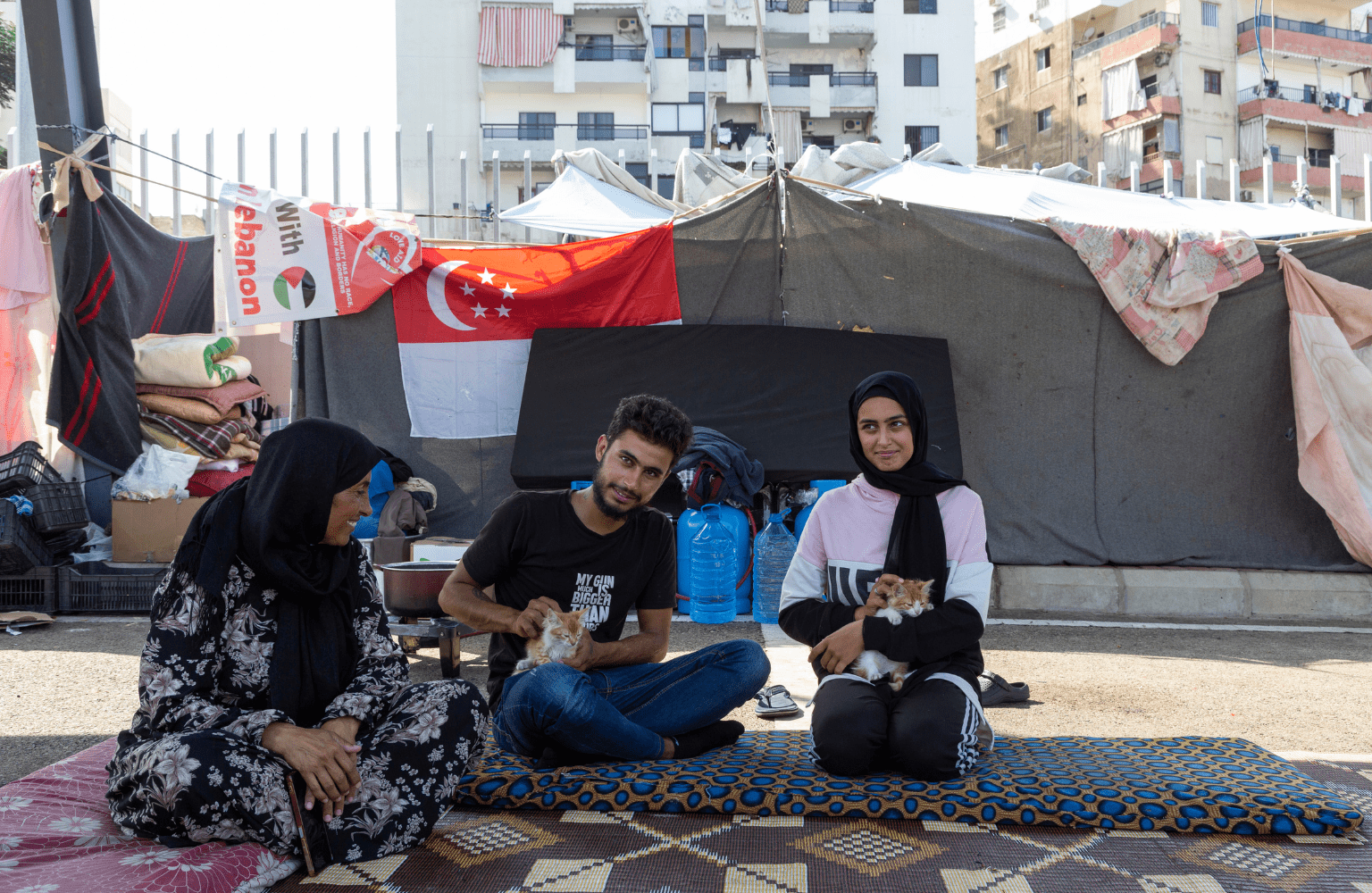
Shams Al Mahmoud, whose first name means ‘sun’ in Arabic and is a Syrian refugee, remains as bright and warm as ever, despite the hardships she and her family have endured. Along with her children—Mimar, 24, Mimas, Kazem, 20, and Marimar,14—Shams was displaced from Kfar Roumane and now lives in a parking lot in Saida, southern Lebanon.

With an endearing smile, she recounts the moments her family escaped Israeli airstrikes in the town they had called home for over a decade, fleeing for 12 hours on foot to finally find relative safety in Saida. A few days later, Kazem and one of his sisters made a dangerous trip back to their former home on a borrowed motorcycle to rescue their two kittens, Simba and Mimi.

“We thought of them as we were leaving,” says Marimar, as she fondly strokes one of the kittens. “But the airstrikes were too close. I’m so relieved we could go back for them.”

Najah Ashour

A Syrian refugee living in south Lebanon, was displaced once again along with her daughters—Maya, 11, Lujain, 6, and Sary, 9 months—after airstrikes struck the southern town of Baisariyeh. She is among the 1.2 million people displaced by the ongoing Israeli bombardments. While the war affects everyone, minority groups like Syrian refugees, migrant workers, the elderly, and people with disabilities face even greater risks of discrimination and exclusion, further limiting their access to healthcare and humanitarian aid

Facebook
Twitter
LinkedIn
WhatsApp
Print

Beyond Survival: Helping Children and Adults Cope with the Traumas of War in Lebanon

Beyond Survival: Helping Children and Adults Cope with the Traumas of War in Lebanon

“My daughter is only 14, but with all the difficulties we’ve faced, she’s reacting like an adult to the bombings,” says Ezdihar, a displaced mother in Lebanon. “She’s had to grow up quickly.”

On the night of September 28, Ezdihar and her family were having dinner at home in the southern suburbs of Beirut when they received an alert about an imminent strike by Israeli forces. While her husband went to care for his mother, Ezdihar took her children and, with neighbors, sought refuge in central Beirut. After spending a night on the streets, they moved into the Azarieh shelter, a repurposed commercial building now housing around 3,500 displaced people. Today, they are among 1.2 million people displaced by the war between Hezbollah and Israel, according to Lebanese authorities.

Doctors Without Borders/Médecins Sans Frontières (MSF) is attending to the medical and mental health needs of people living in collective shelters like Azarieh, including children like Ezdihar’s daughter. She is one of a generation navigating a landscape of fear and uncertainty, in which children are hit the hardest.

Ezdihar al Diqa, 39, and her daughter Nouraya, 14

The mental health impacts of war and displacement

In less than a month since the escalation of war, more than 2,300 people have been killed in Lebanon, with the majority of deaths occurring in the last 3 weeks, and more than 11,100 have been injured, according to health authorities. The violence and destruction people are witnessing can have lasting impacts on psychological and emotional well-being, especially for children. Like Ezdihar’s daughter, countless children across Lebanon have had to grow up quickly under the harsh realities of war, including being uprooted from their homes, having their schooling disrupted, being separated from their friends, and losing access to basic necessities like food and shelter.

Many parents are observing behavioral issues in their children—anger, aggression, and other troubling behaviors—which heightens concern for their well-being. People are expressing a strong need for mental health services, particularly for trauma, It’s affecting their daily lives, from sleep disturbances to appetite loss.
Amani Al Mashaqba, MSF's mental health activity manager in the Bekaa governorate

Children are not the only ones in need of mental health support, however. Many of MSF’s patients report feeling overwhelmed and traumatized by the constant threat of violence, expressing deep concerns about their future in an unstable environment. Grief over lost family members and the pain of separation due to displacement further compound their distress. Others worry about managing chronic health conditions or the possibility of missing a year of school. These experiences have had a significant impact on people’s mental health.

MSF teams are responding by providing primary and mental healthcare to displaced people, including psychological first aid and psychoeducation through our mobile medical units across the country. However, getting people to acknowledge their struggles and express vulnerability isn’t always easy. Many feel they should remain resilient in the face of hardship, as our mental health teams have observed. Convincing them that it is okay to experience emotions has been a challenge at times, particularly for young boys who are commonly taught to suppress their feelings.

To further extend this support, MSF has also launched a helpline through which people can receive remote assistance from clinical psychologists who help manage trauma-related symptoms such as anxiety and grief.

A helpline for healing

The MSF helpline allows us to reach people who are unable to access our services in person, particularly in the south of Lebanon, where heavy bombardments and mobility restrictions make travel difficult. This accessibility is crucial during such a volatile period, as many individuals are on the move and face barriers to accessing care including the high cost of transportation and cultural stigma surrounding mental health.

Many of the helpline callers are parents facing difficulty trying to help their children cope during the war, often while noticing changes in their children’s behavior. Parents are struggling to explain the frightening sounds of bombs and gunfire to their kids, at times resorting to misleading explanations in an effort to reassure them. Gunfire, for example, may be described as “happy shooting,” such as shots fired in celebration during weddings. Our helpline psychologists equip parents with strategies to communicate honestly and create safe spaces for their children to express their feelings.

Facing increasing demand, the helpline has seen a dramatic rise in calls, from five calls a day in the beginning to as many as 80 in a single afternoon. Overall, the helpline has received nearly 300 mental health calls, the majority coming in the last two weeks alone.

In addition, our mobile teams have facilitated psychological first aid group sessions for nearly 5,000 individuals as of October 21, 2024, and more than 450 people have benefitted from individual mental health sessions. Our teams also provide psychological first aid, which includes active listening and techniques for stress relief, allowing patients to express their feelings and concerns. Along with critical medical and mental health care, our teams are also distributing essential non-food items such as mattresses and hygiene kits to displaced people.

While we must be realistic about the situation, we also need to normalize their feelings. It’s important for parents to listen to their children and understand how the sounds affect them. They can encourage kids to share their feelings through drawing or talking.
Amani Al Mashaqba, MSF's mental health activity manager in the Bekaa governorate

A country in crisis

This current war comes on the heels of a prolonged economic crisis that has left over 80 percent of the Lebanese population living below the poverty line and in urgent need of assistance. The healthcare sector has faced severe challenges, with public services deteriorating and private healthcare becoming increasingly unaffordable.

“One of my psychologists shared that when a woman learned our services are free, she began to cry,” Al Mashaqba noted. “People are often unaccustomed to having access to these kinds of resources without the financial burden.”

Moreover, Lebanon is home to a significant number of refugees, including 1.5 million Syrians and over 200,000 Palestinians, many of whom have faced repeated displacements. For these individuals, the fear of deportation and the struggle to find safety can be overwhelming. “Some have told me they would rather die than experience the trauma of being a refugee again,” Al Mashaqba said.

MSF is conducting ongoing needs assessments for internally displaced people, and as the situation evolves, our teams are working closely with partners and hospital networks to provide comprehensive support wherever possible.

Facebook
Twitter
LinkedIn
WhatsApp
Print

A little safety and a lot of anxiety: testimonies of the displaced from Beirut’s southern suburbs

A little safety and a lot of anxiety: testimonies of the displaced from Beirut’s southern suburbs

The Azarieh shelter, once a bustling commercial center in the heart of Beirut, has been transformed into a refuge for people displaced by the ongoing Israeli bombardment in Lebanon. This makeshift shelter, now housing more than 2,500 people. Conditions here are dire, as the facility was never intended for long-term living, leaving families struggling without adequate resources, and basic needs.

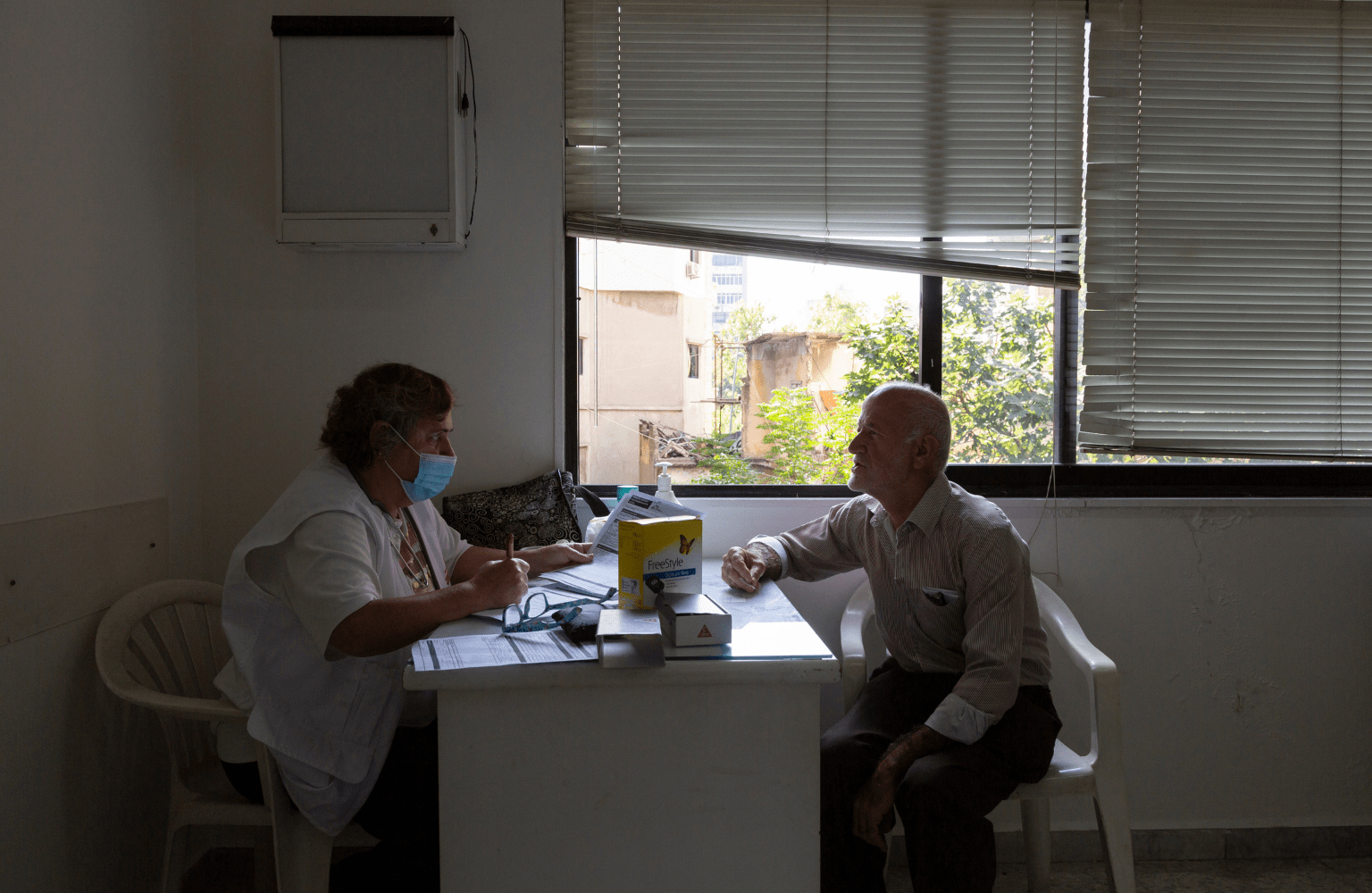
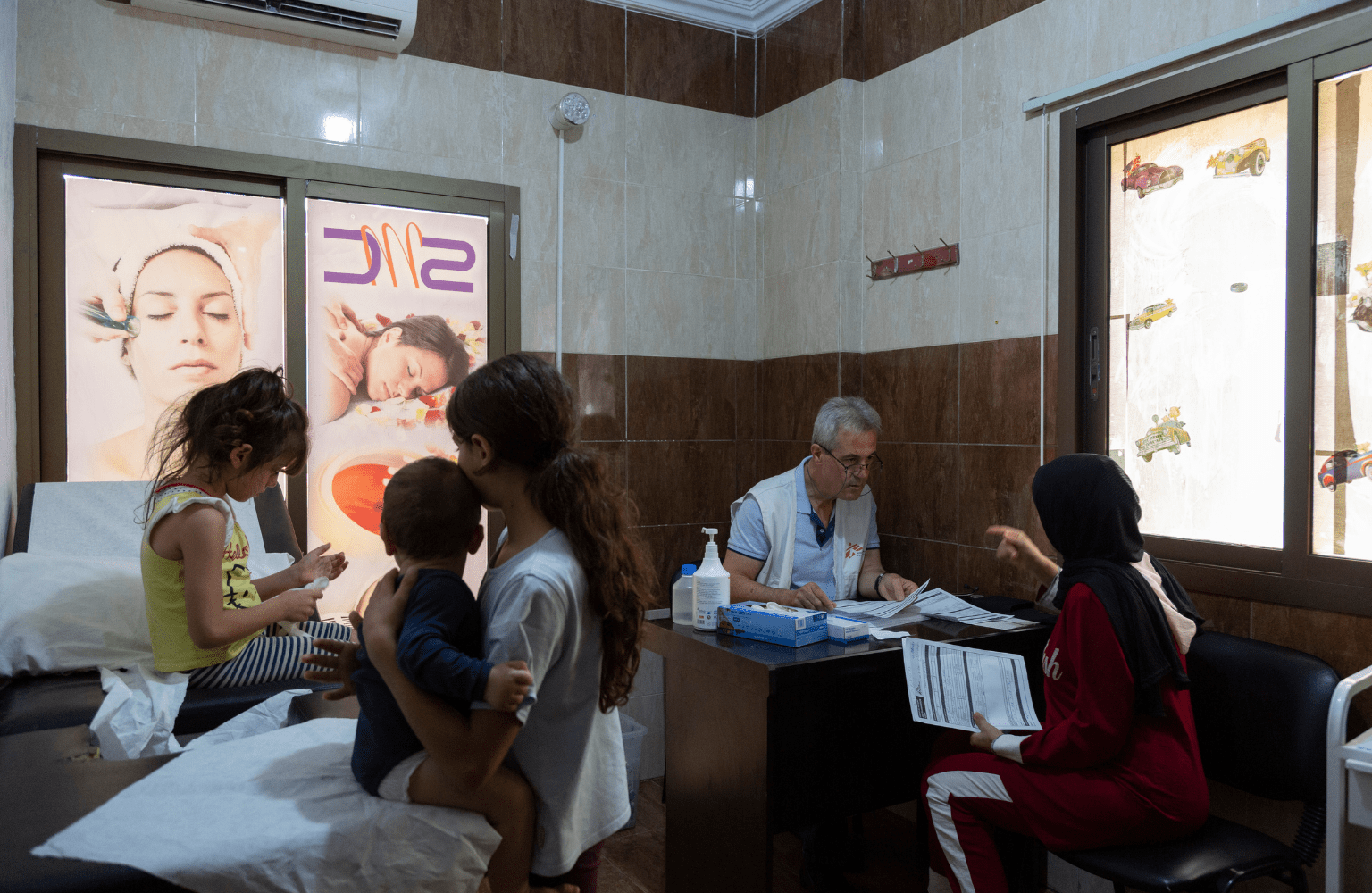
Médecins Sans Frontières (MSF) deploys a mobile medical unit there, providing essential primary healthcare and psychological support, especially for children affected. We have also distributed vital non-food items such as hygiene products, mattresses, and blankets to help improve living conditions for these vulnerable families.

In that building and its surroundings, we met families forced to flee the southern suburbs of Beirut as the Israeli bombardment of populated areas intensified, seeking safety.

“I don’t want to leave…”

Imad Hachem, 55, lived with his wife, sister, son, and cousin in the southern suburbs of Beirut, Lebanon. In the aftermath of the September 27 strike, the family decided to leave the southern suburbs of Beirut, taking with them all they could carry. Although it took the family a few days to find mattresses and blankets, Imad explains that they are now managing to survive in the Azarieh shelter thanks to the regular distribution of food. The father of the family is worried, however, about the living conditions in the shelter, especially with the arrival of winter, rain and cold. He is also concerned about the health of his cousin, who has cancer and has been missing treatment for 2 days. He explains: “We used to receive this expensive treatment from the Ministry of Health, but now we are not sure how to access it”.

Imad hopes to be able to return there one day. “I don’t want to leave Lebanon, but I have a son and a wife to take care of. If the only way to regain stability is to leave, then we’ll leave. But where and how, I have no idea”.

Children growing up too soon

Originally from Baalbek, 39-year-old Ezdihar Al Diqar used to live with her husband, daughter and son in the southern suburbs of Beirut, Lebanon. It was on the evening of September 28, around 10:30 pm, while the family was having dinner, that they received the alert of an imminent strike in the neighborhood, and they decided to flee.

Ezdihar took her two children and left the southern suburbs for the center of the capital with 14 of her neighbours. The group spent their first night on the streets before moving to the Azarieh shelter. After two weeks in Azarieh, Ezdihar explains that she doesn’t feel safe in the shelter, and she no longer knows where to go to be safe from the bombings, especially after an Israeli strike in the center of Beirut.

Ezdihar is determined to face these challenges with her head held high, hoping that things will get back to normal. But as a mother, she sees the consequences of war on her children. “My daughter is only 14, but with all the difficulties we’ve had to overcome – she often responds to situations, namely airstrikes, with a maturity that surpasses her years. She’s had to grow up quickly.”

Displacement after refuge

Originally from Syria, Abbas, 28, came to Lebanon seeking safety with his wife and parents. The young man lost his job when the war broke out. The family used to live in the southern suburbs of Beirut and decided to leave the area to escape the bombings. After spending several nights on the streets, they moved into the Azarieh shelter, where they have been sharing a room. Abbas says he is very worried about the health of his 8-month-old son, Amir. “Amir has a fever, and he’s been sick a lot since we’ve been here. We’re running out of milk and diapers. He also cries more and more often, I think he’s aware of this change of environment and the insecurity in which we live, especially because of the noise of the bombings.”

Abbas explains that he left Syria with the hope of a better life, but now he feels trapped. His house was destroyed in Syria, where the economic situation would not allow him to find work, and it seems impossible for him to return to his homeland.

“Even if the war ends, what will be left of our home?”

Zeinab Ouzir, 29, left the southern suburbs of Beirut, Lebanon, with her husband and their children, the day after the Israeli strike on September 27. At first, the family headed north, but were told to leave the area. So, not feeling welcomed they decided to go back to Beirut. They settled in the Azarieh shelter for displaced persons, where the couple lives in a 10-square-meter room with their 4 children.

Zeinab describes the overwhelming sense of uncertainty that has gripped her since she had to leave her loved ones and home behind: “I can’t imagine the future here anymore. Even if the war ends, what will be left of our home? Will my family and friends survive?” Although she lived through the 2006 war, she describes the current situation as much more worrying. She is also worried about the impact of the war on her children. The war put a strain on the psychological health of every one of them. Zeinab describes the nights filled with nightmares and constantly waking up at the slightest noise. When an Israeli bomb hit a building two kilometers from the shelter the day before, her children asked her to move to a safer place. She would also like to leave. With her husband, they are thinking of leaving Lebanon, no matter what the destination, as long as their children are safe and they can look forward to a peaceful future.

More than one million people have been displaced in Lebanon, many of whom are in urgent need of assistance. MSF has deployed 14 mobile medical teams across Lebanon to provide care to displaced communities in Beirut, Mount Lebanon, Sidon, Tripoli, Bekaa and Akkar. Our teams are present in shelters, primary health care centres and public places, providing medical consultations, medicines, psychological first aid and psychosocial support. We are also distributing blankets, mattresses and hygiene kits, and supplying water to various centres.

Facebook
Twitter
LinkedIn
WhatsApp
Print

MSF urges for protection of civilians and medical staff amid Israeli bombardment in Lebanon

MSF urges for protection of civilians and medical staff amid Israeli bombardment in Lebanon

Beirut, Lebanon, 10 October 2024 – As Israeli attacks intensify in Lebanon, healthcare facilities in areas most affected by airstrikes are being forced to close. This is leading to devastating consequences for civilians and their access to healthcare.

Médecins Sans Frontières (MSF) teams are working tirelessly to ensure the continuation of care in our existing facilities, while also scaling up our activities to address the needs emerging from the ongoing conflict. However, due to the intense Israeli airstrikes, we were forced to suspend some activities in highly affected areas. We continue to adapt our activities to provide people with much needed healthcare.

MSF urges all warring parties to spare civilians, medical facilities, and medical personnel in Lebanon to ensure that vital healthcare services can adequately address people’s urgent medical needs.

Given the intensity of the violence, road damage, and the lack of guaranteed safety, we are currently unable to reach all affected areas in Lebanon despite the increasing medical and humanitarian needs.
François Zamparini, emergency coordinator for MSF in Lebanon

Last week, MSF was forced to completely close its clinic in the Palestinian camp of Burj el Barajneh in the southern suburbs of Beirut. We also had to temporarily stop our activities in Baalbek-Hermel, northeast Lebanon. These are both areas heavily affected by the strikes

“We partially reopened our clinic in Hermel this week to ensure that patients receive their medications, providing them with a two-to-three-month stock of essential drugs, depending on the severity of their condition and medical risks,” says François Zamparini, emergency coordinator for MSF in Lebanon.

Patients in these areas are already vulnerable, struggling to access the healthcare they desperately need. The closure of medical facilities has left them, specifically people living with chronic diseases, without the essential services they need.

MSF medical teams also remain unable to operate properly in southern Lebanon due to a lack of safety guarantees for our medical personnel.

“One of the hospitals we planned to support and had donated medications and trauma kits to, in Nabatiyeh, only a few kilometres away from the active frontlines, was hit on 5 October,” explains Zamparini.

An MSF mobile medical team, which had been actively supporting general healthcare centres in Nabatiyeh and other areas closer to the Lebanese border since November 2023, has been forced to stop its activities. The team, which was once able to reach areas near the border, can no longer do so and is currently limited to operating only as far as Saida, which is about 50 kilometres north of the southern border, where needs are highest.

In the last two weeks, Israeli strikes have claimed the lives of at least fifty paramedics. This brings the total number of healthcare workers killed since October last year to over a hundred, as reported by the Lebanese Ministry of Public Health[1]. The heavy Israeli bombardments have also severely disrupted access to medical care across Lebanon. As of 1 October 2024, six hospitals and 40 general healthcare centres have closed their doors as the intensity of the fighting made it impossible to work without safety guarantees, according to OCHA. [2]

The armed conflict is worsening an ongoing humanitarian crisis, aggravating existing needs. Lebanon’s healthcare system was already overburdened by the country’s economic crisis, which has caused the emigration of many medical staff and strained the capacity and resources of medical facilities. Local health centres, already at capacity, are now facing increasing pressure as they try to meet the growing medical needs of displaced people.

The scale of displacement in Lebanon significantly surpasses the country’s ability to provide adequate shelter, with over a million people displaced according to UNHCR[3]. The majority of shelters people are seeking safety in are in dire conditions. To respond, MSF deployed 12 mobile medical teams across various regions of the country, including Beirut, Mount Lebanon, Saida, Tripoli, Bekaa, and Akkar. These teams are providing psychological first aid, general medical consultations, and mental health support, in addition to donating mattresses, hygiene kits, hot meals, and clean water. Nevertheless, people’s needs are far greater than what we are able to cover.

[1] Health workers in Lebanon describe deadly Israeli attacks on colleagues and fear more | AP News

[2] https://www.unocha.org/news/todays-top-news-lebanon-occupied-palestinian-territory-and-israel-syria-haiti-ukraine-eastern

[3] UNHCR’s Grandi appeals for urgent humanitarian support and an end to the bloodshed in Lebanon | UNHCR

We must ensure the continuation of care for those in need. We urge all parties to respect international humanitarian law. Civilians and civilian infrastructure, medical facilities and medical personnel must not be targeted. Their safety must be guaranteed
François Zamparini, emergency coordinator for MSF in Lebanon

MSF response to the humanitarian crisis in Lebanon

In response to the ongoing escalation of conflict and intense Israeli bombing in Lebanon, Médecins Sans Frontières (MSF) has deployed 12 mobile medical teams across various regions of the country, including Beirut, Mount Lebanon, Saida, Tripoli, Bekaa, and Akkar. These teams are providing psychological first aid, general medical consultations, medication, and mental health support. MSF is also distributing essential items such as blankets, mattresses, and hygiene kits, as well as supplying water by trucks to schools and shelters where displaced people have gathered. Additionally, we are offering hot meals and drinking water to hundreds of displaced families. MSF has also donated fuel and trauma kits to several hospitals, prepositioned 10 tons of medical supplies and trained over 100 healthcare workers in trauma care and mass casualty management across the country.

Facebook
Twitter
LinkedIn
WhatsApp
Print

Israeli forces pushing people from north Gaza to the south will only worsen the humanitarian catastrophe

Israeli forces pushing people from north Gaza to the south will only worsen the humanitarian catastrophe

Israeli evacuation orders for parts of northern Gaza, issued on 7 October, are pushing tens of thousands of people to immediately flee south as the area is targeted by airstrikes and a ground offensive. In this latest forced mass displacement, residents of Beit Hanoun, Jabalia and Beit Lahia have been urged to move to the overcrowded, so-called humanitarian zone between Al-Mawasi and Deir Al-Balah, where one million people are already living in inhumane conditions. The zone also remains unsafe for civilians and aid workers, as Israeli forces continue to repeatedly strike the area.

These forced mass evacuations of homes and bombing of neighbourhoods by the Israeli forces are turning the north of Gaza into an unliveable wasteland, effectively emptying out the whole north of the Strip of Palestinian life. To make matters worse, no humanitarian supplies have been allowed to enter the area since 1 October.

MSF calls on the Israeli forces to halt evacuation orders, which are causing the forced displacement of people, and to ensure the protection of civilians. They must also allow desperately needed humanitarian supplies to enter the north as a matter of extreme urgency.

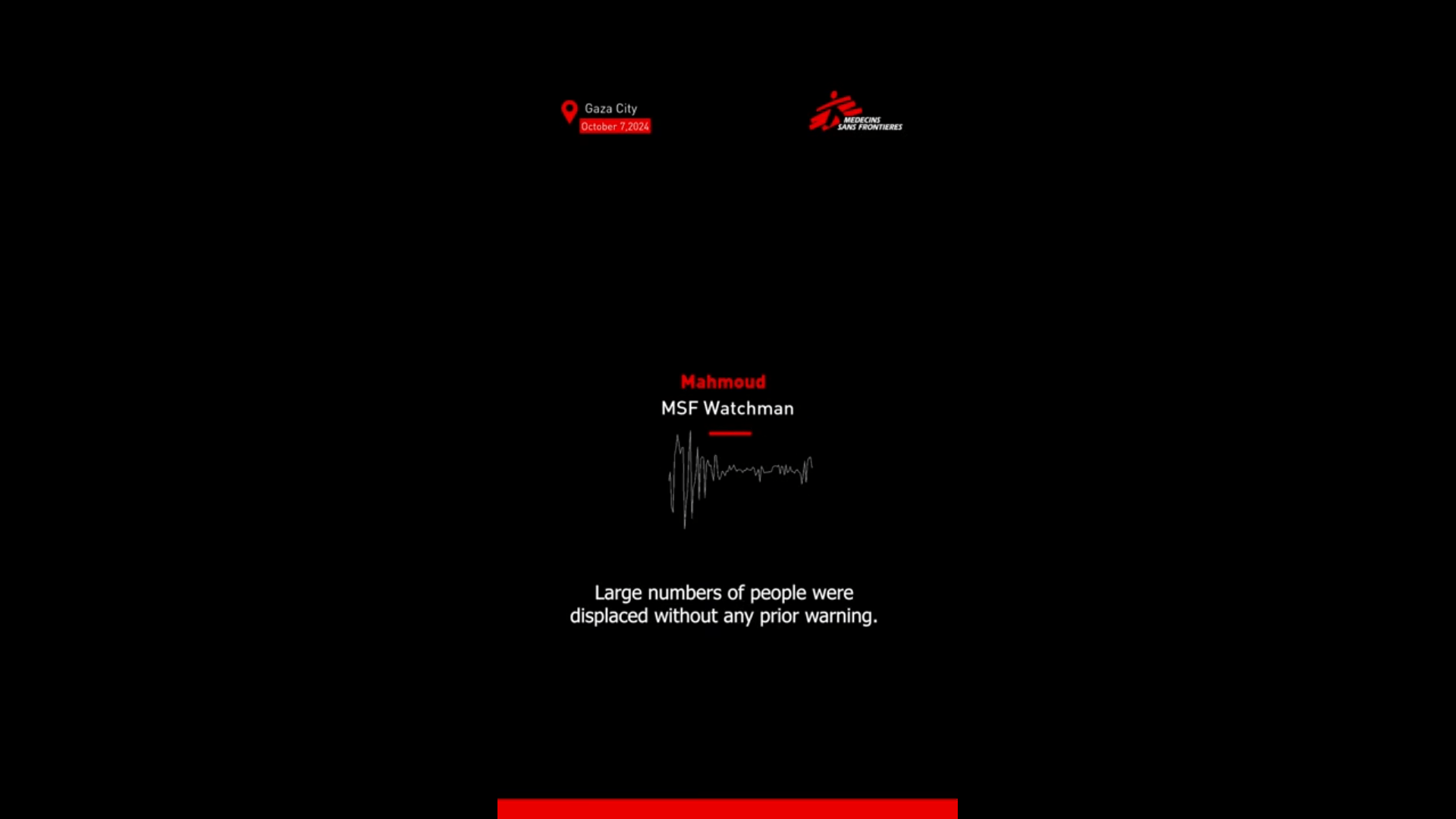
“All of a sudden, I was told that we had to move from the north,” says Mahmoud, a Médecins Sans Frontières (MSF) watchman, who left Jabalia at night to find refuge at the MSF guest house in Gaza City. “We left our home in despair, under bombsleave , missiles and artillery. It was very, very difficult. I would prefer to die than to be displaced to the south; my home is here, and I do not want to leave.”

Israeli forces also called for the evacuation of the three main hospitals in northern Gaza, namely Indonesian, Kamal Adwan and Al-Awda hospitals. These are operating at minimal capacity and have a total of 317 patients still hospitalised, with around 80 people in intensive care and unable to move, according to the Ministry of Health. These three medical facilities, as well as those that remain partially functional across the Strip, must be protected at all costs. 

The MSF clinic in Gaza City received 255 patients on Sunday and Monday alone, as options for people to access medical care shrink by the day. For some people, accessing the few existing health facilities is impossible; our teams have received reports of wounded people who have died as they were unable to seek medical care.

Among those facing evacuation orders in the north are seven MSF staff who managed to find shelter in Gaza City. Five others remain blocked in Jabalia, where the Israeli forces are on the ground carrying out attacks.

“The latest move to forcefully and violently push thousands of people from northern Gaza to the south is turning the north into a lifeless desert, while aggravating the situation in the south, where more than one million people have already been squeezed into a small portion of the Gaza Strip and live in deplorable conditions,” says Sarah Vuylsteke, MSF project coordinator in Gaza.

“Access to water, healthcare, and safety is already almost non-existent, and the thought of more people fitting into this space is impossible to imagine,” says Vuylsteke. “People have been subjected to endless displacement and relentless bombing for the past 12 months. Enough is enough, this must stop now.”

While the Israeli authorities have recently declared a minimal expansion of the so-called humanitarian zone, the area remains subject to evacuation orders and is unsafe due to regular Israeli bombardment. Many people living in the zone are suffering from skin diseases and respiratory infections because of the dire conditions. The situation is even more worrying with the approach of winter and the cold temperatures that people will be exposed to.

Israeli forces must urgently halt evacuation orders in the north of Gaza. The relentless killing of people in Gaza must stop now, and an immediate and sustained ceasefire must be implemented.

MSF colleague Mahmoud shares his testimony of how he had to evacuate northern Gaza
Facebook
Twitter
LinkedIn
WhatsApp
Print