“We are the people of Baalbek, we honour our guests, with whatever means available.”

“We are the people of Baalbek, we honour our guests, with whatever means available.”

  • Testimony collected on 1 November from a school sheltering displaced people in Bichwet, Baalbek-Hermel governorate, Lebanon.

On 23 September, after nearly one year of cross-border attacks along Lebanon’s southern border, Israel escalated its bombardment of Lebanon, causing waves of mass displacement that have surpassed the country’s ability to provide adequate shelter.

*

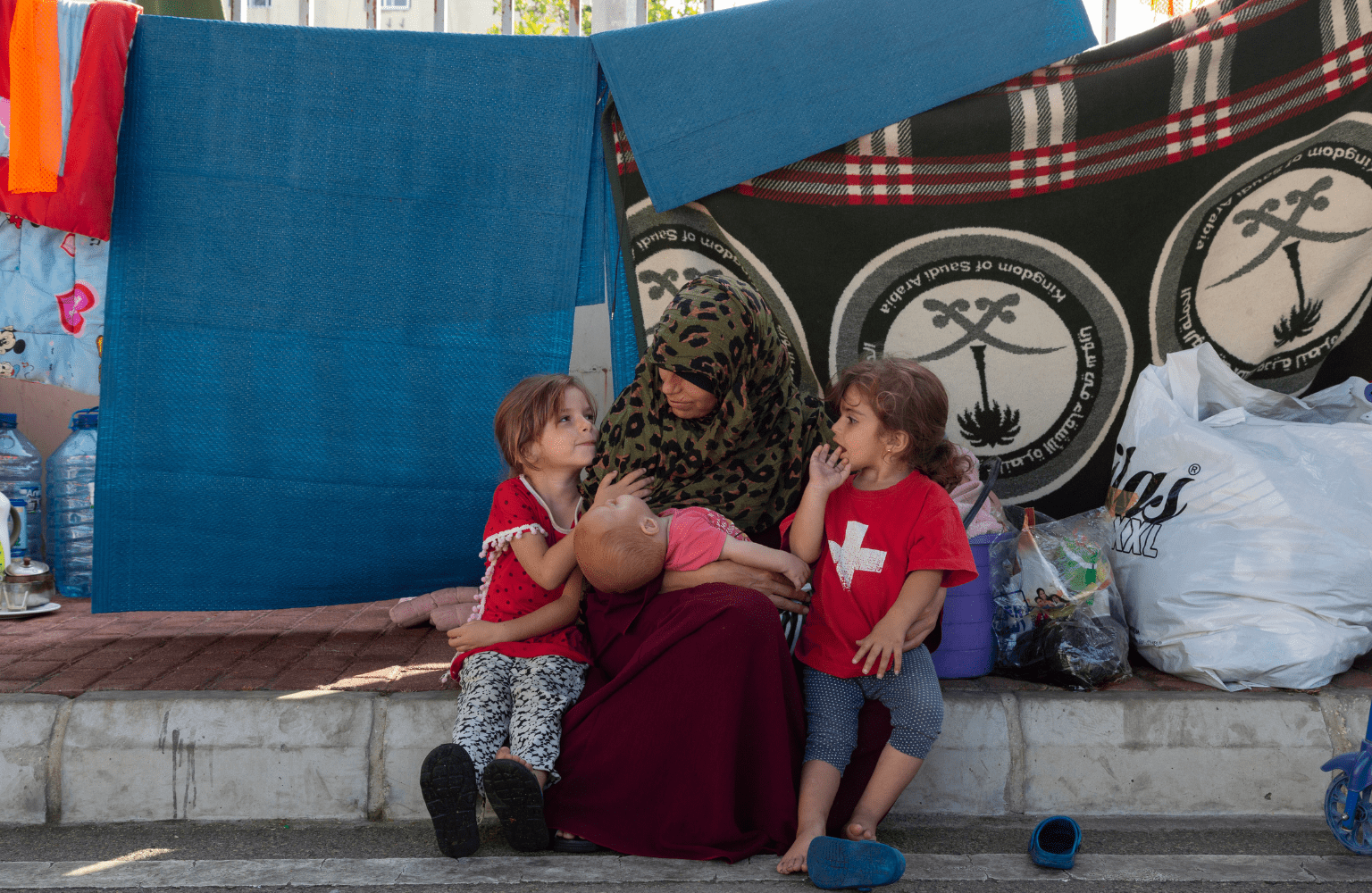
Fatima’s vibrant smile slowly fades away after entering the classroom. Desks and chairs are stacked on one side of the room, making room for the mattresses laid out on the floor. She’d rather be at a school to seek education for her three children, not to seek refuge. “I didn’t want to leave our home, I really didn’t,” says Fatima, who is 43 years old. “The day we were forced to leave was the toughest day.” On 29 September, Fatima quickly collected a couple of mattresses and blankets and headed out of the house under the bombing. Some five minutes later, her neighbour’s house in Kfarden was bombed.

“I am grateful I saved my children,” she says. “My husband and I live for them. We’re well physically, but not at all mentally. We muster patience and wait for the war to end.”

Fatima wipes her tears and puts a coffee pot on a portable stove. Her vibrant smile returns as she says, “We are the people of Baalbek, we honour our guests, with whatever means available.”

Iqbal knocks on the door and enters. The 60-year-old woman was forced to leave her town, Boudai, and arrived at the school on the same day as Fatima.

“We couldn’t sleep all night because of the constant bombing all around us,” says Iqbal. “When the sun came up, we fled with nothing. We didn’t even know where we’re going, we just ran for our lives.”

Iqbal managed to get a few mattresses and blankets for herself, her father, and her three siblings.

“We know nothing about our house,” she says. “I miss home so much, and the things I took for granted before. It’s dangerous to go back home; it’s undignified to stay here.”

As they’re sipping coffee, their chats are filled with a shared sense of nostalgia for the recent past. Fatima does something that Iqbal hasn’t dared though; she risks her life every few days to go back home.

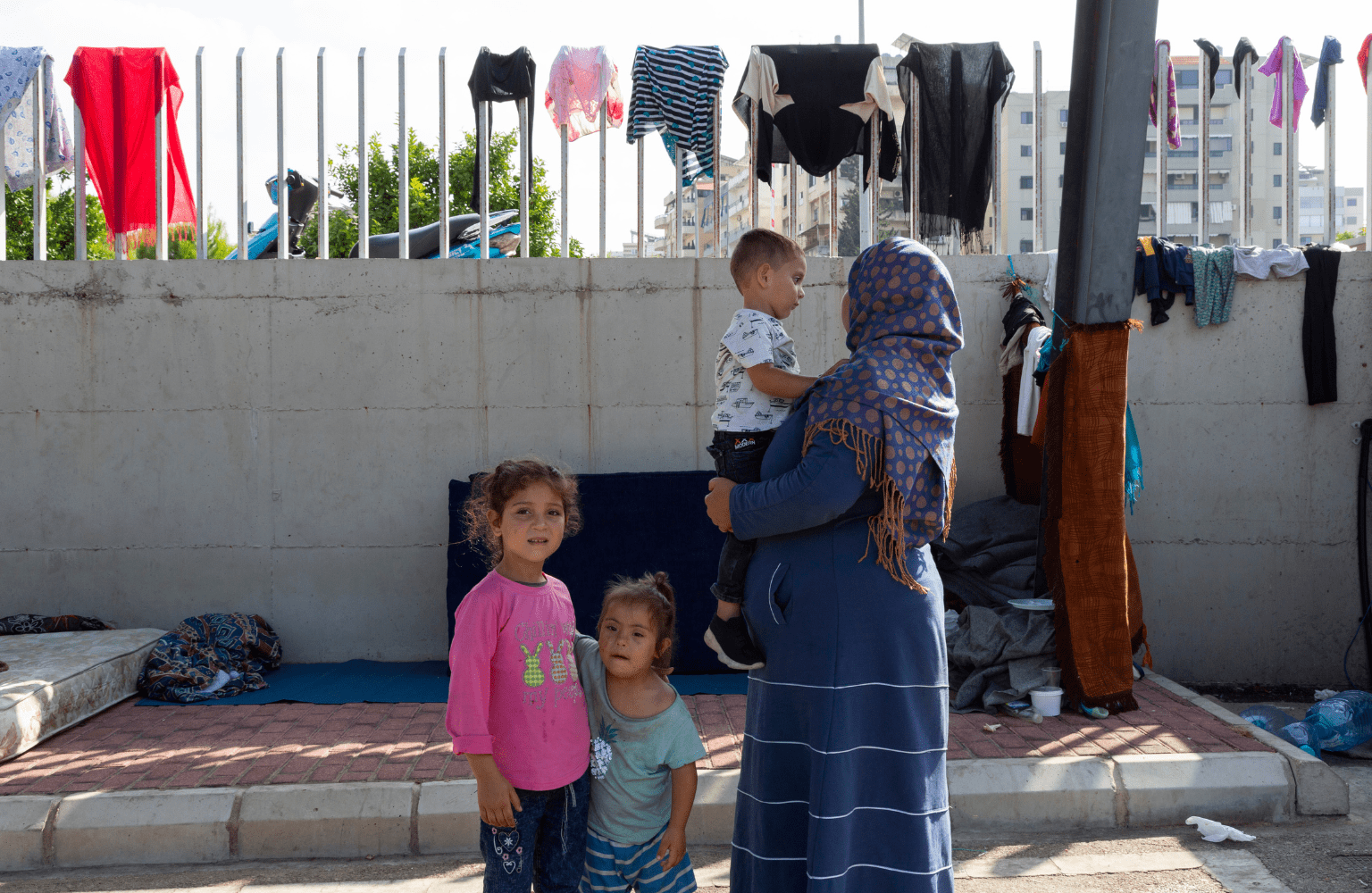
“There are no showers in this school and the weather is freezing here in the mountains,” says Fatima. “We can’t afford to heat up water on the stove. We also can’t afford to have our children get sick. I have succumbed to the fact that this is our life now.”

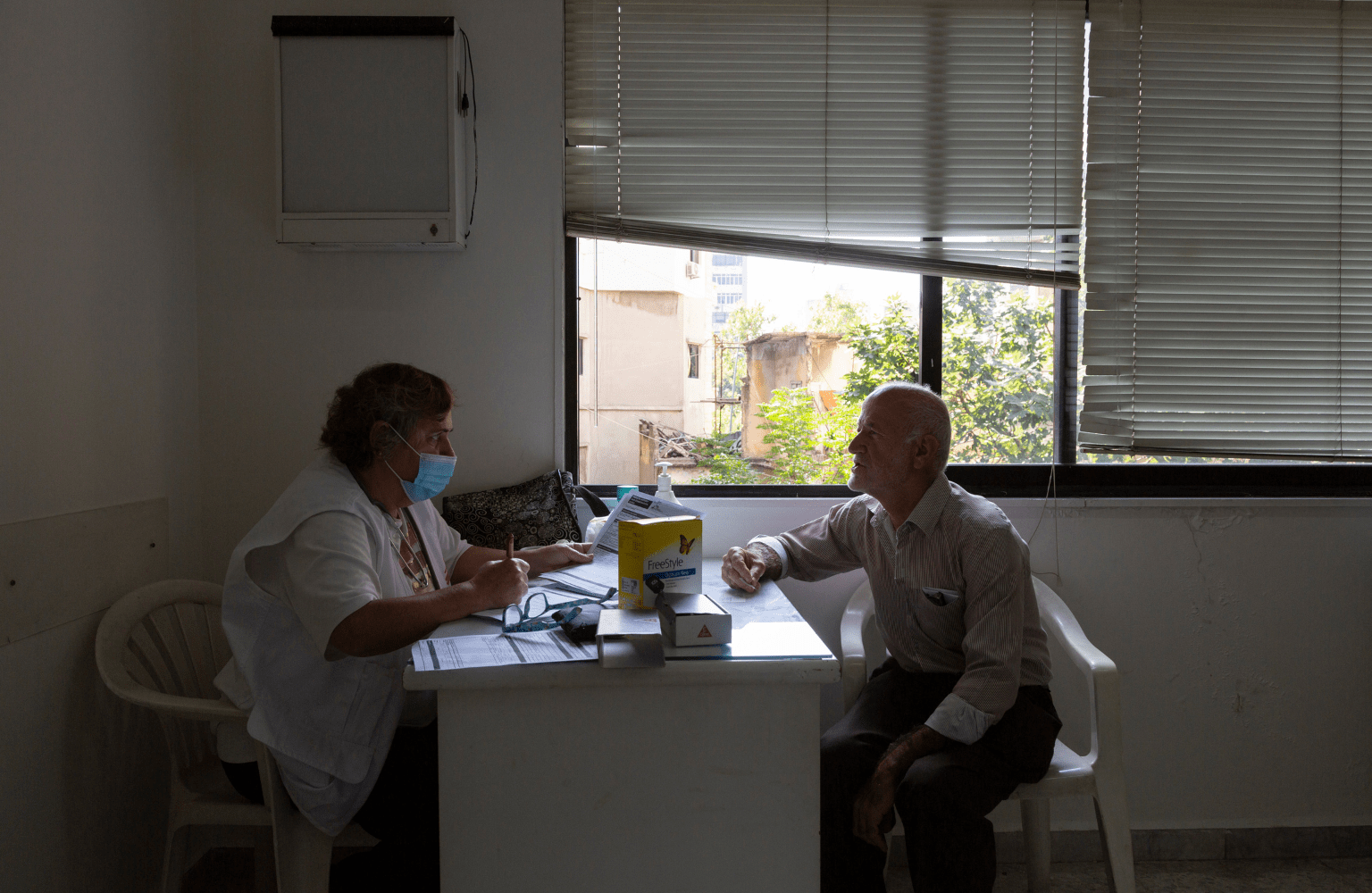
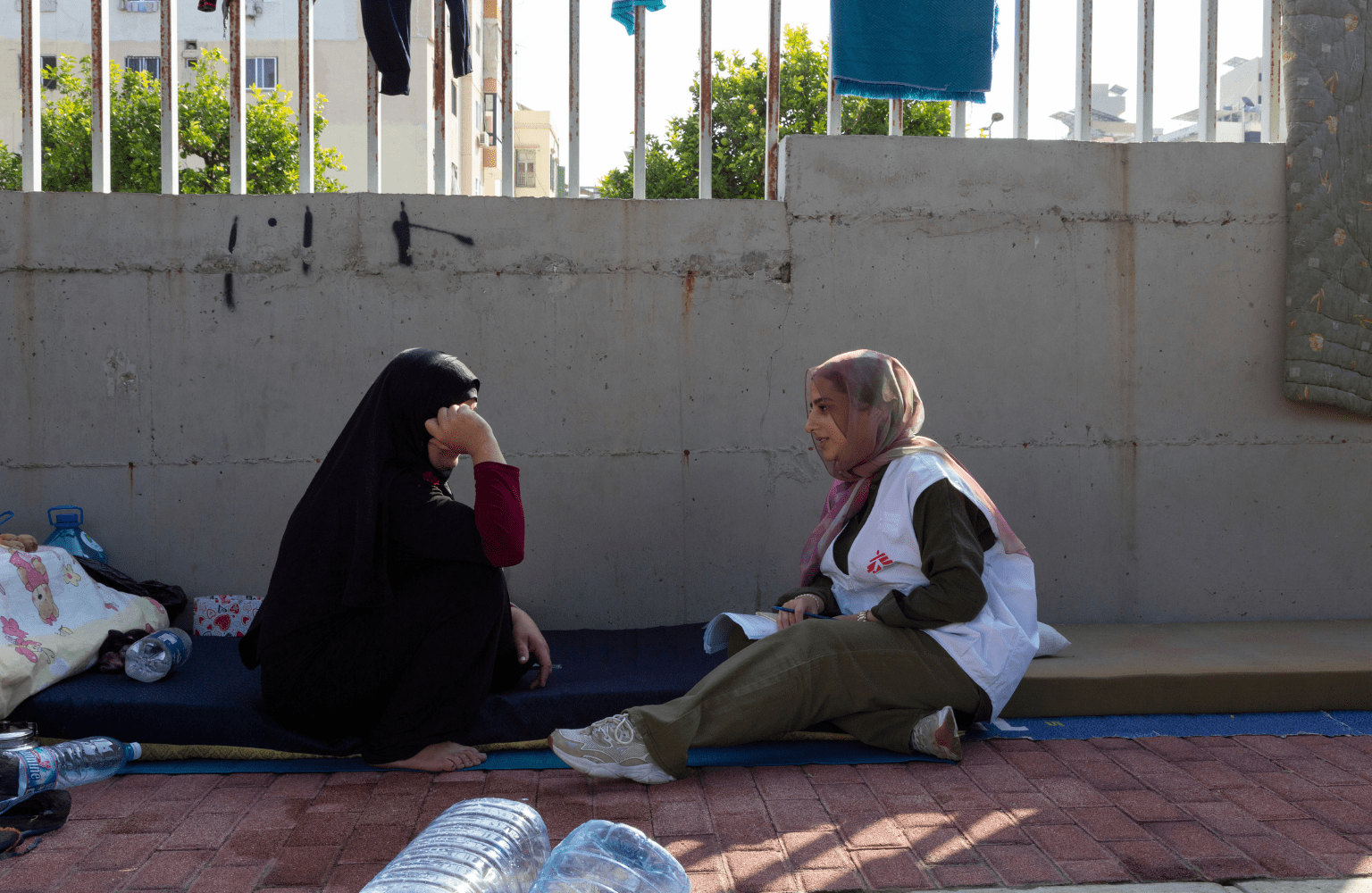
In Deir al Ahmar, Arsal, and other parts of the governorate, MSF teams are actively responding—providing essential items like mattresses and blankets, along with medical care and mental health support—to help those affected by the ongoing attacks.

MSF response in Baalbek-Hermel governorate
Facebook
Twitter
LinkedIn
WhatsApp
Print

Treating Open Wounds in Tulkarem, West Bank

Treating Open Wounds in Tulkarem, West Bank

It’s a sunny morning in Nur Shams refugee camp, in Tulkarem, West Bank. Over twenty women are filing into a room set up by MSF staff, sitting in a circle and chatting over Arabic coffee. In the middle of the room, there is a table with gauze, tourniquet devices and charts explaining blood flow in the human body. This is MSF’s “stop the bleed” training. Most women gathered in this room have little to no medical training, but trauma wounds and severe bleeding are not new to them. They are here to learn how to care for wounds, apply tourniquets and provide basic first aid to family members and neighbours until they can reach medical care during frequent military incursions by Israeli forces.

“We suffer from raids, bombings, and injuries from shootings,” says Saeda Ahmad, a participant in the training from Nur Shams camp. “We often have an injured person right in front of us. In such situations, it’s important for us to have the knowledge and background to properly administer first aid. During raids, it’s extremely difficult for ambulances to reach the scene. That’s why everyone in the camp needs to have some knowledge of first aid. So that we ourselves can help the injured person.”

Here, military raids by Israeli forces are becoming increasingly frequent, and blockages of access to healthcare are part of the modus operandi. Roads are blocked, ambulances cannot move, healthcare workers are harassed and targeted or otherwise hindered, and wounded people often cannot reach hospitals.

Incursions from Israeli forces are also increasing in violence and intensity; on October 3 2024, 18 people were killed in an airstrike on Tulkarem refugee camp. The use of drone strikes, air strikes and other bombardments by Israeli forces, in often densely populated areas and refugee camps, has become increasingly common. Incursions are also increasing in length, and not only here; last August, in Jenin, north of Tulkarem, Israeli forced launched a large-scale military incursion that lasted nine days.

In this context of constant violence and insecurity, people in the camps have spoken with MSF mental health staff of the deep psychological impacts of these raids. Military incursions by Israeli forces reshape the lives of people, stripping them of normalcy and any sense of safety. People are always in the aftermath from the last incursion, rebuilding torn up streets and destroyed houses, while holding their breath until the next military raid. MSF is also providing psychological first aid to residents in the camp to address the significant mental health issues stemming from the impact of these incursions, which affect all residents but particularly children.

The situation is very difficult. The children in the camps are afraid to go to school, as they fear a raid might happen while they are there. In their home life, stability has vanished. People remain on edge. Children have stopped playing in the alleys. They spend most of the time at home and are not able to go out. They can’t even go out to buy what they need because their parents won’t let them out of fear that a raid or incident might occur while they’re outside. There are children whose entire playtime has become centered around the violence they have experienced.
An MSF community health educator for MSF in Tulkarem

In a context of fear and insecurity, it becomes impossible for people to live a normal life or plan for the future. Trainings like “stop the bleed” can provide some sense of control over the situation, by giving residents the tools to act in a medical emergency during an incursion, but their very existence highlights the direness of the situation in the West Bank. In this room, as participants practice wrapping gauze around each other’s arms, emotional wounds also reveal themselves. Participants share stories of the violence they have experienced, in conversations, stories, and photos of killed family members on a phone’s lockscreen. The psychological wounds, also, are deep. And mending them takes more time than applying pressure or tightening a tourniquet.

Facebook
Twitter
LinkedIn
WhatsApp
Print

“Whatever we lose, we will come back”

“Whatever we lose, we will come back”

Amid the ongoing Israeli bombardment and incursions across southern Lebanon, countless families have been uprooted, many seeking refuge in the coastal city of Saida. Médecins Sans Frontières’ (MSF’s) mobile medical teams have been visiting several locations in the southern city, offering general healthcare, medication, and mental health support to people displaced by the violence. Here are some of the testimonies of our patients there:

Hasan Kheir Eddine

“There’s nothing like living in your own home,” reflects Hassan Kheir Eddine, 67, an internally displaced Lebanese man with hypertension. He and his wife fled Kfar Melki, in the south of Lebanon, after nearby Israeli bombardments, leaving with only the clothes on their backs. “My sons are also displaced, scattered across the country. That alone is a struggle, but what we are going through is similar to what everyone else is.”

Having been uprooted three times during the recent escalations, Hassan, a retired employee who lost his pension and savings in the 2020 economic crisis, reminisces about the olive harvest and his deep connection to the land he was forced to leave behind.

“There is nothing quite like the south,” he says. “Wherever we go, whatever we lose, and whatever we are offered, we will always come back. I lived through the 1982 Israeli invasion and remember the airstrikes on southern villages then. As we returned to our homes then, we will now.”

Khadija

A Syrian refugee and mother of five, was displaced from Nabatieh with her family. “She’s fading right before my eyes,” says Khadija, pointing to her seven-year-old daughter, who she says suffers from stunted growth. She describes the harsh conditions in the open parking lot by the Saida coastline where they’ve sought refuge.

“We never feel clean. People are competing over food here, and we don’t have enough clean water to wash. We go to the sea to relieve ourselves, but there are often men around.”

Her children are battling various health issues and it’s breaking her spirit. “Sidra, 13, has asthma, Hiba, 7, weighs barely 10 kilograms, and Malak, my 8-month-old, has a fever and diarrhoea. I breastfeed her whenever I can, but it’s not always enough, and I can’t properly clean her bottles.”

In a moment of despair Khadija admits, “Sometimes I wish we had stayed and died in an airstrike instead of living like this.”

Um Mohammad
 

A 40-year-old Syrian refugee displaced from Qsaibeh, in south Lebanon, has three daughters. She used to maintain her employer’s garden, landscaping and building fences around his land. The night she fled Qsaibeh, an airstrike landed dangerously close.

She recalls joining the community with buckets of water to put out the fire, and then her employer told her it was time to leave. She packed a change of clothes for each of her daughters, aged 18, 6, and 4, and grabbed only a blanket, leaving behind the groceries she had just bought that day on her kitchen floor.

Hala
 
A 24-year-old Syrian refugee and mother of three—Yamen, 2, Rawan, 3, and Razan, 6. She fled from the coastal town of Adloun in south Lebanon amidst airstrikes and the sirens of ambulances. “We left with nothing. We escaped on a motorcycle, but it broke down here in Saida. My husband went back to retrieve our belongings, but everything was stolen.”

Now, they rely on aid for food.

“All my children are sick with vomiting and diarrhoea. Rawan, who has down syndrome, used to receive physical therapy to walk and move. We had high hopes that she would begin verbal communication through speech therapy soon, and she had made so much progress. But now, all that is gone. She requires lots of medications and is often bullied by other children for not being able to express herself.”
Shams Al Mahmoud, Marimar, and Kazem
 
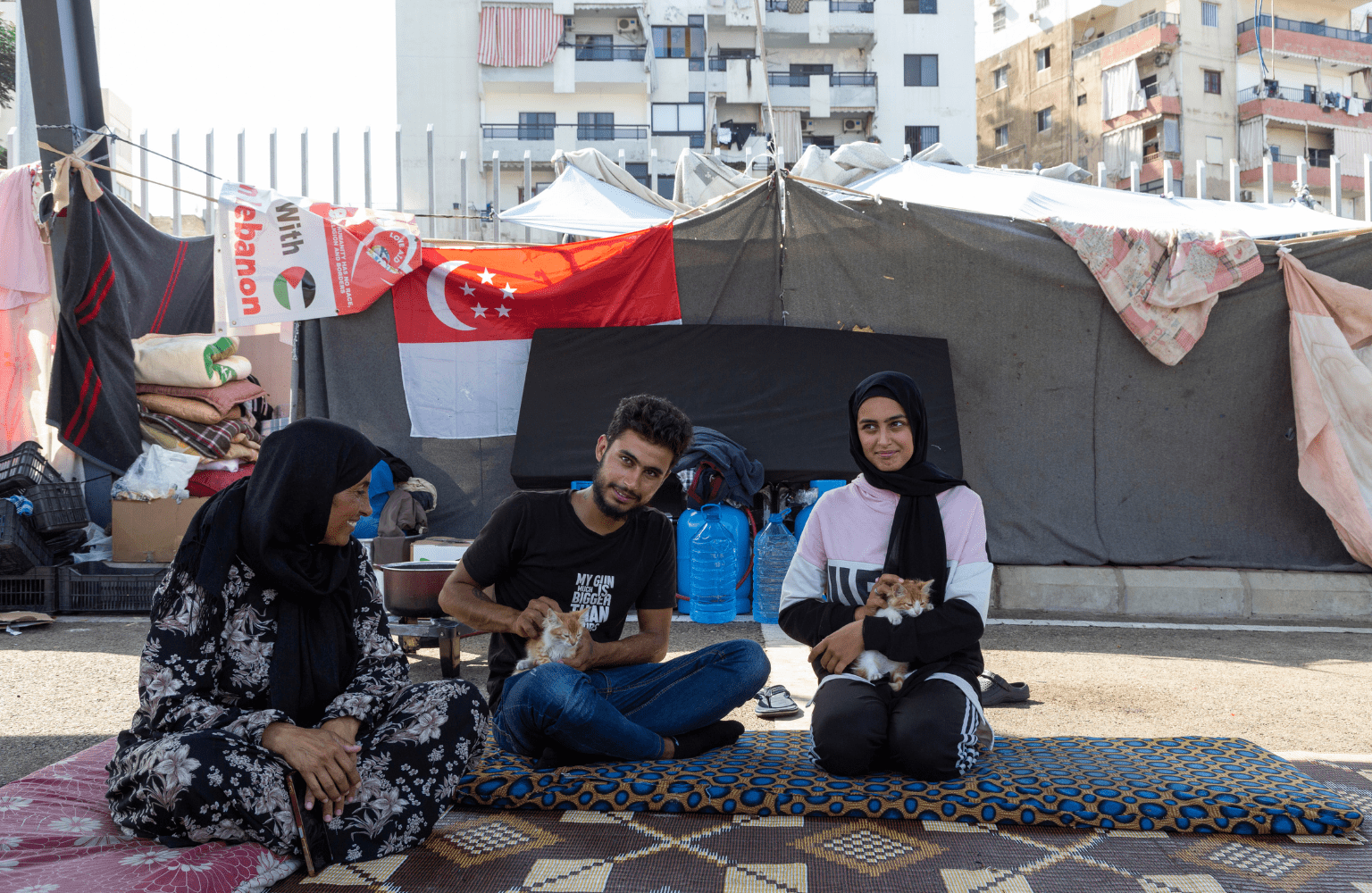
Shams Al Mahmoud, whose first name means ‘sun’ in Arabic and is a Syrian refugee, remains as bright and warm as ever, despite the hardships she and her family have endured. Along with her children—Mimar, 24, Mimas, Kazem, 20, and Marimar,14—Shams was displaced from Kfar Roumane and now lives in a parking lot in Saida, southern Lebanon.

With an endearing smile, she recounts the moments her family escaped Israeli airstrikes in the town they had called home for over a decade, fleeing for 12 hours on foot to finally find relative safety in Saida. A few days later, Kazem and one of his sisters made a dangerous trip back to their former home on a borrowed motorcycle to rescue their two kittens, Simba and Mimi.

“We thought of them as we were leaving,” says Marimar, as she fondly strokes one of the kittens. “But the airstrikes were too close. I’m so relieved we could go back for them.”

Najah Ashour

A Syrian refugee living in south Lebanon, was displaced once again along with her daughters—Maya, 11, Lujain, 6, and Sary, 9 months—after airstrikes struck the southern town of Baisariyeh. She is among the 1.2 million people displaced by the ongoing Israeli bombardments. While the war affects everyone, minority groups like Syrian refugees, migrant workers, the elderly, and people with disabilities face even greater risks of discrimination and exclusion, further limiting their access to healthcare and humanitarian aid

Facebook
Twitter
LinkedIn
WhatsApp
Print

Beyond Survival: Helping Children and Adults Cope with the Traumas of War in Lebanon

Beyond Survival: Helping Children and Adults Cope with the Traumas of War in Lebanon

“My daughter is only 14, but with all the difficulties we’ve faced, she’s reacting like an adult to the bombings,” says Ezdihar, a displaced mother in Lebanon. “She’s had to grow up quickly.”

On the night of September 28, Ezdihar and her family were having dinner at home in the southern suburbs of Beirut when they received an alert about an imminent strike by Israeli forces. While her husband went to care for his mother, Ezdihar took her children and, with neighbors, sought refuge in central Beirut. After spending a night on the streets, they moved into the Azarieh shelter, a repurposed commercial building now housing around 3,500 displaced people. Today, they are among 1.2 million people displaced by the war between Hezbollah and Israel, according to Lebanese authorities.

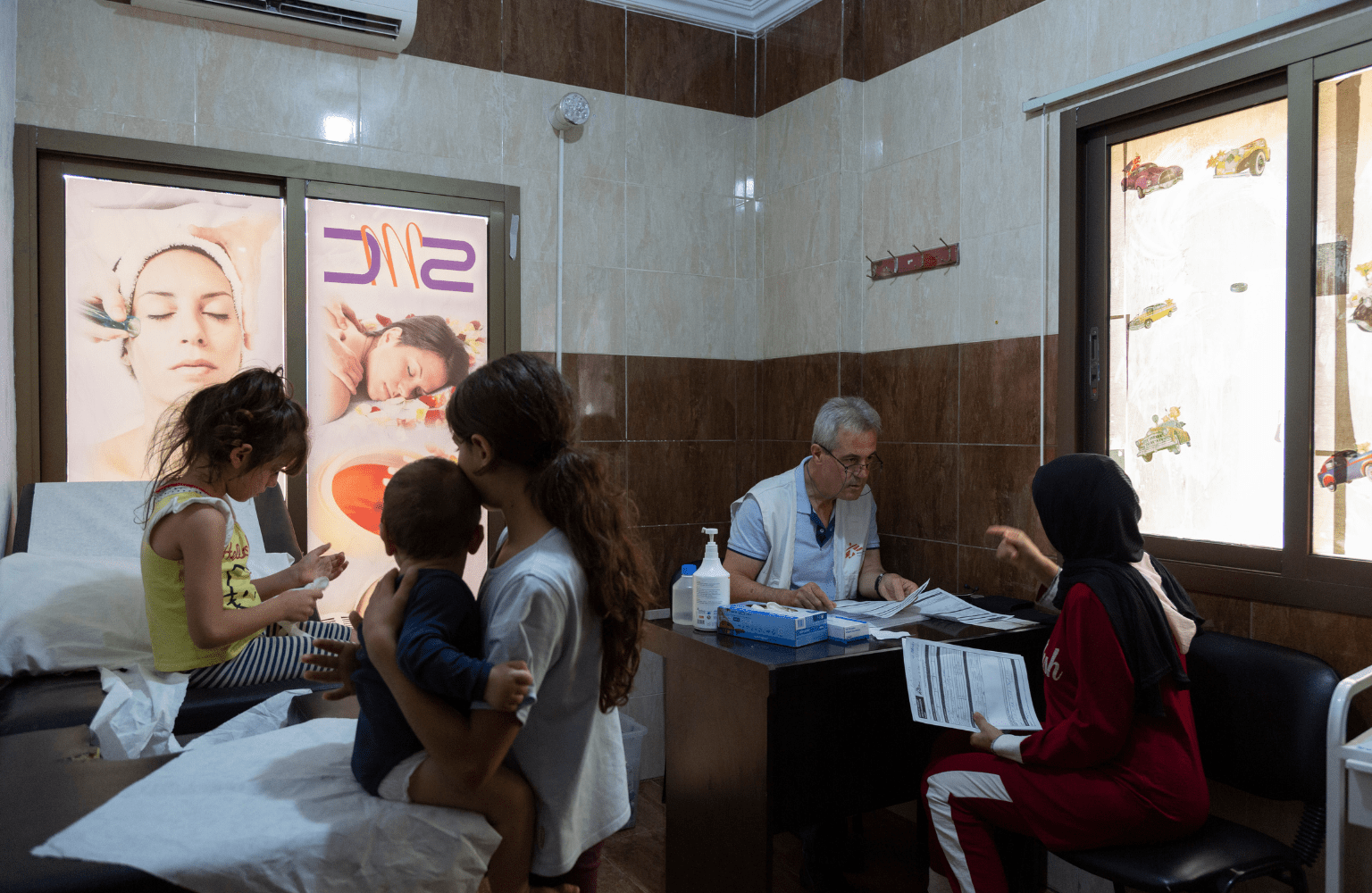
Doctors Without Borders/Médecins Sans Frontières (MSF) is attending to the medical and mental health needs of people living in collective shelters like Azarieh, including children like Ezdihar’s daughter. She is one of a generation navigating a landscape of fear and uncertainty, in which children are hit the hardest.

Ezdihar al Diqa, 39, and her daughter Nouraya, 14

The mental health impacts of war and displacement

In less than a month since the escalation of war, more than 2,300 people have been killed in Lebanon, with the majority of deaths occurring in the last 3 weeks, and more than 11,100 have been injured, according to health authorities. The violence and destruction people are witnessing can have lasting impacts on psychological and emotional well-being, especially for children. Like Ezdihar’s daughter, countless children across Lebanon have had to grow up quickly under the harsh realities of war, including being uprooted from their homes, having their schooling disrupted, being separated from their friends, and losing access to basic necessities like food and shelter.

Many parents are observing behavioral issues in their children—anger, aggression, and other troubling behaviors—which heightens concern for their well-being. People are expressing a strong need for mental health services, particularly for trauma, It’s affecting their daily lives, from sleep disturbances to appetite loss.
Amani Al Mashaqba, MSF's mental health activity manager in the Bekaa governorate

Children are not the only ones in need of mental health support, however. Many of MSF’s patients report feeling overwhelmed and traumatized by the constant threat of violence, expressing deep concerns about their future in an unstable environment. Grief over lost family members and the pain of separation due to displacement further compound their distress. Others worry about managing chronic health conditions or the possibility of missing a year of school. These experiences have had a significant impact on people’s mental health.

MSF teams are responding by providing primary and mental healthcare to displaced people, including psychological first aid and psychoeducation through our mobile medical units across the country. However, getting people to acknowledge their struggles and express vulnerability isn’t always easy. Many feel they should remain resilient in the face of hardship, as our mental health teams have observed. Convincing them that it is okay to experience emotions has been a challenge at times, particularly for young boys who are commonly taught to suppress their feelings.

To further extend this support, MSF has also launched a helpline through which people can receive remote assistance from clinical psychologists who help manage trauma-related symptoms such as anxiety and grief.

A helpline for healing

The MSF helpline allows us to reach people who are unable to access our services in person, particularly in the south of Lebanon, where heavy bombardments and mobility restrictions make travel difficult. This accessibility is crucial during such a volatile period, as many individuals are on the move and face barriers to accessing care including the high cost of transportation and cultural stigma surrounding mental health.

Many of the helpline callers are parents facing difficulty trying to help their children cope during the war, often while noticing changes in their children’s behavior. Parents are struggling to explain the frightening sounds of bombs and gunfire to their kids, at times resorting to misleading explanations in an effort to reassure them. Gunfire, for example, may be described as “happy shooting,” such as shots fired in celebration during weddings. Our helpline psychologists equip parents with strategies to communicate honestly and create safe spaces for their children to express their feelings.

Facing increasing demand, the helpline has seen a dramatic rise in calls, from five calls a day in the beginning to as many as 80 in a single afternoon. Overall, the helpline has received nearly 300 mental health calls, the majority coming in the last two weeks alone.

In addition, our mobile teams have facilitated psychological first aid group sessions for nearly 5,000 individuals as of October 21, 2024, and more than 450 people have benefitted from individual mental health sessions. Our teams also provide psychological first aid, which includes active listening and techniques for stress relief, allowing patients to express their feelings and concerns. Along with critical medical and mental health care, our teams are also distributing essential non-food items such as mattresses and hygiene kits to displaced people.

While we must be realistic about the situation, we also need to normalize their feelings. It’s important for parents to listen to their children and understand how the sounds affect them. They can encourage kids to share their feelings through drawing or talking.
Amani Al Mashaqba, MSF's mental health activity manager in the Bekaa governorate

A country in crisis

This current war comes on the heels of a prolonged economic crisis that has left over 80 percent of the Lebanese population living below the poverty line and in urgent need of assistance. The healthcare sector has faced severe challenges, with public services deteriorating and private healthcare becoming increasingly unaffordable.

“One of my psychologists shared that when a woman learned our services are free, she began to cry,” Al Mashaqba noted. “People are often unaccustomed to having access to these kinds of resources without the financial burden.”

Moreover, Lebanon is home to a significant number of refugees, including 1.5 million Syrians and over 200,000 Palestinians, many of whom have faced repeated displacements. For these individuals, the fear of deportation and the struggle to find safety can be overwhelming. “Some have told me they would rather die than experience the trauma of being a refugee again,” Al Mashaqba said.

MSF is conducting ongoing needs assessments for internally displaced people, and as the situation evolves, our teams are working closely with partners and hospital networks to provide comprehensive support wherever possible.

Facebook
Twitter
LinkedIn
WhatsApp
Print

A little safety and a lot of anxiety: testimonies of the displaced from Beirut’s southern suburbs

A little safety and a lot of anxiety: testimonies of the displaced from Beirut’s southern suburbs

The Azarieh shelter, once a bustling commercial center in the heart of Beirut, has been transformed into a refuge for people displaced by the ongoing Israeli bombardment in Lebanon. This makeshift shelter, now housing more than 2,500 people. Conditions here are dire, as the facility was never intended for long-term living, leaving families struggling without adequate resources, and basic needs.

Médecins Sans Frontières (MSF) deploys a mobile medical unit there, providing essential primary healthcare and psychological support, especially for children affected. We have also distributed vital non-food items such as hygiene products, mattresses, and blankets to help improve living conditions for these vulnerable families.

In that building and its surroundings, we met families forced to flee the southern suburbs of Beirut as the Israeli bombardment of populated areas intensified, seeking safety.

“I don’t want to leave…”

Imad Hachem, 55, lived with his wife, sister, son, and cousin in the southern suburbs of Beirut, Lebanon. In the aftermath of the September 27 strike, the family decided to leave the southern suburbs of Beirut, taking with them all they could carry. Although it took the family a few days to find mattresses and blankets, Imad explains that they are now managing to survive in the Azarieh shelter thanks to the regular distribution of food. The father of the family is worried, however, about the living conditions in the shelter, especially with the arrival of winter, rain and cold. He is also concerned about the health of his cousin, who has cancer and has been missing treatment for 2 days. He explains: “We used to receive this expensive treatment from the Ministry of Health, but now we are not sure how to access it”.

Imad hopes to be able to return there one day. “I don’t want to leave Lebanon, but I have a son and a wife to take care of. If the only way to regain stability is to leave, then we’ll leave. But where and how, I have no idea”.

Children growing up too soon

Originally from Baalbek, 39-year-old Ezdihar Al Diqar used to live with her husband, daughter and son in the southern suburbs of Beirut, Lebanon. It was on the evening of September 28, around 10:30 pm, while the family was having dinner, that they received the alert of an imminent strike in the neighborhood, and they decided to flee.

Ezdihar took her two children and left the southern suburbs for the center of the capital with 14 of her neighbours. The group spent their first night on the streets before moving to the Azarieh shelter. After two weeks in Azarieh, Ezdihar explains that she doesn’t feel safe in the shelter, and she no longer knows where to go to be safe from the bombings, especially after an Israeli strike in the center of Beirut.

Ezdihar is determined to face these challenges with her head held high, hoping that things will get back to normal. But as a mother, she sees the consequences of war on her children. “My daughter is only 14, but with all the difficulties we’ve had to overcome – she often responds to situations, namely airstrikes, with a maturity that surpasses her years. She’s had to grow up quickly.”

Displacement after refuge

Originally from Syria, Abbas, 28, came to Lebanon seeking safety with his wife and parents. The young man lost his job when the war broke out. The family used to live in the southern suburbs of Beirut and decided to leave the area to escape the bombings. After spending several nights on the streets, they moved into the Azarieh shelter, where they have been sharing a room. Abbas says he is very worried about the health of his 8-month-old son, Amir. “Amir has a fever, and he’s been sick a lot since we’ve been here. We’re running out of milk and diapers. He also cries more and more often, I think he’s aware of this change of environment and the insecurity in which we live, especially because of the noise of the bombings.”

Abbas explains that he left Syria with the hope of a better life, but now he feels trapped. His house was destroyed in Syria, where the economic situation would not allow him to find work, and it seems impossible for him to return to his homeland.

“Even if the war ends, what will be left of our home?”

Zeinab Ouzir, 29, left the southern suburbs of Beirut, Lebanon, with her husband and their children, the day after the Israeli strike on September 27. At first, the family headed north, but were told to leave the area. So, not feeling welcomed they decided to go back to Beirut. They settled in the Azarieh shelter for displaced persons, where the couple lives in a 10-square-meter room with their 4 children.

Zeinab describes the overwhelming sense of uncertainty that has gripped her since she had to leave her loved ones and home behind: “I can’t imagine the future here anymore. Even if the war ends, what will be left of our home? Will my family and friends survive?” Although she lived through the 2006 war, she describes the current situation as much more worrying. She is also worried about the impact of the war on her children. The war put a strain on the psychological health of every one of them. Zeinab describes the nights filled with nightmares and constantly waking up at the slightest noise. When an Israeli bomb hit a building two kilometers from the shelter the day before, her children asked her to move to a safer place. She would also like to leave. With her husband, they are thinking of leaving Lebanon, no matter what the destination, as long as their children are safe and they can look forward to a peaceful future.

More than one million people have been displaced in Lebanon, many of whom are in urgent need of assistance. MSF has deployed 14 mobile medical teams across Lebanon to provide care to displaced communities in Beirut, Mount Lebanon, Sidon, Tripoli, Bekaa and Akkar. Our teams are present in shelters, primary health care centres and public places, providing medical consultations, medicines, psychological first aid and psychosocial support. We are also distributing blankets, mattresses and hygiene kits, and supplying water to various centres.

Facebook
Twitter
LinkedIn
WhatsApp
Print

MSF urges for protection of civilians and medical staff amid Israeli bombardment in Lebanon

MSF urges for protection of civilians and medical staff amid Israeli bombardment in Lebanon

Beirut, Lebanon, 10 October 2024 – As Israeli attacks intensify in Lebanon, healthcare facilities in areas most affected by airstrikes are being forced to close. This is leading to devastating consequences for civilians and their access to healthcare.

Médecins Sans Frontières (MSF) teams are working tirelessly to ensure the continuation of care in our existing facilities, while also scaling up our activities to address the needs emerging from the ongoing conflict. However, due to the intense Israeli airstrikes, we were forced to suspend some activities in highly affected areas. We continue to adapt our activities to provide people with much needed healthcare.

MSF urges all warring parties to spare civilians, medical facilities, and medical personnel in Lebanon to ensure that vital healthcare services can adequately address people’s urgent medical needs.

Given the intensity of the violence, road damage, and the lack of guaranteed safety, we are currently unable to reach all affected areas in Lebanon despite the increasing medical and humanitarian needs.
François Zamparini, emergency coordinator for MSF in Lebanon

Last week, MSF was forced to completely close its clinic in the Palestinian camp of Burj el Barajneh in the southern suburbs of Beirut. We also had to temporarily stop our activities in Baalbek-Hermel, northeast Lebanon. These are both areas heavily affected by the strikes

“We partially reopened our clinic in Hermel this week to ensure that patients receive their medications, providing them with a two-to-three-month stock of essential drugs, depending on the severity of their condition and medical risks,” says François Zamparini, emergency coordinator for MSF in Lebanon.

Patients in these areas are already vulnerable, struggling to access the healthcare they desperately need. The closure of medical facilities has left them, specifically people living with chronic diseases, without the essential services they need.

MSF medical teams also remain unable to operate properly in southern Lebanon due to a lack of safety guarantees for our medical personnel.

“One of the hospitals we planned to support and had donated medications and trauma kits to, in Nabatiyeh, only a few kilometres away from the active frontlines, was hit on 5 October,” explains Zamparini.

An MSF mobile medical team, which had been actively supporting general healthcare centres in Nabatiyeh and other areas closer to the Lebanese border since November 2023, has been forced to stop its activities. The team, which was once able to reach areas near the border, can no longer do so and is currently limited to operating only as far as Saida, which is about 50 kilometres north of the southern border, where needs are highest.

In the last two weeks, Israeli strikes have claimed the lives of at least fifty paramedics. This brings the total number of healthcare workers killed since October last year to over a hundred, as reported by the Lebanese Ministry of Public Health[1]. The heavy Israeli bombardments have also severely disrupted access to medical care across Lebanon. As of 1 October 2024, six hospitals and 40 general healthcare centres have closed their doors as the intensity of the fighting made it impossible to work without safety guarantees, according to OCHA. [2]

The armed conflict is worsening an ongoing humanitarian crisis, aggravating existing needs. Lebanon’s healthcare system was already overburdened by the country’s economic crisis, which has caused the emigration of many medical staff and strained the capacity and resources of medical facilities. Local health centres, already at capacity, are now facing increasing pressure as they try to meet the growing medical needs of displaced people.

The scale of displacement in Lebanon significantly surpasses the country’s ability to provide adequate shelter, with over a million people displaced according to UNHCR[3]. The majority of shelters people are seeking safety in are in dire conditions. To respond, MSF deployed 12 mobile medical teams across various regions of the country, including Beirut, Mount Lebanon, Saida, Tripoli, Bekaa, and Akkar. These teams are providing psychological first aid, general medical consultations, and mental health support, in addition to donating mattresses, hygiene kits, hot meals, and clean water. Nevertheless, people’s needs are far greater than what we are able to cover.

[1] Health workers in Lebanon describe deadly Israeli attacks on colleagues and fear more | AP News

[2] https://www.unocha.org/news/todays-top-news-lebanon-occupied-palestinian-territory-and-israel-syria-haiti-ukraine-eastern

[3] UNHCR’s Grandi appeals for urgent humanitarian support and an end to the bloodshed in Lebanon | UNHCR

We must ensure the continuation of care for those in need. We urge all parties to respect international humanitarian law. Civilians and civilian infrastructure, medical facilities and medical personnel must not be targeted. Their safety must be guaranteed
François Zamparini, emergency coordinator for MSF in Lebanon

MSF response to the humanitarian crisis in Lebanon

In response to the ongoing escalation of conflict and intense Israeli bombing in Lebanon, Médecins Sans Frontières (MSF) has deployed 12 mobile medical teams across various regions of the country, including Beirut, Mount Lebanon, Saida, Tripoli, Bekaa, and Akkar. These teams are providing psychological first aid, general medical consultations, medication, and mental health support. MSF is also distributing essential items such as blankets, mattresses, and hygiene kits, as well as supplying water by trucks to schools and shelters where displaced people have gathered. Additionally, we are offering hot meals and drinking water to hundreds of displaced families. MSF has also donated fuel and trauma kits to several hospitals, prepositioned 10 tons of medical supplies and trained over 100 healthcare workers in trauma care and mass casualty management across the country.

Facebook
Twitter
LinkedIn
WhatsApp
Print

Israeli forces pushing people from north Gaza to the south will only worsen the humanitarian catastrophe

Israeli forces pushing people from north Gaza to the south will only worsen the humanitarian catastrophe

Israeli evacuation orders for parts of northern Gaza, issued on 7 October, are pushing tens of thousands of people to immediately flee south as the area is targeted by airstrikes and a ground offensive. In this latest forced mass displacement, residents of Beit Hanoun, Jabalia and Beit Lahia have been urged to move to the overcrowded, so-called humanitarian zone between Al-Mawasi and Deir Al-Balah, where one million people are already living in inhumane conditions. The zone also remains unsafe for civilians and aid workers, as Israeli forces continue to repeatedly strike the area.

These forced mass evacuations of homes and bombing of neighbourhoods by the Israeli forces are turning the north of Gaza into an unliveable wasteland, effectively emptying out the whole north of the Strip of Palestinian life. To make matters worse, no humanitarian supplies have been allowed to enter the area since 1 October.

MSF calls on the Israeli forces to halt evacuation orders, which are causing the forced displacement of people, and to ensure the protection of civilians. They must also allow desperately needed humanitarian supplies to enter the north as a matter of extreme urgency.

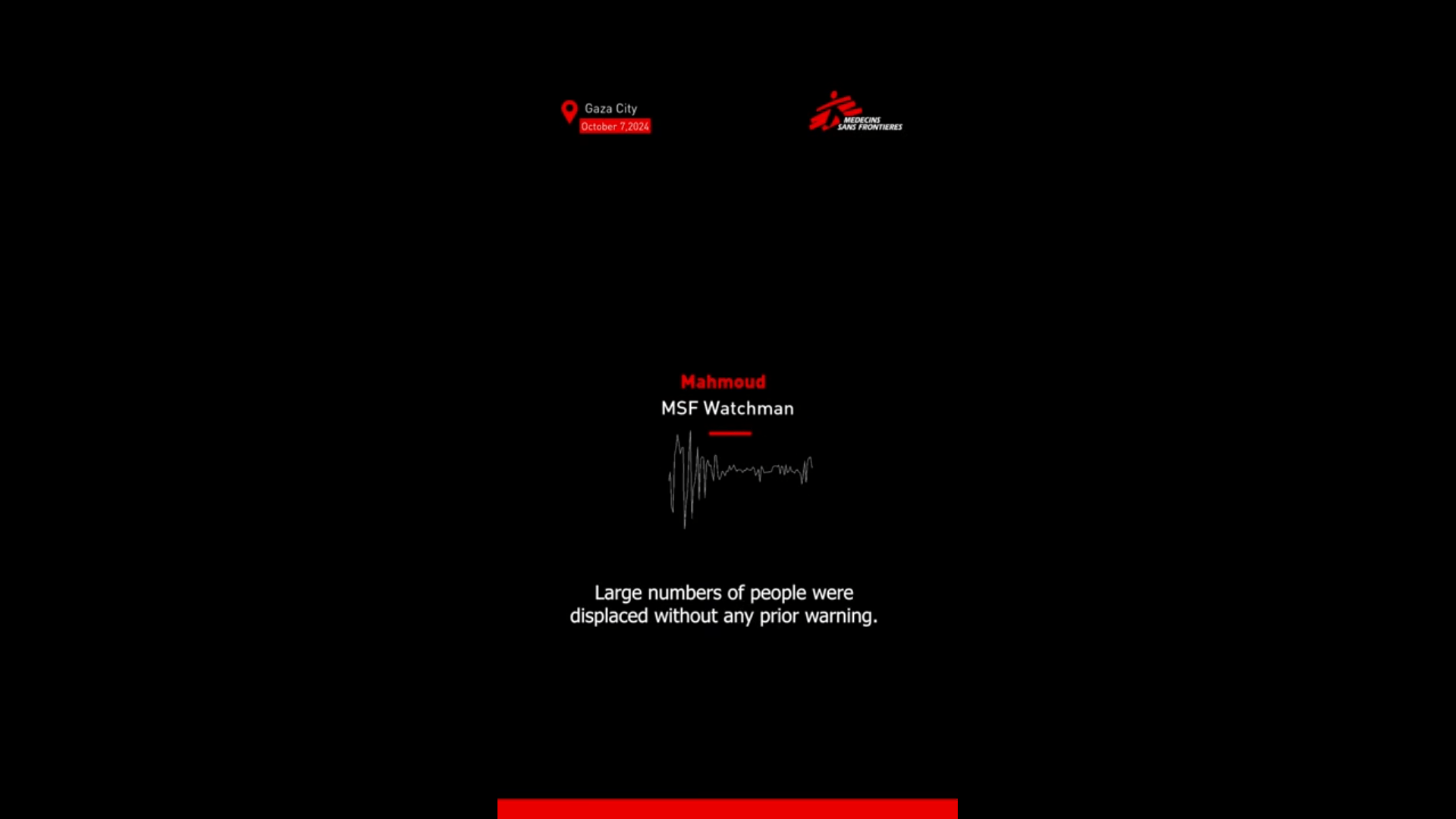
“All of a sudden, I was told that we had to move from the north,” says Mahmoud, a Médecins Sans Frontières (MSF) watchman, who left Jabalia at night to find refuge at the MSF guest house in Gaza City. “We left our home in despair, under bombsleave , missiles and artillery. It was very, very difficult. I would prefer to die than to be displaced to the south; my home is here, and I do not want to leave.”

Israeli forces also called for the evacuation of the three main hospitals in northern Gaza, namely Indonesian, Kamal Adwan and Al-Awda hospitals. These are operating at minimal capacity and have a total of 317 patients still hospitalised, with around 80 people in intensive care and unable to move, according to the Ministry of Health. These three medical facilities, as well as those that remain partially functional across the Strip, must be protected at all costs. 

The MSF clinic in Gaza City received 255 patients on Sunday and Monday alone, as options for people to access medical care shrink by the day. For some people, accessing the few existing health facilities is impossible; our teams have received reports of wounded people who have died as they were unable to seek medical care.

Among those facing evacuation orders in the north are seven MSF staff who managed to find shelter in Gaza City. Five others remain blocked in Jabalia, where the Israeli forces are on the ground carrying out attacks.

“The latest move to forcefully and violently push thousands of people from northern Gaza to the south is turning the north into a lifeless desert, while aggravating the situation in the south, where more than one million people have already been squeezed into a small portion of the Gaza Strip and live in deplorable conditions,” says Sarah Vuylsteke, MSF project coordinator in Gaza.

“Access to water, healthcare, and safety is already almost non-existent, and the thought of more people fitting into this space is impossible to imagine,” says Vuylsteke. “People have been subjected to endless displacement and relentless bombing for the past 12 months. Enough is enough, this must stop now.”

While the Israeli authorities have recently declared a minimal expansion of the so-called humanitarian zone, the area remains subject to evacuation orders and is unsafe due to regular Israeli bombardment. Many people living in the zone are suffering from skin diseases and respiratory infections because of the dire conditions. The situation is even more worrying with the approach of winter and the cold temperatures that people will be exposed to.

Israeli forces must urgently halt evacuation orders in the north of Gaza. The relentless killing of people in Gaza must stop now, and an immediate and sustained ceasefire must be implemented.

MSF colleague Mahmoud shares his testimony of how he had to evacuate northern Gaza
Facebook
Twitter
LinkedIn
WhatsApp
Print

Israel’s all-out war on Gaza must end and its allies must stop enabling it

Israel’s all-out war on Gaza must end and its allies must stop enabling it

Jerusalem, 2 October – For almost a full year now, Israel has carried out unmitigated slaughter in the Gaza Strip, Palestine. Since the Hamas unprecedented attacks on 7 October 2023, killing up to 1,200 people and taking around 250 hostages, Israeli forces have pursued an all-out war on people in the Gaza Strip, killing more than 41,500 people[1], and wounding over 96,000. People have been repeatedly displaced and forced into smaller and smaller areas under bombardments and increasingly inhumane conditions.

For a year, Israel, Hamas, and their respective allies have catastrophically failed to reach a deal on a sustained ceasefire in Gaza, while the risk of a full-blown regional conflict is now increasing. Israel must immediately stop the indiscriminate killing of civilians in Gaza and urgently facilitate the delivery of aid to alleviate suffering inside the Strip, including through the reopening of vital border crossings, in compliance with the measures requested by the International Court of Justice.

Médecins Sans Frontières’ (MSF) medical staff have treated patients on a daily basis with wounds caused by massive bombings. People have extensive burns, crushed bones, and have been dismembered. Since the beginning of the war, MSF teams have treated over 27,500 patients for violence-related injuries, with more than 80 per cent of the wounds linked to shelling.

[1] Source OCHA: https://www.ochaopt.org/content/humanitarian-situation-update-224-gaza-strip

Israeli bombardments of densely populated areas have repeatedly caused injuries on a massive scale. Our teams have been forced to perform surgeries without anaesthesia, witness children die on hospitals floors due to a lack of resources, and even treat their own colleagues and family members. Meanwhile, the healthcare system in Gaza has been systematically dismantled by Israeli forces.
Dr Amber Alayyan, MSF medical programme manager

MSF teams were already treating the effects of Israel’s 17-year blockade and recurrent attacks on people in Gaza, including treating patients for long-lasting injuries, mental health conditions, and severe burns, inflicted before 7 October. Since that date though, while needs have soared as a consequence of Israel pummelling the Strip, access to healthcare has been reduced to shreds.

Today, only 17 out of out of 36 hospitals are partially functional[1] due to the systematic dismantling of the health system by Israeli forces. Warring parties have conducted hostilities near medical facilities, endangering patients, caretakers, and medical staff.

In the past year, Israeli forces have routinely surrounded facilities, given evacuation orders in extremely dangerous conditions for patients and caretakers, fired upon facilities and upon patients and medical staff, many of whom have been killed, raided facilities and proceeded to arbitrary arrest medical staff. Six MSF colleagues have also been killed. From October 2023, staff and patients from MSF have had to leave 14 different health structures, due to serious incidents and ongoing fighting. Each time a medical facility is evacuated, thousands of people lose access to lifesaving medical care. This will have consequences on people’s health, not just in the immediate term, but in the weeks and months to come.

The lack of access to healthcare is compounded by the dearth of enough humanitarian supplies in Gaza. Israeli authorities have routinely imposed unclear, unpredictable criteria for authorising the entry of supplies. Once supplies cross into the Gaza Strip, they often do not make it to their destination, due to an absence of safe and accessible roads, ongoing fighting, and looting of food and basic supply items.

“As the medical needs in the Strip increase, our capacity to respond continues to be limited; we just cannot get enough humanitarian and medical supplies into Gaza,” says Dr Alayyan. “The field hospitals we set up as a last resort are simply a bandage to fix the devastation caused by the war and destruction of the healthcare system. Even their setup has been hampered and delayed by restricting our ability to procure materials and equipment. As it stands, the medical facilities that remain operational cannot cope with the vast needs.”

As the availability of medical care has shrunk so too have the options for people to seek out desperately needed healthcare in Gaza. Repeated evacuation orders have displaced 90 per cent of people into so-called safer zones which Israel has nonetheless bombed over and over again. People are now urged to stay within a tiny patch of 41 square kilometres[1], with limited shelter, food and water. There is an increased risk of disease due to overcrowding. Out of the two million people in the Gaza Strip, at least 12,000 people desperately need to be medically evacuated[2]. The medical evacuation of those in need, and the right of Palestinians simply seeking safety for themselves and their families to leave the Strip, must immediately be facilitated, without prejudice to their right of return.

While the past 12 months have been marked by destructive actions, they have also been defined by shameful inaction.

[1] Source OCHA: https://www.ochaopt.org/content/humanitarian-situation-update-209-gaza-strip

[2] Source WHO: Microsoft Power BI

[1] Source OCHA: Humanitarian Situation Update #221 | Gaza Strip | United Nations Office for the Coordination of Humanitarian Affairs – occupied Palestinian territory (ochaopt.org)

For one year, Israel’s allies have continued to provide their military support to Israel, as children are killed en masse, tanks fire on deconflicted shelters, fighter jets bomb so-called humanitarian zones. This has been accompanied by a consistent public narrative dehumanising people in Gaza and failing to distinguish between military targets and civilian lives. The only way to stop the killing is with an immediate and sustained ceasefire.
Chris Lockyear, MSF Secretary General

Time and again, political allegiances have been put before human life.  While Israel´s allies publicly speak on the importance of a ceasefire and need to facilitate humanitarian aid into Gaza, they continue to provide arms to Israel. The United States in particular, while recently espousing calls for ceasefire, has frequently worked to obfuscate, block, and undermine ceasefire efforts through its role in the United Nations Security Council.

Meanwhile, the war in Gaza is fuelling regional tensions, which are reaching disastrous heights. Israeli attacks have surged in the West Bank, and now in Lebanon, with already devastating consequences on civilians.

MSF’s calls:

  • A sustained ceasefire must immediately be implemented.
  • The mass killing of civilians must stop immediately.
  • The destruction of the healthcare system and civilian infrastructure must halt.
  • The blockade on Gaza must end.
  • Israel must open vital land borders, including the Rafah crossing, to ensure massive scaled up humanitarian and medical aid can reach those in need as a matter of urgency.
Facebook
Twitter
LinkedIn
WhatsApp
Print

Lebanon: Israel’s bombardment causes unprecedented mass displacement of people, urgent humanitarian needs

Lebanon: Israel’s bombardment causes unprecedented mass displacement of people, urgent humanitarian needs

Beirut, October 4 – Lebanon is experiencing the most significant escalation of conflict since the 2006 Lebanon War, with close to 1,300 people killed over a span of 16 days, between Sept. 16 and Oct. 1, according to Lebanon’s Ministry of Public Health. The intense Israeli bombardments have forced more than one million people to flee their homes, according to national authorities. Médecins Sans Frontières has scaled up our emergency response and mobilized teams across the country to provide urgent medical and psychosocial support to people who have been displaced.

In the early hours of Monday, Sept. 23, the Israeli army launched a large-scale military operation, targeting dozens of towns across Lebanon’s governorates, including South Lebanon, Nabatieh,  Baalbek-Hermel, and the densely populated southern suburbs of Beirut. Further bombardments on Sept. 27 led to mass displacement from these areas, as well as parts of Mount Lebanon, as residents sought safety elsewhere.

As of Sept. 29, Lebanese authorities estimate that more than one million people have been displaced, primarily from southern Lebanon and Beirut’s densely populated southern suburbs. The intense bombardments have forced many people to flee multiple times, including since clashes began in October 2023, often with little time to gather essential items.

Across Lebanon, there are currently 875 shelters, with over 70 per cent already full, according to national authorities. Most displaced people urgently need assistance, having fled without basic necessities, while the communities and shelters hosting them are also in dire need of support.

“Families are fleeing their homes in search of safety. Many of them are seeking refuge in underprepared and overcrowded shelters,” says Dr. Luna Hammad, MSF medical coordinator in Lebanon. “People who have been displaced are very vulnerable—children, women, elders, and people with physical disabilities—living in terrible conditions including limited access to clean water, sanitation, and basic healthcare services. The needs are huge.”

MSF’s response: Mobile clinics, essential aid, mental health support

In response to the dire situation, MSF has scaled up our emergency response and sent various mobile medical teams, including doctors, nurses, psychologists, counsellors and health promoters, to schools and other shelters across the country. These teams have already provided over 1,780 general medical consultations over the past week and continue to provide assistance to displaced individuals and families, and more teams are on the way to reach areas in need of support.

Additionally, MSF is donating essential items such as mattresses, blankets and hygiene kits to displaced families in locations including Saida, Tripoli, and several sites in Beirut and Mount Lebanon. We are also distributing meals and drinking water, as well as delivering large quantities of washing water to shelters in Beirut and Mount Lebanon to ensure basic hygiene standards in structures that are often not equipped to house people. As of Oct. 2, we have donated  6,523 hygiene kits,  16,118 liters of drinking water, 643 mattresses, 699 blankets, 7,000 litres of fuel to hospitals, and 713,000 litres of water to shelters across the country.

“My children tell me they would rather die under bombing than to live like this. The school was shaking all night. We consider ourselves safe here for now, but what if Israel decides to target schools?” says Alia (name changed to protect anonymity).

To support healthcare facilities, MSF has previously prepositioned over 10 tonnes of medical supplies in hospitals since the beginning of last November. MSF has been sending a mobile medical unit to provide primary healthcare, psychological first aid, and health promotion to displaced and affected communities in south Lebanon. Our teams have also conducted mass casualty preparedness training to 117 healthcare staff in hospitals across the country.

Displaced communities facing trauma

In Baalbek-Hermel, where MSF has been running a project for over 13 years with two primary healthcare clinics, the recent escalation in violence forced the closure of one clinic due to heavy bombardment, while the clinic in Arsal continued to operate at limited capacity. Despite the challenging conditions, teams provided essential medications for chronic disease patients, aiming to supply a two-month stock. Many of our staff in the governorate, like thousands across the country, are still sheltering as airstrikes fall around them. Our clinic in Burj al Barajneh, south of Beirut, has also been closed due to bombardment of the area.

MSF mobile medical teams on the ground in Beirut, Mount Lebanon, and Tripoli are seeing patients with chronic diseases who fled their homes without their medications and have been unable to access treatment for days.

“Many of the displaced individuals are children,” adds Dr. Hammad, “dealing with trauma from the violence, fear of bombings, and the loss of their homes.”

MSF’s mental health teams are witnessing immense needs for psychological and psychosocial support. Our psychologists and counsellors are providing psychological first aid to people who have been displaced, while our mental health helplines are receiving over 100 calls daily from individuals struggling with rising mental health challenges amid the fear and displacement.

Protecting civilians and healthcare workers

MSF is gravely concerned about the ongoing bombing campaign, much of which targets densely populated urban areas. We urge the protection of civilians, healthcare workers, medical facilities, and ambulances. According to the WHO and the Ministry of Public Health, over 50 health personnel have been killed in the clashes since last October. Many MSF staff in Lebanon are displaced themselves; some have lost loved ones or have family members who have been injured.

“We risked our lives to get out,” says Jabine, a citizen who fled from Jibsheet in southern Lebanon who is now taking refuge in an abandoned office building near Beirut’s downtown. She is one of over 3,500 individuals currently sheltering in these structures, where up to 30 people share a single bathroom, and many are still waiting to be assigned rooms. Many of the shelters people are residing in are abandoned structures or makeshift schools that lack basic amenities, with some having no doors or windows to shield the people within from the elements.

The current crisis has put immense pressure on Lebanon’s healthcare and humanitarian response capabilities, already strained by years of economic crisis.

 With many people still on the streets, in open areas, and even seeking refuge on the beach in Beirut, humanitarian needs continue to grow. As winter approaches, the harsh conditions put these people at even greater risk. MSF teams in Lebanon remain committed to providing urgent medical and psychosocial support to those affected.

Facebook
Twitter
LinkedIn
WhatsApp
Print

Stories of the displaced in Lebanon

Stories of the displaced in Lebanon

As the large-scale Israeli bombardment continues in Lebanon, nearly 1 million people have been forced from their homes in a desperate search for safety.

Doctors Without Borders/Médecins Sans Frontières (MSF) is providing support to displaced people in shelters, including schools, in Saida (south of Lebanon), Akkar, Tripoli, (North Lebanon) mount Lebanon as well as in and around Beirut. Our teams are delivering water, psychological first aid, and medical consultations, while also donating essential items such as mattresses, blankets, drinking water, and hygiene kits to displaced people, in some locations, we are providing hot meals.

Below are testimonies from three displaced people, including MSF’s field communications manager in Beirut.

View of people fleeing after a night of aggressive Israeli bombardment on densely populated areas in South Beirut.

“I hope we can return to our houses; if there are houses to go back to”

Testimony collected on 25 September in a school in Barja, Mount Lebanon.

Alia* sits on the pavement of the school’s humble garden in Barja, a small town located in Mount Lebanon, her face perplexed, as if she doesn’t know what to do. Her mother-in-law, who has just undergone eye surgery, is trying to avoid the harsh sun rays.

The school Alia* is sheltering in is overflowing with displaced people like herself. Sounds of children playing fill the air, yet it cannot mask the blasts of airstrikes falling on the surrounding hills and shaking the building.

“We’re from the southern border town of Khiam. We were forced to leave our home around a year ago when clashes started. And now, we were forced to leave yet again from the house we were sheltering in. We had barely started adapting, registered our kids in a nearby school, and all of it went away.” says Alia*.

Before being forced out of her house in October 2023, Alia* was working as a nurse. Since then, she has been unable to work, and the family has lost their source of income.

In the last quarter of 2023, she spent two months trying to find a safe home for herself, her husband, and her two boys. They would move almost every ten days from one town to another, desperately trying to find a more permanent place to stay. Eventually, a former colleague found her a house in the southern town of Kfartebnit, located 20 kilometres away from her hometown.

On Monday, September  23, 2024, a large-scale Israeli bombardment of south Lebanon started, soon spanning beyond to different other densely populated areas of the country. Alia* had only the time to pack up a few things and the family went on the move.

“We left the house at 1:30 am under heavy bombing from all around us. The traffic in the south was insane. We went to two towns first, but their schools were full to the brim. We ended up sleeping that night in our car. The next morning, we came to this school and thankfully we found a classroom to house us. However, we have nothing to sleep on. Fortunately, I managed to bring two blankets with me.”

The scale of displacement in Lebanon is unprecedented, which surpasses the country’s capacity to house the displaced.  The main pressing needs people express are mattresses, pillows, blankets, and hygiene products, on top of medical care.

“This displacement is by far tougher than the first one. My children tell me they would rather die under bombing than to live like this. The school was shaking all night. We consider ourselves safe here for now, but what if Israel decides to target schools?”

When Alia* last visited her house in Khiam three months ago, it was heavily damaged, with all the windows shattered but at least it was still standing. She is afraid that with the latest waves of Israeli strikes, her house might have been reduced to rubbles.

“I hope one day we can return to our houses – our original houses – if there are houses to go back to.”

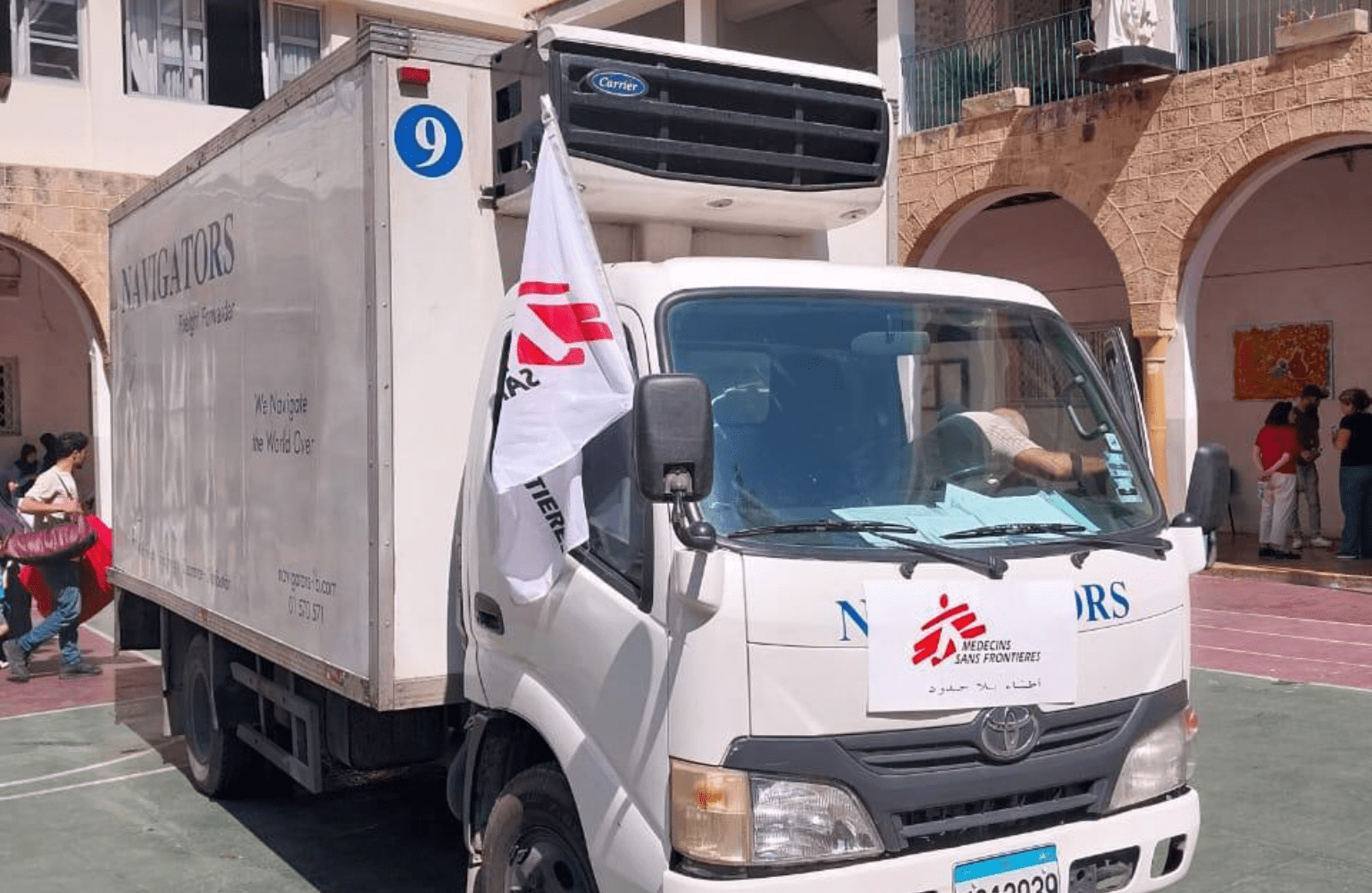
An MSF truck transporting non-food item kits for people fleeing from southern Beirut.

“That night was like a horror movie”

Testimony collected on 30 September in Ramleh El-Bayda, Beirut.

“My name is Hassan*, and I come from Nabatieh governorate, in southern Lebanon. I used to live with my wife and three children in the southern suburb of Beirut.

Four days ago, we decided to leave our home with my family because we were worried about our safety. That night felt like a horror movie; warplanes, airstrikes—you name it. While we were in the car, we could feel the ground shaking.

We spent the first two days in a house in another neighborhood of Beirut, but then the owner asked us to vacate the apartment.

Now, we are here in Ramleh El-Bayda in Beirut. We are 20 members of my family,stranded on the beach. All the shelters and schools are full. Where should we go? We have no place to stay. It seems that nowhere is safe now.

The situation is far worse than anyone can imagine. We have so many needs. When we left, we only took a couple of clothes and our documentation. We couldn’t even bring a mattress or a pillow. Last night, we slept on chairs. No one is helping us.

All I care about is the kids. The youngest is a year and a half old. How can I look out for my family?”

*Name was changed based on request to protect privacy.

MSF colleague Maryam shares her testimony of a night marked by displacement and escaping airstrikes in the southern suburbs of Beirut
Facebook
Twitter
LinkedIn
WhatsApp
Print