Sudan: 500 Days of War and a Failing Humanitarian Response as Medical Needs Soar

Sudan: 500 Days of War and a Failing Humanitarian Response as Medical Needs Soar

Port Sudan/Darfur, Sudan, 27 August 2024 – Today marks 500 days since Sudan began enduring its worst humanitarian crisis yet. This is a shameful moment for international humanitarian organisations and donors, who for over 16 months have failed to provide an adequate response to the country’s escalating medical needs, from catastrophic child malnutrition to widespread disease outbreaks. Heavy restrictions from both warring parties have drastically limited capacities, including ours, to deliver aid, says Médecins Sans Frontières (MSF).

Fighting between the Rapid Support Forces (RSF) and the Sudanese Armed Forces (SAF), starting from the capital Khartoum on April 15, 2023, has been raging across multiple parts of the country, triggering an unprecedented humanitarian crisis in Sudan. The conflict has left tens of thousands of people killed and injured. Between April 2023 and June 2024, MSF treated 11,985 war-wounded at supported hospitals. The violence has created the world’s largest displacement crisis: over 10 million people, or one in five people in Sudan, have been forced to flee their homes, many of them facing repeated displacement, according to the UN.

As political solutions for the crisis stagger, malnutrition rises amid increasing food prices and a lack of humanitarian supplies. Beyond the catastrophic situation in North Darfur’s Zamzam camp, MSF’s inpatient therapeutic feeding centres in other areas of Darfur like El Geneina, Nyala and Rokero are full of patients, and the same applies to refugee camps where we operate in eastern Chad. Since the onset of the war until June 2024, we treated 34,751 acutely malnourished children in Sudan.

Today children are dying of malnutrition across Sudan. The help they most urgently need is barely coming and, when it does, it is often blocked. In July, for instance, trucks with MSF supplies in two different locations in Darfur were blocked from reaching their destination. Two trucks were held by RSF, and one was seized by unknown armed men.
Tuna Turkmen, MSF Emergency Coordinator in Darfur

The situation is also challenging in east and central Sudan. “In south Khartoum, MSF has been blocked from bringing medical supplies and international staff to hospitals for many months. It is becoming increasingly difficult to provide the medical care our patients need, including maternity and emergency care,” said Claire San Filippo, MSF Emergency Coordinator for Sudan.

On top of man-made impediments imposed or tolerated by the warring parties, including lawlessness, insecurity, bureaucratic obstacles, and delayed or denied permissions to reach affected populations that have significantly slowed down the humanitarian response, now natural impediments are also hampering movements of humanitarian personnel and supplies.

The rainy season, an annual occurrence that exacerbates needs and complicates movements, is at its peak. Heavy rains have flooded crossing points and washed off critical roads and bridges. With the collapse of Mornei bridge in West Darfur, the only lifeline route connecting Central and South Darfur with Chad, from where supplies arrive, millions of people will not be able to receive assistance coming by road.

We already see an uptick in malaria cases and water-borne diseases with cholera outbreaks now declared in at least three states. The threat of vaccine preventable diseases among children, such as measles, is looming with the war putting immunization campaigns on hold.

Meanwhile, the conflict has put nearly 80% of the health facilities out of service, according to the World Health Organization, crippling an already struggling health system. In El Fasher alone, MSF-supported facilities were attacked 12 times and only one public hospital remains partially functional with the ability to perform surgery since fighting escalated in the city in May.

Most recently, on 22 August at around 4:40 am, shelling struck the house accommodating part of the MSF team working in El Fasher and Zamzam. Fortunately, the damage was only material and no one in the house was injured. This constitutes the 84th violent incident against MSF staff, vehicles and premises in Sudan since the start of this conflict, which has been characterised by a glaring disregard for the protection of civilians, as well as health personnel and facilities.

The situation is not much better in neighbouring countries, where about two million have sought refuge, often separating from their dear ones. “My husband has been missing for over a year and I don’t know where he is,” says Um Adel, a woman in Metche, a camp in eastern Chad. “[My son] Khalid was fine, until the food started to diminish. After a day or two of not eating well, he developed a high fever. I don’t feel comfortable here and the situation is not good, I want to go back to Sudan.”

Warring parties, and member states with influence over them, must ensure the protection of civilians, health personnel and medical facilities. Responsible authorities on both sides of the conflict must simplify the processes granting permissions for humanitarian movements and personnel through all available routes across borders, states, and frontlines, and provide prompt responses. And the United Nations, relevant agencies and anyone who has the power to help must employ all measures to ensure that available access routes are utilized to their fullest extent.

MSF tries to fill some of the gaps. In many places we work we are the only international organisation operating, but we cannot tackle this huge crisis alone. We are also struggling to get supplies and staff to our projects. In tandem with access, securing sustained funding to UN agencies, as well as local organisations and responders, who are carrying the brunt of this response, is also essential. A meaningful response with aid reaching people who need it most must start now. There is no more time to waste.
Esperanza Santos, MSF Emergency Coordinator in Port Sudan

MSF is one of the few international organizations working on both sides of the conflict in Sudan. It currently runs and supports medical projects, including over 20 primary healthcare clinics and hospitals across 8 of Sudan’s 18 states. MSF employs 926 Sudanese staff and 118 international staff, and it provides incentives to 1,092 Ministry of Health staff.

Facebook
Twitter
LinkedIn
WhatsApp
Print

International Activity Report 2023

International Activity Report 2023

By: Dr Christos Christou, International President, Médecins Sans Frontières and Christopher Lockyear, Secretary General.
 

In 2023, as the world was once again shaken by devastating natural disasters and brutal wars, Médecins Sans Frontières (MSF) worked to support people in need of medical care and basic services.

Alongside our regular activities, we launched emergency responses to powerful earthquakes in Türkiye, Syria, Morocco, and Afghanistan. We also assisted communities caught up in wars in Sudan and Palestine, and other conflicts around the world.

We face many challenges in delivering this assistance: not only in gaining access to patients but also in ensuring the safety of our staff in insecure situations.

After war in Sudan erupted in April, leading to tens of thousands of casualties and around 8.5 million people being displaced from their homes, our teams had to quickly adapt and scale up as the country spiralled into chaos. We transformed our activities, treating patients with gunshot, stabbing and shrapnel wounds, as well as responding to surges of malnutrition and measles cases in overcrowded displacement camps.

However, working across 11 states and in 30 health facilities, we faced severe challenges due to chronic insecurity, with warring parties blocking humanitarian access and the delivery of aid, all amidst the scarcity of global attention.

Despite this, the medical care we have been able to provide demonstrates that it is possible to work in Sudan. Yet we often find ourselves the sole humanitarian organisation in areas where we are working. In the face of the immense needs, a massive scale-up of the humanitarian response is desperately and urgently needed.

On 7 October, we, like so many, were horrified by Hamas’ massacre in Israel, and we are horrified by Israel’s response. We feel the anguish of families whose loved ones were taken hostage on 7 October. We feel the anguish of the families of those arbitrarily detained from Gaza and the West Bank.

In Palestine, as the Israeli authorities waged their offensive with impunity, our teams had to reorganise in desperately difficult conditions, often moving from hospital to hospital amidst bombardments, putting their lives at risk to provide lifesaving care. They are exhausted and many are utterly traumatised. Tragically, six of our team members have been killed, and we mourn their loss. Under these extreme conditions, we continue to work where and how we can in Gaza.  

During the year, we continued to examine ourselves critically, to ensure a working environment free of harassment and abuse for both staff and patients. We unequivocally commit to reinforcing mechanisms and procedures to prevent and address abuse, harassment, and exploitation within MSF, including guidance on how to report cases.

In 2023, a patient charter was developed to ensure effective, safe, and equitable healthcare in our projects. The charter is based on seven principles, aiming to assure that no harm is caused in delivering healthcare. The charter’s principles range from general overarching ideals to tools and practices that can be used and adapted according to the culture and context of our projects.

We’ve also challenged ourselves on how we bear witness, to make sure that we do so in a way that is ethical and respectful of patients. With some sensitive and problematic images taken in our facilities over the course of our history, we committed to make changes. We convened an advisory group composed of staff and external experts to review content from the MSF image database and provide advice. Their feedback invited a critical reflection on MSF visual norms and standards, and proposes concrete recommendations and solutions to ensure that the dignity, safety and integrity of patients prevails.  

Our aim as humanitarians is to provide support and care to those in need. In 2023, we were able to run a range of vital healthcare programmes in more than 70 countries, thanks to our dedicated staff and the generosity of our supporters. This loyal support gives us the courage to keep going, despite the obstacles and the increasingly polarised views in today’s world. We remain ever thankful to you for believing in our humanitarian work.

Facebook
Twitter
LinkedIn
WhatsApp
Print

Five questions about the mpox outbreak in DRC

Five questions about the mpox outbreak in DRC

In Democratic Republic of Congo (DRC), the number of mpox (formerly known as monkeypox) cases have been on the rise for more than two years. However, the situation has worsened in recent months, with a surge in the number of people affected, a mutation leading to human-to-human transmission of the virus, and the notification of suspected cases in sites for displaced people in North Kivu province. What is the situation in the country, and what are Médecins Sans Frontières (MSF) teams doing to deal with this new emergency? Dr Louis Albert Massing, MSF’s medical coordinator in DRC, provides some answers.

What is mpox and what risks does it pose?

Mpox is a disease caused by the monkeypox virus. It is transmitted by close contact between people or with infected animals. It has been endemic in Central Africa (strain I) and West Africa (strain II) since the 1970s and spread rapidly around the world in 2022-2023. Tens of thousands of cases linked to the West African variant have been reported in more than 110 countries.

In practical terms, mpox causes rashes, lesions, and pain, all of which require supportive treatment to manage the symptoms as effectively as possible, and avoid further complications. Most patients treated recover within a month, but the disease can be fatal if left untreated. In DRC, where the mortality rate for the strain is much higher than in West Africa, more than 479 people have died since the start of this year. By comparison, the World Health Organization (WHO) estimates that mpox claimed the lives of 89 people worldwide in 2022.

What is the current situation in DRC?

Historically, the disease is endemic in 11 of the country’s 26 provinces. However, the number of cases has been rising sharply for more than two years, leading health authorities to declare an epidemic in December 2022. The number of cases tripled in 2023, with more than 14,600 suspected cases notified and 654 deaths. But in 2024, the situation has worsened further. Between January and mid-July, more than 12,300 suspected cases were reported, and 23 provinces were affected.

The acceleration of the epidemic is worrying, especially as a genetic mutation has been identified in South Kivu province, with human-to-human transmission now uninterrupted for months. This had not yet been identified with the Congo Basin strain, unlike the West African strain that caused the global epidemic in 2022. In addition to this mutation, another cause for concern is that the disease has been recorded in displaced people’s camps around Goma, in North Kivu, where the high population density is making the situation critical. There is a real risk of an explosion of the disease, given the huge population movements in and out of DRC.

The identification of cases, the monitoring of patients, and the care available remain extremely limited, while the lack of vaccines makes the situation even more difficult. The perception of the disease as being linked to mysticism or witchcraft in some communities also complicates people’s adherence to public health measures. This illustrates the need to work closely with community leaders to get everyone to adhere to the measures. MSF is calling for the mobilisation of all those involved in the response, and for the communities most at risk to be protected as quickly as possible by vaccination.

As many partners as possible must support key aspects of the response such as laboratory analysis, surveillance, support for isolation and self-isolation, and awareness-raising.
Dr Louis Albert Massing, MSF medical coordinator in DRC

What is the situation regarding vaccines in DRC?

DRC has validated two vaccines and is trying to obtain supplies, but at this stage, no vaccine is yet available. Negotiations are underway with certain countries, and priority areas are being identified. We hope that things will soon be resolved and that sufficient vaccines will be supplied to the country to act in the main epidemic areas.

What are MSF teams doing in the meantime?

We have set up several interventions to support the response to this outbreak. This is not the first time: emergency interventions were already carried out in 2021 in Mai-Ndombe province, then in 2023 and early 2024 in Équateur province. But we’re stepping up our efforts given the recent developments.

Since mid-June, one of our teams has been supporting the Uvira health zone in South Kivu. We are supporting the provision of care for people with severe symptoms at the Uvira general referral hospital, and follow up with patients with milder forms of the disease on an outpatient basis, while isolating suspected cases. Our teams are training medical staff in medical management and are also involved in infection prevention and control measures and community awareness-raising. In Uvira, over the last five weeks, more than 420 patients have already been treated by MSF, including 217 serious cases. We are also providing hospitals with kits for treatment and for taking samples.

In North Kivu, we have launched surveillance and awareness-raising activities in the displaced people’s camp sites in Goma where we are present, and we are strengthening health care facilities in terms of triage, isolation and management of patients presenting mpox symptoms.

In the northwest of the country, two other interventions have been launched: one in the Bikoro health zone, in Équateur, and the other in the Budjala health zone in South-Ubangi. Both interventions will be carried out for several months. They are also aimed at training medical staff in medical and psychological care, strengthening epidemiological surveillance, infection prevention and control measures, including community awareness-raising, particularly for groups of people that are sometimes more difficult to involve, such as people with disabilities. In Budjala, 329 patients were treated with our support between mid-June and mid-July. In Équateur province, we will also be conducting operational research with the health authorities to better understand the dynamics of the virus and how to combat the disease.

What should the immediate priorities be?

The epidemic is spreading in areas with demographic and geographical realities that are sometimes very different. The response must be not only multisectoral but also adapted to each context. Pending the arrival of vaccines, as many partners as possible must support other key aspects of the response such as laboratory analysis, surveillance, support for isolation and self-isolation, awareness-raising, etc. And, of course, patient care. Today, all these aspects suffer from shortcomings and require enormous resources to function properly.

For the rest, as I was saying, we can only plead, like so many others, for the vaccines to arrive in the country as quickly as possible and in large quantities, so that we can protect communities in the areas most affected—particularly the most at-risk groups such as Congolese health workers, who are on the front line of the infection, as well as other at-risk groups such as sex workers and displaced people in camps.

Facebook
Twitter
LinkedIn
WhatsApp
Print

Nigeria: Overwhelming surge of malnutrition cases in Bauchi

Nigeria: Overwhelming surge of malnutrition cases in Bauchi

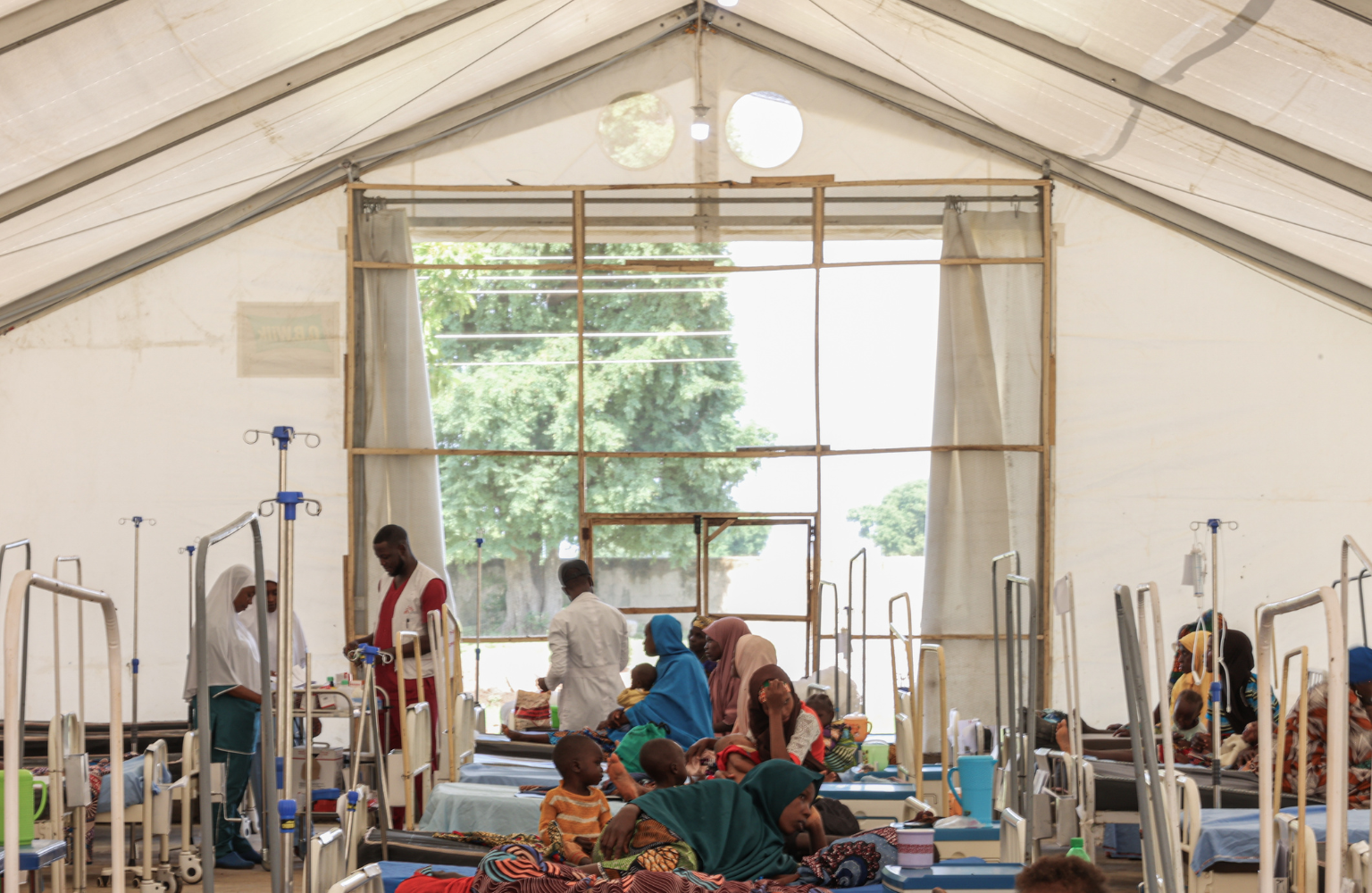
30th July, Bauchi state, Nigeria: In Bauchi state, like other states in northern Nigeria, Médecins Sans Frontières (MSF) teams are witnessing an unprecedent surge in malnutrition cases and are rapidly scaling up our medical response. As well as increasing bed capacity at the inpatient therapeutic feeding centre (ITFC) in Ganjuwa LGA, we are launching a community-integrated program to identify and train people in the community to diagnose and treat malnutrition at an early stage.

Bauchi, along with the majority of northern Nigeria, is facing a malnutrition crisis. Across Nigeria, MSF teams have seen rates of malnutrition admissions rise on average 40 per cent from the same period last year. Between January and June 2024, more than 5,780 children were admitted in our ITFC and more than 17,220 to our three local ambulatory therapeutic feeding centres (ATFCs) in Bauchi. ATFCs support malnourished children before they need to be admitted to an in-patient hospital. The number of admissions is 127 per cent and 123 per cent higher than during the same period in 2023 respectively.

We are very alarmed by the catastrophic increase in malnutrition admissions we have seen in Bauchi in the first half of 2024. Although there may be many factors compounding this increase in admissions, the numbers we are seeing are incredibly high. We are only just entering the peak season for malnutrition and our facilities are over capacity and having to expand.
Rabi Adamou, MSF Project Coordinator for Bauchi

MSF has been supporting the local health system in Bauchi since 2012 by responding to outbreaks of diseases such as cholera, diphtheria, and Lassa fever, providing healthcare, training medical staff, and conducting health promotion activities in communities.

Since 2022, MSF has been responding to the huge numbers of children suffering from malnutrition. Our teams currently run a 250-bed ITFC and an inpatient paediatric department (IPD) in Kafin Madaki General Hospital. We also operate in three ATFCs in Kafin Madaki, Kafin Liman and Miya primary healthcare centres.

In addition, new community-based activities are planned. Integrated community case management (iCCM), which aims to expand the existing community-based approach to include the treatment of malnutrition. This pilot program in eight villages in Miya started in mid-July. To respond to the increasing number of admissions for malnutrition in the region, MSF added malnutrition treatment to the conventional iCCM activities, which include malaria and diarrhoea diagnosis and treatment.

“Given the multifaceted causes of malnutrition, it is imperative the response is equally comprehensive and spans multiple sectors. This includes not only treatment but also preventative measures. Recognising the geographically widespread nature of people’s needs, the response must mirror this extent, ensuring a broad and multidisciplinary approach to help offer children this care”, says Nathalie Avril, MSF nutrition advisor.

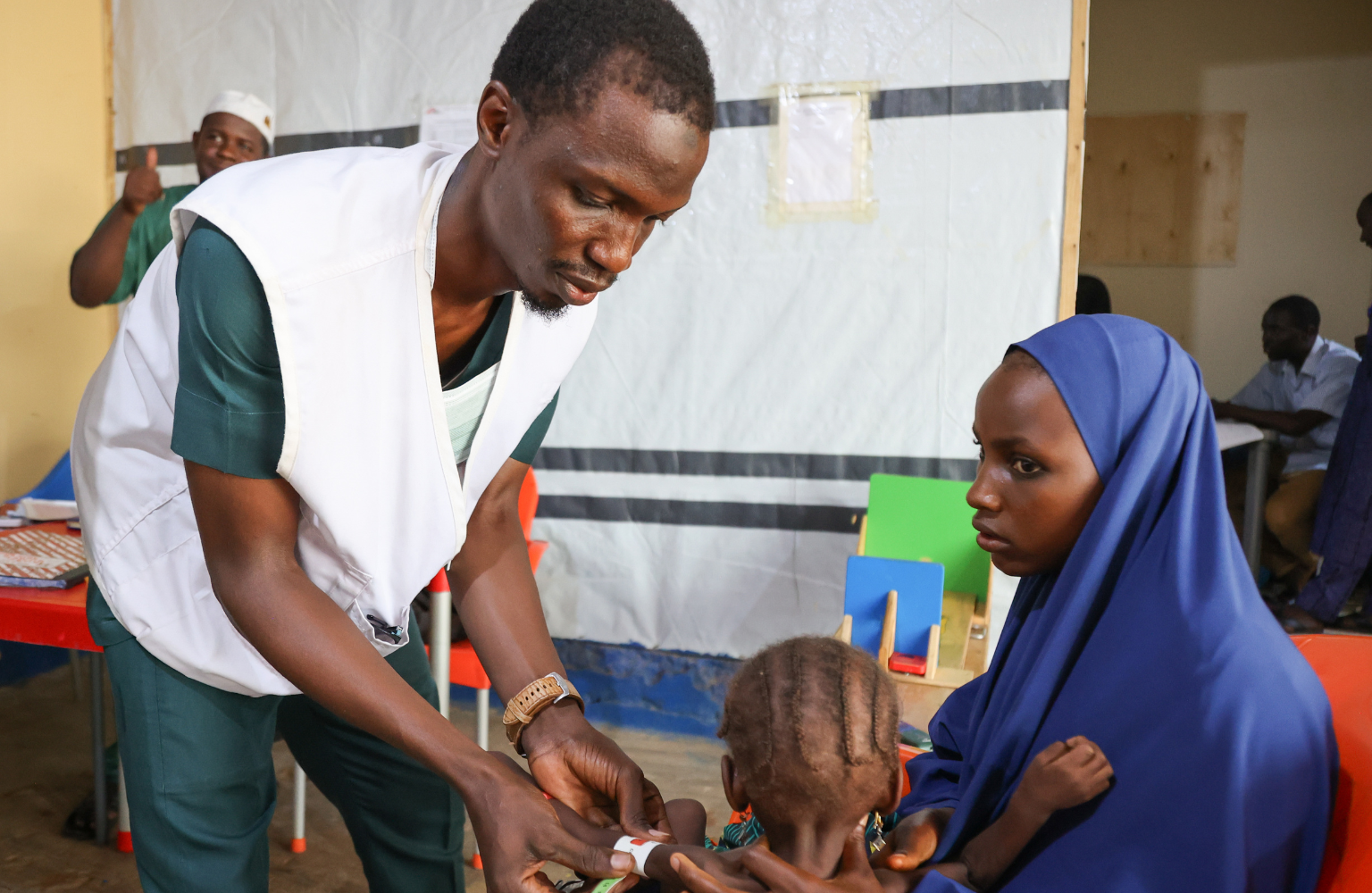
The ‘Parent MUAC’ (mid-upper arm circumference) activity will also be implemented in Bauchi. This activity trains parents and caretakers to measure children at home using the MUAC, to monitor and detect malnutrition in children at early stage, before it develops into severe cases.

“Despite the collective efforts, many challenges remain like limited access to healthcare, the lack of qualified medical staff in health facilities, provisions of medications and ready to use therapeutic foods, all of which are essential to treat children with malnutrition. It is crucial that Bauchi state representatives as well as national and international stakeholders work together and expand the response to help deliver this critical care to children and families and prevent further increase in malnutrition numbers in the years to come”, says Rabi Adamou, MSF project coordinator for Bauchi.

Facebook
Twitter
LinkedIn
WhatsApp
Print

SUDAN: Last hospital in El Fasher risks closure during intensive bombardment of the city

SUDAN: Last hospital in El Fasher risks closure during intensive bombardment of the city

Nairobi, Wednesday 14 August – As the fighting escalates in El Fasher once more, its impact on the lives of civilians is becoming increasingly devastating, warns Médecins Sans Frontières (MSF). Multiple attacks on the city have taken place over the past week and since Saturday, at least 15 people have been killed, more than 130 have been injured, and yet another attack on the MSF-supported Saudi hospital – the last remaining public hospital in the city with the capacity to treat the wounded and perform surgery – has occurred, causing extensive damage and leaving the facility only partially functioning.

The attack took place on Sunday 11 August, marking the 11th time a hospital in El Fasher has been hit since the fighting escalated on May 10. The surgical ward was hit during the bombardment, killing the carer of a patient and injuring five others, while the maternity unit was also damaged. In addition, a number of hospital offices were hit, and a nurse sustained injuries while working inside.

Already, Saudi hospital had been inundated with wounded people following heavy fighting on Saturday 10 August. Over 100 people arrived at the facility that day, and 14 passed away from their injuries. At the same time, 15 casualties were brought from El Fasher to MSF’s facilities in Zamzam camp. It is expected that the fighting will become even more intense over the coming days.

For more than three months, people in El Fasher have been under constant bombardment. Shelling from both sides has impacted on the city resulting in over 2,500 casualties arriving at MSF-supported hospitals and more than 370 of these patients passing away from their injuries. The number of victims of the conflict is unknown. Sunday’s attack on Saudi hospital – which is the largest hospital in North Darfur state – makes it crystal clear that the warring parties are making no efforts to protect health facilities or the civilians inside them. Patients fear for their lives as a result of the relentless attacks.
Michel Olivier Lacharité, head of MSF’s emergency operations

“People are moving to Zamzam to flee the fighting in El Fasher, but those already in the camp also fear for their lives – Zamzam was hit by shelling just one week ago and there are very real fears that this will happen again. We are preparing to receive more casualties in Zamzam – especially as the fighting in El Fasher means that people cannot easily reach Saudi hospital. However, our field hospital has been built to treat children with malnutrition and paediatric diseases – it is not currently set up to treat the wounded. There is no operating theatre and no blood bank, which means our team will be under exceptional pressure if casualties continue to arrive. Additionally, people in the camp are already facing life-threatening issues of their own. MSF raised the alarm about the catastrophic malnutrition crisis there over six months ago, and now the Famine Review Committee has declared a state of famine in the camp. We urge the warring parties to let humanitarian supplies pass through without being obstructed, and we also urge them to protect civilians and health structures. Saudi is the last remaining public hospital in North Darfur with the capacity to effectively treat the wounded. If it, or our facilities in Zamzam, are hit again and become non-functional, there will be nowhere left for the injured to seek care and the death toll will soar.”

Facebook
Twitter
LinkedIn
WhatsApp
Print

Bangladesh: MSF sees severe spike in arrivals of war-wounded Rohingya from Myanmar

Bangladesh: MSF sees severe spike in arrivals of war-wounded Rohingya from Myanmar

Dhaka, Bangladesh, 9 August 2024 – Escalating numbers of Rohingya people with violence-related injuries have crossed the border into Bangladesh over the past week, says international medical organisation Médecins Sans Frontières/Doctors Without Borders (MSF), indicating the worsening humanitarian crisis in Myanmar’s Rakhine state.

In the four days leading up to 7 August, MSF teams in Cox’s Bazar, Bangladesh, treated 39 people for violence-related injuries. More than 40 per cent were women and children. Many had  mortar shell injuries and gunshot wounds. Numbers peaked on 6 August when MSF teams treated 21 wounded people. MSF staff at the clinic say this is the first time in a year that they have seen serious injuries on this scale.

“Considering the rise in the number of wounded Rohingya patients crossing from Myanmar in recent days, and the nature of the injuries our teams are treating, we are becoming increasingly concerned about the impact of the conflict on Rohingya people,” says Orla Murphy, MSF’s country representative in Bangladesh. “It is clear that safe space for civilians in Myanmar is shrinking more each day, with people caught up in the ongoing fighting and forced to make perilous journeys to Bangladesh to seek safety.”

Patients have described to MSF staff the desperate situation in Rakhine state. Some reported seeing people bombed while trying to find boats to cross the river into Bangladesh and escape the violence. Others described seeing hundreds of dead bodies on the riverbanks. Many patients spoke of being separated from their families en route to safer areas and of loved ones being killed in the violence. Many people said they were fearful that family members remaining in Myanmar would not survive.

Conflict has been escalating in Rakhine state since October 2023, causing immense suffering to the Rohingya population and crippling the healthcare system. “Our patients tell us that they faced extreme difficulties in accessing medical facilities in Myanmar due to the highly volatile situation there,” says Murphy.

The conflict has also impacted MSF’s ability to run medical activities safely. In June, MSF was forced to suspend its services in Northern Rakhine state because of the violence, depriving people of vital medical care and further deepening the humanitarian crisis.

MSF calls for the immediate protection of civilians caught up in the conflict. “People must not come under indiscriminate attack and should be allowed to leave for safer areas, while all those in need of vital medical care should have unhindered and sustained access to medical facilities,” says Murphy.

Facebook
Twitter
LinkedIn
WhatsApp
Print

Being a Child in a Refugee Camp: “We Too Have Dreams and Talents”

Being a Child in a Refugee Camp: “We Too Have Dreams and Talents”

Medecins Sans Frontieres has been running an emergency response in Eastern Chad for a year to address the medical and humanitarian needs of refugees who fled Sudan after the outbreak of war. Since the conflict began in April 2023 till June this year, over 600,000 Sudanese refugees have arrived in Chad as per the UN data.

As part of our agile response to this displacement, we are providing pediatric support at our clinics in Adré transit camp and Aboutengué camp, offering essential health services for children. Since the beginning of this year till July, we have conducted approximately 43,709 pediatric consultations for children under five years old in these clinics.

In the following testimonies, we share the voices of Sudanese children, aged 7 to 12 years old, as they speak about their life in the camp: their talents, hobbies, needs as children, and their future wishes.

Copyright Thibault Fendler/MSF

Rayan – 7 years old

Rayan’s from Ardamatta, North-East of El-Geneina. She arrived in East Chad one year ago.

“Life is okay here. At least here, we don’t hear gunshots. I like to do pottery, making little pots, cups, teapots, and “mabakhar” (Arabic word for censers used to burn fragrant herbs to perfume the room). I make everything with mud I find in the camp after the rain and let dry in the sun.

I play tea party with other children. Back in Sudan, my favorite moment at school was at the end of the class when they gave us a toy tea set to play with. But since I’m not going to school anymore, I made one on my own so I can keep playing.

My mom came here first with my five sisters and me to set us up in the camp and then went back to Ardamata to find my dad and bring him here on a cart. When people asked me if I would like to go back home, I say, “No”.  I’m fine here.”

Copyright Thibault Fendler/MSF

Mushtaha – 10 years old

“I have four sisters and one brother. My little sister was even born in Adré’s hospital, five months ago. We all live together with our dad and mom. My mother has a little shop in front our shelter where she sells sweets. Life was different before we came here. We lived in El-Geneina, and now we’ve been in these shelters for nine months. Life is hard in the camp.

Here, there’s no electricity, so no watching TV… I loved watching MBC3, a channel for children. I miss sitting on chairs; we have none here, we always sit on the floor.

We are at the middle of the desert, so there are no trees to play under neither. My parents built a shelter with a metal roof to sleep under, and that’s where we stay and where we play…  When fled from El-Geneina, we brought some toys with us: a few dolls and the Talking Tom cat. But Tom, the toy, doesn’t talk anymore because he has no more batteries.

In El-Geneina, I used to go to school. But here, there is no school. Why are there no schools here?  I want to be a doctor, and why not work with MSF. But how and I am out of school?

Copyright Thibault Fendler/MSF

Mazim – 12 Years old

“I am from El-Geneina. I am the oldest of six siblings, with two sisters and three brothers. I have been here for more than a year and also share the shelter with two of my cousins. My aunt, my mom’s sister, went back to Sudan a few weeks ago to try to find her husband, who has been missing for months.

Life here is okay. My days consist of playing football, praying, and playing football again. When playing football, I always have the same position: wing-back. My favorite team is Real Madrid. Look! I have their logo on my sweatpants. And my favorite player remains Cristiano Ronaldo, even though he’s not playing there anymore.

My brother, he’s for Barcelona, he wears their jersey all the time. This is how we play all the time: Madrid against Barcelona.

 At first, we had a ball, but it has worn out over time. So, we stuffed a sock with plastic and play with that now.

There is a football pitch nearby the camp, that’s where we play, always the same 24 kids, enough to assemble two teams. I met some of them in the camp but knew others from El-Geneina already.

Often, neighbors who fled are in contact during the journey from Sudan, so those who arrive first wait at the border to welcome the new arrivals and take them to their block so they can settle there. In that way, we recreate our former neighborhood in the camp and stay surrounded by the ones we know.

Sometimes, I also go around the camp to pick up wood for my mother to cook with. I also have to do some work to support my family. I am a part-time cobbler. I go to the market several times a week to polish shoes and repair others as I learned to sew. The food given by humanitarian organizations is not enough, so I buy a little of vegetables and even meat as these is not provided by the aid.

In the future, I would like to be a doctor, to help and heal people—”all the people.”

Facebook
Twitter
LinkedIn
WhatsApp
Print

Occupied lives: The Risk of Forcible Transfer of Palestinians in Hebron

Occupied lives: The Risk of Forcible Transfer of Palestinians in Hebron

Hebron, West Bank: “You can’t get sick here, it’s not allowed” – Palestinians in Hebron blocked from medical care, says MSF.

 Hebron, Occupied Palestinian Territories, 6 August 2024 – Physical injuries, mental trauma and restricted access to medical care are an everyday reality for many Palestinians living in and around the West Bank city of Hebron, warns international medical organisation Médecins Sans Frontières /Doctors Without Borders (MSF) in a new report published today. In “Occupied lives: the risk of forcible transfer of Palestinians in Hebron”, MSF details the rapidly deteriorating access to medical care for Palestinians in Hebron because of restrictions imposed by Israeli forces and violence perpetrated by Israeli soldiers and settlers.

“The movement restrictions and harassment and violence by Israeli forces and settlers is inflicting immense and unnecessary suffering on Palestinians in Hebron,” says MSF humanitarian affairs manager Frederieke van Dongen. “This is having a disastrous impact on people’s mental and physical health.”

The movement restrictions and harassment and violence by Israeli forces and settlers is inflicting immense and unnecessary suffering on Palestinians in Hebron. This is having a disastrous impact on people’s mental and physical health.
MSF humanitarian affairs manager Frederieke van Dongen

Ministry of Health clinics across Hebron governorate have been forced to close, pharmacies have run short of medications, and ambulances transporting the sick and wounded have been obstructed and attacked. Faced with restrictions on their movements and the threat of violence, many sick people delay seeing a doctor or have no choice but to stop their treatment altogether. In addition, families across Hebron are experiencing severe financial hardship after losing their livelihoods, forcing many to cancel their health insurance, limit their food and go without essential medicines, which they can no longer afford.

Through the testimonies of patients and Palestinian communities supported by MSF, the report sets out the consequences Israeli-imposed movement restrictions and physical violence on Palestinians’ access to medical care and describes its devastating impact on people’s physical and psychological wellbeing.

One of the most restricted areas within the West Bank is known as H2, where 21 permanent checkpoints operated by Israeli forces regulate the movement of Palestinian residents and pose significant barriers to healthcare workers trying to access the area. For two months after 7 October, Ministry of Health clinics inside H2 were closed, and only one clinic was able to open as most of the Ministry of Health staff did not have permissions to cross the Israeli checkpoint into H2.  

“There are no clinics operating within the closed area [H2] currently, and even if there were, residents live in fear of losing their lives for medicine,” said MSF staff member and resident of H2, speaking in November 2023 after Israeli forces blocked access to all Ministry of Health staff in the area forcing them to close their doors to patients. . “You can’t get sick here, it’s not allowed.”

In the months directly following the attacks of 7 October, movement restrictions and violence in the H2 area of Hebron city were so intense that patients resorted to climbing over fences and rooftops, at the risk of their lives, just to access healthcare
MSF humanitarian affairs manager Frederieke van Dongen

The continuous threat of violence places a severe strain on people’s mental health, say MSF staff. “When the soldiers come at night for home incursions my children and wife hide behind me for protection, but I cannot protect them,” says a Palestinian patient in Masafer Yatta, South Hebron Hills. “They have the power; they can do whatever they want.”

MSF’s report also sheds light on the forced displacement in Hebron governorate. Ever-more coercive and violent policies and practices by Israeli authorities and settlers are pushing a growing number of Palestinian families to flee their homes in what may amount to a forcible transfer, says MSF. The report describes how, since October 2023, MSF teams have responded to the urgent needs of more than 1,500 Palestinians across Hebron who were either forcibly displaced from their villages or whose houses were demolished and possessions destroyed. “Despite their responsibilities as an occupying power, Israel authorities’ have failed to meet their obligations to the Palestinian people,” says  Dongen. “

Israeli policies implemented in Hebron are already having far-reaching consequences on Palestinian’s physical and mental health. We call on the Israeli authorities to  guarantee unimpeded access to healthcare and other essential services, to protect Palestinians against forced displacement, and to facilitate the safe return of displaced communities to their homes.”

Facebook
Twitter
LinkedIn
WhatsApp
Print

Nasser hospital must be protected as south Gaza hospitals receive waves of deadly influxes

Nasser hospital must be protected as south Gaza hospitals receive waves of deadly influxes

JERUSALEM – In Khan Younis, southern Gaza, Palestine, fighting is approaching ever closer to Nasser hospital, putting it under threat and jeopardising people’s access to medical care. This comes as Médecins Sans Frontières (MSF) teams at Nasser and Al-Aqsa hospitals have responded to 10 mass influxes of badly injured people in July alone, following bombings in the area. MSF urgently calls on all warring parties to ensure people’s safe access to medical care and to avoid the evacuation of Nasser hospital, which would endanger hundreds of patients.

“Any escalation of fighting near the hospital would obstruct access for patients and medical staff, making it impossible to provide care,” says Jacob Granger, MSF project coordinator in Gaza. “The health system is completely decimated and evacuating hundreds of patients and medical supplies, hastily or not, would be an impossible task.”

“It would have devastating consequences for people in the area, who have nowhere else to go,” says Granger. “Closing Nasser hospital is not an option.”

Any escalation of fighting near the hospital would obstruct access for patients and medical staff, making it impossible to provide care.
Jacob Granger, MSF project coordinator in Gaza

Nasser hospital is providing care for an estimated 550 patients, including people with severe burns and trauma injuries, newborns, and pregnant women. People currently admitted in the hospital need continuous, lifesaving treatment, including those who require a high level of care, oxygen therapy, or close monitoring. As the last main hospital in southern Gaza, Nasser hospital also provides essential support, including oxygen production, to several other health facilities in the surrounding area.

The encroaching war on Nasser hospital comes as MSF teams in Nasser and in Al-Aqsa hospitals have been flooded by massive numbers of wounded patients arriving at the same time. In July alone, this has occurred on 10 separate occasions, following strikes and fighting, often in areas where displaced people are sheltering.

“Every day in July has been one shock after another,” says Dr Javid Abdelmoneim, MSF medical team leader. “[On 24 July] I walked in behind a curtain, and there was a little girl alone, dying by herself. And that’s the outcome of a collapsed health system: a little eight-year-old girl, dying alone on a trolley in the emergency room. In a functioning health system, she would have been saved.”

Hospitals and health facilities should be protected and respected by the warring parties as sanctuaries for the sick and wounded where health workers can safely deliver medical care.
Alice Worsley, MSF Nurse Activity Manager

According to the Ministry of Health, levels of blood in the blood bank at Nasser hospital are critically low after five successive waves of incoming patients, with around 180 people killed and 600 injured. One in 10 people who volunteered to give blood during an MSF supported Ministry of Health blood collection activity, were unfit to donate due to anaemia or malnutrition. In Al-Aqsa hospital, the emergency department hasn’t been able to function properly as it is overwhelmed with patients. Before the war, Al-Aqsa hospital had some 220 patients beds. Currently, the hospital has 550 – 600 patients admitted.

“Al-Aqsa hospital is already several hundred patients over its bed capacity,” says Alice Worsley, MSF nurse activity manager. The overcapacity comes after receiving patients from an Israeli strike on Khadija school in Deir Al-Balah on 27 July. “The situation was desperate: even the most dedicated response can’t always save lives without enough supplies, beds, and medical staff.”

On 22 and 27 July, the Israeli forces issued two evacuation orders in Khan Younis, resulting in yet another mass displacement and further shrinking the space where people can go. According to OCHA, from July 22 to 25, approximately 190,000 Palestinians were displaced in Khan Younis and Deir Al-Balah. Since the start of the war, an estimated 1.7 million people have been advised to move to an area of 48km2, representing 13 percent of the Gaza strip, according to the World Health Organization. 

While the so-called humanitarian zones have proved to be unsafe in Gaza, the existence of such areas does not take away warring parties’ obligations to protect civilians – wherever they are. For nearly 10 months, we have seen that nowhere in Gaza is safe.

MSF calls on all parties to ensure safe access to care and avoid the evacuation of Nasser hospital, which would endanger hundreds of patients.

Facebook
Twitter
LinkedIn
WhatsApp
Print

South Lebanon: Thousands displaced and urgent healthcare needs

South Lebanon: Thousands displaced and urgent healthcare needs

“I won’t forget the sound of the air raid that woke us up that night, and I will wait for the day when I can go back to my old room.” Says Zahra 11 years old, from Aita Al Shaab displaced in Tayr Felsay, south of Lebanon.

The Israel-Gaza conflict has spilled over into neighbouring Lebanon, particularly along its southern borders, where clashes between Israeli forces and Hezbollah have persisted since October 8, 2023. In recent months the conflict have seen an escalation, with heavy Israeli bombardments displacing more than 94 thousand of Lebanese residents and exacerbating the region’s humanitarian crisis.

“At the beginning of the latest conflict in South Lebanon, we thought it would be as usual, for a few days, maybe weeks, and then it would stop. But when the air strikes intensified, we had to leave our house and farm and move immediately to my relatives in Tayr Falsay.” Says Abu Mohammed, 68 years old from Aitaroun displaced in Tayr Felsay, south of Lebanon. “I’m a farmer and I rely on my farm as a source of income. Being a displaced person isn’t new to me. In the 6 decades of my life, I’ve experienced displacement 4 times, in the 80s, 90s, 2006 and now.”

“I’ve always heard my parents’ stories of displacement over the years, and the stories of the previous wars that they witnessed, and I never thought that I would experience them myself. I miss my old room, my house, my friends.” Says Zahra.

To address the urgent healthcare needs of the displaced population, MSF has dispatched mobile medical teams to support primary healthcare centres in 4 locations in south of Lebanon: Al-Merouaniye, Ghassaniyeh, Qaaqaaiyet El Jisr, and Tayr Felsay.

MSF medical mobile teams provided 1333 medical consultations, in addition to medications, and psychosocial support for the displaced people.

“I came to this center after they told us that MSF would be visiting and providing free medical care, so I came here with my wife to follow up on the diabetes and hypertension with the medical doctor and get our medications. Since we arrived here, we haven’t found or received any humanitarian assistance from any organisation, except for the weekly visits of MSF medical teams to this health centre.” Explains Abu Mohammad.

Abu Mohammad adds, “If it weren’t for the solidarity of the people here with us, providing shelter, houses and food, I don’t know where we would end up.”

Facebook
Twitter
LinkedIn
WhatsApp
Print