I will always be a daughter of South Lebanon!

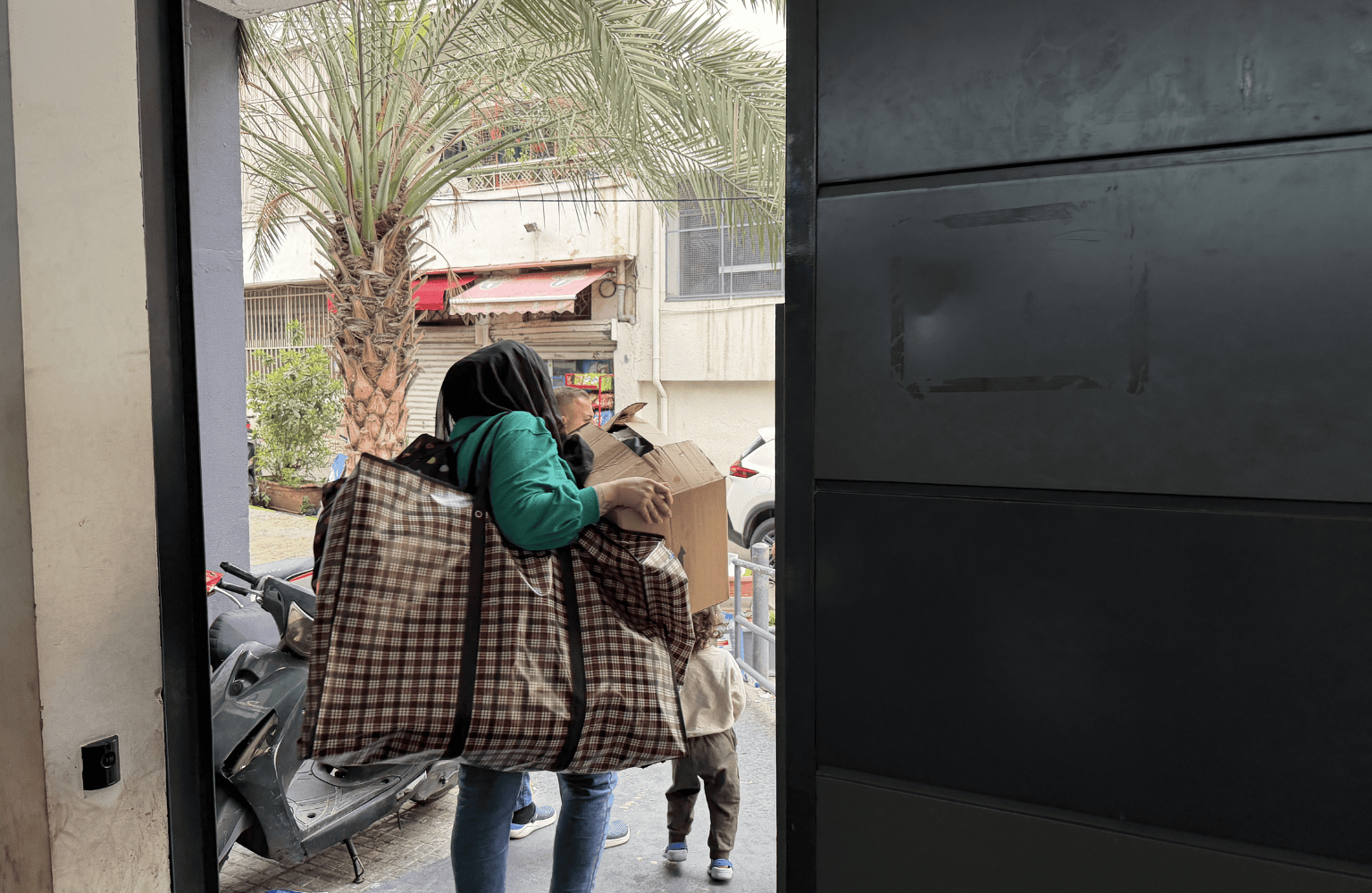
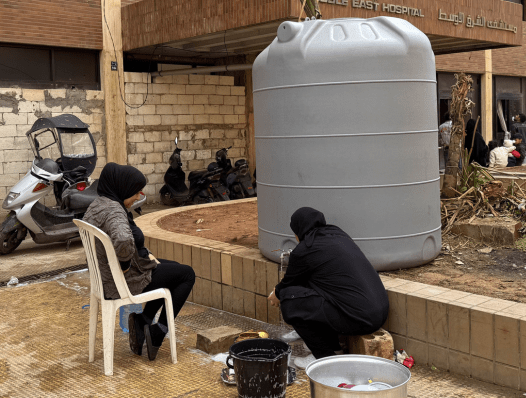
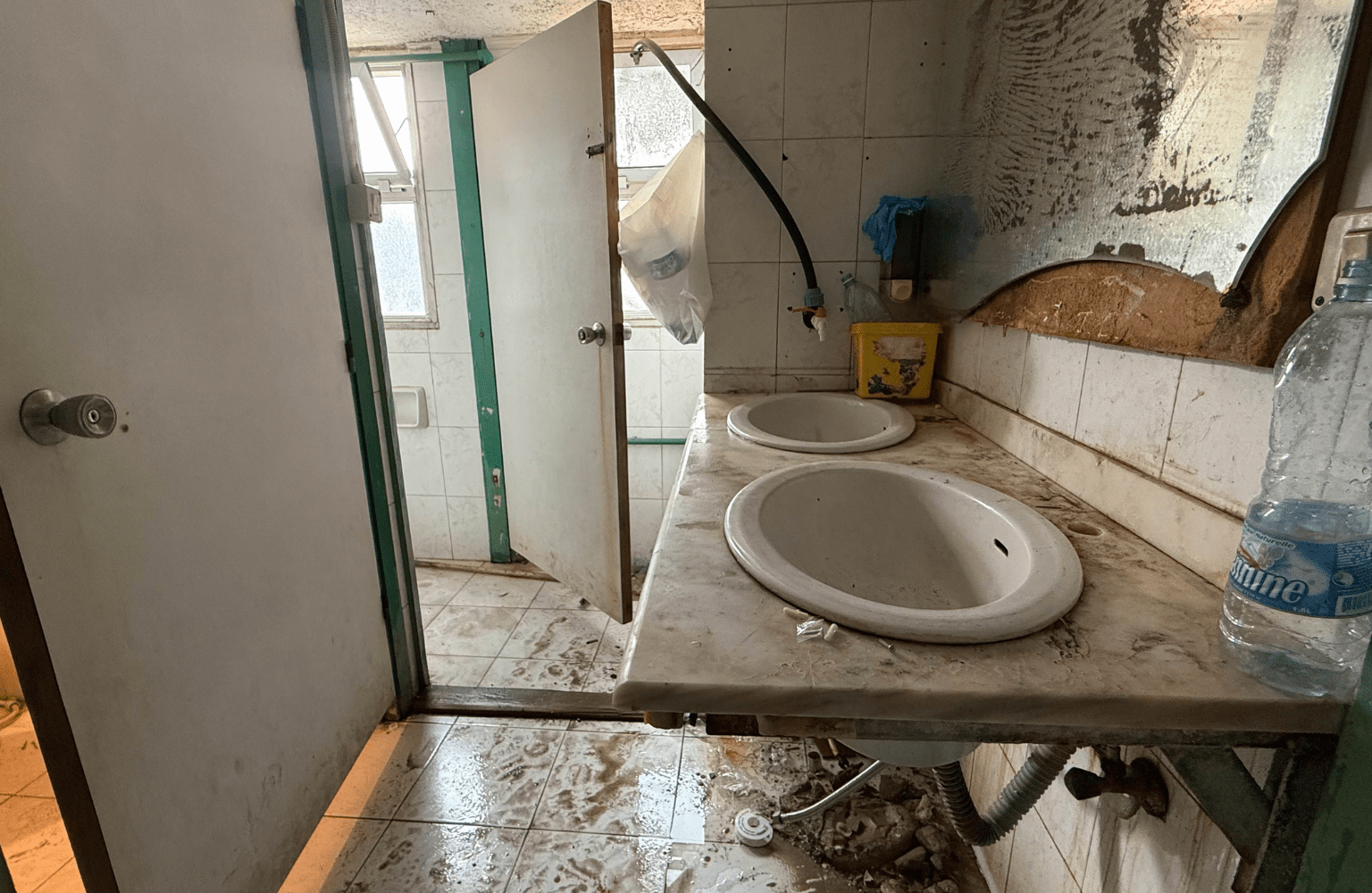
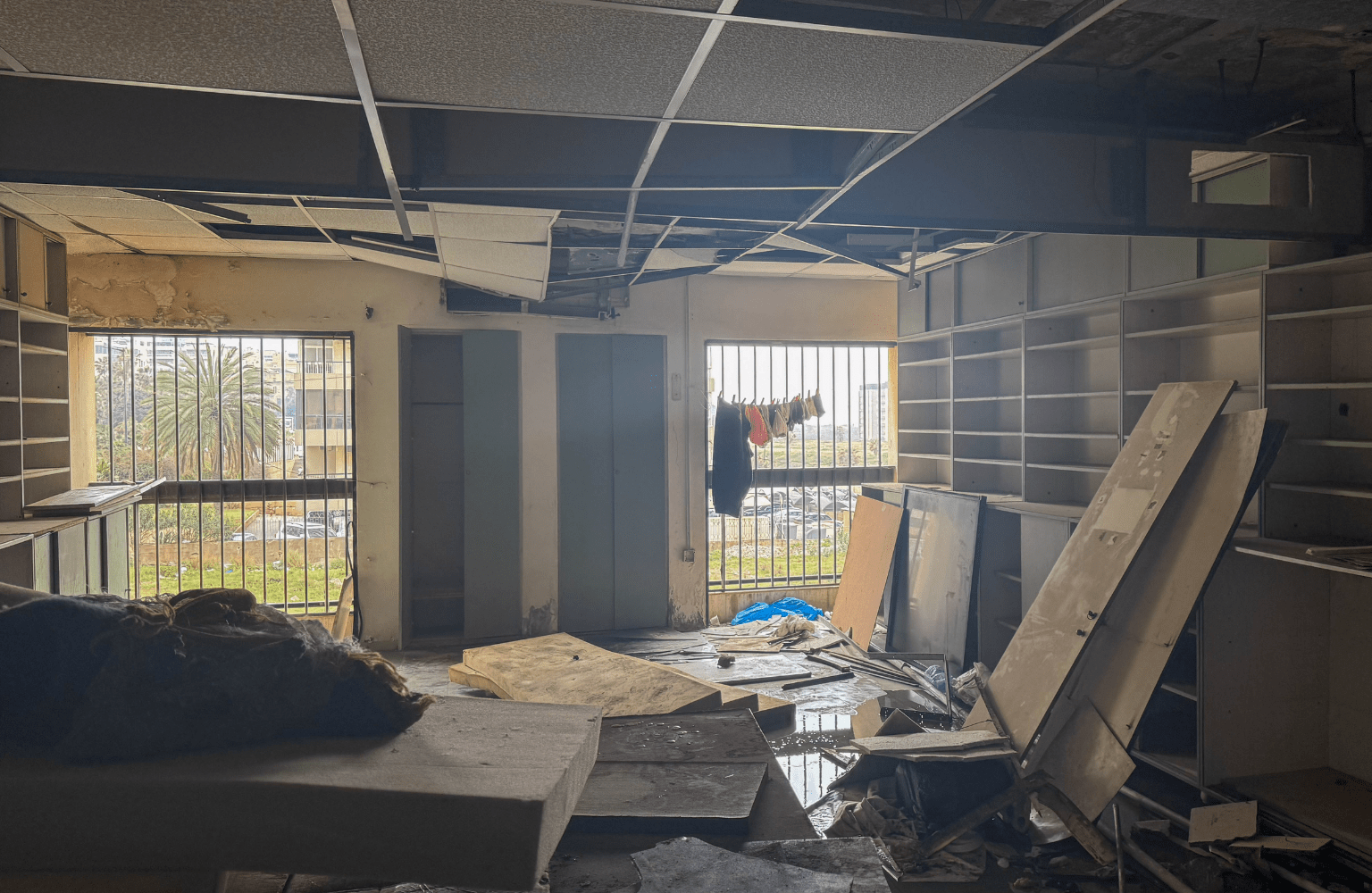
Women hanging cloth in displacement center in south Lebanon

I will always be a daughter of South Lebanon!

Khadija*, 56, from Odaisseh (a border village in the Marjeyoun District, Nabatieh Governorate, south of Lebanon)

Displaced to Marwaniyeh (Saida District)

When the war began on October 8, 2023, we headed to Beirut and stayed there for a year, until my mother passed away in February 2024. I remained in Beirut, while my sister and her children moved to Marwaniyeh.

Following the ceasefire in November 2024, I decided to return to Odaisseh, to my family’s home, seeking the safety I had lost.

I went to the village and tried to repair the house as much as possible. I was overjoyed at first; after all, this house is my refuge, my safety and my stability.

Unfortunately, after spending four months there, I no longer felt safe[1]. It was constant anxiety, fear, tension and explosions.

[1] Despite the ceasefire agreement in November 2024, Israeli bombardment by drones and warplanes continued across various Lebanese regions, particularly targeting southern border villages on a near-daily basis.

There was no life, no people. The village was devastated.
Khadija*
child walking in displacement center in south lebanon

I tried to stay, but I just couldn’t. Life in the village is about more than just having food, water, or a roof over your head. Despite the destruction, I tried to hold on, but I needed to feel safe. And there was no safety.

No safety at all.

Once my nerves were completely shattered, I had to come to Marwaniyeh to stay with my sister. I ended up in the emergency room because I had a nervous breakdown. I am now living with my sister and her three children. However, because I am unmarried and have no children of my own, I am not officially considered a “family” unit, so I was simply registered under my sister.

I just want to know: if I’m not a “family,” how am I supposed to manage? How do I get by? The burden is already so heavy on my sister, a widow with three kids. So how do I fend for myself? How do I survive? Does this mean my fate is to just keep moving from one place to another forever?

No matter where I go, I will always be a daughter of the South, from the land of the South.
Khadija*

My father worked abroad for 35 long years to build our home, our kingdom. Even if it was just one room, it was ours. Every stone, every corner holds a story and a memory in my heart. No matter where I stay, I am not home. There is no stability. I am here today, but an hour from now, I don’t know where I’ll be. I don’t know when I’ll be asked to leave. Everything my eyes see doesn’t belong to me. It means nothing to me.

I just want my home. I want to return to my family’s house where I grew up, where my mother, father, siblings, and I lived in every corner.

I weep over the very stones. People say, “Stones can be replaced.” Maybe. But what is gone never returns exactly the way it was. I carried those stones with my own hands and laid them down. I planted those plants myself and waited for them to sprout before my eyes. Imagine the heartbreak of someone who worked for 35 years to build a house, only to have it destroyed in the end?

I wouldn’t mind living in a tent, as long as it is on my land, in my village, and I am safe. I am not to blame for what is happening. The children are not to blame. The elderly are not to blame. The sick are not to blame. What did any of them do to deserve this?

Man walks next to hanged cloth in displacement center in south Lebanon

My sister is a widow, and neither of us has a job. How are we supposed to afford food, gas, and daily expenses? We live day by day, hour by hour. Sometimes we only eat one or two meals, and we might skip meals altogether just to feed the kids. My nephew has asthma, and my sister has diabetes. As for me, I don’t even know. I’m too terrified to go to the doctor in case I discover something is wrong. I’m just constantly anxious and scared. I’ve become afraid of everything. If a doctor were to ask me, “Where does it hurt?” I would say that everything hurts. Everything. I’m afraid of everything now.

Screaming has become my only outlet. I feel this immense pressure inside me – fear and anger – like a hand choking me. I am so angry! I am so sad. I try to hold myself together. During those four months in Odaisseh, I tried so hard to stay strong, to the point where people would tell me, “You are so strong; no one has done what you’ve done. You gave people life. You brought back our strength. You brought us back to life. You lift our spirits.”

But in the end, when night falls, I am alone, like a child looking for her mother.

I am a 56-year-old little girl. I want my mom!
Khadija*

I lost my mother to the war. She wasn’t sick, but because she had to leave her home after decades of hard work, and she knew she would never return, she died of a broken heart. When you lose your family, you lose your sense of safety. So imagine what it’s like to lose your homeland, your village, and your land?

Wherever I go, people ask, “Where are you from?”

I say, “From the South…”

“Are you displaced?”

No! I am Lebanese. Why do you call me ‘displaced’ when I am in my own country?

Facebook
Twitter
LinkedIn
WhatsApp
Print

Lebanon: Families face uncertainty under bombardment and new evacuation orders

Lebanon: Families face uncertainty under bombardment and new evacuation orders

In less than two weeks, more than 800,000 people have been forced to flee their homes and towns in Lebanon, due to relentless Israeli bombings and blanket evacuation orders that are not sparing anyone.

These mass displacements are deepening people’s vulnerabilities, including those of people who have not been able to return home since previous displacements. Ghina, a young person who fled from Odaisseh, on Lebanon’s southern border, is one of the thousands who remain internally displaced since 2023. She now lives with her family in a shelter, known as Montana shelter by its residents, in a town called Marwaniyeh, close to Saida, Lebanon’s third-largest city.

“I came with my family from Odaisseh, and we were amongst the first people who forcibly evacuated our villages [in 2023],” says Ghina, standing outside the shelter. “I have been living in this shelter for almost three years. I lived with my family of five in one room, now an influx of people arrived, and, in some rooms, there are up to 30 people living together.”

Montana shelter used to be a hotel some years ago. Today, it is home for more than 120 displaced families, many of whom have been living here since villages in the south were forcibly evacuated nearly three years ago. But with the latest evacuation orders, many more people have arrived in the past days, overcrowding the shelter and placing further stress on the families there.

Médecins Sans Frontières’ (MSF’s) mobile medical units regularly visit this shelter, providing general healthcare to its residents. We run similar activities in several other shelters across the country, including in North, Akkar, Bekaa, Mount Lebanon, and Beirut governorates, where hundreds of thousands are seeking refuge.

People are being forced to move once again, and this is taking a toll on their physical and mental health.
Lou Cormack, MSF Country Coordinator in Lebanon

The intensification of bombardments in densely populated areas over recent days, coupled with new blanket evacuation orders, are systemically forcing people from their villages. 

When the MSF team arrived on the morning of 12 March to Montana shelter, the families there were still under shock following an Israeli airstrike just 150 metres away the night before. While the airstrike did not cause any casualties and only minor damages to the shelter, families were left scared.

“The Israeli airstrike hit without warning and very close to our shelter,” says Ghina. “The entire shelter trembled, and the children started crying. I am tired of this situation.”

This bombardment occurred just as new blanket evacuation orders were announced by the Israeli forces, spreading further north of Litani River and towards Zahrani River.

Today, this shelter in Marwaniyeh, along with at least additional seven shelters assigned by local authorities, supposedly in safe areas, are no longer safe. They fall under the new Israeli evacuation orders.
Lou Cormack, MSF Country Coordinator in Lebanon

Israel’s expansion of the mass evacuation order to include all areas reaching Zahrani River is targeting a densely populated area, instructing all residents to move up to 50 kilometres away from the Lebanese southern border.

We are seeing a similarity to what we saw in the past two and a half years in Gaza: broad evacuation orders, constant displacement of thousands of families, and systematic bombing on densely populated areas. After 15 months of a fragile ceasefire that failed to stop the violence in Lebanon, families are once again trapped between fleeing or facing bombs.
Lou Cormack, MSF Country Coordinator in Lebanon

It is estimated that around 14 per cent of Lebanon’s territory is now under evacuation orders[1] and that the evacuated areas in Beirut’s suburbs and at the southern border constitute more than 1,300 square kilometres. People from nearly 200 villages and towns were forced to evacuate in less than two weeks.

We have witnessed people fleeing areas that fall below Zahrani River towards the north and are closely monitoring the impact of these new evacuation orders. This time though, more people have decided not to evacuate, often because shelters are full, routes are unsafe, they have no means to move again, or they simply have nowhere else to go – which likely contributes to higher civilian exposure and rising casualties.

At the same time, families are carrying the financial and psychological toll of repeated displacement: the loss of homes and livelihoods, mounting debt, exhaustion, trauma, and a lack of access to care, are all making it harder to cope. 

[1] Reuters: Israeli evacuation orders affect 14% of Lebanon, NGO says | Reuters

Facebook
Twitter
LinkedIn
WhatsApp
Print

Lebanon: MSF scales up response as displacement rises across the country

Displacement in Lebanon

Lebanon: MSF scales up response as displacement rises across the country

Beirut, March 7, 2026 – Médecins Sans Frontières (MSF) teams across Lebanon have rapidly adapted their activities to respond to the growing humanitarian needs resulting from the escalation of violence and the mass displacement of people due to Israel’s relentless bombing. However, addressing such immense needs will require a comprehensive response.

Our teams are responding, but needs are immense. Tens of thousands are in urgent need of protection, water, basic relief items, and access to healthcare now. A swift mobilisation of emergency and flexible funding must happen immediately to scale up responding to needs at a nationwide level,” says Jeremy Ristord, MSF’s Head of Programmes in Lebanon.

According to Lebanese authorities, more than 217 people have been killed since Monday 2 March and close to 800 have been injured as a result of Israel’s relentless bombing. Thousands of families have been displaced as sweeping evacuation orders covering large parts of southern Lebanon, southern Beirut and areas of the Bekaa Valley, force people to flee with nowhere safe to go, raising serious concerns about potential violations of international humanitarian law.

“This escalation comes after 15 months of a ceasefire that never brought an end to Israeli attacks. Now families are being pushed into impossible choices: flee once again or remain at home under threat. In this environment of relentless bombing of densely populated areas, we call for the protection of civilians, healthcare workers and medical facilities,” adds Ristord.

Since 2 March, MSF teams have been assessing needs and responding in several collective shelters, towns and cities across Lebanon where tens of thousands of displaced people have gathered. Many people have already been displaced multiple times during previous escalations. Shelters are overcrowded, with some people sleeping in their cars or on the streets. Others have remained in their homes despite evacuation orders or returned due to a lack of space in shelters or lack of means to rent accommodation.

Across Lebanon, MSF has deployed several mobile clinics to reach displaced people. A newly established mobile clinic in Saida, Lebanon’s third city in the south, provided more than 70 consultations in one day together with psychological first aid.  On 6 March, another mobile clinic was deployed in Barja, in the Chouf area of Mount Lebanon—where an estimated 10,000 people are sheltering—and, in just a few hours, delivered 72 general consultations, 11 sexual and reproductive health consultations, and 13 mental health support sessions. MSF deployed a third mobile clinic in Bebnine in Akkar in northern Lebanon, treating more than 50 displaced people from the south on its first day of activities. On 7 March MSF launched additional mobile clinics in Beirut and the Bekaa region to support internally displaced people, alongside preparing mental health helplines to provide psychological support to people who are on the road or unable to reach services.

In Beirut, Bekaa and Chouf, we have already distributed 350,000L of water and over 7tonnes of essential relief items like blankets and hygiene kits to thousands of displaced people, including children and elderly. While in Nabatiyeh and South governorates, MSF has had to suspend on-ground activities due to evacuation orders issued by Israel and the lack of security guarantees for staff, MSF teams continue to look into avenues of providing support in the area, as well as running our clinics in Bourj Hammoud in Beirut and in Arsal in the governorate of Baalbek-Hermel to ensure continuity of care for patients and continues to support primary healthcare centres in Tripoli.

The scale of the crisis demands urgent and comprehensive action. At a time when the 2026 Lebanon Response Plan is only 14% funded and contingency stocks remain critically low, MSF calls for the immediate mobilisation of emergency and flexible funding to rapidly scale up assistance for displaced people and the communities hosting them.

MSF remains in contact with Lebanese authorities and other actors and is ready to increase its support as needs grow.

Facebook
Twitter
LinkedIn
WhatsApp
Print

Huge influx of aid urgently needed amid catastrophic conditions in Gaza

Huge influx of aid urgently needed amid catastrophic conditions in Gaza

The international medical humanitarian organisation, Médecins Sans Frontières (MSF), is calling for a massive scale-up of lifesaving assistance and unhindered humanitarian access amid the ongoing catastrophe in Gaza, where lives continue to be lost due to sustained violence and persistent aid restrictions imposed by the Israeli authorities. Despite these policies, MSF is committed to remaining to provide assistance in the Occupied Palestinian Territory (OPT) for as long as possible, working under its registration with the Palestinian Authority.

Under international humanitarian law, as the occupying power, the Israeli authorities are obliged to ensure the provision of humanitarian assistance. Yet restrictive new rules, which require 37 NGOs to leave the OPT by 1 March 2026, threaten to drastically reduce already insufficient aid.  Governments worldwide must ensure that the International Court of Justice decisions are respected, including facilitating the provision of humanitarian assistance.

MSF is working to preserve services for patients in an increasingly constrained environment. The needs are immense and drastic restrictions have deadly consequences. Hundreds of thousands of patients need medical and mental health care, and tens of thousands require long-term medical, surgical and psychological follow-up.
Christopher Lockyear, MSF Secretary General

Despite the US-led peace plan, the Israeli authorities continue to heavily restrict and even deny water, shelter and medical care. Living conditions are maintained at undignified levels, and violence continues to kill and injure Palestinians on a daily basis. In recent weeks, humanitarian aid reaching Gaza has significantly decreased. In the West Bank, medical and humanitarian needs continue to escalate amidst alarming increases in violence, forced displacements, armed settler attacks, home demolitions, settlement expansion and obstruction to healthcare.

The withdrawal of MSF’s registration with the Israeli authorities is already impacting patient care, as deregistration compounds the strain on a health system devastated over the past two years and constrained by persistent restrictions on essential medical equipment and supplies. Since the beginning of January, MSF has been prevented by the Israeli authorities from bringing international staff and additional supplies into the OPT, and by March 1 2026 all MSF’s international staff will be forced to leave the territory.

MSF’s medical programmes are already facing shortages, and our medical teams are particularly concerned for their ability to continue to provide emergency trauma care and rehabilitation services to patients, as well as pediatric care, sexual and reproductive health services, care for non-communicable diseases and psychiatric conditions. In the longer term, MSF’s activities will be uncertain and potentially impossible to maintain under such restrictive conditions.

MSF’s programmes are critical lifelines. Medical care and humanitarian assistance on this scale cannot easily be replaced. Amid ongoing humanitarian catastrophe, MSF will stay in the OPT for as long as possible, doing as much as we can. We call on the Israeli authorities to enable humanitarian aid at scale and on the international community to ensure Palestinians in Gaza and the West Bank are not abandoned to their fate.”
Christopher Lockyear, MSF Secretary General

MSF has been working in the OPT since 1988, providing medical and mental health care, as well as large-scale water and sanitation services more recently. In 2025, MSF supported one in five hospital beds in Gaza, assisted one in three deliveries, carried out 913,284 outpatient consultations, and distributed more than 700 million litres of water. In January 2026, MSF provided 83,579 outpatient consultations, treated 40,646 emergency cases, and treated 5,981 patients for trauma-related conditions. In response to overwhelming needs, MSF had planned to expand its programmes in 2026 with a budget of €130 million. That support is now shrouded in uncertainty.

The restrictive new registration requirements, used as a pretext to obstruct assistance, coincides with a coordinated global campaign of online attacks targeting MSF, promoted by the government of Israel.

A delegitimisation campaign, grounded in false and unsubstantiated allegations, is designed to discredit MSF, silence the organisation’s voice, and obstruct the provision of healthcare. In a context where international journalists are barred and Palestinian journalists are regularly killed, further reducing NGO access risks removing yet another layer of witnesses to the ongoing violence and its enduring impacts on people.
Christopher Lockyear, MSF Secretary General
Facebook
Twitter
LinkedIn
WhatsApp
Print

Where is the ceasefire in Southern Lebanon?

MSF donations in the war-ravaged Tibnine southern Lebanon

Where is the ceasefire in Southern Lebanon?

How is this still happening, and how are we expected to live with it? How has the destruction of homes, the displacement of families, and living in constant fear become our new ‘normal’?

Sitting among his peers, surrounded by notebooks and crayons, 12-year-old Mohamad Mehdi recalled the day his and his family’s lives changed forever: “I was at school and saw the teachers running in the hallways, so I thought they [Israeli warplanes] were going to attack the school. But as we were fleeing our village of Kfar Tebnit, I learned that our house and neighbourhood were struck.”

On 2 February, Mohamad Mehdi lost his family home in one of the Israeli strikes that hit several towns in southern Lebanon, including Kfar Tebnit and Ain Qana in Nabatiyeh governorate.[1] The strikes caused widespread destruction in residential areas, displacing at least 37 families from Kfar Tebnit alone. While some attacks were preceded by so-called evacuation orders, this has not always been the case — leaving communities across the south and Bekaa living in constant uncertainty and fear.

[1] Since the beginning of 2026 alone, Israeli forces have issued 13 so-called evacuation orders, damaging 1,406 residential units, according to the Council of South Lebanon.

MSF donations in the war-ravaged Tibnine southern Lebanon

With each new Israeli strike, pre-existing humanitarian needs are exacerbated, adding to the psychological burden borne by people who continue to show exceptional resilience in these conditions. In the aftermath of the airstrikes on Kfar Tebnit, MSF teams mobilized immediately to respond to urgent needs, distributing 40 food parcels alongside 100 blankets, 100 mattresses, and 100 pillows to the affected families. Meanwhile, our mobile medical and mental health teams have continued to provide primary healthcare services, psychological support, and health promotion activities across the governorate to support residents living through repeated trauma and continuous displacement.

Our teams are present on the ground, delivering urgent aid and supporting healthcare. But what we responded to in Kfar Tebnit is not an isolated incident: it reflects the reality for thousands of people in southern Lebanon. Families are living in constant uncertainty, never knowing if their home or loved ones will be struck next. Again and again, we hear people ask: where is the ceasefire?
Jeremy Ristord, Head of Programmes for MSF in Lebanon

Since the November 2024 ceasefire agreement between Israel and Lebanon, Israeli attacks have persisted on several regions in the country and have intensified in southern Lebanon. The United Nations Interim Force in Lebanon (UNIFIL) reports more than 10,000 ceasefire violations by Israeli forces,[1] while more than 370 people have been killed by Israeli fire in Lebanon since the ceasefire began. These attacks are driving repeated waves of displacement, damaging civilian infrastructure, including homes and essential services, and preventing thousands of people from returning to their villages to rebuild. “The continuing Israeli attacks do not only destroy houses and infrastructure; they erode the pillars of daily life and recovery,” Ristord added.

During our response in Kfar Tebnit, we met with Hawraa al-Mokdad, Mohamad Mehdi’s mother. A nursing teacher, she lost her home in the recent Israeli strike. She shared: “I was at the nursing institute when one of my students told me that my house was in an area under threat of being bombed. In a single moment, I realized I was going to lose my home, my garden, and everything that holds my memories and those of my children. It was painful and shocking, but at the same time, this is the reality that Israeli attacks have imposed on our lives for some time now.”

Hawraa visited our mobile medical clinic in Kfar Tebnit with her two children after she and her family faced a loss that left them reeling. The destruction was not limited to their home and personal belongings; they also lost their identity documents, medical files, and everything else that documented their lives—a shock that stripped them of their sense of stability. “My eldest son is facing difficulties studying and a lack of concentration, while his younger brother has become noticeably more restless,” Hawraa said. Choking back tears, she added, “Every morning, my boys remember their toys and all the moments they spent in our home before it was destroyed.”

This painful reality is shared by many across south Lebanon. In January, Alice Reda, a finance and human resources assistant working in MSF’s Nabatiyeh project, was visiting her parents in Kfar Hatta, Saida district, when so-called evacuation orders were suddenly issued for her town, triggering a familiar moment of panic experienced by many. “How is this still happening, and how are we expected to live with it?” she said. “How has the destruction of homes, the displacement of families, and living in constant fear become our new ‘normal’?”

In southern Lebanon, the MSF mobile clinic provides essential services, including primary care, paediatrics, sexual and reproductive health, and mental health services. In 2025 alone, our teams in Nabatieh provided over 28,000 general consultations, around 2,800 mental health consultations, and more than 10,300 health promotion sessions. These activities are continuing throughout 2026, amidst the ongoing Israeli bombardment in the region. Our teams also respond to the urgent needs following these devastating attacks and the resulting displacement by distributing essential relief items—such as food parcels, blankets, mattresses, and other necessities—to affected families. These families have not yet reached the recovery they so desperately need; rather, they are experiencing what amounts to mere survival under fire.

[1] Updated estimates from UNIFIL and the Lebanese government in February 2026 put the figure closer to 15,400.

Facebook
Twitter
LinkedIn
WhatsApp
Print

Four Years of Full-Scale War in Ukraine

Zinaida Babisheva hugs her dog Toshyk. She is 67 years old and was evacuated from Lyman Ukraine

Four Years of Full-Scale War in Ukraine

The scale of destruction in Ukraine is enormous and has only grown since Russian forces invaded in 2022. The nature of front-line warfare encompassing artillery, drones and missiles, means that nothing and no-one is spared as it shifts.

Damir three months next to his sister Sasha - Ukraine

Damir is two months old. His mother, Kateryna Murashkina, is 17. Since his birth, he has been bathed twice — once in the hospital, and once on a rare day when electricity briefly returned.

“We use wipes now because it’s very cold,” she says. “The room doesn’t warm up in time to bathe him. I’m afraid of giving my child a cold.”

Kateryna and Damir live in a former scientific institute in Dnipro, repurposed as a shelter in 2022, where MSF teams now provide medical consultations for residents. Around 270 people displaced from occupied areas or cities reduced to ruins now live there. Repeated strikes by Russian forces on energy infrastructure mean residents endure days without heating, water, or electricity — in temperatures that fall to minus 20°C.

MSF’s increased presence in shelters like this one through mobile medical clinics, reflects the growing needs for displaced people as fighting continues to empty towns and villages. Consultations provided through mobile medical clinics more than doubled in 2025 compared to 2024 — increasing from 4,327 to 9,500.

For many people living near the front line, the decision to leave home takes a long time, and is extremely difficult – despite the extreme danger posed by the encroaching front line. With limited financial means and few alternatives, elderly people and those with chronic illnesses often remain in their homes until sustained bombardment and the collapse of infrastructure and essential services, including medical services, leave them no choice but to flee.

MSF teams have also been forced to adapt – leaving seven hospitals and over 40 locations where they were running mobile clinics – when the situation becomes too dangerous.

Lyman, in Donetsk region, is one district where MSF was running mobile medical clinics before insecurity made operations impossible. In June 2024, activities were suspended entirely. Today, approximately 2,000 residents remain in the frontline town, which faces daily shelling.

Lyman was also 67-year-old Zinaida Babisheva’s home, who now lives in the Dnipro displacement shelter. She recalls life before the full-scale invasion. She remembers pulling tables into the street on public holidays to eat with neighbours. She remembers her garden.

“We had apples, plums, cherries, pears, peaches. So many roses and lilies,” she says. “Now my daughter grows flowers, but I no longer feel like doing anything.”

Zinaida Babisheva hugs her dog Toshyk. She is 67 years old and was evacuated from Lyman Ukraine
Liubov Kuzmenko (65) shares a room with her cat Kuzma.

Liubov Kuzmenko, 65, from Siverskodonetsk also lives in the shelter with Zinaida, Kateryna and Damir. She says her apartment was looted after Russian forces took control. But what weighs most heavily on her is separation from her family.

“My parents stayed under occupation. My father died in 2024, and I couldn’t return to bury him. I send my mother video messages — it hurts that I cannot be there.”

As the war grinds on, hospitals, pharmacies, schools and shops have been destroyed or closed. Entire communities have become uninhabitable. As fighting continues, displacement has risen — and the humanitarian needs grow more complex and prolonged.

MSF continues to provide medical and psychological care across Ukraine: supporting hospitals near the frontline, running ambulances for war-wounded patients, and operating mobile clinics in shelters and communities hosting displaced people and in locations where people are trying to remain despite collapsing services and encroaching frontlines.

Yuliia Murashkina (39) begins to make pancakes- Ukraine
Facebook
Twitter
LinkedIn
WhatsApp
Print

Northeast Syria: Fighting Sparks Mass Displacement

MSF Mobile clinic in Qamishli

Northeast Syria: Fighting Sparks Mass Displacement

“My dream is that we have a stable life, without moving from one place to another,” says Layla. “We just want to live without fear.” 

Fourteen years of conflict have left Syria deeply scarred, and for many people in the northeast, displacement continues to shape daily life. One year after the fall of the previous government, renewed fighting in mid-January 2026 displaced tens of thousands of people, overwhelming already stretched shelters and health services. 

On 17 January, the Syrian Democratic Forces announced their withdrawal from Deir Hafer and Maskana in eastern Aleppo countryside. Shortly after, the Syrian Arab Army declared control over both towns and advanced into parts of Raqqa, Deir ez Zor, and Hassakeh. Clashes in areas previously held by the Syrian Democratic Forces triggered widespread civilian displacement. 

Schools as shelters for displaced people in Qamishli

Hospitals under pressure 

The fighting quickly overwhelmed hospitals. During the peak violence on 18 and 19 January, the MSF-supported Deir ez Zor National Hospital received more than 100 wounded patients in just two days. 

MSF teams supported emergency trauma care and donated surgical and anaesthesia kits, along with essential medications, to Deir ez Zor and Raqqa national hospitals, working closely with local health authorities to respond to urgent needs. 

Shelters stretched beyond capacity 

As violence spread, many displaced families sought safety in Qamishli, Hassakeh governorate. Exposed to freezing winter conditions along the route, they arrived to Qamishli with only carrying only a few personal belongings with them. 

The International Organisation for Migration (IOM) estimated that as of 4 February there were 94,051 people displaced in Al-Hassakeh governorate. The sudden influx has put immense pressure on basic services. 

Many shelters are former schools, often poorly maintained. Upon arriving in Qamishli, MSF team visited two schools that had been repurposed into shelters. The buildings suffered from years of neglect, with peeling walls, damaged or dysfunctional toilets, and little insulation from the cold.  Clothes belonging to displaced people were hung along the windows and walls to dry. During the first days of displacement, temperatures fell below 0°C, leaving families struggling to stay warm. 

Nazlia Arif Rasul, woman from Afrin, in one of the collective centres in Qamishli.

Lives marked by repeated displacement 

Many people sheltering in Qamishli have been displaced multiple times over the years. “I am originally from Afrin. Our life was normal, like any other family. We had livestock, and we were financially stable,” says Hevin Misto, a young woman and former Kurdish teacher. “That changed when Turkey’s incursion into Afrin happened in 2018.”  

Hevin describes fleeing her home and hiding in a cave before reaching Shahba <area north of Aleppo>. “In Shahba, we tried to build a new life, and I started my career as a Kurdish teacher. We have stayed in Shahba for 7 years,” she says.  “But in late 2024, violence came again. We were displaced to Raqqa after attacks on Tal Rifaat and Shahba.” 

Hevin’s family spent a year sheltering in a school in Raqqa before being forced to flee again. “Now we are here in Qamishli,” she says. “Each time we try to rebuild, violence follows us.” 

Funding gaps worsen conditions 

The humanitarian efforts in northeast Syria were already under pressure due to repeated funding cuts. Now, the recent surge in forced displacement has made the situation even worse, overwhelming an already fragile system, and making it even harder for thousands of people to get basic services such as healthcare, clean water, and sanitation.  

Layla Tobal, mother of five-year-old Rashid, describes fleeing Raqqa with almost nothing. Originally from Afrin, this is the third time her family has been displaced. 

“While we were in Raqqa, we heard clashes and shootings,” she says. “We fled only with the clothes we were wearing. Here in Qamishli, we have nothing.” 

“My son, Rashid, suffers from epilepsy and we struggle to get him the required medications.  My husband and I are both sick because of the cold. Most days, our heater does not work because there is no fuel.”  

“We need clothes, blankets, and fuel. Many families here also urgently need infant milk,” she adds. 

Layla Tobal, 42-year-old woman from Afrin and her 5-year-old son having soup in one of the collective centres in Qamishli.
Younis Mouhammad, 52 years-old man from Afrin in a collective centre in Qamishli. Younis is diabetic and lost both legs due to complications from diabetes.

The most vulnerable at risk 

Conditions are especially harsh for people with chronic illnesses or disabilities. In one of the school rooms, we met a middle-aged man under a blanket. Younis Mouhammad lost both legs due to complications from diabetes.  

“I lost my first leg in 2019 and the other one in 2022,” Younis says. “I used to work in construction, but now I am not able to do anything”. 

“We need urgent support,” he says. “There are 28 families living in this school and all of them need care and assistance”. 

Emergency response continues 

To help displaced people, MSF medical teams are running mobile clinics in Qamishli and Derik/Al Malikiyah, providing consultations, treatment for acute and chronic conditions to ensure displaced people can access essential healthcare.  More than 1320 patients have already received care.  

MSF teams also distributed around 2000 mattresses, over 3220 blankets, 530 hygiene kits, hot meals, and kitchen utensils kits across more than 30 shelters in Derik/Al Malikiyah, Hassakeh and Qamishli, reaching over 330 families. 

MSF water and sanitation teams truck clean water in and repair infrastructure like toilets, pipes, taps, and water tanks in shelters, ensuring displaced people have safe water to use. 

Schools as shelters for displaced people in Qamishli (2)

A crisis demanding sustained support 

Despite these efforts, shelters and services remain overwhelmed. Many families still lack adequate heating, food, clean water, and healthcare. For people exhausted by years of conflict, uncertainty remains constant. 

People who have been forced to flee again and again just want to be able to live in safety and with dignity. All efforts must be made to ensure they are able to do so.
Barbara Hessel, head of MSF programmes
Facebook
Twitter
LinkedIn
WhatsApp
Print

Sudan: Repeated drone strikes hit civilian areas

Sudanese boy with shrapnel wound

Sudan: Repeated drone strikes hit civilian areas

MSF urges warrying parties to immediately spare civilians and humanitarian workers.

Port Sudan, February 19, 2026 – Drone attacks carried out by the Sudanese Armed Forces (SAF) and Rapid Support Forces (RSF) are hitting civilian areas and critical infrastructures, including schools, markets, healthcare facilities, and water sources, across Sudan. In the first two weeks of February, Médecins Sans Frontières (MSF) teams have treated 167 patients suffering from penetrating injuries at level of thorax and abdomen, multiple fractures of limbs, head injuries and drone shrapnel. MSF warns that this pattern of attacks is placing civilians and humanitarian workers at grave risk and calls for their immediate protection.

MSF orthopedic surgeon, performed a follow-up surgery on a patient amputation
Dr. Altayeb, MSF orthopedic surgeon, performed a follow-up surgery on a patient amputation. The patient lost part of his leg after being shot in El Fasher.

On February 15, an MSF team in Adré, eastern Chad, received 18 civilians—including four women and three children—who were injured in SAF drone strikes on a fuel market just across the border in Adikong, West Darfur state. On February 6, 29 people sustaining injuries were treated at MSF supported hospital in Tine, also in eastern Chad, following two RSF drone attacks in western Sudan which killed at least 10 people, four of whom died in the hospital. Since that date, patients have been arriving frequently due to strikes.

Boy with shrapnel wound

“Among the patients we received, a nine-year-old boy arrived with a large shrapnel wound to his eye, extensive facial fractures, and two amputated fingers. He was in severe pain and exposed to dust after a long journey to reach the facility. Even with optimal care, he is likely to face long-term disability. He was transferred to Ndjamena for further treatment,” says Virginia Moneti, MSF Project Medical Coordinator in Tine.

Our teams in Zalingei, Central Darfur, also treated 29 patients this month following several attacks, including at least 8 civilians.

Following drone strikes on 3 November in North Darfur, MSF was forced to withdraw from Kornoi and Tina, halting vital medical and humanitarian services. These attacks have made it impossible for MSF to maintain a safe presence, leaving people without essential care.

The war in Sudan is being fought with drones beyond the front lines. Our teams are regularly treating large numbers of drone wounded people, including women and children. These strikes are used to disrupt supply lines, damage civilian infrastructure, and at risk of creating siege-like conditions in contested areas.
Esperanza Santos, MSF head of emergencies

In North Kordofan, where MSF recently launched an emergency response in El Obeid, drone strikes reportedly hit a humanitarian convoy, a vehicle carrying displaced people, and a bus station on 6-7 February. Drone attacks reportedly also hit various health facilities in Kadugli and Dilling, South Kordofan state, in the first two weeks of February.

Recent incidents reveal a disturbing pattern in the conduct of the war in Sudan. Drone strikes are not limited to military targets, sometimes with multiple follow-ups strikes on the same location, and are causing devastating harm: civilians, including children, are being killed or severely injured in blatant disregard of international humanitarian law. Armed actors must take immediate measures to protect civilians and humanitarian workers. Civilians must be always spared.
Esperanza Santos, MSF head of emergencies

MSF is deeply alarmed by this situation. When civilian areas and humanitarian infrastructure are not respected, our teams cannot operate safely, leaving communities without essential care. This is the exact opposite of what the people of Sudan urgently need, as humanitarian needs are immense and an immediate scale-up of assistance is critical.

Displaced people are waiting in line to get drinkable water in Al Mina Al Muwahad, Sudan
Displaced people are waiting in line to get drinkable water in Al Mina Al Muwahad, the largest displacement camp near El Obeid city, hosting approximately 25,000 people.
Facebook
Twitter
LinkedIn
WhatsApp
Print

MSF responds to attacks on Kfar Tebnit, South of Lebanon

MSF teams in the area mobilized to respond to the needs caused by the attack and consequent displacement. Our logistical teams distributed relief items

MSF responds to attacks on Kfar Tebnit, South of Lebanon

On 2 February, Israeli strikes hit several towns in southern Lebanon, including Kfar Tebnit and Ain Qana, causing widespread destruction in residential areas and displacing at least 37 families. While some attacks were preceded by so-called evacuation orders, this has not always been the case — leaving communities across the south living in constant uncertainty and fear.

“In just a few minutes, 37 families in Kfar Tebnit, 37 mothers and fathers, were once again forced to pack what they could of their lives into bags and flee, leaving behind their memories, their homes and their sense of safety and stability,” said Mahmoud Khalifa, MSF’s Project Coordinator in Nabatieh.

MSF teams in the area mobilized to respond to the needs caused by the attack and consequent displacement. Our logistical teams distributed relief items

For people in Kfar Tebnit, the impact is deeply personal and painfully familiar. “What happened was not a passing incident, but a social and humanitarian shock that struck families already exhausted by displacement, children stripped of their sense of safety, and a local community living under the constant weight of threat. No one can truly understand the meaning of this repeated destruction except those who have lived through it — or suddenly found it before their eyes, affecting people they know by name and share daily struggles with.” said Rima Ahmad Chamoun, director of the Ministry of Social Affairs –affiliated centre in Kfar Tebnit where MSF’s mobile clinics often visit to provide healthcare services.

In the immediate aftermath of the attack, MSF teams mobilized to respond to urgent needs, distributing 40 food parcels alongside 100 blankets, 100 mattresses, and 100 pillows to affected families. At the same time, MSF’s medical and mental health mobile teams across the governorate continue to provide primary healthcare, psychological support, and health promotion activities to communities coping with repeated trauma and displacement.

“Our teams are responding, but how do communities rebuild their lives under continued attack?” Khalifa added.

MSF teams in the area mobilized to respond to the needs caused by the attack and consequent displacement. Our logistical teams distributed relief items

Since the November 2024 ceasefire agreement, Israeli attacks on southern Lebanon have persisted, driving repeated waves of displacement and damaging civilian infrastructure, including homes and essential services. Only last week, MSF similarly responded following Israeli airstrikes on five southern towns in the districts of Nabatieh and Saida. Our teams supported displaced families through emergency distributions and mental health interventions in Kharayeb and Qanarit.

This painful reality is shared by many across the south. In January, Alice Reda, a finance and human resources assistant working in MSF’s Nabatieh project, was visiting her parents in Kfar Hatta when so-called evacuation orders were suddenly issued for her town, triggering a familiar moment of panic experienced by many. “How is this still happening, and how are we expected to live with it?” she said. “How has the destruction of homes, the displacement of families, and living in constant fear become our new ‘normal’?”

In the Kfar Tebnit attack earlier this week, families who had just settled after previous displacement now find themselves once again without safe shelter, access to basic services, or a sense of stability. Each new incident compounds existing humanitarian needs and places growing strain on communities’ mental health and resilience. MSF teams remain present on the ground — responding to urgent humanitarian needs while raising the alarm about the human cost of repeated attacks on civilian areas.

Facebook
Twitter
LinkedIn
WhatsApp
Print

First Measles Vaccination Campaign in El Geneina Since 2021

Measles Vaccination campaign in El Geneina

First Measles Vaccination Campaign in El Geneina Since 2021

“This was an urgent response to the surge in measles cases in El Geneina. In the period leading up to the vaccination campaign, we received around 130 cases per week in the measles isolation ward at El Geneina Teaching Hospital. From November 2025 to the end of January 2026, we treated a total of 778 measles cases.”

These are the words of Dr. Ali Daoud, MSF’s deputy medical coordinator, on the final day of the measles vaccination campaign in El Geneina, the capital of West Darfur state. The campaign, carried out in close coordination with the Ministry of Health and other health partners, ran from January 25 to 30. During these six days, more than 174,000 children between the ages of 9 months and 15 years were vaccinated, making up 94% of those targeted.

Measles Vaccination campaign in El Geneina

This marked the first measles vaccination campaign in El Geneina locality since 2021. Measles disease is highly contagious and can be fatal if not prevented or treated early, so sustained access to routine immunization is crucial.

“It’s important for other children to get the vaccine to protect themselves from the disease. The injection does not hurt. Afterwards, I can go home, pray, and study. Measles can be deadly, especially for children,” says Khalid, 14, who encouraged his cousin to join him and his siblings at one of the vaccination sites.

Measles Vaccination campaign in El Geneina

Community mobilization at the heart of the campaign

Community engagement played a central role in achieving high coverage. Over 1,400 community volunteers were mobilized, trained, and deployed by MSF throughout the campaign to support with the activities at over 200 vaccination sites in El Geneina. Mobile teams and vehicle-mounted public address systems were used to raise awareness: sharing vaccination schedules and encouraging families to bring their children in for vaccination.

“Delivering this vital campaign required strong community engagement as well as significant logistical support and coordination,” said Abdalhalim Ishag, MSF logistics base at El Geneina Teaching Hospital. “To reach over 200 vaccination sites in El Geneina, we mobilized resources to cover remote and hard-to-reach areas.”

“I first felt scared, but the injection didn’t hurt. I have not seen anyone with measles before, but I know you can’t play if you get sick. The vaccine will protect me and my family,” Ten-year-old Mawa attended a vaccination site with her four brothers said.

This is not the first time that our teams have supported the state Ministry of Health in responding to an increase in measles cases in West Darfur state. In mid-2025, a mass coverage campaign was conducted in Foro Baranga locality, which is a rural area in the south of this state.

For many people, survival is not only about escaping violence. It is also about surviving diseases such as measles, whose spread is driven by multiple factors, including displacement, overcrowding, limited access to healthcare, gaps in routine vaccination, and fragile disease surveillance systems.

“Moving forward, MSF continues to call on the Ministry of Health and health actors to strengthen the availability and accessibility of routine vaccination services across Darfur,” says Dr. Ali.

“Sustained vaccination services are essential to prevent recurrent of measles cases and protecting children, not only in West Darfur but also in all of Sudan.”

Measles Vaccination campaign in El Geneina
Facebook
Twitter
LinkedIn
WhatsApp
Print