Displaced and Forgotten: Harsh Winter in Northwest Syria

Shadhan, 6 years old, he sits on the bags of heating materials distributed by MSF in Idlib

Displaced and Forgotten: Harsh Winter in Northwest Syria

Fourteen Years of War and Ongoing Displacement in Northwest Syria

In Syria, despite the end of the war, people continue to live with the heavy legacy of fourteen years of brutal conflict. Years of aerial attacks and protracted hostilities, including in rural areas around Homs, Hama, Aleppo, and Idlib, have destroyed homes and essential infrastructure, left countless families with no choice but to flee. Many families sought shelters in the mountains, where harsh winters added to their daily struggle. What began as emergency displacement camps turned into a fragile, long-term living area.

Children try to carry heating materials to their tents in the cold, in Northwest Syria, Idlib

Homes Destroyed, Lives Uprooted

If millions of people have been able to return home, many displaced families remain in camps as they often don’t have the financial capacity to rebuild their lives. Their houses in their hometowns have been completely destroyed; basic services are absent and livelihood opportunities are scarce, leaving people dependent on humanitarian assistance that has steadily declined over the past couple of years.

Despite huge needs remaining in Syria, the country has witnessed a decrease in humanitarian funding. MSF urges humanitarian organisations to step up their response, including for people who are still displaced and struggling to survive.  

From Emergency Shelters to Long-Term Fragility

The winter months are particularly dangerous, and without sustained aid, people will continue to face life-threatening conditions.

 Um Ayman, 75, grieves the destruction of her olive farm.
“I returned home after the shelling to find my house levelled to the ground. I did not grieve for my home as much as I grieved for my olive trees. I grew olives and oranges on my land, and everything was gone.”

Winter Turns Displacement Into a Life-Threatening Crisis in Northwest Syria

Across the Harim mountains and around the town of Salqin in Idlib province, more than 50 displacement camps are still sheltering thousands of families, many living in makeshift homes made from salvaged materials or bricks.

Cold, Snow, and Unsafe Shelters

During winter storms, water seeps into tents, snow piles up between shelters, and families struggle to stay warm. When temperatures drop, heating becomes a necessity, not a comfort. Roofs are often unstable, offering little protection against snow, rain, and freezing cold.

“When the Snow Started Falling, the Roof Collapsed”

Um Ali, a mother of three, lives in Al Fardan camp:
“When the snow started falling, the plastic-sheet roof collapsed. We were unable to remove the snow because we live in a mountainous area.”

Declining Aid Leaves Displaced Families in Northwest Syria Forgotten

Initially, humanitarian organisations rushed to provide emergency support, but over time, the amount of aid provided has reduced. Today, many displaced families are largely left to manage on their own, with only limited assistance. Makeshift shelters deteriorate with each passing season, and families must gather whatever materials they can find to keep their homes standing.

Forgotten After the Cameras Left

Abu Musa, a resident of one of the camps, recalls: “It’s been one year and few months since we last received assistance from humanitarian organisations; after the liberation, no one provided any kind of support to people living in the camps here.”

Humanitarian needs are immense and growing. Families lack access to adequate food, healthcare, winter clothing, blankets, and medicines. Some camps have small clinics, but supplies are limited, and services are paid, putting essential care out of reach for many.

MSF team distributes heating materials to displaced people in displacement camps across Idlib governorate

MSF’s Winter Response for Displaced Families in Northwest Syria

In Idlib governorate, Médecins Sans Frontières/ Doctors Without Borders (MSF) has been providing support to displaced families.

Emergency Winter Aid in Idlib Camps

Between December and February, MSF teams have distributed heating materials (around 600 tons of bering) and plastic sheets to 2,000 families across 21 camps. A further 1,400 mattresses, 4,200 blankets, and hygiene and cooking kits have been distributed to 700 families in camps near Salqin and in the Harim mountains, and 150 families received tents in Armanaz, in rural Idlib. These distributions aim to help families endure the harsh winter months and reduce immediate risks linked to exposure to the cold. Yet the gap between needs and assistance remains enormous.

Osama Joukhadar, MSF logistics manager, explains:
“People here are living in extremely fragile shelters. They are exposed to the cold, wind, and snow. Every winter, families struggle just to survive. We are trying to provide basic support, small but essential help to assist families get through the cold months.”

Displacement and Winter Hardship Across Syria

In Daraa and Rural Damascus governorates, in southern Syria, MSF distributed around 3,000 heaters, plus mattresses and blankets, between November and February, to support displaced families who remain exposed to extreme weather, unsafe living conditions, and prolonged uncertainty. In Qamishli and Derik/Al-Malikiyah, northeast Syria, MSF responded to the needs of recently displaced people, who were forced to leave their homes in Tabqa, Raqqa and Al-Hassakeh under relentless rain and cold temperatures.

The story of Syria’s displaced people is a reminder that the war may have faded from headlines, but its human consequences remain urgent and unresolved.

MSF team distributes heating materials to displaced people in camps across Idlib governorate
Facebook
Twitter
LinkedIn
WhatsApp
Print

Beyond medical action: a decade of solidarity

Burj al Barajneh, South Beirut

Beyond medical action: a decade of solidarity

After operating a standalone clinic in Bourj El-Barajneh camp for ten years, Médecins Sans Frontières (MSF) has concluded its provision of healthcare in the clinic by December 2025. During the years, medical activities took many shapes, focusing on sexual and reproductive healthcare, vaccinations for children, care for non-communicable diseases, and mental healthcare.

Located in southern Beirut, Bourj El-Barajneh camp was established for Palestinian refugees in 1948. Since then, and despite it being already densely populated, it has hosted Syrian refugees who fled the war that started in 2011, migrant workers who have limited resources, and many others who have nowhere else to go.

For the last four years of activities, Mohammad Hazineh welcomed patients into the clinic and directed them to the relevant department with a smile. He is originally a Palestinian refugee in Syria. In 2011, his house in Al-Yarmouk camp in Damascus was bombed, so he decided to move to Lebanon and chose Bourj El-Barajneh camp as his home.

“Endings are inherently sad. We might be saying goodbye to this clinic, but not to the people it blessed us with or the things it taught us,” he says. “Although I feel like a guest in the camp, I was treated equally in the clinic, which made me feel special.”

Over the years, the clinic witnessed many tears: children in pain of jabs protecting them against a range of preventable diseases, and men who just needed someone to listen to them.

Smiles and laughter also filled the air: parents learned that their children’s non-communicable diseases are manageable, women found out they’re pregnant for the first time, and people were reminded that they are worthy. The clinic was a safe space where feelings were validated and differences were celebrated.

“I’m very proud to have worked in this clinic. It was always full of humanity,” says Mohammad Hazineh, MSF crowd controller. “I’ve worked with people from various nationalities over the years, which mirrored the diversity of our patients and the residents of the camp. Working with MSF gave me a new outlook on the future. It made me hopeful.”

Mohammad Dabdoub is a Palestinian born and raised in Bourj El-Barajneh camp. He considers the camp to be a miniature of Palestine in diaspora. Through his nine-year journey with MSF, and his work as a liaison officer, he was the connection between MSF and the society in the camp. He raised awareness of MSF’s activities and established trust in the community.


“What I value the most is that our activities were never limited to the clinic,” he says. We managed to support organisations like the Civil Defense and The Palestinian Red Crescent Society, thus serving the community in the camp to the best of our abilities.”

The clinic closure comes as part of MSF’s strategy for the upcoming period of supporting existing health facilities providing similar services to the community. MSF aims to continue supporting the community in Bourj El-Barajneh camp.

“People in the camp needed medication just as much as they needed someone to stand by them,” says Mohammad Dabdoub. “Our activities went beyond medical action. They represented a decade of solidarity.”

Facebook
Twitter
LinkedIn
WhatsApp
Print

Addressing FAQs and allegations about MSF’s work in Gaza

An MSF vehicle is parked outside Al Rantisi Hospital in Gaza City, amidst the rubble and destruction in the area. The photo, taken from the hospital’s entrance, looks out onto the street.

Addressing FAQs and allegations about MSF’s work in Gaza

Médecins Sans Frontières (MSF) provides a vast amount of critical healthcare in Gaza, Palestine, yet even this is not enough to meet people’s overwhelming needs. Israel is now taking steps to stop the work of 37 NGOs, including MSF, in Gaza and the West Bank, by threatening to withhold registration. This comes on top of the intimidation, pressure, and smear campaigns that we and other aid organisations have faced from Israeli authorities while working in, and speaking out about, Gaza and the West Bank. Below, MSF responds to frequently asked questions about the reality of our work on the ground and our ongoing assessments about the registration process to continue working in Palestine.

What is MSF’s response to accusations by Israeli authorities that its medical work in Gaza is not significant or needed?

In 2025 alone, MSF teams handled over 100,000 trauma cases; managed the care for over 400 hospital beds; performed 22,700 surgical operations on nearly 10,000 patients; carried out almost 800,000 outpatient consultations; administered 45,000 vaccinations; assisted in more than 10,000 births; provided more than 40,000 individual mental health sessions and group sessions for over 60,000 people; distributed more than 700 million litres of water and produced nearly 100 million litres of clean water. Many of the services provided by MSF are largely unavailable elsewhere in Gaza due to the destruction of the health system.


As of 1 January 2026, MSF’s registration is no longer valid, and we will be required to cease operations by 1 March 2026. If MSF loses access to Gaza, hundreds of thousands of people will lose access to critical medical care and water. MSF’s vital work serves nearly half a million people in Gaza.

In Gaza, MSF is currently supporting six public hospitals and running two field hospitals. We also support seven general healthcare centres and run an inpatient feeding centre for people with malnutrition. MSF has recently opened six new medical points where we provide wound care and other general healthcare services.

MSF has been working in Palestine since 1988.

Is it true that MSF has not cooperated with Israel?

For many months, MSF has unsuccessfully sought dialogue with the Israeli authorities on the renewal of our registration to work in Palestine. We remain open to dialogue with the Israeli authorities to maintain our critical medical operations in Gaza and the West Bank and to ensure that MSF can continue delivering essential, lifesaving medical care to people in desperate need, whilst safeguarding our teams. We would consult our Palestinian colleagues on any possible next step.


By accusing MSF, as well as other NGOs, of not cooperating and creating smear campaigns against aid organisations, Israel is using unfounded allegations to arbitrarily restrict access to critical care for Palestinians and limit witnessing from independent organisations working on the ground. This type of accusation contributes to the delegitimisation of humanitarian workers who are delivering vital care and services under extremely challenging conditions.


We observe that such accusations fit within a long-standing pattern used by Israeli authorities, alongside numerous physical and bureaucratic obstacles, to restrict the entry and delivery of aid into Gaza. Similar tactics were used in 2024 against UNRWA. Allegations are used to justify actions which stand in clear contradiction to the Israeli government’s claims that it is facilitating the provision of humanitarian assistance to the Gaza Strip.

What is the status of MSF’s registration to operate in Gaza and the West Bank?

As of the 1 January 2026, MSF’s registration to work in Gaza and the West Bank has expired and is therefore no longer valid. As such, we are required to cease operations by 1 March 2026.

We are seeking avenues to ensure that our humanitarian response continues in Gaza and the West Bank. We are also engaging with the Israeli authorities to ensure we can continue our activities, the prevention of which is a direct violation of UN Security Council Resolution 2720 - which calls for the unimpeded delivery of humanitarian aid to civilians.


For 2026, MSF has committed an estimated 100-120 million euros for our humanitarian response in Gaza.

What is the actual impact of MSF’s expired registration?

MSF remains fully operational in Gaza and the West Bank and continues to deliver critical medical care. However, as MSF’s registration in Israel expired on 31 December 2025, we are no longer authorised to import supplies or have international staff enter into Gaza. This deprives our medical teams of much-needed materials and technical skills.


We remain committed to providing assistance to Palestinians in Gaza and the West Bank and call on the Israeli authorities to reverse their decision about our registration and to put in place acceptable operating conditions, including guarantees for the safety of MSF staff and patients.

Is it true that MSF considered providing a defined staff list to Israel?

In an effort to explore every possible option – however limited – to continue providing critical medical care, MSF informed Israeli authorities on 23 January that, as an exceptional measure, MSF would be prepared to share a defined list of Palestinian and international staff names, subject to clear parameters, with our staff safety at its core. This position was defined following consultation with our Palestinian colleagues and with the clear understanding no staff information would be shared without the express agreement of individuals concerned.


However, despite repeated efforts, it became evident that we were unable to build engagement with Israeli authorities on the concrete assurances required. These included that any staff information would be used only for its stated administrative purpose and would not put colleagues at risk; that MSF would retain full authority over all human resource matters and management of medical humanitarian supplies, and that all communications defaming MSF and undermining staff safety would cease.  


As a result, and in the absence of these clear assurances, we have concluded that we will not share staff information in the current circumstances. MSF remains open to ongoing dialogue with the Israeli authorities to maintain our critical medical operations in Gaza and the West Bank and to ensure that MSF can continue delivering essential, lifesaving medical care to people in desperate need.

 
Did MSF provide Israel with a staff list at any time?

No, we have not at any moment handed over any list of our national or international staff to Israeli authorities as part of this registration process.

Why did MSF consider sharing a defined staff list with Israel?

Expelling MSF, alongside dozens of other humanitarian organisations, would deprive hundreds of thousands of people of essential medical care. MSF is one of the few international organisations able to witness and denounce the ongoing genocide and if we are forced to leave, we will lose this ability.


Israeli authorities have forced humanitarian organisations including MSF into an impossible choice – between sharing information about our staff or interrupting critical medical care in a context of staggering humanitarian needs and extreme violence against health workers.

Facing the imminent threat of the closure of our projects, MSF wanted to explore all possible chances to continue providing medical care in Gaza and the West Bank. As such, we wrote to the Israeli authorities explaining that as an exceptional measure, under exceptional circumstances, we would be prepared to provide a defined staff list subject to clear parameters with staff safety at its core.


We did not share the personal details of any of our colleagues. Despite repeated efforts, it became evident that we were unable to build engagement with Israeli authorities on the concrete assurances required. As a result, and in the absence of these clear assurances, we have concluded that we will not share staff information in the current circumstances.

How did MSF consult with Palestinian staff on Israel’s request for a staff list?

This process included dialogue across teams and most critically with our Palestinian colleagues, taking into account their perspectives and concerns, including with respect to their personal safety and the consequences of MSF’s potential withdrawal.


Throughout, we stressed that no information would be shared without the agreement of the individual concerned, and no pressure should be put on anyone regarding decisions affecting MSF’s continuation of operations in Gaza and the West Bank.   It was emphasised that not participating would not impact people’s employment with MSF.


We used several channels to gather staff feedback, including focus-group discussions, one-to-one conversations, surveys, and town-hall style exchanges. In these discussions, our colleagues voiced a wide range of concerns, including safety risks, and uncertainty about the implications for our humanitarian principles. Some were worried about possible repercussions of sharing their details, while others questioned whether complying would lead to registration or yet further demands.  

How can staff give consent in this environment?

We recognise the limitations and difficulty for our Palestinian colleagues to provide proper informed consent in this environment of coercion imposed by the Israeli authorities. Israel knowingly gave MSF and our Palestinian colleagues an impossible choice; either we provide information about our colleagues or risk being forced to abandon the hundreds of thousands of Palestinians who need vital medical care. The lack of assurances from the Israeli authorities also makes it impossible for our staff to know what they would be accepting, should they provide their names.


Despite the challenges of consent, it was not possible or acceptable, to make any decisions without discussing with our Palestinian colleagues. What was conducted was a consultation, not a transfer of institutional responsibility. The intention was never to ask our colleagues to carry the weight of an unbearable decision, but to ensure we heard their views on a question that is existential for their safety and work.

Are you paying compensation to the families of MSF staff members who have been killed by Israeli forces?

Yes, we are offering financial support to all the families of MSF staff members who have been killed by Israeli forces. We are in touch with all the families to support them, including by providing legal and financial support and health coverage for dependents, and we will continue to do so.   

Israeli authorities claim that MSF staff have links to terrorism. How does MSF respond to this?

MSF takes these allegations seriously. MSF would never knowingly employ people engaging in military activity. Any employee with links to an armed group would pose a serious risk to our staff and to our patients. For this reason, wherever we operate, all MSF staff are required to commit to the MSF Charter, which includes strict adherence to humanitarian principles, independence, and medical ethics. 


Recruitment procedures include rigorous due diligence, background and reference checks, CV verification, and probationary periods. MSF has implemented an enhanced screening and vetting process for all staff recruited in this context. As everywhere else, MSF operates strictly in accordance with the principles of neutrality, impartiality, and independence, providing medical care based on need alone, irrespective of political authority or affiliation. Our support to the health system in Gaza is purely humanitarian and in no way ideological.

Is it true that MSF has a relationship with Hamas in Gaza?

MSF works with the Ministry of Health in Gaza, which is part of the Hamas Civilian Administration. The current smear campaign against aid organisations by Israeli authorities' states that “MSF shares information with a terrorist organisation”, when in fact coordinating with medical authorities is standard practice in any place where we operate. These smear tactics attempt to distract attention away from the humanitarian catastrophe on the ground. As everywhere, MSF operates strictly in accordance with the principles of neutrality, impartiality, and independence, providing medical care based on need alone, irrespective of political authority or affiliation.

What is MSF’s response to the allegation that aid does not reach people in need, but is instead taken by Hamas?

Our operations are independent, transparent, and strictly monitored. A USAID review found no evidence of widescale diversion of humanitarian aid by Hamas in Gaza. Senior Israeli army officers have also acknowledged that there is no evidence of systematic widescale diversion of humanitarian aid by Hamas in Gaza.


From the beginning of this war, the number of trucks carrying medicine, food, and water which have crossed the borders into Gaza have been entirely insufficient, in comparison to the scale of destruction and need. During the past two years, we have communicated and documented the ways in which Gaza’s supply chain of humanitarian aid has been effectively choked by Israeli authorities. Lengthy bureaucratic procedures and “dual-use items” lists have been put in place. The “dual-use item” prohibition is why some items have not been allowed to enter Gaza, including scalpels and oxygen generators.

Why does MSF condemn Israel but not Hamas?

We were horrified by the mass killing of 1,200 people in Israel by Hamas, and we unequivocally condemn those attacks. We are horrified by the spiral of violence and the tragedies on both sides. Our communications are driven by what our medical teams see on the ground and their work in the medical facilities we support. Hence, we have been speaking out about the ongoing genocide in Gaza. We speak out when we witness unacceptable suffering, attacks on healthcare facilities, the denial of access to healthcare facilities, and when warring parties fail to protect civilians.

Have MSF teams treated any hostages or does MSF call for their release?

Throughout our activities in Gaza since 7 October 2023, we have never encountered a patient who was presented as being among the hostages. Our work as medics is to provide healthcare to anyone who needs it – any patient is a patient. It is a fundamental principle of medical ethics to provide medical care in the best interest of any patient. We feel for the suffering endured by those who were taken hostage on 7 October 2023, as well as the anguish of their loved ones. Not only since October 2023 but in all contexts and in any situation of conflict, MSF calls for the protection of civilians.

How does MSF respond to accusations regarding its lack of neutrality?

United under a single charter, MSF teams bring together health professionals, logisticians, and administrative staff from dozens of nationalities, both international and locally employed colleagues. After assessing the needs of affected communities, we provide assistance in accordance with medical ethics and the principles of humanitarian action.


Impartiality is the cornerstone of MSF’s’ mission. We deliver aid without discrimination, prioritising those most immediately at risk. MSF operates with a spirit of neutrality and does not take sides in armed conflicts. However, we may publicly denounce and criticise obstacles to our humanitarian work and violations of international law.


In conflict situations, MSF bears witness to the plight of victims, particularly civilians, and in this respect, we are outspoken.


Our teams report what they see with their own eyes, and what they themselves experience, in Gaza and the West Bank. Numerous observers, legal experts, human rights organisations, and several United Nations reports also describe the total destruction of the Gaza Strip. This includes Israel’s dismantling of the health system, siege imposed on the territory, disregard for civilians and civilian infrastructure, and man-made famine, which are all part of a genocidal campaign.

Facebook
Twitter
LinkedIn
WhatsApp
Print

MSF statement on sharing staff information and humanitarian operations in Palestine

The logistics team evacuates beds and medical furniture.

MSF statement on sharing staff information and humanitarian operations in Palestine

30 January 2026: Following many months of unsuccessful engagement with Israeli authorities, and in the absence of securing assurances to ensure the safety of our staff or the independent management of our operations, Médecins Sans Frontières (MSF) has concluded that it will not share a list of its Palestinian and international staff with Israeli authorities in the current circumstances.

In March 2025, Israeli authorities announced that organisations seeking registration would be required to provide personal information about their staff. From the outset, MSF raised serious concerns about this request in a context where medical and humanitarian workers have been intimidated, arbitrarily detained, and attacked. Since October 2023, 1,700 health staff have been killed, as well as 15 MSF colleagues. On 30 December, Israeli authorities announced that MSF’s previous registration had lapsed and was therefore expected to cease operations within 60 days.

In an effort to explore every possible option – however limited – to continue providing critical medical care, MSF informed Israeli authorities on 23 January that, as an exceptional measure, MSF would be prepared to share a defined list of Palestinian and international staff names, subject to clear parameters, with our staff safety at its core. This position was defined following consultation with our Palestinian colleagues and with the clear understanding no staff information would be shared without the express agreement of individuals concerned.

The MSF Hebron team on their way to assess a family that was attacked by Israeli settlers in Shi’b al-Butum, south of the West Bank.

However, despite repeated efforts, it became evident in recent days that we were unable to build engagement with Israeli authorities on the concrete assurances required. These included that any staff information would be used only for its stated administrative purpose and would not put colleagues at risk; that MSF would retain full authority over all human resource matters and management of medical humanitarian supplies, and that all communications defaming MSF and undermining staff safety would cease.  

As a result, and in the absence of these clear assurances, we have concluded that we will not share staff information in the current circumstances. No staff information has been shared with the Israeli authorities in this process.

In the midst of the ongoing humanitarian catastrophe in Gaza and extreme violence against healthcare workers, Israeli authorities are forcing humanitarian organisations into an impossible choice – forced to choose between sharing this information about our staff or interrupting critical medical care.

If MSF is expelled from Gaza and the West Bank it would have a devastating impact, as Palestinians face a brutal winter amidst destroyed homes and urgent humanitarian needs. Humanitarian conditions remain extreme: nearly 500 people have been killed since October, basic services including food, water, shelter, healthcare, fuel, and livelihoods have been largely destroyed, and the health system is nearly non-functional, with many specialised services, such as burn care, unavailable. In 2025, MSF provided 800,000 consultations, assisted in one in three births, and supported one in five hospital beds – services that cannot be easily replaced.

MSF remains open to ongoing dialogue with Israeli authorities to maintain our critical medical operations in Gaza and the occupied West Bank, and to ensure that MSF can continue delivering essential, lifesaving medical care to those in desperate need.

Facebook
Twitter
LinkedIn
WhatsApp
Print

MSF on staff registration and the continuation of medical care in Gaza & West Bank

Youssef Al-Khishawi, an MSF water and sanitation agent

MSF on staff registration and the continuation of medical care in Gaza & West Bank

To avoid being forced to suspend its operations in the Occupied Palestinian Territory from 1 March 2026, following unreasonable demands to hand over personal information about our staff, Médecins Sans Frontières/Doctors Without Borders (MSF) has informed Israeli authorities that, as an exceptional measure, we are prepared to share a defined list of Palestinian and international staff names, subject to clear parameters with staff safety at its core.  

This position follows extensive discussions with our Palestinian colleagues and will only be done with the express agreement of the individuals concerned. MSF communicated this position in a letter to the Israeli authorities, solely with the aim of being able to continue providing critical medical care.

After months of engagement with the Israeli authorities and with governments involved in these discussions, during which we have explored all other options, our priority remains the safety of our staff while continuing to provide independent essential healthcare for Palestinians across the West Bank and Gaza in dire need.

Israel has knowingly given MSF and our Palestinian colleagues an impossible choice; either we provide this information or abandon the hundreds of thousands of Palestinians who need vital medical care. 

We have so far refused to hand over this list as we are legitimately concerned about providing such information in a context where 1,700 health staff have been killed, including 15 MSF workers, since October 2023. We would share this information with the expectation that it won’t negatively affect MSF staff or our medical humanitarian operations. 

Dr. Khaled Al-Shawwa is performing a minor surgery at the MSF clinic in Gaza City.

Now is a time when Palestinians across Gaza and the West Bank desperately need organisations like MSF to ramp up  humanitarian assistance.  The situation across Gaza and the West Bank remains catastrophic and the humanitarian needs of millions of people are immense. People need much more support, not less. Since 1 January 2026, all arrivals of our international staff into Gaza have been denied and all our supplies have been blocked.
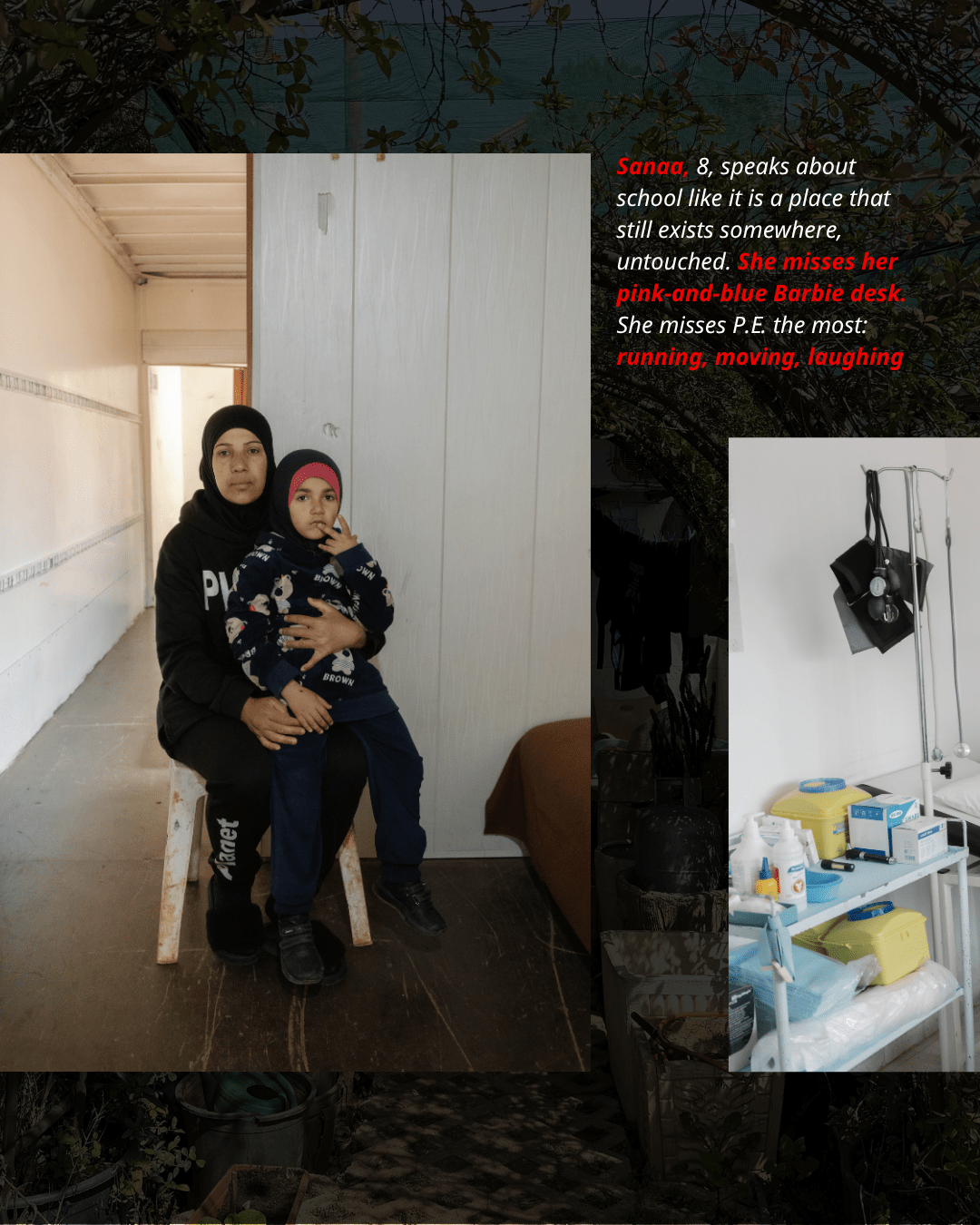
Despite our concern that these administrative blockages form part of broader efforts to undermine, discredit, and defame humanitarian action, we continue to seek dialogue with the Israeli authorities, to reassert the principles of independent humanitarian aid, and ultimately continue our medical mission for the hundreds of thousands of Palestinians who must not be abandoned in their time of greatest need.

Logistics staff dismantle and evacuate tents often used for triage and overflow, are no longer available to the influx of wounded from continued Israeli airstrikes.

In Gaza, in 2025 MSF alone carried out almost 800,000 outpatient consultations, handled more than 100,000 trauma cases, and distributed over 700 million litres of water. Today, we operate in six hospitals, support seven healthcare centres and four clinics, and run two field hospitals. At the beginning of the year, our teams were supporting one in five hospital beds and the delivery of one in three babies in Gaza. We respond to the daily water needs of over 635,000 people – 30 per cent of the people in Gaza.  

Facebook
Twitter
LinkedIn
WhatsApp
Print

How Children’s Drawings Reveal Trauma and Hope in Lebanon

Displaced people in Arsal, Lebanon

How Children’s Drawings Reveal Trauma and Hope in Lebanon

By: Glykeria Koukouliata, mental health activity manager with MSF in Baalbek-Hermel, Lebanon.

In Baalbek-Hermel, one of Lebanon’s most underserved governorates and heavily impacted by the latest war and ongoing Israeli airstrikes, large communities of Syrian refugees, both long-term and newly arrived, live alongside local communities.[1] Here, children grow up with stress and uncertainty that they don’t yet have the means to express. Through drawings, they reveal how trauma, memory, and hope coexist when daily life is shaped by displacement and insecurity.

The idea came about unexpectedly during a community discussion in Baalbek-Hermel. As Médecins Sans Frontières/Doctors Without Borders (MSF) teams spoke with Lebanese and Syrian families about their health needs, a child timidly hovered timidly at the edge of the conversation and asked, “Can we draw? We just want to draw.”

[1] Lebanon continues to host the highest number of refugees per capita worldwide, with Baalbek-Hermel being the governorate hosting the largest refugee community in the country. In addition to more than one million long-term Syrian refugees and an estimated 230,000 Palestinian refugees, Lebanon has also seen a recent influx of around 120,000 Syrians following the fall of Assad’s government in December 2024 and the subsequent instability —many of whom have settled in Baalbek-Hermel.

MSF Teams with the Community
MSF teams organize regular drawing and art-based activities as well as other psychosocial support sessions in our mobile clinics and fixed facilities in Hermel and Arsal.

In northeastern Lebanon, children from both refugee and host communities are growing up under immense pressure. Years of conflict in Syria, Lebanon’s economic collapse, ongoing Israeli military operations and airstrikes, and prolonged uncertainty have taken a heavy psychological toll, particularly on children. Sleep disturbances, anxiety, withdrawal, negative behavioral changes, and difficulty concentrating, are a few of the conditions our mental health teams see among children visiting our clinics due to the constant insecurity around them. Many children struggle to articulate fear, grief, and longing, especially in environments where adults themselves are overwhelmed and focused on day-to-day survival and coping.

For children, feelings and experiences they don’t fully understand often surface indirectly in the way they play, behave, or the images they draw rather than speech. Art-based psychosocial support allows them to express what they cannot yet name.

Our mental health teams began organizing regular drawing and art-based sessions in our mobile clinics and fixed facilities in Hermel and Arsal. The response was immediate: Each week, children arrived early and eager, some bringing crayons from previous sessions and others asking for extra paper to take home. What began as a simple activity quickly became a ritual: A space where they felt seen, safe, and free to imagine.

But what began as an activity to support the community quickly became a powerful window into unspoken struggles. The insight was staggering. As a psychologist, I looked beyond the drawings themselves, noting recurring, missing, or changing elements over time. These observations were considered alongside other information to inform our psychosocial support. Over time, the drawings told a story.

MSF team With the Community
MSF’s mobile teams bring medical and mental health care to communities in Baalbek-Hermel, ensuring people affected by displacement, insecurity, and conflict can access care closer to where they reside.

What drawings reveal about children’s psychology

Many children drew homes they no longer live in. These homes are often depicted larger, brighter, and more detailed than their current surroundings. Others drew trees, gardens, animals, and open skies. Taken together with the children’s words, their narratives, and the broader context of their experiences, these images reflect nostalgia, but not only for a place. They reflect a longing for safety, predictability, and belonging —feelings that war and displacement stamp out abruptly.

Nostalgia, in this context, is not simply about the past. For children, it serves a stabilizing role, helping them preserve a sense of identity amid disruption. Drawing familiar scenes allows them to reconnect with memories of care, family, and stability, all of which are essential elements for emotional regulation and resilience.
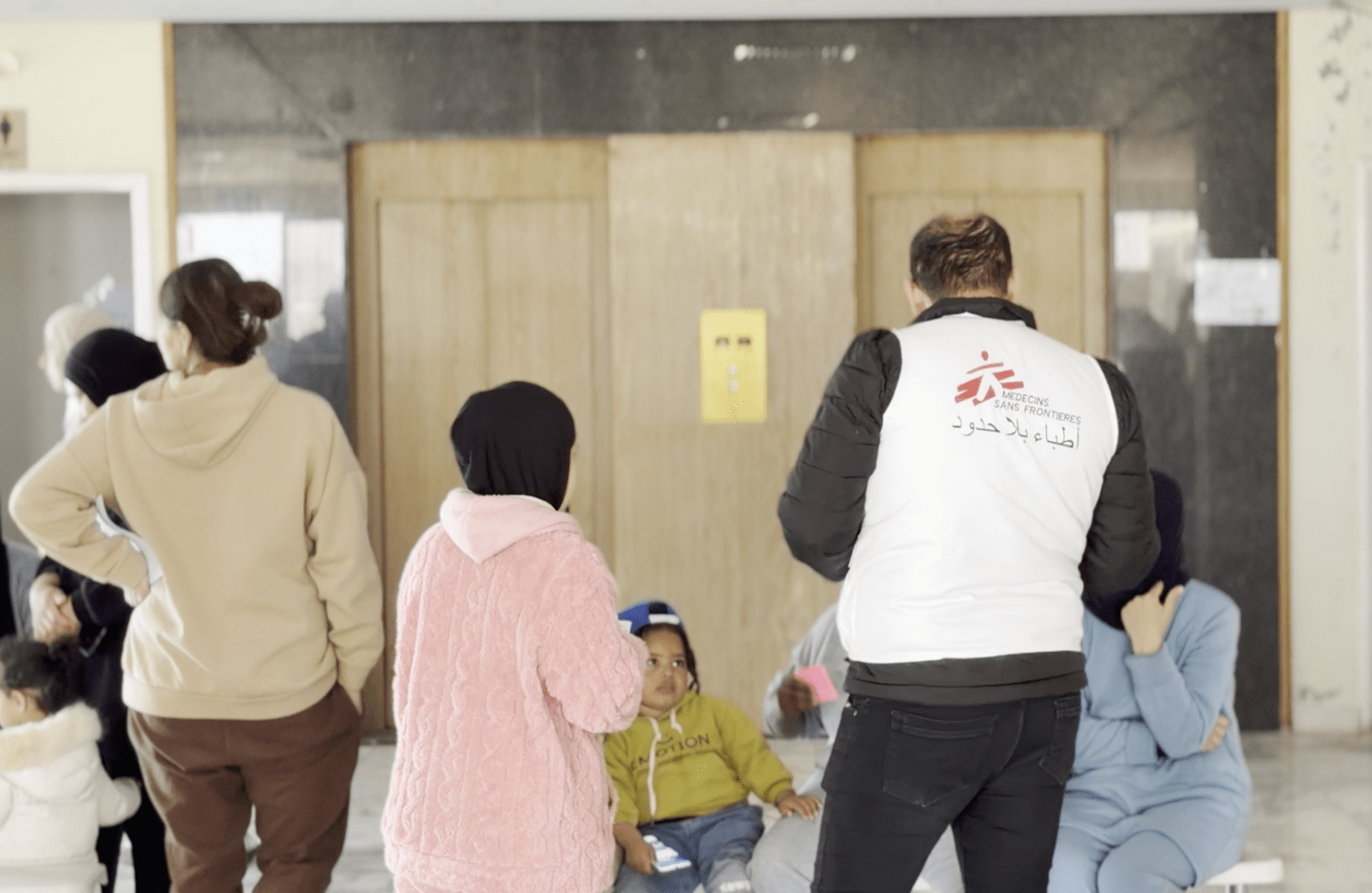
At the same time, other drawings included imagery often associated with fear and hypervigilance: drones in the sky, men carrying guns, dark clouds, or divided spaces. These images often appeared alongside peaceful scenes, showing how trauma and hope coexist in a child’s internal world. This duality is common in children affected by conflict — they are not only “victims” of fear, but also actively making sense of overwhelming experiences trying to integrate overwhelming experiences.

One drawing that stayed with me was made by Hamida, a 13-year-old girl from Syria. She drew a large mulberry tree and told us about her father shaking its branches while she and her siblings gathered the fruit beneath it.

Child's drawing - TheTree We Left Behind

The Tree We Left Behind, by Hamida, 13 years old
This is our big and beautiful tree in the village that we left when we came here. I loved it because it had very tasty mulberries. My dad would shake the tree, and my siblings and I would run to collect them from the ground. There were flowers and land planted with onions near the tree. For sure, the tree must be dry now.

From a mental health perspective, Hamida’s drawing and its accompanying story and context hold multiple layers of meaning: connection to a caregiver, sensory memory, play, and loss—all contained within a single image. For Hamida, sharing this memory aloud was not only storytelling; it was emotional processing. The drawing allowed her to externalize grief in a way that felt contained and supported.

We have seen the positive impact of these drawing sessions. Parents tell us their children sleep better, speak more openly, or show fewer behavioral outbursts. Caregivers begin to understand that a child’s “misbehavior” may be linked to distress rather than disobedience. In this way, children often become quiet agents of change, reshaping how families think about emotions and mental health.
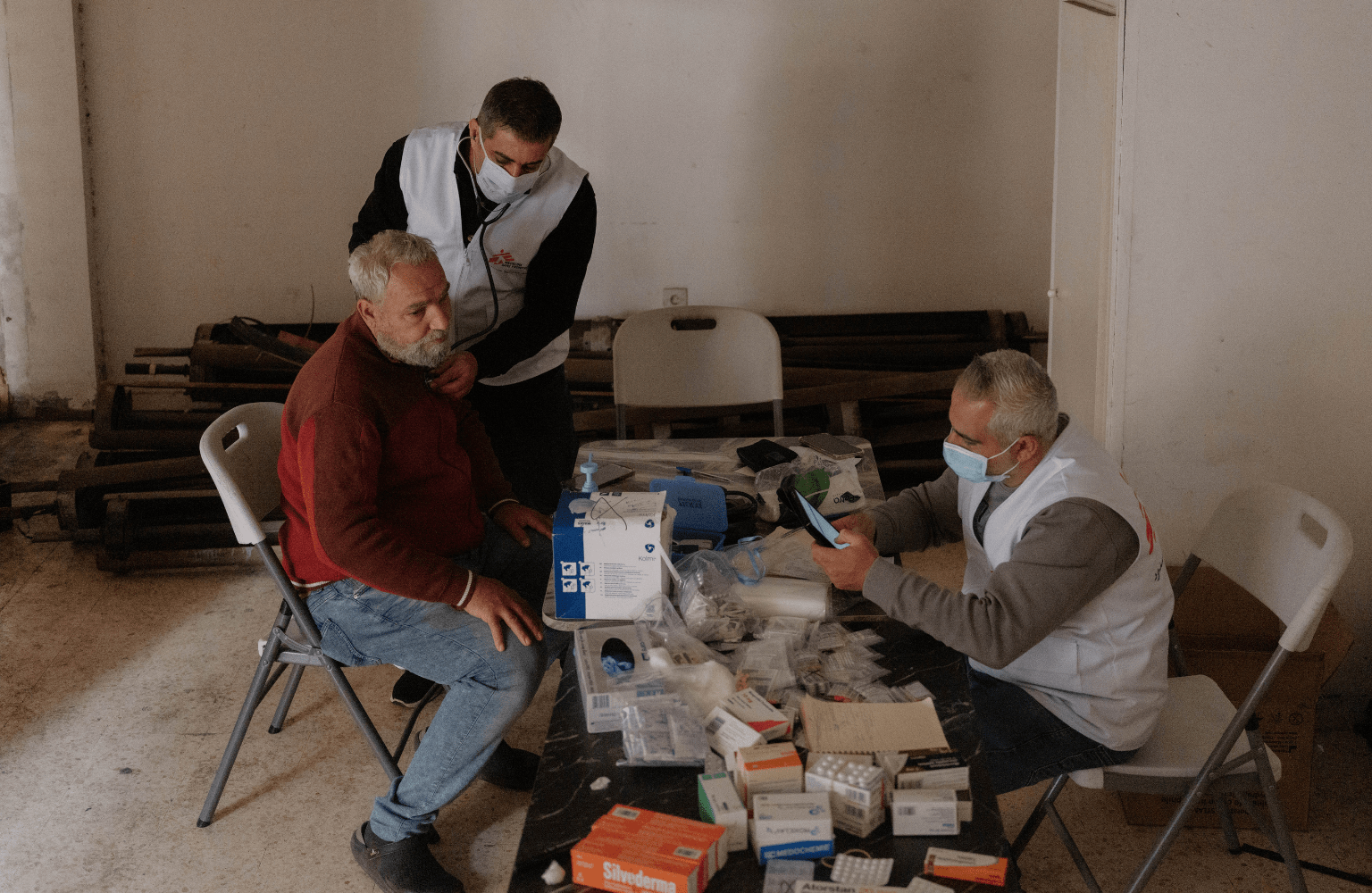
Baalbek-Hermel is a region of striking beauty and resilience, but also one that has absorbed years of hardship. People here are generous and welcoming, yet pain is often kept private. Mental health struggles are still surrounded by stigma, and many people seek help only when distress becomes unbearable.
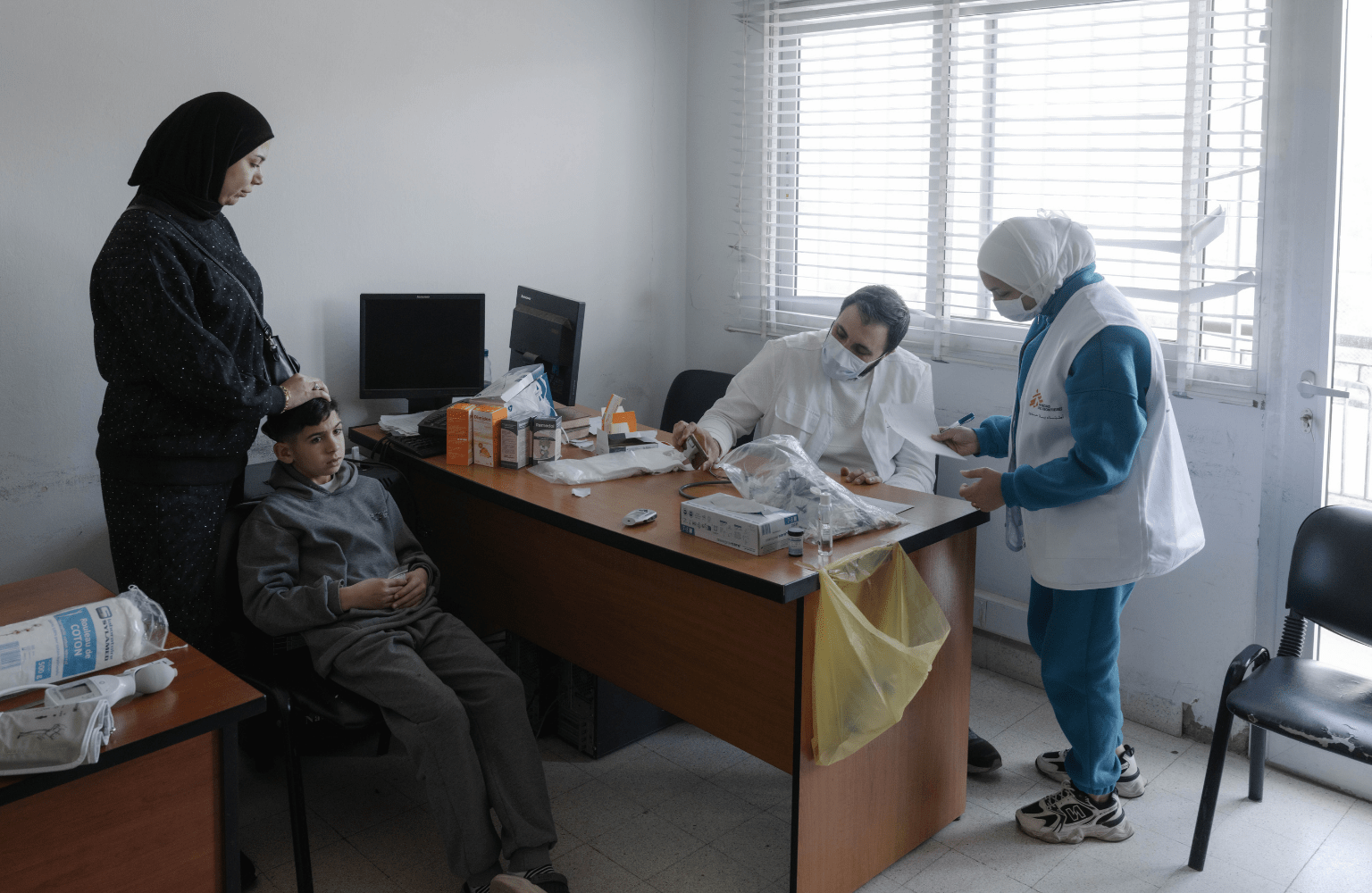
Through simple, creative psychosocial support interventions like drawing, our teams create entry points—simplified ways to talk about mental health that feel accessible and human. These spaces allow both children and adults to understand that distress is not a personal failure, but a normal response to abnormal circumstances.

In Baalbek-Hermel, these drawings are more than images on paper. They are evidence that even in the aftermath of loss, children continue to imagine, remember, and hope. And sometimes, giving a child a crayon is not a small gesture at all: it is the first step toward being heard and chipping away at the wall stigma built.

**Glykeria Koukouliata is a psychologist from Greece who joined MSF in 2023. She has worked on missions in Sudan, Armenia, Ethiopia, and lately in Lebanon. Originally preparing to become a lawyer, Glykeria’s path changed when she met a psychologist and saw how deeply people were drawn to her empathy and presence. Inspired by that connection, she decided to pursue psychology instead.

Today, Glykeria’s work focuses on providing mental health care and psychosocial support to communities affected by displacement and crisis—helping people find strength and healing even in the most challenging circumstances.

Facebook
Twitter
LinkedIn
WhatsApp
Print

Israel’s threat to withhold registration for NGOs: A blow to aid in Gaza and the West Bank

Israel’s threat to withhold registration for NGOs: A blow to aid in Gaza and the West Bank

Israel’s threat to withhold registration from Médecins Sans Frontières (MSF) and other international non-governmental organisations (INGOs) is a cynical and calculated attempt to prevent organisations from providing services in Gaza and the West Bank, in breach of Israel’s obligations under international humanitarian law.

Denying medical assistance to civilians is unacceptable under any circumstances and it is appalling to use humanitarian aid as a tool of policy or collective punishment. Now is the time for action. Israel is escalating its grave attack on humanitarian response, directly threatening medical care and humanitarian aid to civilians.  

MSF unequivocally refutes the allegations made by the Israeli authorities in recent days. MSF would never knowingly employ anyone involved in military activities, which contradicts our core values and ethics. If the descriptions of what our teams see with their own eyes in Gaza – death, destruction and the human consequences of genocidal violence – are unpalatable to some, the fault lies with those committing these atrocities, not with those who speak of them.

MSF has legitimate concerns around the registration requirement to share personal information of our Palestinian staff with Israeli authorities, heightened by the fact that 15 MSF colleagues have been killed by Israeli forces. In any context – especially one where medical and humanitarian workers have been intimidated, arbitrarily detained, attacked, and killed in large numbers – demanding staff lists as a condition for access to territory is an outrageous overreach. It undermines humanitarian independence and neutrality and is made all the more dangerous by the absence of any clarity about how such sensitive data will be used, stored, or shared. Yet, rather than engage with MSF to hear our concerns, the Ministry in charge of the registration process has ignored our repeated requests for a meeting and accuses us in the media of knowingly harbouring alleged terrorists.

Israeli forces have killed and wounded hundreds of thousands of civilians, deliberately destroying essential infrastructure, targeting medical staff, humanitarians and journalists. It has taken control of more than half of the Gaza Strip, forced the population into ever-shrinking areas under inhumane conditions, and manufactured shortages of basic necessities by blocking and delaying the entry of essential goods, including medical supplies.

Currently, MSF supports one in five of Gaza’s hospital beds and assists one in three mothers during childbirth. The support we provide is nowhere enough to meet the needs of Palestinians, yet removing it will have a terrible cost. For Israel to block MSF and dozens of other organisations from providing services to Palestinians, after Israeli forces have obliterated Gaza’s health system, is an escalation of the attacks carried out against Palestinians during the last two years.

Services available for people in Gaza now are far less than what is needed, precisely because of the blockades and restrictions imposed by Israel. For the third winter in the row, the Gaza Strip has been battered by dropping temperatures, torrential rain and heavy winds. Weather conditions have destroyed and flooded the makeshift shelters people are living in, while Israel continues to block the entry of supplies like tents, tarpaulins and temporary housing.

Now the Israeli government seeks to ban what little aid and services do exist. MSF continues to seek engagement with Israeli authorities so we can maintain our vital activities and support Gaza’s decimated health system. Allowing humanitarian aid is not a favour. It is an obligation under international law. Today, more than ever, Palestinians need more services not less.

Facebook
Twitter
LinkedIn
WhatsApp
Print

Working in Lebanon: Between the Sound of Drone & Everyday Life

Verena at her workplace in Nabatieh, Lebanon

Working in Lebanon: Between the Sound of Drone & Everyday Life

Verena Prinz works as a finance & HR manager in Lebanon. She shares how the sound of drones shapes her daily life – and what the tension does to people. 

[Verena (on the right) with her colleague Alice at her workplace in Nabatieh, Lebanon]
Verena (on the right) with her colleague Alice at her workplace in Nabatieh, Lebanon

“I’m not afraid of the booms. The only thing I want is to sleep in my own bed,” says the three-year-old daughter of my colleague here in southern Lebanon. 

A child who is no longer afraid of bombs as long as her mother is with her. A child whose greatest wish is to never have to flee from airstrikes again. Simply to be at home. In peace. 

The uncertain background noise 

I live and work in Nabatieh, a city in southern Lebanon, about 15 kilometers from the southern border. Officially, there is a ceasefire here – but the sky is rarely quiet. 

The war last year hit the south of the country hard. Since then, despite the ceasefire, there have been constant airstrikes and drone flights in the border region. 

For the civilian population, they mean a constant background noise of uncertainty. People here call it “routine.” To outsiders, it sounds like constant insecurity – and both are true. 

With mobile clinics to the patients 

Our project in Nabatieh is still young. We launched it in April 2025 to provide medical care to people in this region. Here, the public healthcare system is weakened by years of economic crisis and the aftermath of Israeli attacks on healthcare, and the fear of escalation shapes everyday life. 

Drones can be heard almost daily, and airstrikes in the surrounding area occur regularly.

As a finance and HR manager, I am part of the core team here. My job is to ensure that our teams can work effectively. I handle everything from recruiting new colleagues to salary systems and the small, everyday structures. 

Currently, we operate three mobile clinics, among other things. Every day, we drive to different communities in the region to help people. Our teams treat patients, provide consultations, and offer psychological support. 

Despite everything, the mood in our team remains calm, carried by the awareness of how important each of these outreaches is.

Each journey and every outreach mission require organization, coordination, and taking responsibility. Sometimes we have to improvise when plans change spontaneously due to security situations, roadblocks, or staff shortages. 

The background noise in everyday life 

While the sky hums, our day begins. We meet for a briefing, discuss plans, and assign tasks. The mobile clinics set off for villages where there is otherwise no medical care. For many, it’s an ordinary day. For us, it’s a day where routine and reality quietly wrestle with each other. 

Everyday life functions. The monotonous hum of drones has become part of the environment – like the ticking of a clock in the background, only noticed when silence falls. Sometimes it’s distant, barely audible. Then again louder, sharper, closer.

Routine in an exceptional situation 

And then there are the sounds of fighter jets. Our conversations falter, glances meet, and the air stands still. In case of an airstrike the pressure wave can shatter windows and lead to injuries. We open the windows slightly to mitigate the risk of broken glass. We listen, wait, and count the seconds. 

Then comes the impact. This time it’s fifteen minutes away – so “far away.” Far in a relative sense that has taken on new meaning here. 

Life goes on because it has to. But I can sense how deeply this constant tension affects my colleagues.

A few minutes later, our teams give the all-clear. Everyday life resumes. A child needs antibiotics, transport is organized, someone laughs at a bad joke in the office. 

A brief sigh of relief 

Some of my colleagues say they feel a moment of relief when a drone has hit its target. Not because it’s over, but because they know: today it wasn’t close to us. They themselves call it absurd and paradoxical.

But at the moment the impact happens, for one breath, our tension eases. For seconds, calm returns, a deceptive relief sets in. 

The choice to help 

Between the sound of drones and normality, between tension and composure, our work plays out every day. We work, help, laugh, plan – and yet we know how fragile everything is. 

I have the choice to help, and that’s why I’m here. It’s our responsibility to look, listen, and help wherever we can. 

Verena with the team in Nabatieh
Facebook
Twitter
LinkedIn
WhatsApp
Print

MSF Warns Israeli Rules Threaten Lifesaving Healthcare in Gaza

The MSF Hebron team on their way to assess a family that was attacked by Israeli settlers in Shi’b al-Butum, south of the West Bank.

MSF Warns Israeli Rules Threaten Lifesaving Healthcare in Gaza

Israel’s new registration rules for international non-governmental organisations (INGOs) risk leaving hundreds of thousands of people in Gaza without lifesaving healthcare in 2026, warns Médecins Sans Frontières (MSF), one of the largest medical organisations operating in Gaza today. The new requirements threaten to withdraw registration from INGOs beginning 1 January. This non-registration would prevent organisations including MSF from providing essential services to people in Gaza and the West Bank.

With Gaza’s health system already destroyed, independent and experienced humanitarian organisations losing access to respond would be a disaster for Palestinians. MSF calls on the Israeli authorities to ensure that INGOs can maintain and continue their impartial and independent response in Gaza. The already restricted humanitarian response cannot be further dismantled.

“In the last year, MSF teams have treated hundreds of thousands of patients and delivered hundreds of millions of litres of water,” says Pascale Coissard, MSF emergency coordinator for Gaza. “MSF teams are trying to expand activities and support Gaza’s shattered health system; in 2025 alone, we carried out almost 800,000 outpatient consultations and handled more than 100 000 trauma cases, and if we obtain registration, we plan to continue strengthening our activities in 2026.”

Hanan Zanoun cares for her three children, Qasem, 7, Abdallah, 5, and Mohammed, 3. They suffer from cystic fibrosis, celiac disease, and heart conditi

MSF provides a vast amount of life-saving healthcare, yet even this is not enough to meet the overwhelming needs of people in Gaza. In 2025 alone, with a budget of more than €100 million, MSF teams handled over 100,000 trauma cases; managing the care for over 400 beds; performed 22,700 surgical operations on nearly 10,000 patients; carried out almost 800,000 outpatient consultations; administered 45,000 vaccinations; assisted in more than 10,000 deliveries; provided more than 40,000 individual mental health sessions and group sessions for over 60,000 people;  distributed more than 700 million litres of water and produced nearly 100 million litres of clean water.

For 2026, MSF has committed an estimated 100-120 million euros for its humanitarian response in Gaza. Many of the services provided by MSF are largely unavailable elsewhere in Gaza due to the destruction of the health system.

 If MSF loses its access to Gaza in 2026, due to the Israeli authorities, a large portion of people in Gaza will lose access to critical medical care, water, and lifesaving support. MSF’s activities serve nearly half a million people in Gaza through our vital support to the destroyed health system.

War on Psyche, West Bank, Palestine

MSF continues to seek constructive engagement with Israeli authorities to continue its activities. In Gaza, MSF is currently supporting six public hospitals and runs two field hospitals. MSF also supports four general healthcare centres and runs an inpatient feeding centre for people with malnutrition. MSF has recently opened six new medical points providing wound care and other general health care services. MSF has been working in the Occupied Palestinian Territory since 1989.

Facebook
Twitter
LinkedIn
WhatsApp
Print

Aswan: Bringing healthcare to Egyptians and Sudanese People

MSF Medical activities: Mental health intervention in one of the Aswan Mobile clinics.

Aswan: Bringing healthcare to Egyptians and Sudanese People

Khaled* sits in the corner of the waiting room, with his UNHCR registration card in one hand, and a little plastic bag full of empty medication packets in the other. This is his third visit to the clinic in Daraw, receiving treatment for his chronic illness.

“We had a comfortable life in Sudan and leaving it was very difficult. But it was our only option,” says Khaled, originally from Jezirah, Sudan but now living in Daraw, a little town in the governorate of Aswan, south of Egypt. “Our home country is left without healthcare, and older people like me cannot stay long without it.” Khaled is one of the 1.5 million Sudanese living in Egypt, many of them crossed after the recent war started in 2023.

In Daraw, Médecins Sans Frontières (MSF) runs a mobile clinic in partnership with Om Habibeh Foundation (OHF), an Egyptian organization with a long history in Aswan governorate. The two organisations started implementing the mobile clinic activity in January 2025 in five different locations in the Egyptian southern governorate.

The objective of this activity is to make access to healthcare easier to people who need it, while supporting the existing healthcare system in Aswan governorate. Since then, the team has provided over 7,265 general consultations and over 6,600 consultations for non-communicable diseases. In addition, the team has provided more than 1,470 individual mental health consultations and more than 2,440 health promotion sessions.

Every morning, a joint MSF and OHF team, consisting of doctors, nurses, psychologists and health educators, visit these locations and provide primary medical care to Sudanese and Egyptians who do not have it elsewhere.

Working with the community: a key component for a successful mission

Since the start of the activities, the two organisations knew that to reach the targeted communities and adapt to their needs, they need to engage closely with them. While the Egyptians and the Sudanese are co-existing in Aswan, their needs are different, and their behaviours towards accessing healthcare is also different.

For the Sudanese, who left their homes with very little on them, have additional challenges and needs. For many, the legal status often determines their freedom of movement and access to healthcare, from fear of intimidation or violent reactions towards them.

“Fleeing war and leaving their homes behind add a serious toll on people’s mental health. We see a lot of patients who suffer from anxiety, depression or post-traumatic stress disorder (PTSD) due to their pasts, what they went through whether in Sudan or on their journey here, and the uncertainty of their current lives,” says Moses Luhanga, MSF health promotion activity manager in Egypt.

Without community engagement, it is difficult to reach the community and get a grasp of their needs. The teams work with have several community mobilisers, who act as the link between us and the communities.  

To get to them, the medical team is increasing the efforts to reach the people in need, by collaborating with community-based organisations to reach Egyptians, and other community leaders and mobilisers to reach the Sudanese refugees who settled here or even those who are on the move.

While the needs are different, and the challenges that obstruct them from accessing healthcare are also different, the financial aspect remains their biggest constraint that is shared among many, either to reach the facilities, or even to buy the medications prescribed. This is the case of Heba*, an Egyptian mother of seven, who finds it difficult to cover all her medical bills and feed her children at the same time. “While I do have access to the public services as an Egyptian woman, I prefer to come here as I receive all my medications for free,” says Heba. “It helps me save some money for my family, instead of paying at the pharmacy.” For many in the governorate of Aswan, Sudanese and Egyptians alike, living costs are increasing, adding more pressure on them to continue feeding their families.

More and more Egyptians are now coming to receive care in our mobile clinics, but most of the patients remain Sudanese.

Care that goes beyond basic medical care

In Karkar, 70 kilometres south of Daraw, Aliya* has a different story. She first came to the clinic when she found out she was pregnant, thinking she could deliver her baby at the clinic. Although the medical team does not provide delivery services, our referral team makes sure to refer the patients who need additional medical care to other organisations or health facilities. “I was very relieved when I was told that my delivery will be taken care of by the medical team, including transportation costs to the hospital. I do not have sufficient money to pay for it,” says Aliya, with a big smile on her face.

Daily, an MSF referral nurse follows up with patients who require additional services that neither MSF nor OHF provide. While many of the patients, Aliya being one of them, require secondary medical care, a lot ask for non-medical services such as protection or financial or social services. Since the introduction of this new service in September 2025, more than 80 patients have been referred to other organisations, reflecting on the high needs for further care.

The link with the community mobilisers is also key for this component, as the solidarity between the host community and the refugees, as well as the inter-organisations network alleviate the sufferings of many.


*Names of patients have been changed to protect their identities

Facebook
Twitter
LinkedIn
WhatsApp
Print