Adapting to Life in Kutapalong: A Rohingya Photo Story

Life in the camps photo essay

Adapting to Life in Kutapalong: A Rohingya Photo Story

المصور الصحفي الروهينجي، ساهات ضياء هيرو، والمصور الأسترالي، فيكتور كارينجال
Rohingya photojournalist Zia Sahat and MSF Australia photograpgher Victor Caringal

In June 2025, Rohingya photojournalist, Sahat Zia Hero, and Australian photographer, Victor Caringal, worked together to produce a series of photographs that showed how the Rohingya have adapted to daily life in the Kutapalong refugee camps in Bangladesh. This photo series is part of the taro leaf project, an advocacy project that uses the taro leaf as a symbol to tell the story of Rohingya statelessness.

Eight years ago, more than 700,000 Rohingya arrived in Bangladesh, fleeing a targeted campaign of extreme violence at the hands of Myanmar’s military.

Zia and Victor reflect on this collaborative work:

Zia: “Photographing together was really nice. The topic we chose was ‘making a mark’ because our ‘mark’, our identity, our culture and history is being erased. And we have the other challenges of life in the camps – lack of access to education, opportunities for livelihood, healthcare and many things. So we’re trying to make a mark through our art, drawing, poetry, and photography, to keep our culture alive, to keep our identity alive and to remind us who we are. We don’t want to be forgotten.”

Victor: “It was a privilege to walk through the camps with Zia. We spent a day photographing, yet only covered a fraction of the city-sized mega camp. But that short time was rich with stories and life, which I hope translates through in the images we’ve chosen.”

The accompanying text to these photos is from Zia and Victor.

A lone Rohingya man walks through the Kutapalong refugee camps.

© Victor Caringal

In 2017, large forest areas were cleared to make way for shelters as more than 700,000 Rohingya fled violence in Myanmar and sought refuge in neighbouring Bangladesh. Some of the foliage has now regrown, providing much needed shade in the heat of the densely populated camps, but it also marks eight years of separation from their homeland that the Rohingya have faced.

We picked this image to show the densely packed setting of the camp shelters. The camps are overwhelmingly large, but at the same time, enclosed, restricted and overbearing. Zia notes that the beautiful greenery and regrowth is in stark contrast to the poor conditions of the temporary shelters that Rohingya live in.


A Rohingya woman walks into MSF’s Balukhali clinic in Kutapalong refugee camp, Bangaldesh.

© Victor Caringal

This image reminded us of conversations we had about Rohingya unable to leave their mark or legacy in the world. The woman walks through the camp with traceless steps, battered by rain. The rain is suspended, like how Rohingya feel about their situation, like their lives are on pause.


A man repairs his shelter in the Kutapalong camps.

© Victor Caringal

We spotted this man repairing his shelter while walking through the narrow streets of the camps. He appeared impressively strong, carrying out repairs to the temporary bamboo shelter that protects his family during monsoonal storms. It’s a type of strength and resilience that’s easy to photograph, but what this man represented for me, is how I see all Rohingya – a people who have to be strong to survive, to carry more emotional weight than anyone should ever have to carry.


Shelter on an unstable slope.

© Zia Sahat Hero

Escalated violence in Myanmar’s Rakhine state has led to the recent arrival of more Rohingya seeking safety in Bangladesh. With little remaining space in the densely populated camps, these Rohingya built their shelter on an area of land prone to landslides. Their new home is far smaller than the one they left behind.

A Rohingya girl studies in her shelter.

© Zia Sahat Hero

Recent aid cuts have left learning centres closed and contracts terminated for 1179 local teachers within the camps. Education  is one of the few opportunities Rohingya youth have to improve their situation.

We chose this image because it showed the fragility and hope of young Rohingya and how decisions made today will have a ripple effect on future generations.

Childrens play and imagination.

© Zia Sahat Hero

Children’s play and imagination create moments of relief from daily challenges in the camps. Their vision of a better future are not only expressions of hope but also a way to manage and process the difficult realities around them.

While we walked through the camps, we saw that children were everywhere – laughing, playing, and sometimes being scolded. They brought life to the camps and pockets of joy. Zia noted that the reason there were so many kids was because of the school closures from aid cuts.


A child overlooks the camps from an eroded hill top.

© Zia Sahat Hero

We selected this image to share the threat of landslides that occurs from monsoonal rain and flooding, and the eroded soil in the camps. Originally there were shelters built here, but these were lost in a landslide. The area now remains precarious and unoccupied, despite the child standing and smiling from the top of the hill. 


Rayhana Rohingya food stall owner in her shelter.

© Zia Sahat Hero

I was impressed to see how much food Rayhana was able to prepare within the tight quarters of a shelter kitchen space. Rayhana opened a small food stall in the camps to financially support her family. While there is a food ration in place, it’s currently at US$10 a month per person, which is far below what’s needed to survive in the camps, and the reduction of aid means lower amounts in the future.


A young child seen through the tarpaulin.

© Zia Sahat Hero

We picked this pairing of images as they visually speak to a feeling of enclosure, a sentiment that many Rohingya in the camps talk about while living behind wired fences of the camps.


A chicken in a makeshift coup in front of a makeshift shelter.

© Victor Caringal

Farming was an integral part of Rohingya life during Zia’s childhood. In the dense camps where people have no permanent home, land or space, it is rare for people to raise livestock or grow enough vegetables to make a living or survive from.


A daily worker prepares bamboo materials for building and repairing shelters.

© Zia Sahat Hero

Zia explained that bamboo was a traditional building material in Rohingya culture. In this picture, the bamboo looks fresh and green, but the quality of this bamboo is lower than what Rohingya would use for their homes and structures in Arakan.


A bridge crossing separates camp districts in Kutapalong refugee camp.

© Victor Caringal

We watched as people crossed the bamboo bridge: two girls taking careful steps, two boys racing to the top, backflipping into the water. Zia had taken photos of this crossing over the eight years he’d been in the camps. A wider bridge was once in place, but it eroded and was swept away over multiple flood seasons. While it looks precarious, the new bridge provides an important access route between the neighbouring camps.


A man is transported to a health facility.

© Zia Sahat Hero

NGO workers and foreign visitors typically travel to the camps via arterial roads. But deep inside the camps, the throughways become much tighter, and Zia explained that many parts are only accessible on foot. When a medical need arises, people need to be carried to the nearest hospital, a difficult journey which can take hours away in monsoonal conditions.

"I want the world to know that Rohingya people are human beings. We exist. We deserve peace, knowledge, and dignity — just like everyone else.” Sahat Zia Hero.

Israel Starving Palestinians of Water in Gaza

A little boy struggles under the weight of a water jerrycan to bring it back to his displaced family's tent

Israel Starving Palestinians of Water in Gaza

Jerusalem, 21 August – Israel is deliberately depriving people of water in Gaza as part of its genocidal campaign – denying Palestinians of life’s necessities, including food, water and healthcare – says Médecins Sans Frontières (MSF). After 22 months of Israel destroying and restricting access to critical water infrastructure, the amount of water available in Gaza is wholly insufficient. Organisations like MSF would be able to increase the amount of safe water in the Strip, however, Israel is blocking imports of critical water treatment items. Since June 2024, for every 10 import requests of items for water desalination, MSF has had only one approved.

An MSF water truck provides a critical source of clean drinking water.

Gaza faces catastrophic water shortages under Israeli blockade

Israel must begin allowing the importation of critical equipment for water supply and distribution, at scale. The Israeli military must stop its destruction of water infrastructure and allow the immediate repair of water systems that have been damaged to ensure people have life-sustaining access to water.  Water and other necessities of life must not be used as weapons of war.

Not only is there insufficient water overall for people in Gaza, but the reliance on water trucking means they do not have predictable methods to obtain what is available. Eighty six percent of Gaza is under forced displacement order by the Israeli military, making it unsafe for water trucks to attempt to reach people in those areas. The lack of adequate storage methods in households compounds the problems people face.

Water scarcity in Gaza fuels disease and endangers public health

Diarrhoea and skin diseases rise as clean water runs out

The reduction of clean water in Gaza has resulted in an increase of disease, with MSF medical teams conducting over 1,000 consultations for acute watery diarrhoea a week for the past month. Without sufficient water for hygiene, people have been suffering from skin conditions, such as scabies.

Not only is there insufficient water overall for people in Gaza, but the reliance on water trucking means they do not have predictable methods to obtain what is available. Eighty six percent of Gaza is under forced displacement order by the Israeli military, making it unsafe for water trucks to attempt to reach people in those areas. The lack of adequate storage methods in households compounds the problems people face.

Hospitals struggle without safe water for patients and infection control

Clean water is also essential for hospitals; to reduce the spread of infection and to keep patients hydrated so their bodies can heal from their injuries and illnesses.

“There’s too little water for too many people,” says Mohammed Nsier, a water and sanitation officer for MSF in Gaza. “The amount we can provide is very small compared to the need, and conditions are extremely difficult.”

Palestinians wait with worn-out containers to fill them from a truck.

Critical water infrastructure destroyed and blocked from repair

Israel is creating difficult conditions for the delivery of safe water to people. It has always controlled much of the flow of water into Gaza. There is no naturally available drinking water in Gaza because of salination and contamination of sewage and chemicals, making people reliant on pipelines coming from Israel and desalination plants in Gaza. This infrastructure has been subjected to continuous Israeli attacks.


Israel has repeatedly damaged two out of the three water pipelines into Gaza since October 2023. It is estimated that 70 per cent of the water that goes through these pipes is lost because of leaks in the broader pipeline network, from the damage caused by bombardment. As a result, water must be distributed by water trucking, coming from desalination plants. Of the 196 desalination plants that are publicly- and NGO-run, over 60 per cent are non-functional because of their location or damage.

Humanitarian organisations are willing to repair the damaged pipes and plants of the water infrastructure that existed before October 2023, but Israel has repeatedly hindered these efforts by denying access to these sites. For locations that are reachable, repair efforts use “Frankenstein” techniques, salvaging parts from one generator or broken sites to fix another, and desperate attempts to source parts locally. Such actions are necessary as the supplies required to repair this infrastructure are impeded from entering Gaza by Israel. When items do come in, they arrive months late because of deliberate blockages.

Seven MSF water treatment units produce enough water for 65,000 people to receive 7.5 litres per day[1], a fraction of what is needed. For months, MSF has been trying to get nine new treatment units into Gaza – which would significantly increase MSF’s water production capacity – but these efforts have remained unsuccessful as Israel has not issued approvals or allowed the units to enter Gaza.

1 7.5 litres is the minimum amount of water a person needs per day during a humanitarian emergency, according to the WHO: Water Sanitation and Health

MSF logistics manager Mahmoud Abu Nada supervises a water distribution in Gaza City

Dangerous and limited access to water distribution points in Gaza

When water trucks can reach desalination plants, the next step of distributing it to people also means contending with major obstacles. Reaching people safely is near impossible, as the expansion of military activities and bombardments in so-called safe zones mean distribution points have to be continually re-located. In 2025, MSF has had to stop providing water at at least 137 water distribution points. To reach distributions, people must walk long distances carrying their heavy jerry cans.

Displacement and bombardment force families into long walks for water

“You see how people are struggling, everyone is desperate for water,” says a woman waiting for an MSF distribution in Gaza city. “Honestly, [it’s] very, very hard to get water, even walking a little bit is very difficult. I don’t know what to tell you—it’s torture.”

Children at risk as families lose track during chaotic distributions

The dangers of collecting water are compounded by its limitation, with the scarcity creating tension at distributions. People have told MSF staff that they fear collecting water.  Our teams see children who get lost after a distribution site has been forced to move by a displacement order or an airstrike, or because extensive damage has made their surroundings unrecognisable.

Children wait beside their empty jerrycans for a water truck to arrive in Gaza city.

Israel must stop using water as a weapon of war

“As with food, supplies, and healthcare, the Israeli military is restricting access to water to minimal levels,” says Ozan Agbas, MSF emergency manager. “By refraining from cutting off water entirely, they allow plausible deniability while choking Palestinians of their means of survival.”

Facebook
Twitter
LinkedIn
WhatsApp
Print

From Trauma to Healing: MSF Helps Torture Survivors in Syria

Soha torture victim in syria, animation

From Trauma to Healing: MSF Helps Torture Survivors in Syria

In Syria’s prisons and security branches, the darkness of the unknown overpowered the darkness of detention cells. During nearly 14 years of war, arbitrary arrests grew more common, with many people held in custody without trial or investigation. Many survivors suffer from physical injuries, psychological trauma, and chronic health conditions due to these years of systematic abuse, torture, and neglect. 

torture victims in syria, animation

Torture in Syria’s prisons leaves deep physical and psychological scars

Survivors speak of arbitrary arrests and years of abuse

“I was taken to solitary confinement while my daughters were locked in another cell. I knew nothing about them,” says Suha*, a 50-year-old woman who was detained in 2018 without charge and held for six years. “I didn’t care about the beatings I took, hoping that when the beating stopped, I would find out the fate of my daughters.” 

Suha*, like hundreds of prisoners and detainees, gained her freedom when chains were broken and the gates of prisons were opened upon the fall of the former Syrian government in Syria in December 2024. Many of them spent years in detention under very harsh conditions, deprived of proper food and sometimes medical care, and exposed to endless cycles of physical and psychological ill treatment, as reported to MSF medical and mental health teams. 

MSF launches medical and mental health support for torture survivors in Syria

Comprehensive care: medical, psychosocial, and social work service

In response to the huge medical and mental health needs, MSF teams launched a program for survivors of ill treatment in Syria. The program was piloted in MSF’s existing project in Idlib governorate. MSF then opened a dedicated clinic in Damascus, located inside Al-Mujtahid hospital, later introducing the program in Kafr Batna in Eastern Ghouta, where most of our patients come from. The area was historically an opposition area and was besieged and heavily bombarded. 

The clinic for survivors of ill treatment program offers general medical consultations with referrals to secondary and tertiary care, psychosocial support, and social work services which link patients to non-medical assistance through local organisations and associations offering support beyond the scope of MSF’s services.

victims being tortured in Syria's prison

Psychological trauma from detention hinders reintegration in Syrian society

Women and children survivors face additional barriers to care

“The mental health ramifications of detainment in Syria are quite alarming,” says Laura Guardiola, MSF Project Medical Referent in Damascus. “Being detained under unimaginable conditions of ill treatment that amount to physical and psychological torture has left deep and lasting wounds on former detainees and prisoners: wounds that require time, support, and care to begin healing.” 

MSF is also working on reaching more women as the very low number of female patients in our cohort is worrying, and even fewer children are seeking treatment. Less than 15 per cent of the consultations were with a female patient in the first two months of the clinic’s activities in Damascus. Several female former detainees have survived sexual violence during detention, which might prevent them from seeking support, mainly due to stigma.

While people left the places where they were detained to a new reality, they are still living in the same country, and they are reminded of their horrific experiences in their daily lives, which makes reintegration in society very challenging. Suha*talks about how she will never forget the Mezzeh tunnel in Damascus, which is where she realised she was not going to be returned to her home unharmed and will always be reminded of her experiences when she passes through it.  

Soha's daughter being tortured in Syria's prisons

Healing journeys: survivors rebuild their lives after torture in Syria

“That tunnel absolutely had no light at its end,” she says. “I often think of revenge. Abnormal reactions to normal actions have become my norm. I do not want feelings of hatred and bitterness to overcome me. It hurts me and not other people. I would like to rid myself of all that my experience left in me.” 

Suha* is one of 113 patients in the survivors of ill treatment program MSF runs through the clinic and the same services are offered in two other MSF projects. She is following up with our survivors of ill treatment team, and though there will be a long road ahead she is beginning her healing journey bit by bit. Our team believes her strong will to live, though shaken during her detention, never went away, and she is restarting her life for the sake of her daughters. 

Facebook
Twitter
LinkedIn
WhatsApp
Print

Al-Ubor Health Center Provides Vital Care in West Mosul, Iraq

Women gather at Al-Ubor clinic for a health education session led by MSF staff, focusing on pregnancy care and maternal health — empowering women with knowledge to make informed choices.

Al-Ubor Health Center Provides Vital Care in West Mosul, Iraq

AL-UBOR, MOSUL – In a corner of west Mosul in Iraq, an area often overlooked by public services, Al-Ubor health center stands as a vital sanctuary for families seeking access to essential healthcare. Since its opening in July 2023, the center has been a lifeline for many in Al-Ubor, where approximately 30,000 people that face challenges in accessing healthcare.

We’ve been coming here for two years for mental health, family planning, everything. My husband has a spinal cord injury and can’t work. The services here are free. My neighbors told me about the center. We walk half an hour to get here.
Basha’er Ahmed, a Longtime Patient

A critical lifeline in a neglected area

Al-Ubor is a densely populated and underserved area in west Mosul, where residents face daily challenges due to pollution, limited mobility, and a severe lack of public services—including access to affordable healthcare. Limited access to other public health services and other constraints in people’s lives make the population of Al-Ubor vulnerable and susceptible to illnesses and certain health conditions. “In Al-Ubor, water comes every five days,” adds Basha’er. “There are no clinics or schools, and kids walk far to attend class. We’ve seen cases of scabies spread quickly because there’s no sanitation.”
In this context, Al-Ubor health center helps bridge a critical gap, offering essential care to families who might otherwise go without. For many in the area, this center is one of the few places they can access essential care without financial constraints.

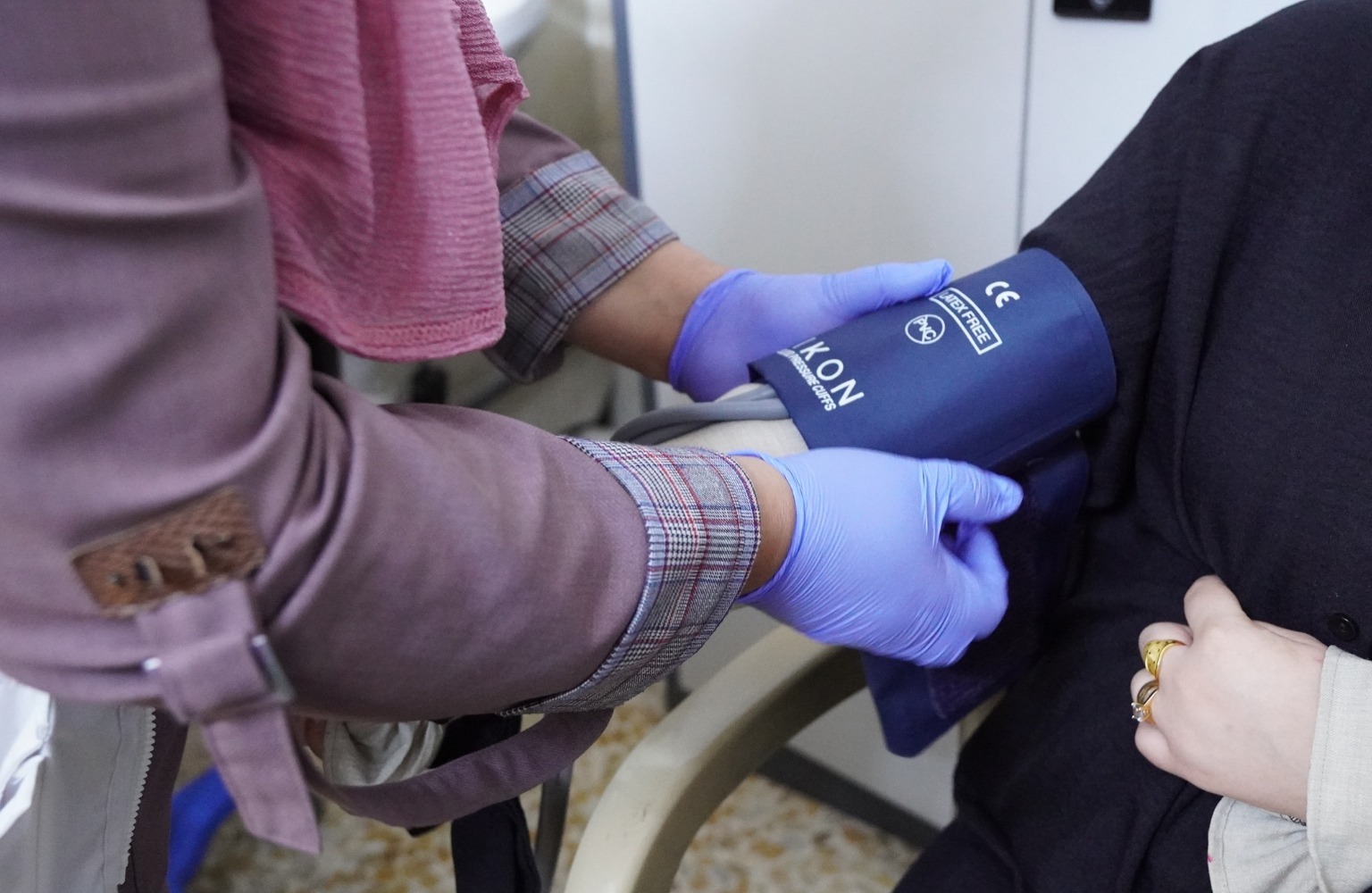
Checking blood pressure of a pregnant woman at Al-Ubor clinic, Mosul

Meeting urgent needs with practical solutions

Al-Ubor health center caters to children and adolescents, girls aged six months to 19 years and boys up to 14, offering general consultations and first-line care. For severe cases, an ambulance is available to transfer patients to other health centers in the city. Medicines are provided on-site when in stock, and when unavailable, the MSF team ensures families are guided to alternatives.

The demand for care is not limited to basic illnesses. Families come here as well for a wider range of maternal and reproductive health services.

Before MSF’s intervention, many residents struggled to reach healthcare due to distance, lack of transportation, unpaved roads, and the absence of local facilities. In emergencies, delays and obstacles—even at checkpoints—could have life-threatening consequence.
Israa Al-Hassan, MSF Health Promotion Supervisor
A medical staff member examines a child’s mouth at Al-Ubor clinic during a routine check-up.

Reaching the unvaccinated

“My husband and I live with my in-laws; we come here because it’s free,” says Doha Ghazi, a 19-year-old mother from Al-Ubor, as she waits to vaccinate her child.

In response to community needs, Al-Ubor health center launched a child vaccination program in April 2025 in partnership with Nineveh Directorate of Health . Every Tuesday and Wednesday, between 10 to 40 children are vaccinated, many of whom missed their early doses due to long travel distances, financial constraints, or distrust in vaccine handling. In just under three months, 764 vaccines were administered, including 240 in June alone. The vaccines protect against tuberculosis, measles, smallpox, polio, and whooping cough.

“My older daughter was vaccinated here too,” explains Shaza Youssef, a young mother of two, while holding her 20-day-old baby, “That’s why I brought the new baby.”

Support through pregnancy and beyond

Without this center, people wouldn’t have access to care — and that includes family planning services among other health services. The center also provides essential care for women throughout pregnancy and after childbirth, including ultrasounds, infection testing, tetanus vaccinations, and routine monitoring. Women also receive follow-up care for up to 40 days postpartum to support their recovery and well-being.

Other family planning services include intrauterine devices (IUD) and contraceptive implants for women who otherwise might have no access to such options, with priority given to those with medical needs. While deliveries are not conducted at the center, MSF’s medical team ensures that pregnant women are referred to appropriate facilities in Mosul, such as the Nablus Hospital, where MSF continues to provide care, or other available options, while also ensuring continuity of care throughout their journey.

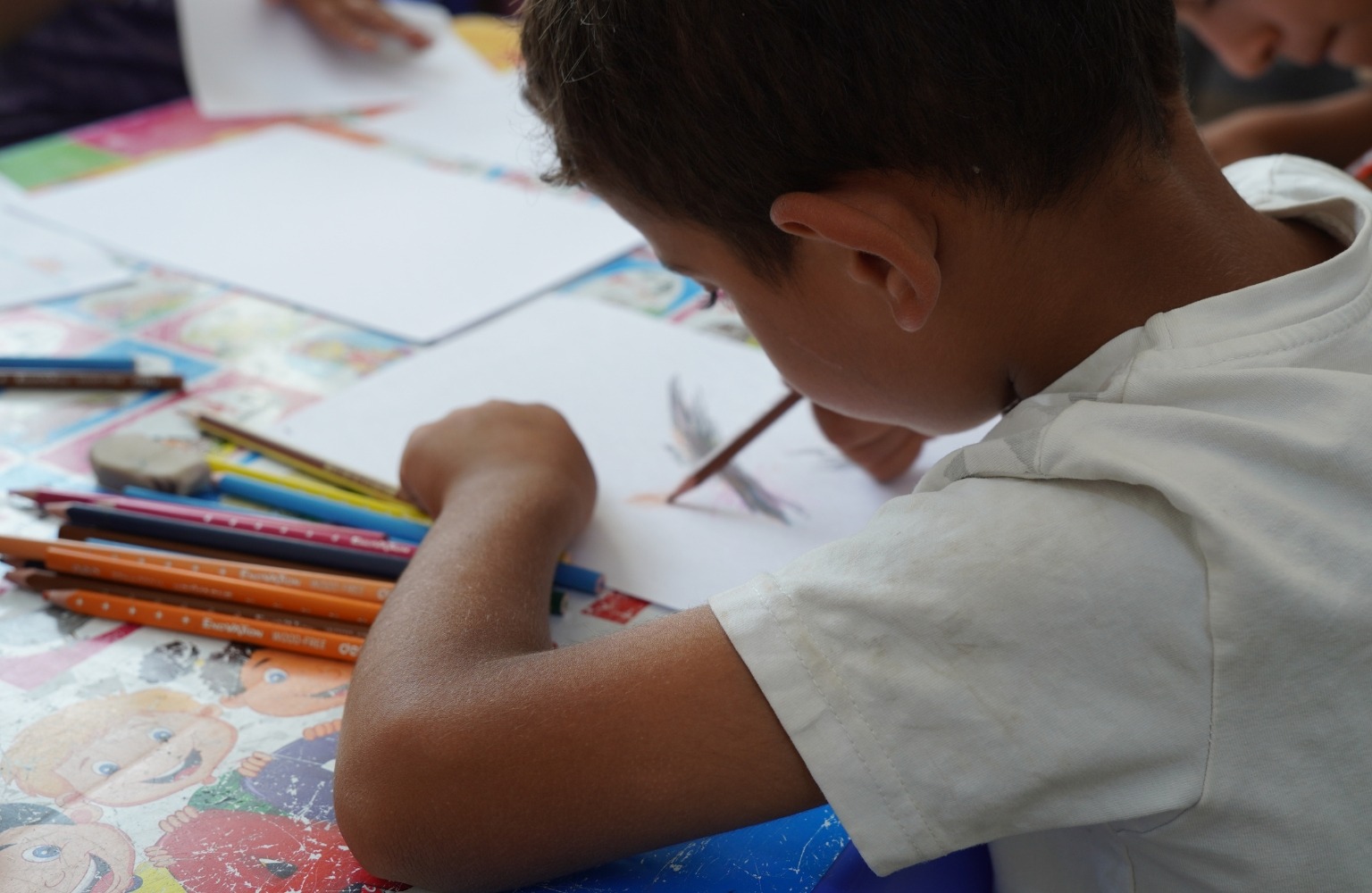
Child drawing at Al-Ubor Clinic, Mosul

Mental health and Awareness Building

Beyond physical care, MSF’s health promotion team raises awareness about mental health, dealing with puberty, hygiene, infectious diseases, and chronic issues like antimicrobial resistance, often worsened by unregulated use of antibiotics in poor communities. In addition to that, the MSF mental health team delivers psychosocial support to the patients there.

Al-Hassan recalled cases where mothers relied on unqualified neighborhood nurses, leading to misuse of antibiotics and worsening illness. Today, with MSF’s services and the numerous awareness sessions that the teams are doing, residents can access faster, higher-quality care, and misuse of antibiotics has significantly declined.

Looking Ahead

In a setting where public health services are scarce, Al-Ubor health center has become a trusted space, where children are vaccinated, mothers are supported, mental health is acknowledged, and community voices are heard.

Since we started working in Al-Ubor, we’ve seen healthier mothers and babies, better livelihoods, and a stronger sense of hope. People receive free, quality care without barriers, and the community feels safer and more confident about the future.
Pacific Oriato, Midwives Activity Manager
Facebook
Twitter
LinkedIn
WhatsApp
Print

War Fuels Sudan Cholera Outbreak: 2,300 cases, 40 deaths

MSF supported cholera treatment center, Nyala, South Darfur, Sudan

War Fuels Sudan Cholera Outbreak: 2,300 cases, 40 deaths

Port Sudan, 14 August –  On top of an all out war, people in Sudan are now experiencing the worst cholera outbreak the country has seen in years. First declared by the Ministry of Health one year ago, there has since been 99,700 suspected cases and more than 2,470 related deaths, as of 11 August. In Darfur region alone, Médecins Sans Frontières (MSF) teams treated over 2,300 patients and recorded 40 deaths in the past week for cholera, at facilities run by the Ministry of Health.

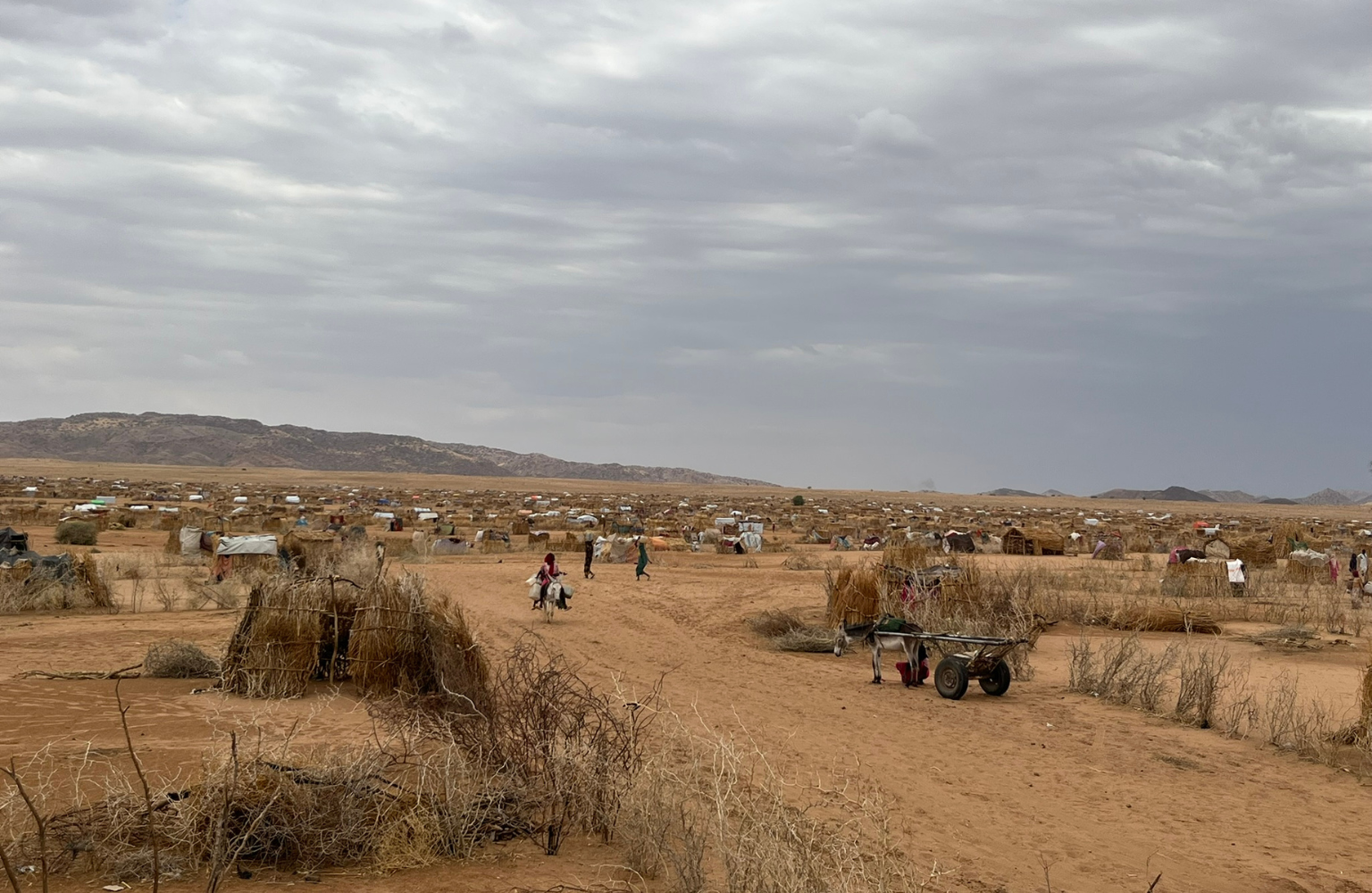
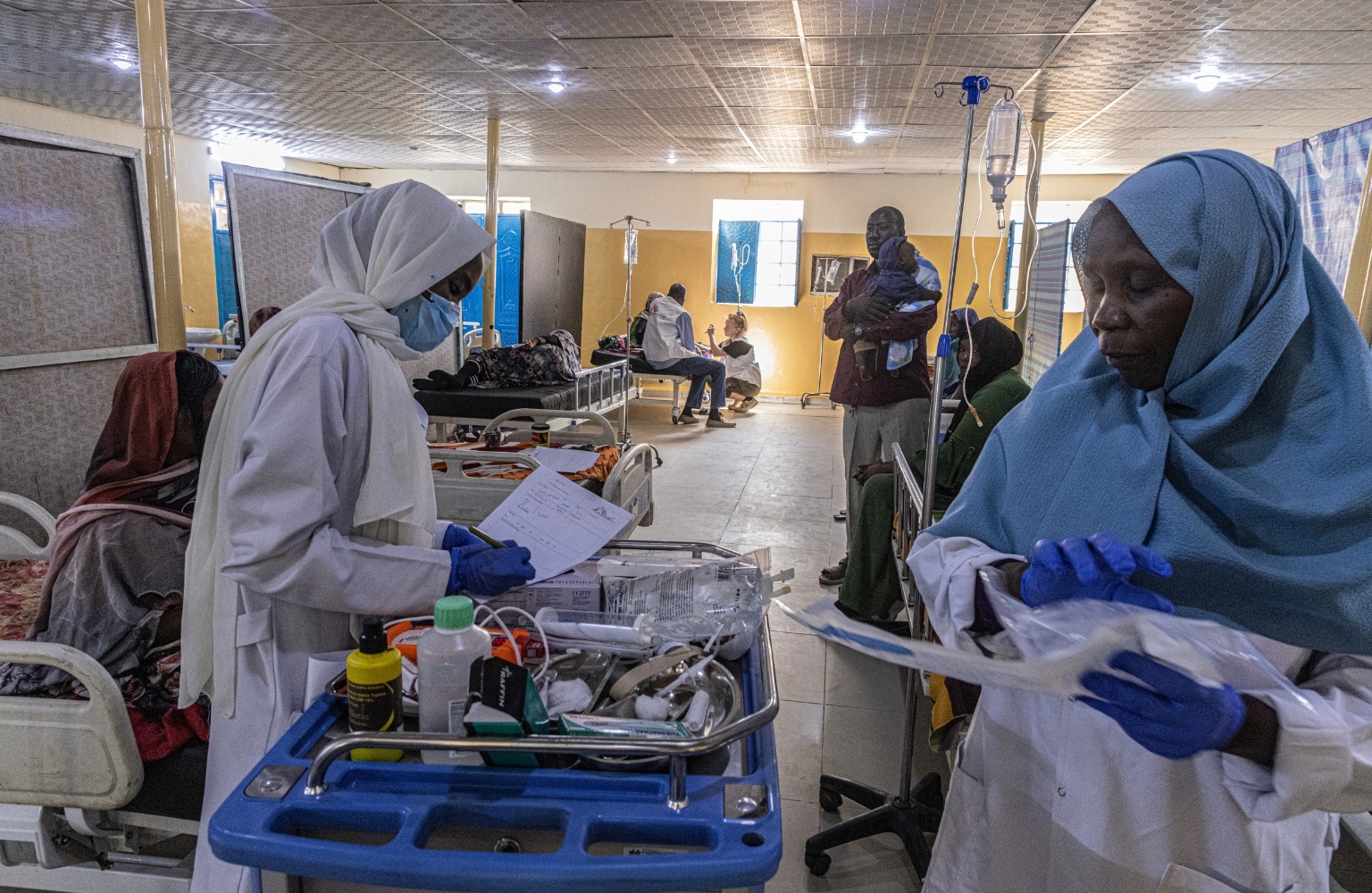
Across Darfur, cholera is hitting people who already struggled with water shortages that made it impossible to follow essential hygiene measures, such as washing dishes and food. The situation is most extreme in Tawila, North Darfur state, where 380,000 people have fled to escape ongoing fighting around the city of El Fasher, according to the United Nations. By the end of July, after one month of responding, MSF teams treated over 2,300 cholera patients in collaboration with the Ministry of Health in Tawila. The cholera treatment centre at Tawila Hospital, officially equipped with 130 beds, had to accommodate 400 patients during the first week of August, overwhelming the facility and forcing staff to add extra mattresses on the floor to cope.

Internally displaced people gathered in an old school in Dali camp, Tawila, North Darfur, Sudan.

In Tawila, people survive with an average of just three litres of water per day, which is less than half the emergency minimum threshold of 7.5 litres needed per person per day for drinking, cooking, and hygiene, as stipulated by the WHO. As cholera cases rise and resources run out, clean water and sanitation services are urgently needed to prevent more deaths.

In displacement and refugee camps, families often have no choice but to drink from contaminated sources and many contract cholera. Just two weeks ago, a body was found in a well inside one of the camps. It was removed, but within two days, people were forced to drink from that same water again.
Sylvain Penicaud, MSF Project Coordinator in Tawila

Cholera outbreak spreads rapidly across Sudan amid conflict

About 100 kilometres from Tawila, cholera was reported in Golo, Central Darfur state, on 13 July. MSF opened a 73-bed cholera treatment centre in Golo hospital. This centre was quickly overwhelmed, with 137 patients arriving on 3 August alone. Five oral rehydration points were set up around Golo to manage mild cases and prevent deterioration, but our teams see that the outbreak is still spreading fast. In early August, cholera reached Zalingei and Rokero in Central Darfur state, and Sortony in North Darfur state.

Heavy rains are worsening the crisis by contaminating water and damaging sewage systems. Cases are continuing to rise in South Darfur state, as well, where MSF, in coordination with the Ministry of Health, has expanded the cholera treatment centre in Nyala to 80 beds. There, the response is waiting for vaccines and facing a severe shortage of water purification tablets.

The health centres are full, some areas have water, others have kiosks that are far or empty. Some water is salty, and we drink it unboiled, unsure if it’s safe.
Samia Dahab, a Resident of Otash Displacement Camp in Nyala
Dabanaira IDP camp, Tawila, North Darfur, Sudan
Dabanaira camp, one of the new camps in which internally displaced people have taken shelter after fleeing El Fasher. Tawila, North Darfur, Sudan.

MSF calls for urgent support to contain outbreak in Sudan

As people move around to flee fighting, cholera is spreading further, in Sudan and into neighbouring Chad and South Sudan. In Damazin, Blue Nile state, Sudan, MSF and the Ministry of Health expanded the Damazin hospital cholera treatment centre from 50 to 250 beds in July to cope with an influx of returnees from South Sudan. At this centre, our teams are seeing a deadly combination of cholera and malnutrition. Between 3 and 9 August, six cholera patients who died were also suffering from acute malnutrition.

The situation is beyond urgent, the outbreak is spreading well beyond displacement camps now, into multiple localities across Darfur states and beyond.
Tuna Turkmen, MSF’s Head of Mission in Sudan

“The international response must have an outbreak emergency coordination mechanism able to provide healthcare, improve water and sanitation services, and begin cholera vaccination campaigns in affected areas at a pace that matches the urgency this catastrophic situation requires,” says Turkmen. “Every day of delay costs lives. MSF stands ready to collaborate with the Ministry of Health, UNICEF, and WHO to launch mass vaccination campaigns across Darfur. Survivors of war must not be left to die from a preventable disease.”

Facebook
Twitter
LinkedIn
WhatsApp
Print

Sudan: Attack & Suspension of Activity at Zalingei Hospital

Zalingei teaching hospital entrance Zalingei Cantral Darfur state Sudan

Sudan: Attack & Suspension of Activity at Zalingei Hospital

Sudan, Central Darfur, 18 August 2025 – Médecins Sans Frontières (MSF) has been forced to reduce its teams and suspend all activities at MSF supported hospital in Central Darfur state, Sudan, following a violent armed assault inside the facility on the night of 16 August. The attack left one person dead, and injured five others, including a Ministry of Health staff member. This suspension of medical activities comes during a deadly cholera outbreak. MSF cannot resume operations until all parties provide clear security guarantees to protect staff and patients.
Patients waiting area of the Zalingei teaching hospital Central Darfur state Sudan

The assault took place at Zalingei hospital on the night of 16 August, after a deceased person with a gunshot wound, reportedly from a looting incident in , was brought to the emergency room around 8:20pm. Armed relatives of the deceased forcefully entered the hospital. Soon after, another patient with gunshot injuries arrived, also accompanied by armed individuals. Tensions between the groups accompanying the patients escalated inside the facility, and at 10pm, a hand grenade was detonated in front of the emergency room, killing one person. Five others were injured, including one Ministry of Health medical staff.

One person has already lost his life in this explosion and more could have been killed if it had happened during the day, when the hospital was full of patients. Suspending our activities and evacuating our teams is a decision no medical organization wants to make, but our staff cannot risk their lives while providing care.
Marwan Taher, MSF’s Emergency Coordinator in Darfur

Zalingei hospital: the only referral facility for 500,000 people

Since 1 August, MSF had been leading a cholera emergency response at Zalingei hospital, treating 162 patients in just 16 days, in collaboration with the State Ministry of Health. Cholera has already claimed seven lives, and Zalingei hospital is the only facility equipped to treat severe cases in Central Darfur state. MSF teams also supported the State Ministry of Health with surveillance to contain the outbreak. Beyond cholera, the hospital provided over 1,500 gynaecological consultations, 1,400 pediatric consultations, and 80 surgeries, between May and July 2025. As the only referral hospital serving around 500,000 people, it is the sole facility managing complex cases in the area. MSF’s mobile clinic in Fogodiku locality and community engagement and health promotion activities has also been suspended, leaving thousands without essential care.

Zalingei teaching hospital emergency department Central Darfur state Sudan

MSF calls for security guarantees to protect staff and patients in Sudan

For more than 40 years, MSF has been on the frontlines of Sudan’s major crises, from disease outbreaks to malnutrition peaks, and we continue to support communities through the ongoing conflict. Protecting our medical teams is essential to ensuring they can deliver care. Already in February 2024, armed men broke into Zalingei hospital and carjacked MSF rental vehicles, forcing the temporary withdrawal of our assessment team before activities even began. The 16 August assault marks the second major security incident in Zalingei hospital in one year and a half.

Attacks on hospitals and medical staff are unacceptable and put lives at risk. The presence of guns inside a medical facility makes it impossible for our teams to operate safely. Without clear guarantees from the concerned parties for the safety of both Ministry of Health and MSF staff, we cannot continue our work. People in Zalingei urgently need healthcare, and their access to it must be protected.
Marwan Taher, MSF’s Emergency Coordinator in Darfur
Facebook
Twitter
LinkedIn
WhatsApp
Print

World humanitarian Day: The Cost of Killing Humanitarians

World Humanitarian Day

World humanitarian Day: The Cost of Killing Humanitarians

This op-ed was first published by SwissInfo on 26 May 2025, by Christopher Lockyear, Secretary General.

Portrait of Christopher Lockyear - MSF Secretary General

On 3 May, we at Médecins Sans Frontières (MSF) woke to shock, grief, and outrage.

Our hospital in Old Fangak, South Sudan, had been attacked: a helicopter gunship destroyed the pharmacy, shelling followed, and drones bombed the market. Patients and staff fled as shrapnel tore through hospital. It was terrifying – and a clear violation of international humanitarian law.

These same emotions ran through us with the news of two other horrific mass attacks that killed medical workers in recent weeks.  

On 23 March, the Israeli military in Gaza killed 15 people, including eight staff from the Palestinian Red Crescent Society (PRCS). Eight days later, their bodies and destroyed vehicles were discovered in a mass grave. Videos showed the attack was deliberately carried out on clearly identified medical staff and ambulances.

On 11 April, in Zamzam displacement camp, in Sudan’s North Darfur region, nine medical workers from the humanitarian organisation Relief International were ruthlessly killed as Rapid Support Forces soldiers entered a clinic – the last one still running – during their assault on the camp. 

Killing humanitarian workers should not just be costly – it should be utterly unaffordable.
Chris Lockyear, Secretary General MSF International

These are just the latest, and particularly shocking, examples of attacks against medical and humanitarian workers worldwide. We’ve also seen horrific attacks in Ukraine, in Haiti, in Democratic Republic of Congo, among others. Whether they directly target staff or hospitals from MSF, or from other organisations, we – humanitarians – feel attacked. We share the grief of all medical and humanitarian colleagues who work alongside us, acting with the same urgency to care for sick and injured people.

These recent assaults on humanitarian and medical workers are exceptionally grave – not only for their brutality and toll, but for the profound indifference that followed. Aside from statements by the United Nations and isolated calls from some states – like the UK’s request for investigations into attacks in Gaza, or France’s response after the strike on Old Fangak’s hospital – there is no shared global outrage. There is no strong political momentum, and certainly no concrete action against the perpetrators. Verbal condemnations ring hollow without real consequences.

It almost feels futile to ask the question: what is preventing this from happening again – even tomorrow?

All such attacks should be met with strong, unequivocal condemnation. We should expect emotion, mobilisation, and strong reaction. Independent investigations should be launched automatically to identify those responsible, and existing laws and international conventions applied – their enforcement should not be up for negotiation or compromise.

Justice should be delivered to the families and the colleagues of the victims, and concrete pressure applied to political stakeholders who tolerate, enable, or even actively encourage, such attacks. Nearly four years on from the brutal killing of our three colleagues in Tigray, Ethiopia, the Ethiopian authorities have failed to conduct a credible, transparent, impartial, or timely investigation.

These recent assaults on humanitarian and medical workers are exceptionally grave – not only for their brutality and toll, but for the profound indifference that followed.
Chris Lockyear, Secretary General MSF International

In the absence of a meaningful international response, it seems to us that carrying out these attacks is increasingly cost-free for the perpetrators. What political, legal, economic, social, or moral price are they paying? And what state, body, or institution is truly ready and committed to hold them accountable?

It should be unthinkable that killing humanitarians or medical staff – people risking their lives to deliver care – comes with little or no consequence. This isn’t only about preserving the feasibility of our work; it’s about defending fundamental values like solidarity and empathy.

Let me be clear: attacks on healthcare staff and aid workers are not new. We don’t yearn for a mythical “golden age” where our work was universally respected, or our security guaranteed. On the contrary, MSF has consistently denounced such attacks and called for change. In 2016, after a wave of assaults on our staff – including the US bombing of Kunduz hospital in Afghanistan – and amid systematic campaigns against hospitals in Syria and Yemen, we supported the adoption of UN resolution 2286, aimed at protecting the wounded and sick, medical personnel, and humanitarian workers in armed conflict. But since then, we have seen its impact remain disastrously limited.

We are not alone in this fight. The International Committee of the Red Cross (ICRC) continues to lead its “Healthcare in Danger” campaign. In 2024, the UN Security Council passed Resolution 2730 – initiated by Switzerland – calling on all states to respect and protect humanitarian workers. That same year, an interministerial group from Australia, Brazil, Colombia, Indonesia, Japan, Jordan, Sierra Leone, Switzerland, and the UK issued a joint statement committing to develop a new Declaration for the Protection of Humanitarian Personnel. However, the collective effort has so far failed. We have not seen the transparency, accountability, and change that should be expected. It is rare to even obtain basic acknowledgement from the perpetrators.

Now, more than ever, we need warring parties... to recognise that attacking and killing humanitarians is an assault on the very values they stand for.
Chris Lockyear, Secretary General MSF International
The death and injury of medical and humanitarian workers are often part of a broader, equally shocking and intolerable pattern of indiscriminate – and even deliberate – violence against the communities they serve. In Gaza, more than 52,000 people have been killed since 7 October 2023, according to local authorities. In Sudan, it is impossible to have a realistic estimate of the civilian death toll, though studies suggest it may number in the hundreds of thousands.

Today, in the face of an unprecedented assault on multilateral organisations, the United Nations, and legal institutions – exemplified by the growing number of countries opposing the International Criminal Court – it is not merely a lack of political pressure or justice, but a deliberate dismantling of the very channels for accountability and change. We call on all those who still believe in humanity and solidarity to strongly condemn these attacks. We need them, wherever they are, to unite and rally around renewed calls for legal and political accountability. Citizens must demand that states who claim to uphold international conventions and treaties take tangible political action and apply political pressure to stop to the normalisation and concealment of attacks against health staff and humanitarian workers – in Gaza, in Sudan, South Sudan, and around the world.

Now, more than ever, we need warring parties – as well as the states who politically, economically, or militarily support them – to recognise that attacking and killing humanitarians is an assault on the very values they stand for.

Killing humanitarian workers should not just be costly – it should be utterly unaffordable.
Facebook
Twitter
LinkedIn
WhatsApp
Print

No Way Home: The Scars of War in Syria Remain

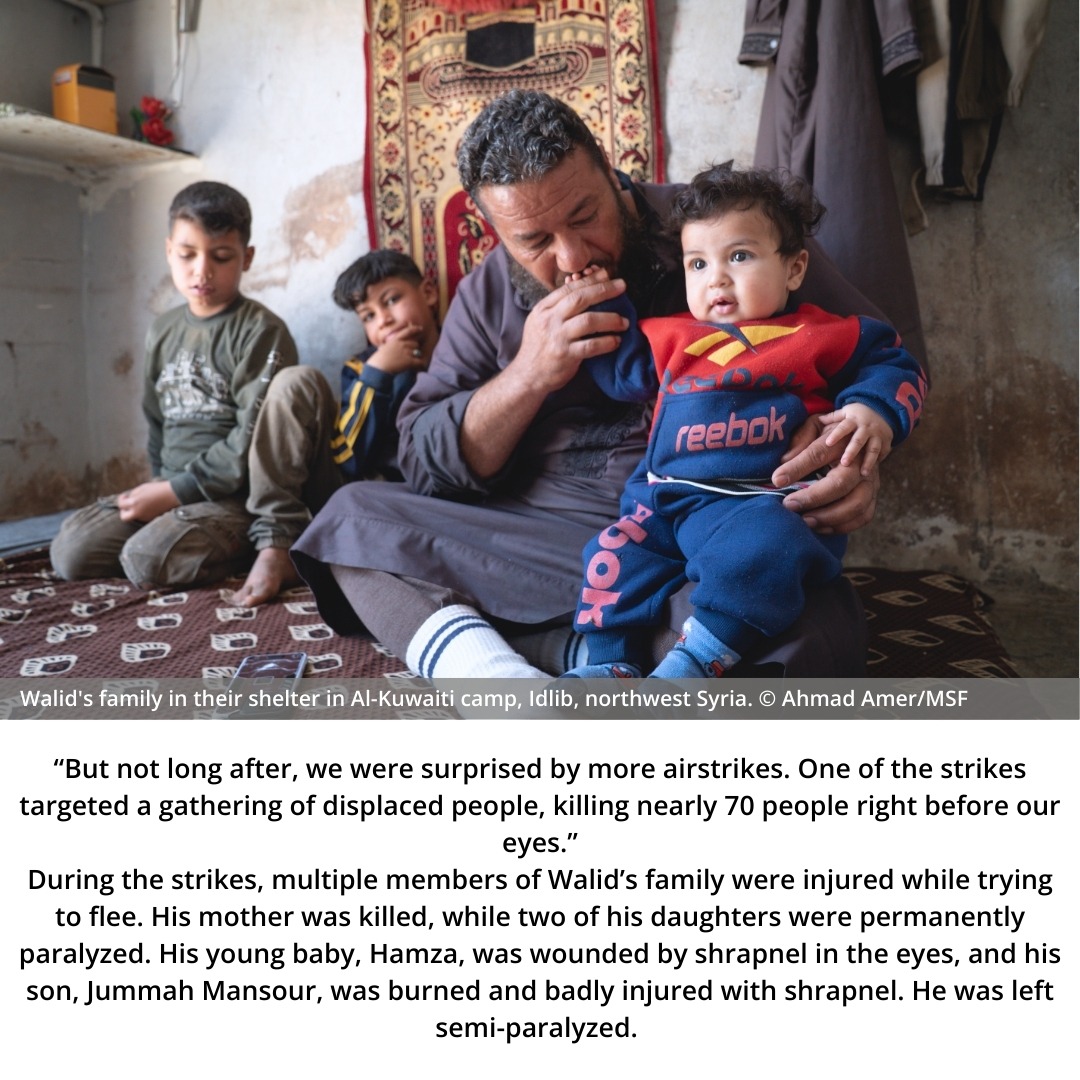
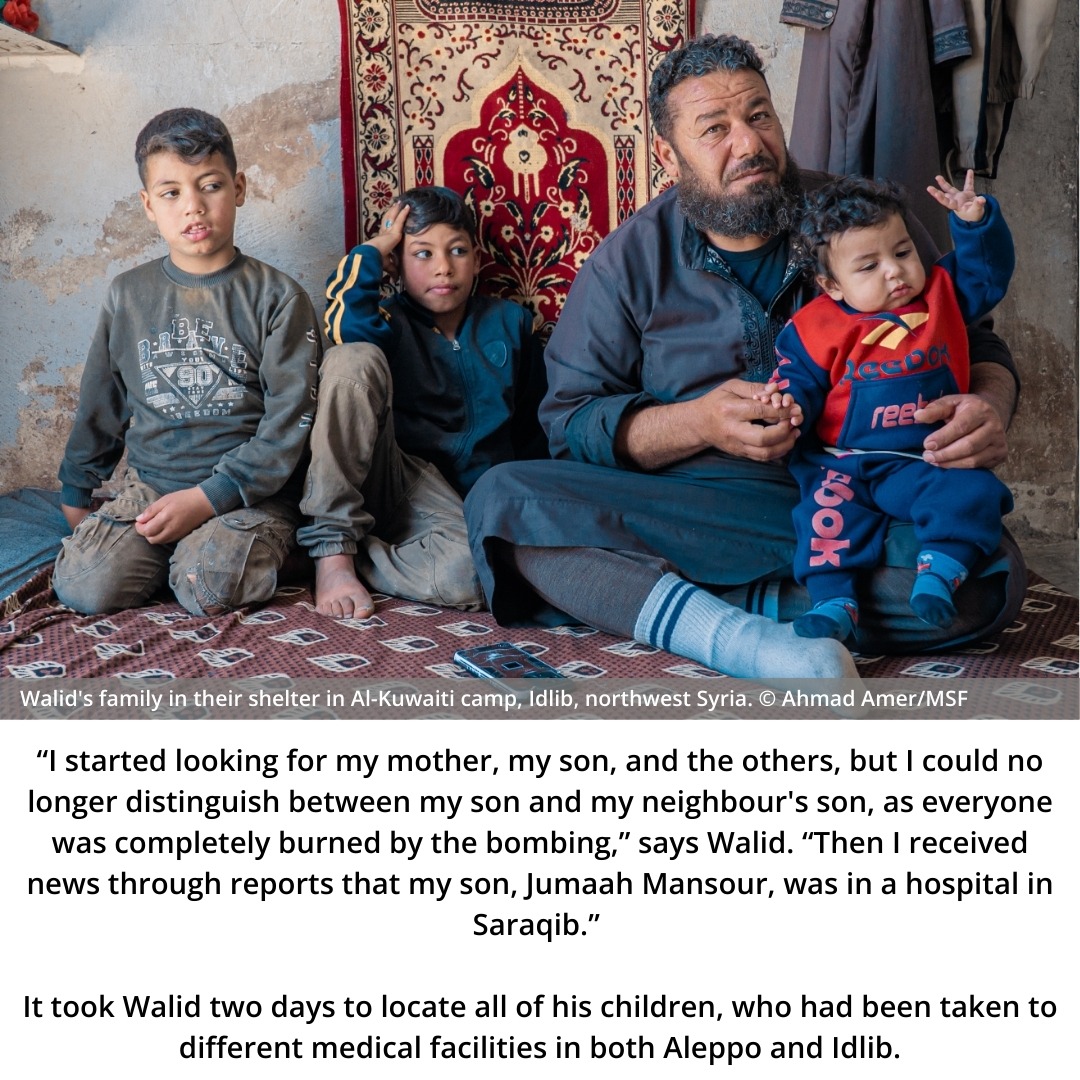
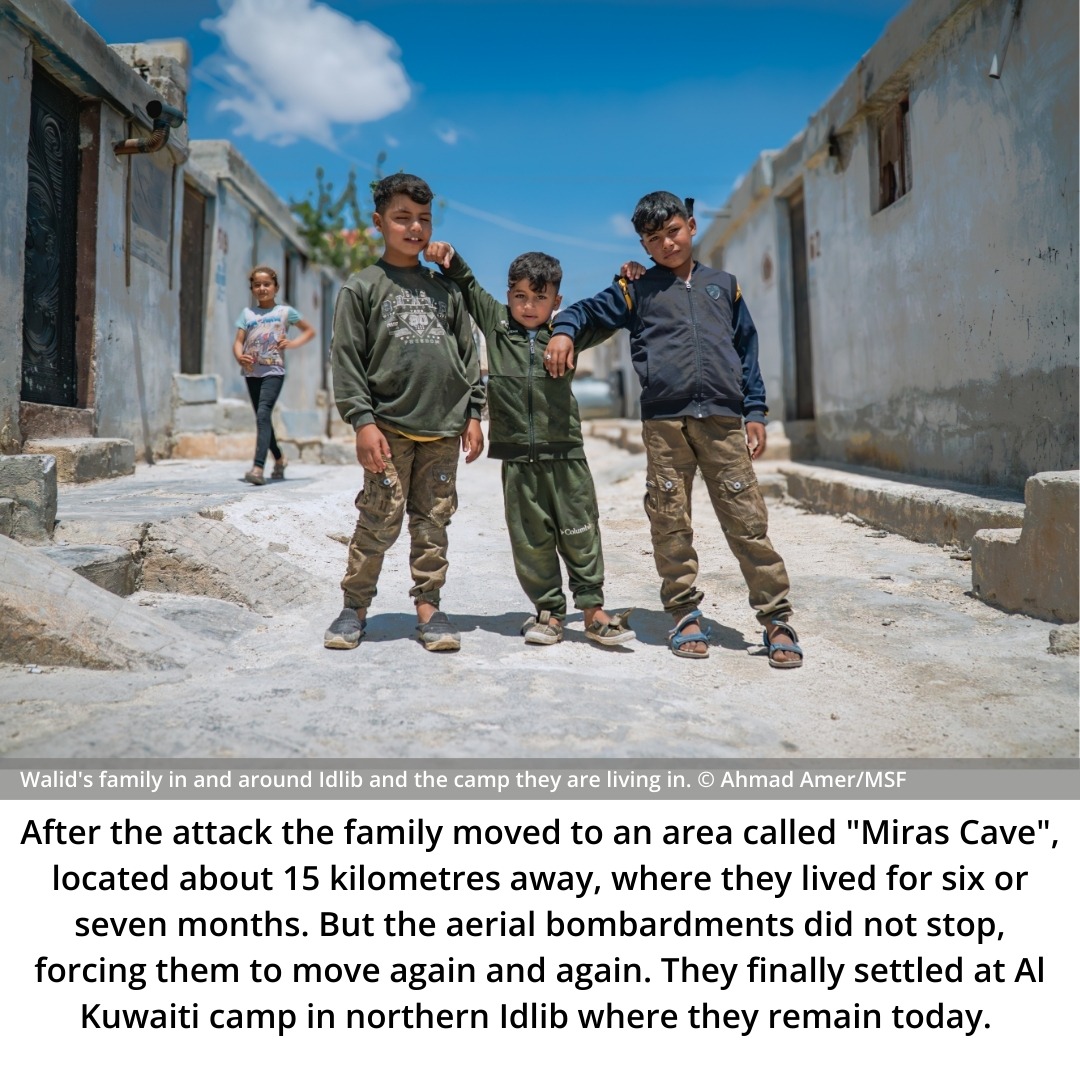
Family in and around Idlib and the camp they are living in.

No Way Home: The Scars of War in Syria Remain

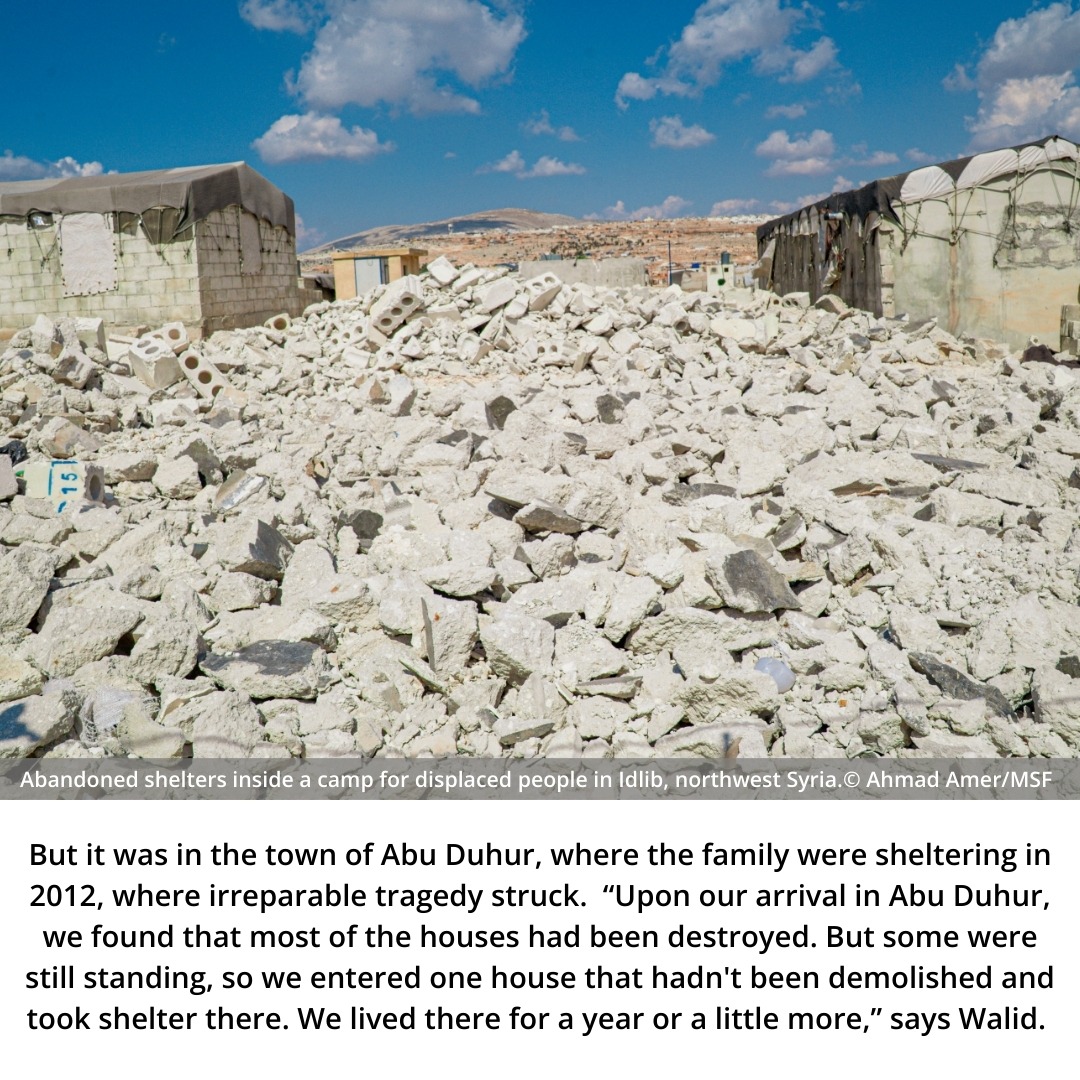
Leaving the ancient city of Damascus, destruction lines the desert road heading north; streams of rubble smeared across the suburbs, bullet holes scattered across the few crumbling facades that remain.

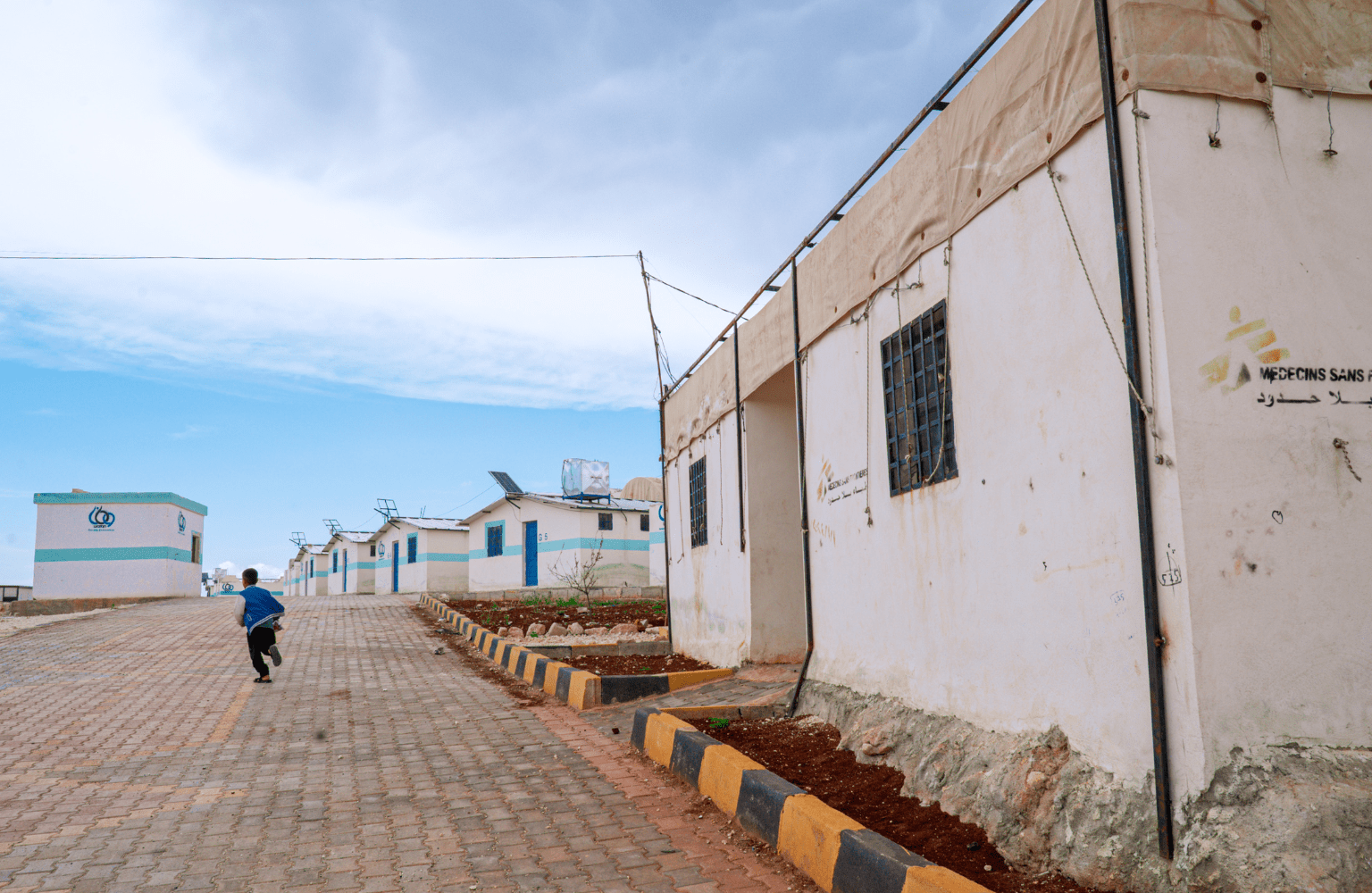
In Idlib, in northwest Syria, the ruins are gradually replaced by towns made up of tents and semi-concrete structures, dotted randomly amongst the waves of olive groves that stretch all the way to the Turkish border.

All the tents and shelters that have no roof are now vacant, they’re the lucky ones – their homes are still standing, so they’ve packed up and gone home. Many people have tried to go home since the Assad regime fell, but there are still millions of people who have stayed here in Idlib in these informal camps. Some have returned only to find their homes gone, their towns barren, with no services.
Yahya Abboud, MSF health promoter

After the war began in Syria, over 14 years ago, millions of people were displaced both inside and outside the country. Although the former Assad regime fell in December 2024, there are still approximately 7.2 million people displaced in Syria.

14 Years of Displacement - Walid's Story

Services Dwindle for Millions in Need

Due to a lack of funding and a healthcare system destroyed by war, specialised medical care in Syria has become a luxury. MSF is one of the few medical organisations who offer free healthcare in the camps, which host millions of people in Idlib and Aleppo governorates. The MSF mobile clinics provide basic healthcare, sexual and reproductive health and mental healthcare, however, for more specialised care people have to travel to major cities.

But it’s not just medical care that is scarce in this mountainous and vast farm country. Water and other basic services have also dwindled, especially since the fall of the Assad regime, as many aid organisations have left for larger cities such as Homs and Aleppo.

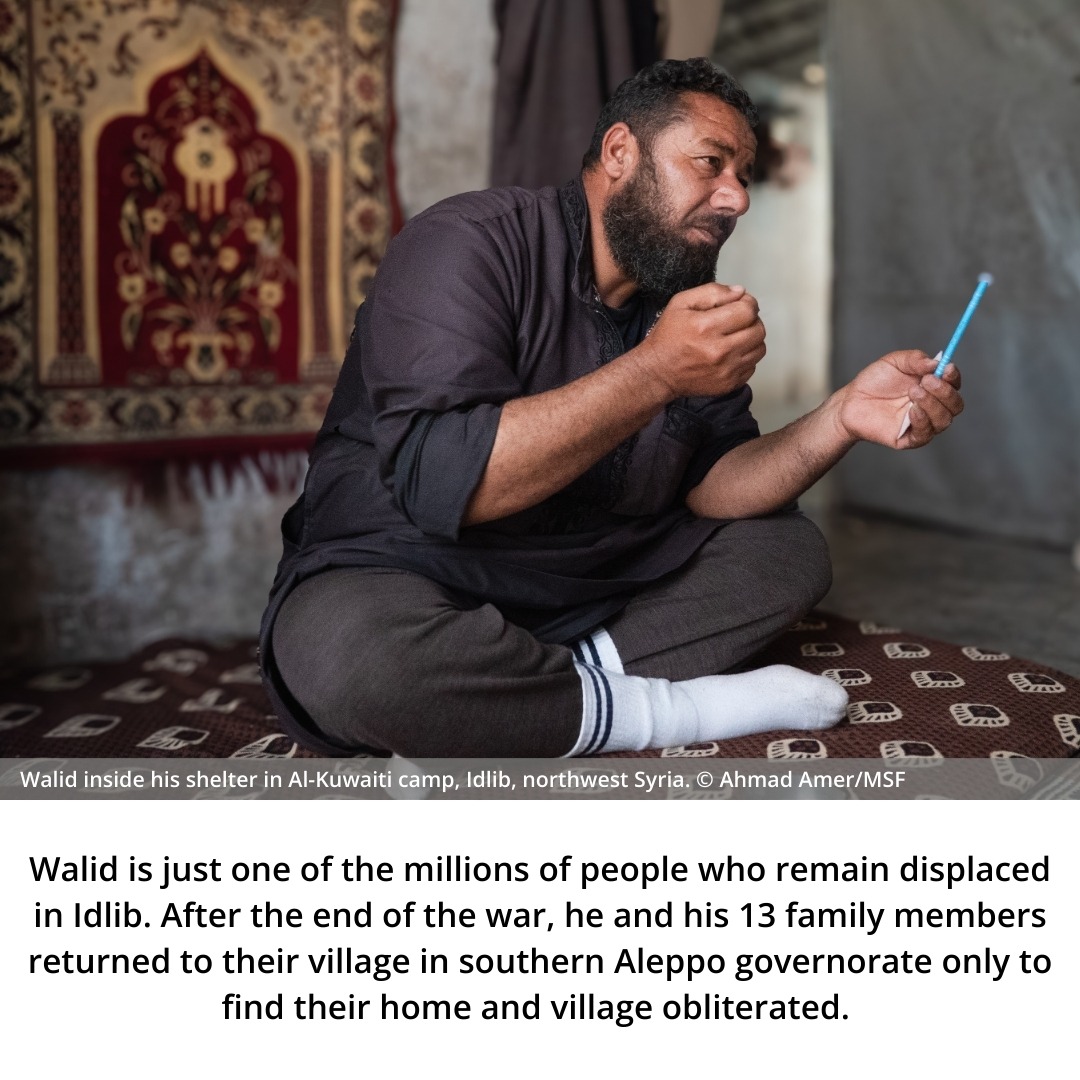
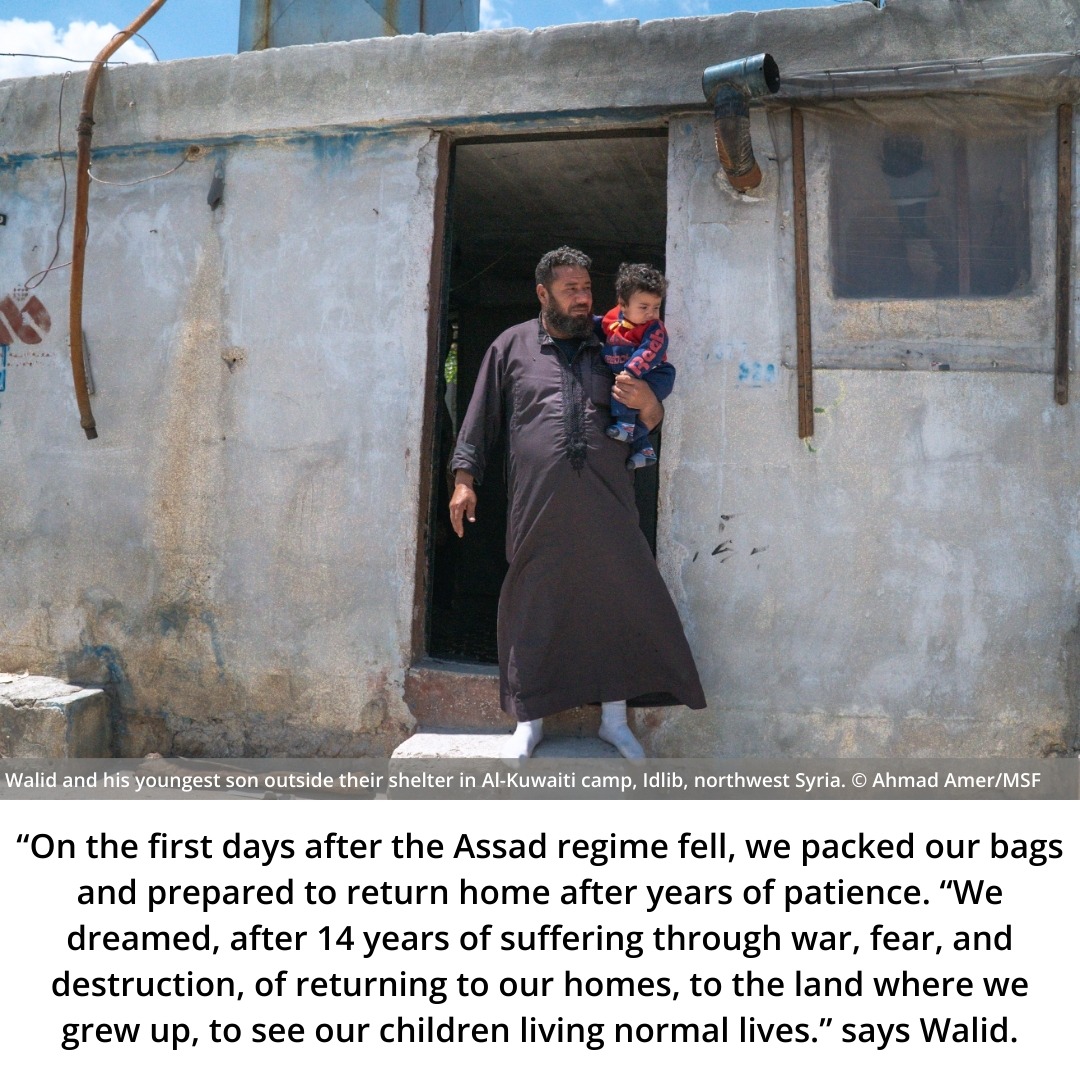
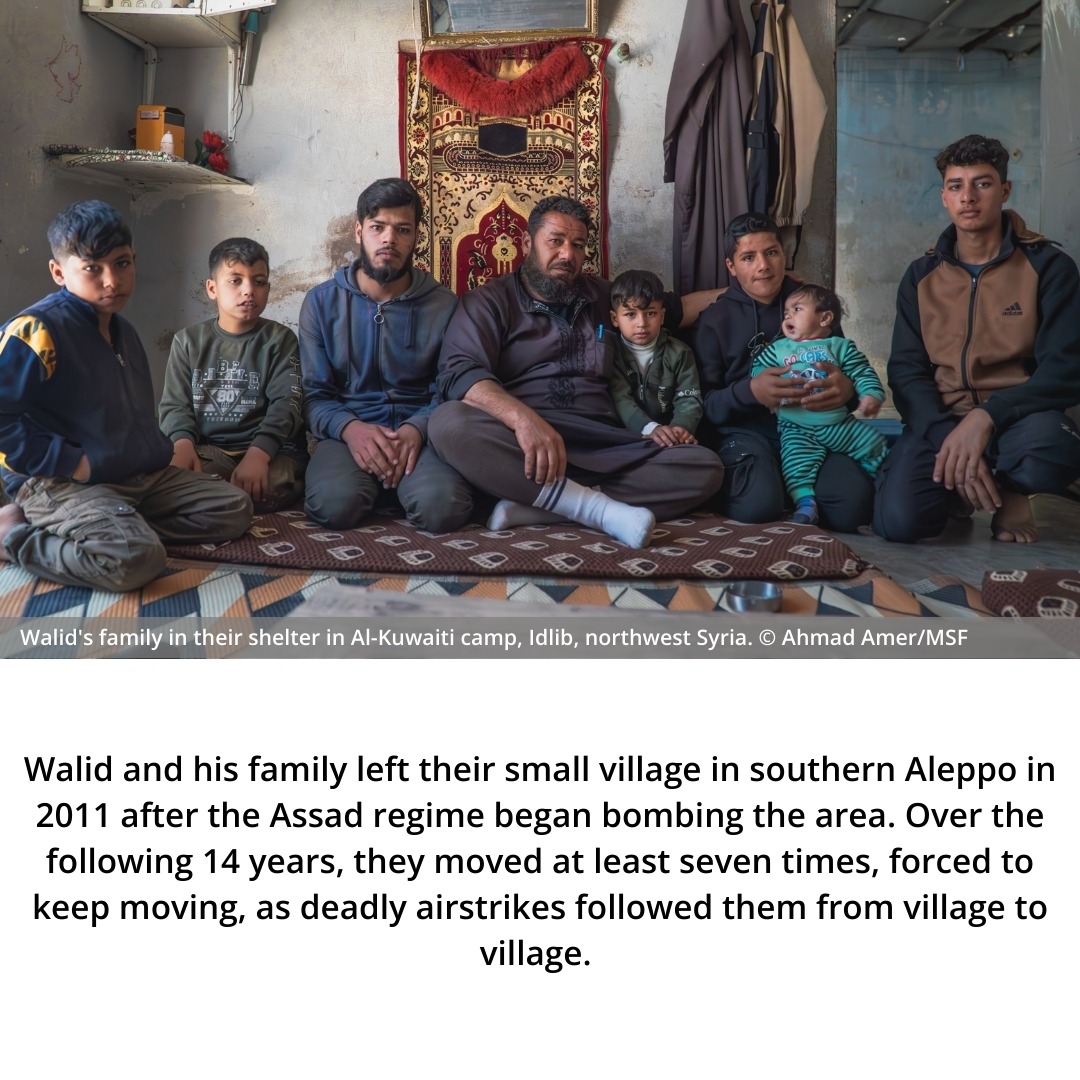
For Walid, the lack of specialised care available in the area weighs heavily on the 44-year-old father. Two of his daughters, Raghad and Ghofran are disabled and bed-ridden, while Jummah Mansour and Hamza remain permanently affected by their injuries.

“Currently, we can barely meet our basic needs. The average worker’s daily income is no more than 150 to 200 Syrian pounds, barely enough to buy nine loaves of bread.

“Previously, the garbage removal process in the camp worked well, and everything was organised. However, after the liberation, we began to face several problems, the first of which was the decrease in the amount of water available, as its supply became extremely limited.”

In addition to the already dire living conditions in camps, funding cuts by the US government have added to the suffering, severely limiting people’s access to medical care. These funding cuts have had a direct impact on the suspension of medical activities in northwest Syria. 

According to WHO, as of May 2025, people in all 14 governorates in Syria have been affected by United States funding cuts that have forced more than 280 health facilities to reduce capacity or suspend activities completely. This includes 41 hospitals, 149 primary healthcare centres, 41 mobile teams and 49 specialised centres.

While over half of Syria’s pre-war population remains displaced, the highest level since 2011, 16.7 million Syrians require life-saving aid according to the UN. But despite the bleak situation, Walid remains hopeful for the future of Syria.

“Our hopes were fulfilled, and the era of injustice—the reign of that tyrant [Assad] under whom we had suffered for so long—ended,” he says.

“We hope that our budding children will complete their studies, learn and rebuild a new life for themselves. God willing, they will make us forget the days of fear and terror that we have gone through, in addition to the destruction, displacement and humiliation we have lived through.”

Facebook
Twitter
LinkedIn
WhatsApp
Print

Gaza: GHF distributions are sites of “orchestrated killing and dehumanisation,” says MSF report

'This is not aid. This is orchestrated killing'

Gaza: GHF distributions are sites of “orchestrated killing and dehumanisation,” says MSF report

Jerusalem, 7th August 2025 – An analysis of Médecins Sans Frontières (MSF) medical data, patients’ testimonies, and first-hand medical witnessing at two MSF clinics in Gaza, Palestine, point to both targeted and indiscriminate violence by Israeli forces and private American contractors against starved Palestinians at food distribution sites run by the so-called Gaza Humanitarian Foundation (GHF). MSF calls for the immediate dismantling of the GHF scheme; the restoration of the UN-coordinated aid delivery mechanism; and calls on governments, especially the United States, as well as private donors to suspend all financial and political support for the GHF, whose sites are essentially death traps.

A new MSF report, This is not aid. This is orchestrated killing, documents the horrors witnessed by MSF staff at two clinics that regularly received mass influxes of casualties following violence at sites run by the GHF, an Israeli-US proxy that has militarised food distribution. Between 7 June and 24 July 2025, 1,380 casualties, including 28 dead, were received at MSF’s Al-Mawasi and Al-Attar clinics in southern Gaza, located near the GHF-run distribution sites. During those seven weeks, our teams treated 71 children for gunshot wounds, 25 of whom were under the age of 15. Faced with no alternatives to find food, starved families frequently send teenage boys into this lethal environment, as they are often the only males in the household physically able to make the journey.

Patients have also included a 12-year-old boy hit by a bullet that had passed all the way through his abdomen, and five young girls, one of whom was only 8 years old and suffered a gunshot wound to her chest.

Children shot in the chest while reaching for food. People crushed or suffocated in stampedes. Entire crowds gunned down at distribution points. In MSF’s nearly 54 years of operations, rarely have we seen such levels of systematic violence against unarmed civilians. The GHF distribution sites masquerading as ‘aid’ have morphed into a laboratory of cruelty, this must stop now.
Raquel Ayora, MSF General Director

An initial analysis of the gunshot wounds among patients arriving at the Al-Mawasi clinic found that 11 per cent of the gunshot injuries were to the head and neck, while 19 per cent were to areas covering the chest, abdomen, and back. By contrast, people arriving from the Khan Younis Distribution Centre were far more likely to arrive with gunshot wounds to the lower limbs. The distinct patterns and anatomical precision of these injuries strongly suggests the intentional targeting of people within and around the distribution sites, rather than accidental or indiscriminate fire.

“We’re being slaughtered. I’ve been injured maybe 10 times,” says Mohammed Riad Tabasi, a patient who was treated at the MSF Al-Mawasi clinic. “I saw it with my own eyes, about 20 corpses around me. All of them shot in the head, in the stomach.”

In May, Israeli authorities sought to dismantle the UN-led humanitarian response and replace it with a militarised food distribution scheme operated by GHF. All four GHF-run distribution sites are in areas under full Israeli military control, and “secured” by private American armed contractors. The GHF has been touted by the Israeli and US governments as an “innovative solution” – a supposed answer to their unproven claims of aid diversion in Gaza and unfounded accusations of UN failure. The sites are nothing but a deadly scheme, institutionalising the Israeli authorities’ starvation policy of Gaza that started on 2 March, with the full siege they imposed on the Strip as part of their ongoing genocidal campaign.

The way this scheme operates attempts to strip people of their dignity. Over the seven weeks, MSF teams treated 196 patients with injuries following chaotic scrambles at the GHF distribution sites. Patients included a five-year-old boy with severe head injuries and a woman who died of asphyxiation, likely caused by the suffocating crush of a crowd.

People who manage to secure any food rations at the sites often face the risk of violent looting and theft of aid by other starved people. Our medical teams were required to add a new acronym to their patient registry: BBO – Beaten By Others. This refers to people injured either in the crush of the crowd or by being beaten and robbed of their supplies immediately after receiving them. It is dehumanisation by design.

On 1 August, the same day the US special envoy to the Middle East visited GHF sites, 15-year-old Mahmoud Jamal Al-Attar was killed around the Al-Shakoush GHF site while trying to get food. He arrived at the MSF Al-Mawasi clinic after being shot in the chest. We treat only a fraction of the total number of people killed and injured at these sites. There is no other way to describe the murder of children as anything but intentional. Despite the condemnations and calls for dismantling it, the global inaction to stop GHF is baffling.
Aitor Zabalgogeazkoa, MSF emergency coordinator in Gaza

Between 27 July – 2 August, 186 people with wounds from gunshots, shrapnel or assault and stabbing were treated in MSF’s Al-Mawasi or Al-Attar clinics after being wounded at GHF sites. Two of them died. On 3 August MSF clinics received three more wounded people, one who had been shot in the neck and two with shots to the head.

Facebook
Twitter
LinkedIn
WhatsApp
Print

South Sudan: Second abduction in four days and MSF suspends all activities in Yei and Morobo counties

South Sudan: Second abduction in four days and MSF suspends all activities in Yei and Morobo counties

MSF has suspended all operational activities in Yei River and Morobo counties in South Sudan’s Central Equatoria State for a minimum of six weeks following the abduction of an MSF staff member, occurring just four days after the abduction of health ministry staff from an MSF ambulance on the same road and location. Fortunately, our colleague was released some hours later.

The incident occurred during an evacuation of MSF staff from Morobo to Yei amid deteriorating security conditions. The four-vehicle convoy was stopped by armed gunmen. They ordered the MSF staff member, who was serving as the team leader of the convoy, out of the vehicle and pulled him into the thickets, while allowing the other vehicles and staff to proceed to Yei.
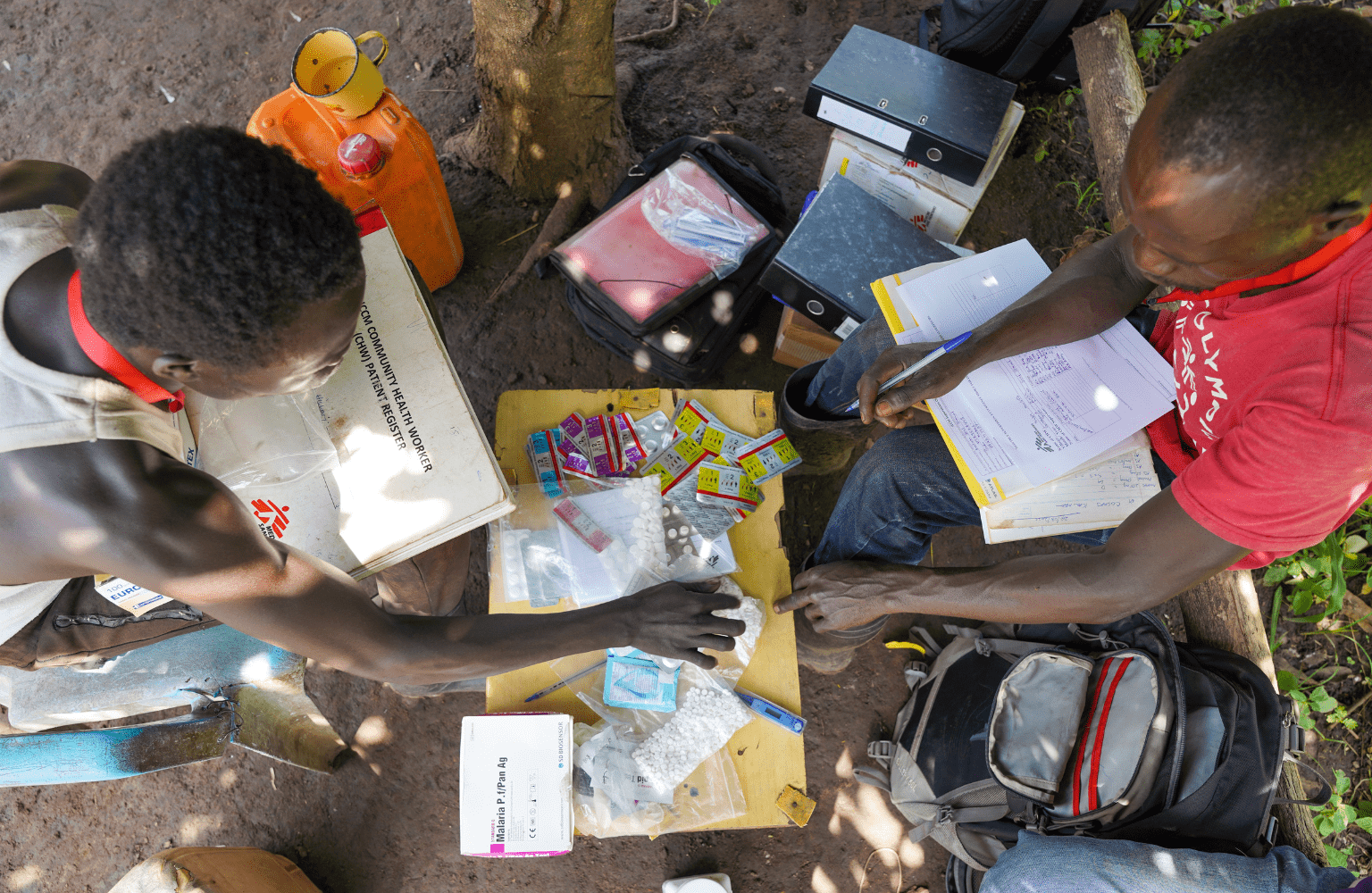
We are outraged by this targeted attack. Attacks on humanitarian workers serving the most vulnerable members of the society must stop. While we are deeply committed to providing care to those in need, we cannot keep our staff working in an unsafe environment.
Dr. Ferdinand Atte, MSF’s head of mission in South Sudan

This abduction is part of a disturbing trend of targeted violence on healthcare and aid workers in these counties. In just three months, several incidents of violence targeting aid workers and healthcare facilities have been reported in Morobo, including forceful abductions, arson, violent looting of hospitals, and damage to medical infrastructure. Seven of these incidents involved the abduction of aid workers.

We demand accountability and concrete guarantees from the authorities and all parties involved in the conflict, including armed groups in Morobo and Yei River counties. It is crucial to ensure safe and unobstructed access to populations in need and to protect civilians and civilian infrastructure, including healthcare workers, patients, and medical facilities, before we can consider resuming our activities.
Dr. Ferdinand Atte, MSF’s head of mission in South Sudan

The residents of Yei River and Morobo counties live in remote and hard-to-reach areas, frequently cut off from essential services due to limited infrastructure and armed conflict. As a result, they heavily rely on humanitarian organisations like MSF for essential services.

This marks the second time MSF has been compelled to reduce provision of medical services in the area in under three months. In May, we were forced to reduce activities due to escalating insecurity in the area. MSF has also suspended all activities in camps for internally displaced persons due to the relentless violence in Morobo County. Today, MSF had to take the difficult decision to suspend all activities in both counties, until further notice, adding to the growing number of projects and health facilities MSF has had to close this year as a result of attacks.

MSF is one of the few medical organisations providing support to various healthcare facilities in this area. When such attacks occur, it is the local people who suffer the most, as it severely undermines their access to essential healthcare
Dr. Ferdinand Atte, MSF’s head of mission in South Sudan

In Yei River and Morobo counties, MSF provides primary healthcare services by supporting four Ministry of Health facilities, offering outpatient consultations, routine vaccinations, and maternal and child healthcare. MSF also conducts mobile clinics and supports community-based healthcare through the Boma Health Initiative program in the area. Between January and June 2025, MSF conducted 14,500 outpatient consultations, 1,192 antenatal consultations, and assisted in 438 maternal deliveries in this area.

Facebook
Twitter
LinkedIn
WhatsApp
Print