MSF international staff leave Gaza among other humanitarian workers, and injured Palestinians to Rafah

MSF international staff leave Gaza among other humanitarian workers, and injured Palestinians to Rafah

Statement – All Médecins Sans Frontières international staff unable to leave Gaza since 7 October have successfully crossed the Egypt border via the Rafah Crossing. A window has been negotiated to allow for foreign passport holders and international aid workers to cross.   

This group includes 22 MSF staff. Although some names have been circulated on social media, we ask for their privacy and wellbeing to be respected.   

This comes as a number of severely injured patients have also been allowed to leave Gaza to receive critical care. However, there are still over 20,000 injured people in Gaza with limited access to healthcare due to the siege.   

A new team of international staff, including a specialised medical team, has already been identified and is ready to enter Gaza as soon as the situation allows, to support the humanitarian and medical response. 

Meanwhile, many of our Palestinian colleagues continue to work and provide lifesaving care in hospitals and across the Gaza Strip, while the most basic protections for hospitals and medical personnel are not guaranteed. 

Around two million Palestinians are still trapped in Gaza under shelling, including 300 Palestinian MSF staff and their families. Those who wish to leave Gaza must be allowed to do so without further delay. They must also be allowed the right to return.   

Furthermore, we have to be able to move medical supplies and personnel into Gaza immediately to be able to respond to the desperate needs on the ground.  

We reiterate our call for an immediate ceasefire. Critically needed humanitarian supplies and staff must be allowed into Gaza where hospitals are overwhelmed and the healthcare system is facing total collapse.   

ENDS

Facebook
Twitter
LinkedIn
WhatsApp
Print

Immediate ceasefire is needed in Gaza to stop the bloodshed

Immediate ceasefire is needed in Gaza to stop the bloodshed

Médecins Sans Frontières (MSF) calls for an immediate ceasefire to prevent more deaths in Gaza and allow desperately needed humanitarian supplies in.  Since Friday 27 October, the bombing by the Israeli forces has intensified to a degree not seen until now: northern Gaza is being razed to the ground, while the whole Strip is being hit and civilians have no place to take shelter.  

The actions of world leaders are too weak, too slow, as a non-binding UN resolution for a humanitarian truce has done nothing to reign in the indiscriminate violence unleashed on a helpless people. The international community must take stronger action to urge Israel to stop the bloodshed. People are being killed and forcibly displaced from their homes, and water and fuel are running low. The atrocity is on a scale never seen before in Gaza.  

Hospitals are flooded with patients, amputations and surgeries are being carried out without proper anesthesia, and morgues are flooded with dead bodies
DR MOHAMMED OBEI, SURGEON

The total communications blackout on 27 October further limits the ability to coordinate and provide humanitarian and medical assistance. People under the rubble, pregnant women who are about to deliver, and the elderly are not able to seek help when they need it the most. Because of the blackout, MSF lost contact with most of its Palestinian staff.  

Across Gaza, the number of injured in need of urgent medical assistance far exceeds the capacity of the health system, which currently has around 3,500 beds. So many victims in such a short space of time is unheard of, even compared with previous large-scale Israeli offensives.  

Hospitals such as Al Shifa in Gaza City, where MSF Palestinian colleagues continue to work, are overwhelmed with patients. Israeli military orders to evacuate the hospital are impossible and dangerous. The hospital is currently at full capacity with patients seeking medical treatment, and tens of thousands of others seeking safe shelter. Under international humanitarian law, patients, health workers and facilities must be protected at all times. 

Helpless people are being subjected to horrific bombing. Families have nowhere to run or to hide, as hell is unleashed on them. We need a ceasefire now, water, food, fuel, medical supplies and humanitarian aid in Gaza need to be urgently restored
DR CHRISTOS CHRISTOU, MSF INTERNATIONAL PRESIDENT

Millions of men, women and children are facing an inhuman siege; a collective punishment that is prohibited under international humanitarian law.  

Israeli authorities continue to prevent the entry of fuel into Gaza, which is essential for powering hospitals as well as the desalination plants that produce clean drinking water. On Friday evening, the death toll already stood at over 7,300 according to the local health authorities, with approximately 19,000 injured, and it may have become a lot worse after the most intense night of bombing since the start of the war. The siege will compound the deaths caused by the strikes, as medics will be forced to decide who to treat or not, and people are left without food, water or medicines. 

Prior to 7 October, between 300 and 500 supply trucks crossed into Gaza every day, where most people were dependent on humanitarian aid. Today, despite the Rafah border crossing being open, only 84 trucks have entered since 20 October. A vastly inadequate response to the constant and growing needs in Gaza. 

Those who want to seek safety across the border should be allowed to do so without prejudice to their right to return to Gaza. Our international staff who worked in Gaza before the war are now in the south and are no longer able to coordinate humanitarian activities. They must also be allowed to leave to Egypt.  

Some of MSF’s 300 Palestinian staff have also moved to south Gaza to find shelter from the bombing for their families. Many other Palestinian colleagues continue to work and provide lifesaving care in hospitals and across the Gaza Strip, while the most basic protections for hospitals and medical personnel are not guaranteed. 

“We are ready to increase our aid capacity in Gaza. We have teams on standby ready to send medical supplies and to enter Gaza to support the emergency medical response, as soon as the situation allows it,” says Dr. Christou. “But as long as the bombing continues with the current intensity, any effort to increase medical aid will inevitably fall short.” 

Facebook
Twitter
LinkedIn
WhatsApp
Print

Gaza: As the ultimatum given to the population expires, MSF calls on the Israeli authorities to show humanity

Gaza: As the ultimatum given to the population expires, MSF calls on the Israeli authorities to show humanity

Despite Israeli announcements suggesting that there are safe areas for the population trapped in the Gaza Strip, they are in fact exposed to bombardment throughout all the territory, including in the south, where tens of thousands of people have fled following the ultimatum.

As the Israeli army has been bombarding the Gaza Strip without restraint for a week, we are calling for the most elementary humanity to be shown.

The injunction to nearly 1.1 million people to move in a few hours to an already overpopulated territory with precarious access to food, water and healthcare is as absurd as it is intolerable. Our teams are witnessing the fact that drinking water is becoming scarce in the south of the Gaza Strip and the difficulty of obtaining it is adding to the distress of the population. MSF urgently calls for the restoration of sufficient and immediate access to drinking water for the population of the Gaza Strip.

A humanitarian corridor of a few hours decreed today by the Israeli authorities in the north of Gaza has just expired. We are extremely worried about the fate of those who will not be able to move, such as the wounded, the sick and the medical staff, who we fear will be wiped out in view of the statements made by the Israeli military authorities.

MSF is calling for safe zones to remain in the north and for regular ceasefires.

We are also calling for the possibility to flee through the Rafah crossing for those who wish to do so, without prejudice to the right to return. Médecins Sans Frontières has asked for its Palestinian staff who wish to leave to be evacuated.

Facebook
Twitter
LinkedIn
WhatsApp
Print

MSF: indiscriminate violence and the collective punishment of Gaza must cease

MSF: indiscriminate violence and the collective punishment of Gaza must cease

[Gaza, Barcelona, Brussels, Paris 12.10.23] – Médecins Sans Frontières/Doctors Without Borders (MSF) is horrified by the escalation in Gaza strip and the mass killing of civilians on both sides. MSF calls for an immediate cessation to the indiscriminate bloodshed, the establishment of safe spaces and safe passage for people to reach them as a matter of urgency. People must be afforded safe access to essential supplies like food and water and health facilities. Essential humanitarian supplies like medicine, medical equipment, food, fuel and water must also be allowed to enter the Gaza enclave. To facilitate this, Rafah border crossing with Egypt must be opened and bombings on the crossing point must cease.

Some 2.2 million people are currently trapped in the Gaza strip, where indiscriminate bombing has turned a chronic humanitarian crisis into a catastrophe. More than 300 MSF staff are in Gaza, some of whom have lost homes or family members; it has been near-impossible for them to move.

The fighter jets are demolishing entire streets block by block. There is no place to hide, no time to rest. Some places are being bombed on consecutive nights. We know what it was like in 2014 and in 2021, thousands died. Each time our medical colleagues go to work, not knowing if they will see their homes or their families again. But they say this is different. This time, after five days, there have already been 1,200 deaths. What can people do? Where are they supposed to go.
Matthias Kennes, MSF Head of Mission in Gaza

Millions of men, women and children are facing a collective punishment in the form of total siege, indiscriminate bombing, and the pending threat of a ground battle. Safe spaces must be established, humanitarian supplies must be allowed into Gaza. The wounded and sick must receive medical care. Medical facilities and personnel must be protected and respected; hospitals and ambulances are not targets.

The siege imposed by the Israeli government, including the withholding of food, water, fuel and electricity is unconscionable. Following 16 years of military blockade on the Gaza strip, the medical structures within are already weakened; this siege leaves no respite for patients caught up in the fighting, nor for medical staff. It represents an intentional block on life-saving items; the entry of these supplies and key medical staff must be facilitated urgently.

In Ministry of Health hospitals, medical staff report that they are running out of anaesthetics and painkillers. On the MSF side, we moved medical supplies from our two-month emergency reserves to Al Awda hospital and now we have used three weeks’ worth of stock in three days.
Darwin Diaz, MSF Medical Coordinator in Gaza

MSF staff including medical personnel have been extremely restricted in their movements since Saturday; they are unable to obtain safe passage to support Palestinian medical colleagues working day and night to treat the injured. Men women and children playing no role in the hostilities do not have a safe haven to go to. MSF teams are witnessing a level of destruction that may already exceed previous escalations. Two of the hospitals MSF supports, Al Awda and the Indonesian Hospital, have both sustained damage in airstrikes, while MSF’s own clinic sustained some damage in an explosion on Monday.

Today MSF is running an MSF standalone clinic, supporting Al Awda hospital, Nasser hospital, and the Indonesian hospital in Gaza. MSF reopened an operational theatre in Al-Shifa on 10 October to receive burn and trauma patients. We have also donated medical supplies to Al Shifa hospital and will continue providing support to hospitals. Our teams in Jenin, Hebron and Nablus are actively assessing the medical needs in the West Bank, as the violence is escalating. At least 27 Palestinians have been killed in settler attacks and clashes with the Israeli military.

Civilians, civilian infrastructure and healthcare facilities must be protected at all times. MSF calls on the Government of Israel to cease its campaign of collective punishment against the entirety of Gaza. Israel and Palestinian authorities and factions must establish safe spaces. The entry of humanitarian assistance, food, water, fuel, medicine and medical equipment to the Gaza strip must be facilitated urgently, failure to do so will cost more lives.

Facebook
Twitter
LinkedIn
WhatsApp
Print

Northwest Syria: The military escalations worsen the already-dire humanitarian situation.

Northwest Syria: The military escalations worsen the already-dire humanitarian situation.

Since 3 October, the escalation of hostilities in northwest Syria has taken a huge toll on the people living in the area and had inflicted devastating consequences on health facilities. At least 78,000 people have been reportedly displaced, while efforts of rendering aid are currently hindered by the ongoing hostilities. According to local health authorities, at least 46 people have been killed and 279 others injured, including women and children. In MSF-supported facilities, 60 wounded people, including two women, have been treated; five people have died.

Healthcare facilities were not spared from the shelling of the Syrian government forces as well. Three hospitals in Idlib, the University Hospital, the National Hospital, and Al-Mohafatha Hospital were hit, impacting their work capacity, and leaving them partially out of service. 

“Such attacks are unacceptable and have disastrous consequences for already vulnerable people and on the already fragile health system in northwest Syria, and are condemned in the strongest terms”, says Siham Hajaj, MSF head of mission for northwest Syria. “All warring parties should respect International Humanitarian Law, protect people and civilian infrastructure, and safeguard medical facilities.” Adds Hajaj.

In addition, approximately 19 hospitals in Idlib and Western Aleppo have ceased providing non-essential services and are now solely dedicated on emergency care, making access to healthcare even more challenging. Local health authorities are urging the efficient use of medical personnel and the engagement of specialists to major referral hospitals in Idlib and closer to the frontline.

“We are in contact with hospitals and medical facilities on the frontlines, and they have been informed that we are fully prepared to receive patients directly from them”, says Abo Mahmood Al Homsi*, MSF medical activity manager in Idlib.    

Al-Sanaa camp for internally displaced people in Daret Ezza, where MSF was conducting activities in the community, was shelled. Women and children in the camp have been evacuated to safer areas. However, the conditions in these areas are extremely challenging due to the lack of essential services such as water, latrines, food, and shelter. The overcrowded conditions exacerbate the difficulties.   

We have delivered medicines and supplies to multiple displacement reception centres in the region. These include centres in Mashhad Ruhein, Termanin, and Kafr Beni. In addition, we have donated blood transport bags to the blood bank in Atarib.   

Medicines and surgical kits, and other supplies have been provided to five hospitals and two medical points in Idlib, while logistical support has been extended to the Atmeh Charitable Hospital.   

“Urgent action needs to be taken to improve trauma and surgical capabilities in Idlib. These resources are already limited in the area. This is important for providing care to those injured in the war, as well as dealing with the long-term effects of increased explosive contamination in populated areas”, says Siham Hajaj, MSF head of mission for northwest Syria.  

In the city of Ariha, where artillery and missile shelling has caused deaths and numerous injuries, MSF, in collaboration with local partners, provided essential care to four injured people at a health centre in the city while other were referred to hospitals in Idlib for further treatment.

This new cycle of violence will only exacerbate the already dire humanitarian situation in northwest Syria as a result of over a decade of war.  MSF is committed to assessing the medical and humanitarian needs of affected communities. We remain dedicated to delivering life-saving medical care to people in need. 

*Name changed for security reasons

Facebook
Twitter
LinkedIn
WhatsApp
Print

“Catastrophic failure of humanity”: MSF denounces 6 months of shameful neglect in Sudan

“Catastrophic failure of humanity”: MSF denounces 6 months of shameful neglect in Sudan

KHARTOUM, 12 October 2023 – Six months into the war in Sudan, people´s lives are still in danger from bombings, shelling and the shootings – both directly and indirectly. Sudanese health staff and volunteers are struggling to respond to people´s medical needs and the country’s health system is on the edge of collapse, says MSF, whose teams note a shameful absence of humanitarian organisations working in the country. In those areas where assistance is being provided, the response is insufficient for people´s immense needs, says MSF which is calling for an immediate increase in humanitarian efforts.

Sudan’s crisis epitomises a catastrophic failure of humanity, marked by the warring parties’ failing to protect civilians or facilitate essential humanitarian access, and by the dire neglect and shortcomings of international organisations in delivering an adequate response. Without an immediate, substantial escalation of the humanitarian response, what we are witnessing now will be the beginning of an even larger tragedy yet to unfold – meaning more people will continue to needlessly die.
Dr Christos Christou, International President of MSF

Across Sudan, the fragile health system is struggling emergency rooms are congested, and many hospitals have closed completely. In the capital, Khartoum, MSF medical teams are witnessing one of the most intense urban conflicts currently taking place worldwide. Large numbers of injured people are arriving at the hospitals with life-threatening wounds, often leaving medical staff with no choice but to amputate.

“In both Khartoum and Darfur, many patients are critically injured to the extent that they need to have multiple rounds of surgery,” says MSF surgeon Shazeer Majeed. “On more than seven occasions in September alone, the hospitals where MSF operates received significant influxes of injured people following shelling, airstrikes, and explosions.”

Even for people who are not directly affected by the violence, are suffering the indirect effects of the war. There is a chronic shortage of medications across Sudan. Pharmacies have either run out of supplies or have hiked their prices, making many medicines unaffordable for those who need them. As a result, patients with chronic illnesses are suffering serious complications and sometimes dying.

We are seeing critical cases arrive at the hospital, due to the lack of medicine, especially patients with illnesses like diabetes. By the time they reach us, there´s often very little we can do.
MSF head of mission Frauke Ossig

Even in places easier to access, millions of displaced people are living in overwhelmed camps and makeshift sites like schools, after being displaced from their homes by the violence. People, including children, in these sites are dying of preventable diseases, such as malaria and measles, as there is a shameful lack of humanitarian response. In Khartoum, as well as in many camps the water systems have been destroyed or are inadequate, for people´s needs, raising risk of cholera outbreaks and more difficult to address suspected cholera outbreaks amid war. MSF teams are supporting the Ministry of Health in many locations to make sure that health staff are ready to respond to possible cholera outbreaks.

MSF´s own humanitarian response is being hindered by considerable bureaucratic and administrative hurdles imposed by Sudanese authorities. These include restrictions on movements of staff, travel permit rejections, delays in releasing medical supplies and bans on specific supplies, such supplies for surgery. In south Khartoum one of the hospitals supported by MSF has less than one week´s worth of essential supplies left to provide emergency trauma care to injured patients. Once these supplies run out, MSF teams will no longer be able to provide this care.

Any supplies that do reach health care facilities are quickly exhausted, leading to dire health consequences and even fatalities. We desperately need surgical and medical equipment not just for trauma care, but also for obstetric surgeries, as we see many pregnant women in life-threatening conditions.
MSF deputy head of emergencies, Claire Nicolet

With no end to the war in sight, MSF is calling for a substantial increase in efforts to provide humanitarian aid, for the safeguarding of medical, humanitarian workers, and civilians, for the removal of administrative blockages on medical and humanitarian staff and supplies, and for people to be allowed unhindered access to aid.

“Sudan´s healthcare system is on the brink of collapse, and without urgent action, the most vulnerable people will continue to bear the brunt of the violence, resulting in more avoidable deaths”, says MSF head of mission Frauke Ossig.

MSF response in Sudan

  • MSF has been working in Sudan since 1979; today MSF teams work in 10 states: Khartoum, Al-Jazeera, White Nile, Blue Nile, River Nile, Al Gedaref, West Darfur, North Darfur, Central Darfur and South Darfur state. MSF teams are also providing assistance to refugees and returnees across Sudan´s borders in South Sudan, Central African Republic and Chad.
  • MSF teams in Sudan are providing emergency treatment, carrying out surgery, running mobile clinics for displaced people, treating communicable and non-communicable diseases, providing maternal and pediatric healthcare, including safe deliveries, providing water and sanitation services, and donating medicines and medical supplies to healthcare facilities, and providing incentive pay, training and logistical support to Ministry of Health staff. MSF is also continuing some of its medical activities that were in place before the start of the conflict.
  • Since the start of the war MSF teams in Bashair hospital, Khartoum, have carried out more than 1,500 surgical interventions, 93% for patients with violence-related injuries. MSF staff in Bashair hospital have also provided more than 300 maternity consultations.
  • Since starting work in the Turkish hospital in Khartoum in June, MSF teams have received more than 8,600 people in the emergency room (including almost 1,500 children and over 1,900 adult patients – including maternity cases), performed 122 general/orthopaedic surgeries, and carried out 166 emergency caesareans/obstetric surgeries. Since August, MSF midwives have delivered almost 300 babies.
  • In the past six months, MSF teams have been supporting the Ministry of Health in Omdurman, Khartoum state, who has received more than 10,000 emergency admissions. In Darfur, MSF has received more than 8,500 emergency admissions. MSF teams have conducted more than 16,000 consultations in Zamzam camp, in North Darfur state, and received more than 1,000 maternity and paediatric admissions in Um Duwwan Ban, Khartoum state. In Alban Jadeed hospital, in Khartoum, MSF teams have provided more than 5,000 consultations, almost a fifth of them being emergency cases. In White Nile state, MSF teams have provided more than 50,000 consultations. In Al-Jazeera state, MSF teams have provided more than 25,000 consultations. In the past six months, MSF teams across Sudan, teams have provided over 10,000 mental health consultations.
  • MSF´s response in Sudan has a budget of €76 million for 2023. MSF has 1,145 Sudanese staff and 57 international staff currently working in Sudan. MSF is also paying incentives to 1358 Ministry of Health staff.
Facebook
Twitter
LinkedIn
WhatsApp
Print

First-person account by Léo Cans, MSF head of mission for Palestine (based in Jerusalem)

First-person account by Léo Cans, MSF head of mission for Palestine (based in Jerusalem)

The situation in Gaza is catastrophic; the hospitals are overwhelmed. The number of wounded is extremely high – there is a constant influx into all the hospitals in the Gaza Strip. The medical teams are exhausted, working around the clock to treat the wounded.

The bombardments are very intense. Entire buildings are being destroyed, including one last night right next to the MSF office. Sometimes people receive a text message in the middle of the night telling them to evacuate their homes, as happened to some of our team members in Gaza. You have to wake up your children in the middle of the night and leave your house, without taking any of your belongings, to get to safety. But very often people don’t know where to go; they find themselves outside in the middle of the night, under a hail of bombs. Where can they find safety?

The latest estimates put the number of displaced people at around 200,000, mainly people who have received those SMS messages and whose homes have been destroyed. They need everything: water, a place to shower, food, a mattress to sleep on… in short, these are varied but basic needs.

Now the Israeli government has decided to completely cut off water and electricity supplies, and the phone network has been badly damaged. This morning, we were unable to reach our teams in Gaza by phone. Inevitably, this all makes it extremely difficult to coordinate rescue operations and access the injured.

In Gaza today, people are terrified. I speak very regularly with our colleagues there. They are very tough people because unfortunately they have lived through a lot of wars, but the current situation is causing them extreme anxiety. They say that this time it’s different: they don’t see a way out and they wonder how it’s all going to end. They are in terrible mental distress. There aren’t words to describe what people are going through.

As for MSF, we are very concerned to see that medical facilities have not been spared. One of the hospitals we support was hit by an airstrike and damaged. Another airstrike destroyed an ambulance carrying the wounded, right in front of the hospital where we work. The MSF team, who were operating on a patient, had to leave the hospital in a hurry. We repeat: medical facilities must be respected. This is not something that should have to be negotiated.

Currently MSF is donating essential medicines and medical equipment to the main hospitals in the Gaza Strip. We have also sent surgical teams to two hospitals to help treat the wounded. In the coming days, there will also be a lot of post-operative surgery to be carried out, as most of the wounded we receive will need several surgical interventions before they can be saved. Yesterday we also set up a clinic in downtown Gaza city for people with other injuries, which we will try to keep open if conditions allow.

Yesterday morning, we received a 13-year-old boy whose body was almost completely burned after a bomb fell right next to his house, starting a fire. These are very complicated cases to treat in such conditions and, when children are involved, it’s very hard to bear.

The intensity of the violence and bombardments is shocking, as is the death toll. The declaration of war must not, under any circumstances, lead to collective punishment of the population of Gaza. Cutting off water, electricity and fuel supplies is unacceptable, as it punishes the entire population and deprives them of their basic needs.

Facebook
Twitter
LinkedIn
WhatsApp
Print

“The situation is horrific” this is how Matthias Kannes, MSF Head of Mission in Gaza described the situation

“The situation is horrific” this is how Matthias Kannes, MSF Head of Mission in Gaza described the situation

Voice Testimony from Gaza

MSF performs surgeries, donates supplies in Gaza amid overcrowded facilities

MSF performs surgeries, donates supplies in Gaza amid overcrowded facilities

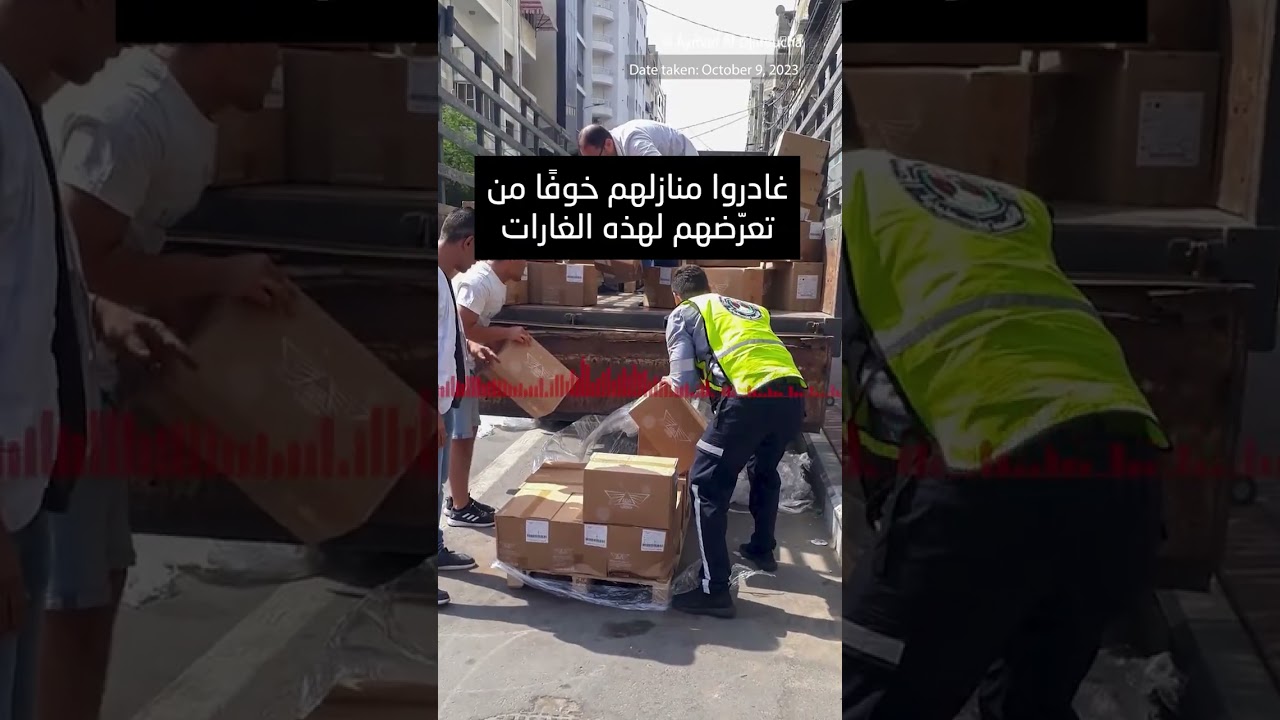
MSF is preparing a medicine and medical consumables donation to hospitals and health facilities in Gaza today.

“Health facilities need this equipment because of the many injured patients,” said Ayman Al-Djaroucha, MSF deputy coordinator in Gaza. “Hospitals are overcrowded with injured people, there is a shortage of drugs and consumables and a shortage of fuel for generators.”

One challenge medical staff face in Gaza at the moment is the lack of a safe option to move patients to health facilities. “Ambulances can’t be used right now because they’re being hit by airstrikes,” said Darwin Diaz, medical coordinator for MSF in Gaza. MSF asks all parties to respect the sanctity of medical facilities, vehicles and personnel.

Teams of local MSF staff have been providing surgical and inpatient care in Al-Awda hospital since yesterday, in the enclave’s north. Our bed capacity there was upgraded to its maximum of 26 beds in preparation for a high influx of expected patients.

“Stable patients are referred to us and we take care of them,” said Jean Pierre, MSF medical activity manager in Gaza. “It’s all been gunshots wounds and injuries from shrapnel, spread at random on the upper and lower limbs.” 

Authorities reported over 2,200 injuries and over 300 deaths including 20 children in Gaza at the moment. In Israel, over 600 have died and over 2,000 are reported injured at the moment. 

Facebook
Twitter
LinkedIn
WhatsApp
Print

Morocco: Three weeks after the earthquake, MSF focuses on mental health response

Morocco: Three weeks after the earthquake, MSF focuses on mental health response

Amsterdam/Brussels/Barcelona/Paris, Oct. 2, 2023 – On Sept. 8, 2023, a 6.8 magnitude earthquake hit central Morocco, killing 2,862 and leaving around 6,000 people injured[1].  The earthquake mainly hit the rural area of the High Atlas Mountains, where there were landslides, collapses and paths were cut or difficult to use. In this region, access to remote and rural villages already difficult to reach has been further affected by the earthquake.

In the immediate aftermath of this tragedy, on Sept. 9, Médecins Sans Frontières/Doctors Without Borders (MSF) sent emergency teams to assess humanitarian and medical situation in the most affected areas, in the provinces of Al Haouz, Taroudant and Chichaoua. Five MSF teams assessed 30 locations in total.  

The overall response of the Moroccan authorities, bilateral partners and the Moroccan people was remarkable. There was rapid mobilization of emergency response plans from the Moroccan ministry of health, military and civil protection. The installation of advanced medical posts, field hospitals and referral capacity were crucial to ensure an urgent medical and humanitarian response in a timely manner.

“We saw entire villages destroyed, roads collapsing, and electricity cut off,” says Fouzia Bara, MSF nurse who was part of the first MSF teams in Morocco. “Despite this, the Moroccan authorities, with the support of some states, managed to remove people from under the rubble, treat the injured, use helicopters to transport the injured from the most remote areas, and distributed food and other materials to the affected people.”

Our teams noted the comprehensiveness of the Moroccan government’s response and found very few gaps. On top of the assessment, MSF teams provided six donations in response to specific needs expressed at the time by health centres or hospitals between Sept. 12 and 17. These targeted donations were coordinated with Moroccan authorities. They contained medical equipment and medicines, such as injectable medicines, analgesics, antibiotics, insulin and medical equipment.

People most severely affected by this crisis urgently need psychological support. This includes search and rescue teams and frontline volunteers. MSF teams talked to dozens of distressed women and men in heavily affected areas in all locations assessed. Most had lost relatives, friends or saw their houses and villages flattened. Some were still waiting for the bodies of their loved ones to be recovered, acutely aware that live rescue was no longer an option.

“We will provide mental health activities and psychological first aid support to local organizations and people who were affected and to the frontline workers, mostly through the networks of Moroccan psychologists, social workers, heath promoters and other volunteers who have been mobilized since the early days,” says Bara. “The psychological first aid is key to increase coping mechanisms and connect people to existing services”.

MSF’s main activities will consist of providing psychological support to people affected and to frontline volunteers, to support Moroccan Ministry of Health medical and paramedical teams, to run health promotion and mental health campaigns and to train and support local groups on psychological first aid.  

ENDS

[1] Data source: Moroccan Ministry of Health, last update Sept. 13.


MSF began working in Morocco in 1997 to provide care to communities excluded from healthcare in Rabat, Casablanca and Tangier.

Our programmes were focused on increasing access to maternal and sexual healthcare. In the early 2000s, we began providing support to migrants arriving in Morocco, by visiting hostels where people stayed and providing outpatient consultations and referrals through mobile clinics.

In 2010, MSF provided care to migrants injured during mass raids and expulsions by the Moroccan police force. In 2013 we handed our projects over to local health and human rights organisations.

Facebook
Twitter
LinkedIn
WhatsApp
Print