Gaza: Acute malnutrition reaches all-time high in two MSF facilities

Gaza: Acute malnutrition reaches all-time high in two MSF facilities

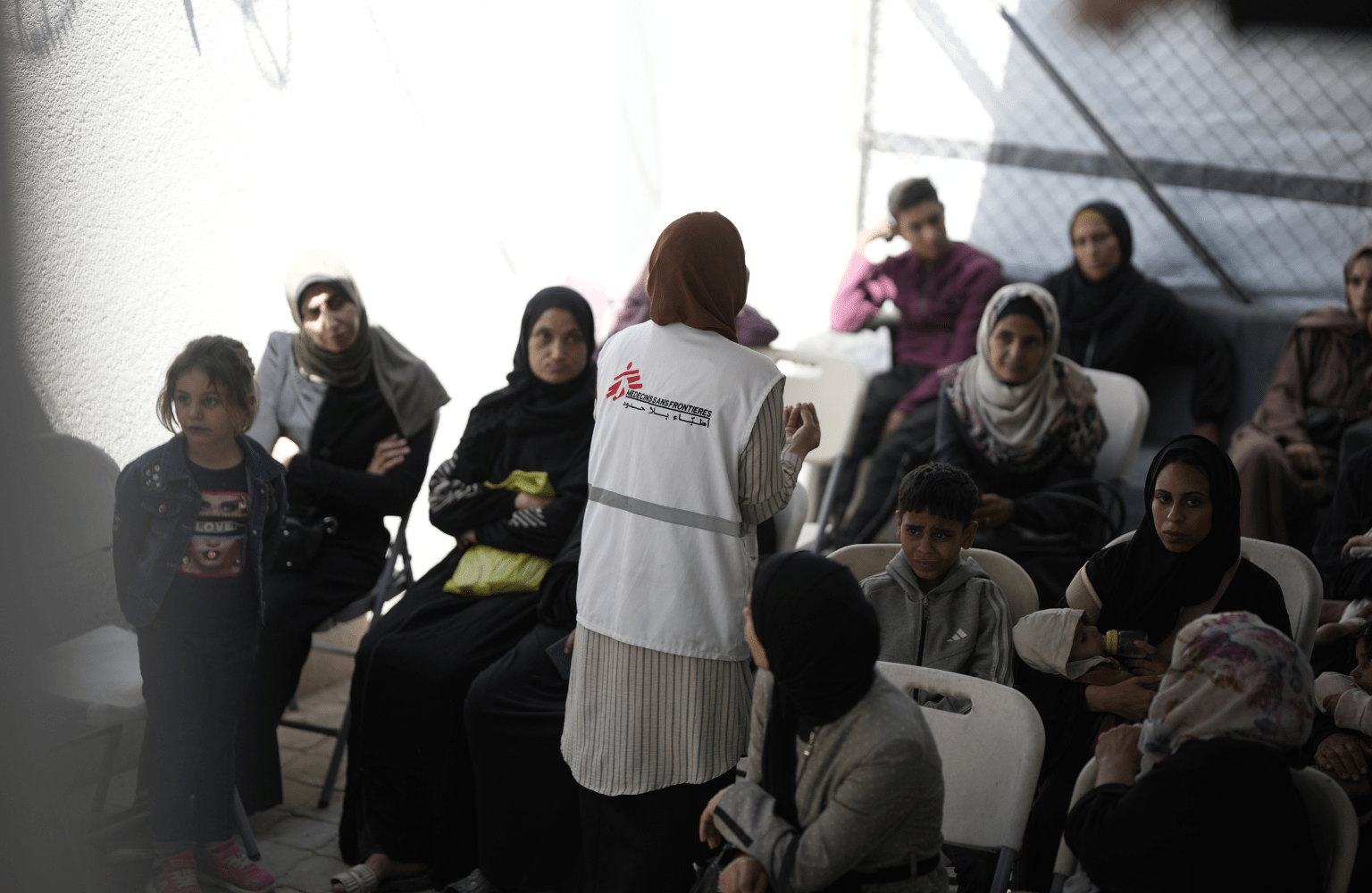
Médecins Sans Frontières (MSF) teams are witnessing a sharp and unprecedented rise in acute malnutrition among people in Gaza, Palestine. In Al-Mawasi clinic, in southern Gaza, and in the MSF Gaza City clinic in the north, we are seeing the highest number of malnutrition cases ever recorded by our teams in the Gaza Strip. A sustained flow of food and medical supplies must be urgently allowed into the Strip.

More than 700 pregnant and breastfeeding women, and nearly 500 children with severe and moderate malnutrition are currently enrolled in ambulatory therapeutic feeding centres in both clinics. Patient enrolment in the MSF Gaza City clinic almost quadrupled in under two months, from 293 cases in May, up to 983 cases at the beginning of July. Of this July cohort, 326 are children between six and 23 months old.

This is the first time we have witnessed such a severe scale of malnutrition cases in Gaza. The starvation of people in Gaza is intentional, it can end tomorrow if the Israeli authorities allow food in at scale.
Mohammed Abu Mughaisib, MSF deputy medical coordinator in Gaza

The existence of malnutrition in Gaza is the result of deliberate, calculated choices by the Israeli authorities: restrict the entry of food to the bare minimum for survival, dictate and militarise the means of its distribution, all while having destroyed the majority of local food production capacity. People are risking their lives in the immediate term to obtain inadequate food rations, as a wider system collapse is ongoing – sewage contamination is occurring because infrastructure is destroyed, restrictions on fuel are limiting the production of clean water, appalling living conditions in overcrowded camps are impacting people’s health and compromising people’s immunity.

Due to widespread malnutrition among pregnant women and poor water and sanitation services, many babies are being born prematurely. Our neonatal intensive care unit [in Al-Helou hospital] is severely overcrowded, with four to five babies sharing a single incubator. This is my third time in Gaza, and I’ve never seen anything like this, mothers are asking me for food for their children, pregnant women who are six months along often weigh no more than 40 kilogrammes. The situation is beyond critical.
Dr Joanne Perry, MSF doctor

Before October 2023, Gaza was heavily reliant on the entry of goods and supplies from outside, with an average of 500 trucks entering the Strip every day. Since 2 March, not even 500 trucks have entered in total. With border crossings for aid frequently closed or operating under heavy limitations, and with local food production nearly impossible due to ongoing hostilities and destruction, markets are either empty, or the available food is unaffordable for most.  

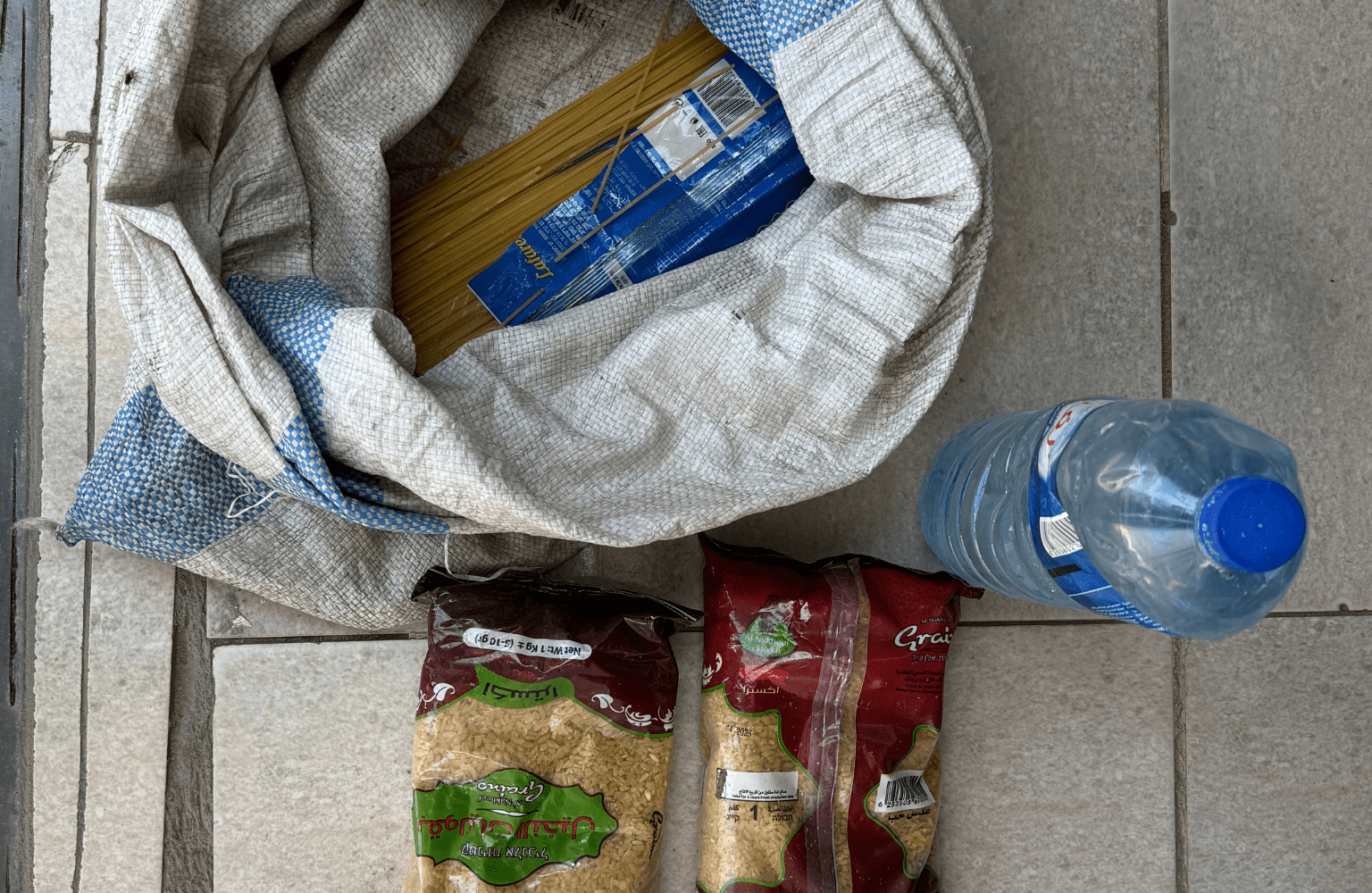
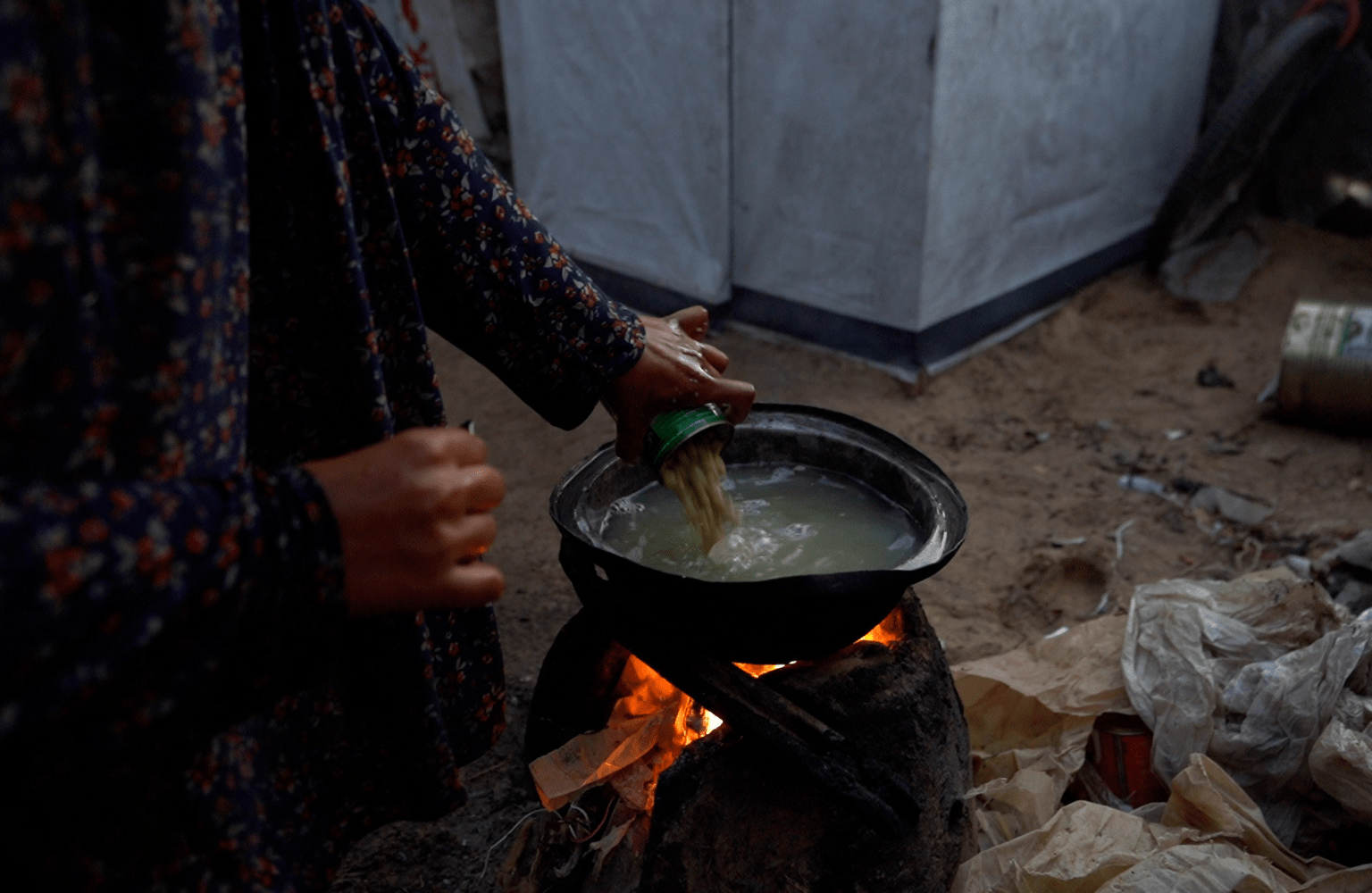
Inevitably, prices of food have skyrocketed across Gaza, placing even basic staples out of reach for most people. For example, one kilogramme of sugar costs on average US$ 76, while a kilogramme of potatoes or flour costs nearly $30, according to the World Food Programme. Due to this, many families are surviving on just one portion of food a day – often only rice, lentils, or pasta – with no access to bread, fresh vegetables, or enough protein.

Parents are also deliberately skipping meals to feed their children. Even malnourished women, who do receive therapeutic food, end up giving their own treatment supplements to their children.

“I’m a mother, and I can’t blame them because I would do the same,” says Nour Nijim, MSF nursing team supervisor. “But I feel helpless as a healthcare provider. People are hungry and ask us for therapeutic food, but we don’t have enough and can only prescribe them to people diagnosed with malnutrition.”

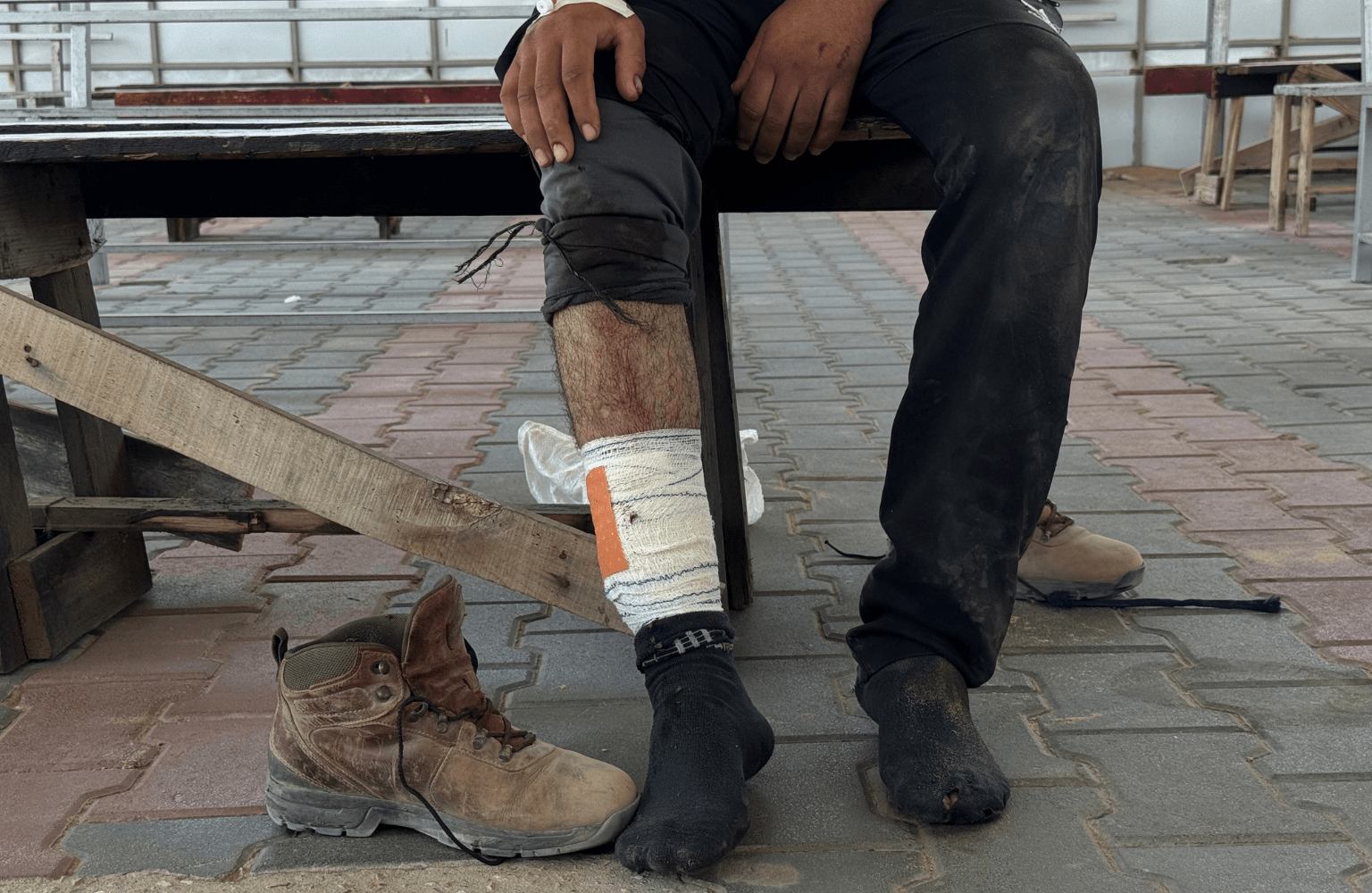
The malnourished patients we are seeing are only the visible tip of a much larger crisis. At MSF clinics, injured patients beg for food instead of medicine – their wounds failing to heal because of protein deficiency. Our doctors are observing rapid weight loss, prolonged infections, and visible fatigue among patients and their caregivers.

MSF urgently calls for unrestricted humanitarian access, a sustained flow of food and medical aid into Gaza, and the protection of civilians.


Facebook
Twitter
LinkedIn
WhatsApp
Print

Gaza: Israeli incursions strain Khan Younis’s already collapsed health system

Gaza: Israeli incursions strain Khan Younis’s already collapsed health system

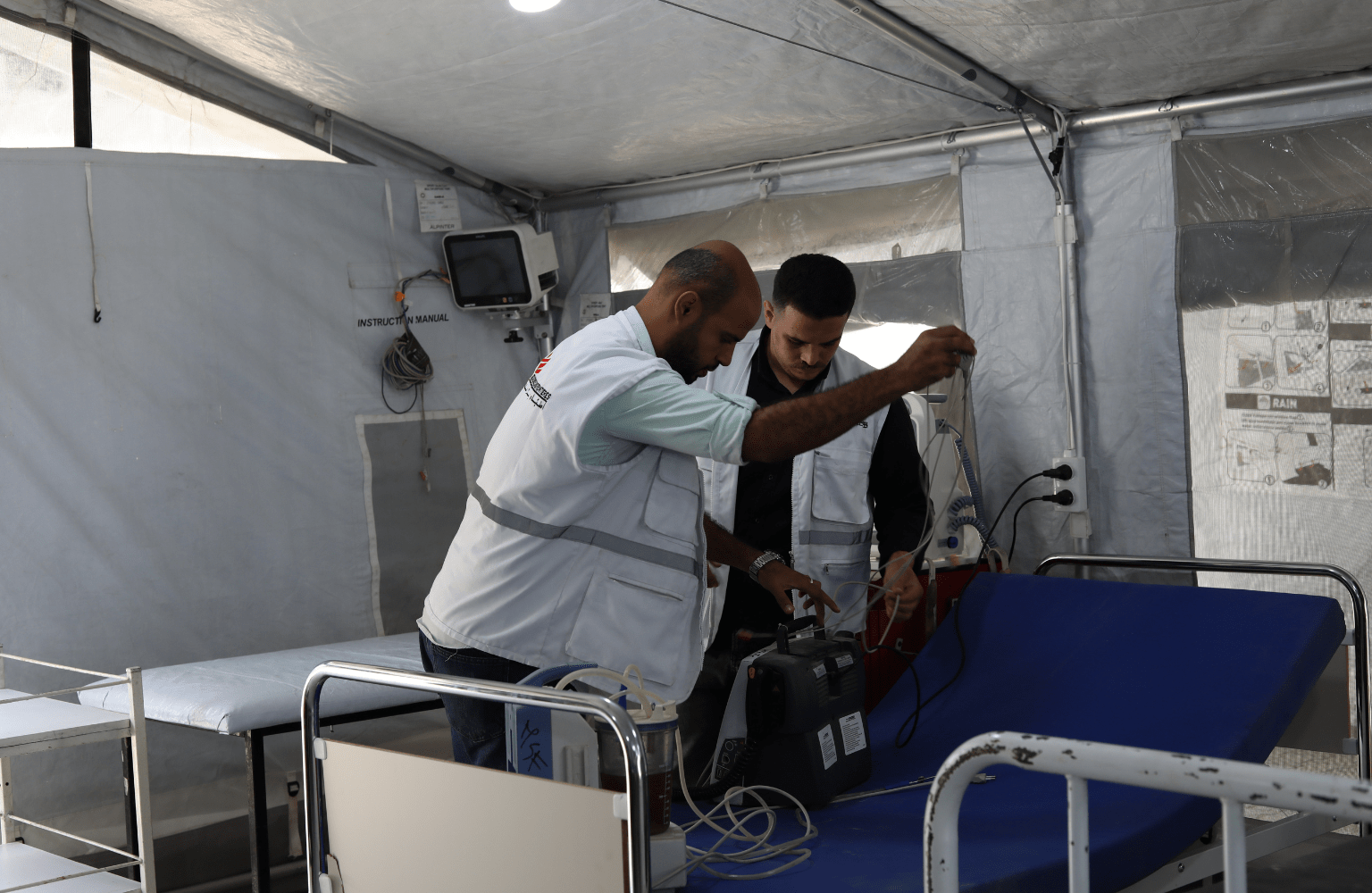
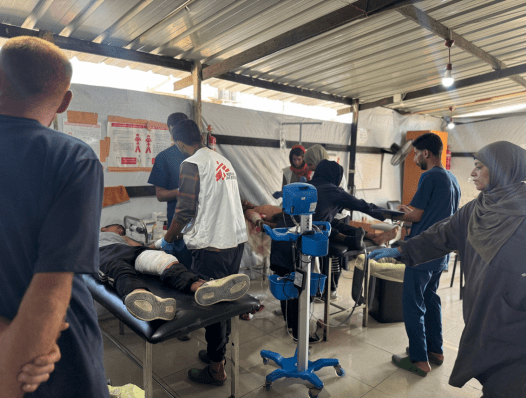
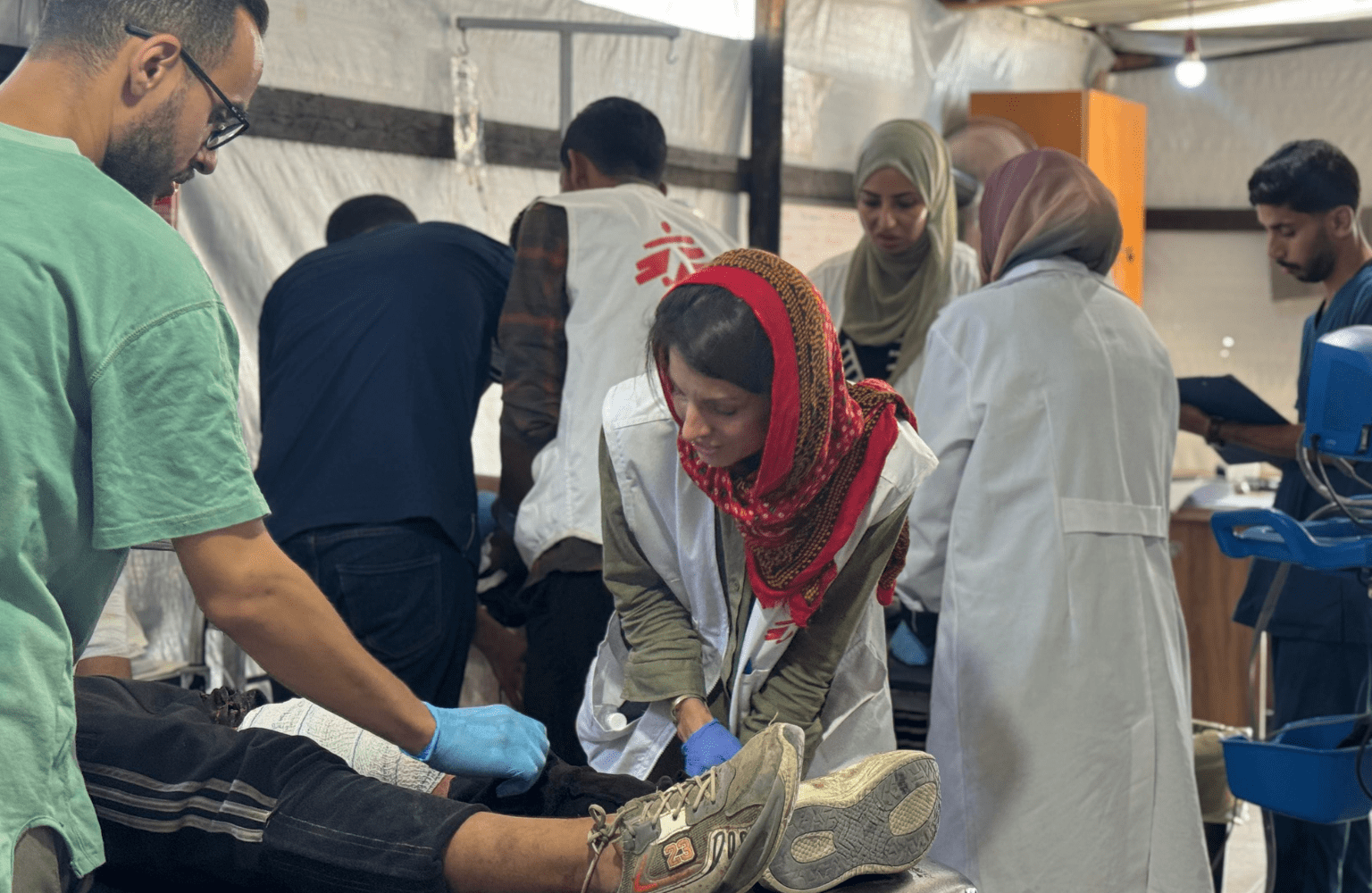
In southern Gaza, our team in the ER at Al Mawasi primary healthcare centre rushes to stabilise two young boys with gunshot wounds sustained from US-Israeli aid distribution sites in Rafah.

This morning Israeli forces expanded their incursion in western Khan Younis, southern Gaza. Tanks advanced, and airstrikes and drones fired into an area full of displaced civilians with no prior warning. As they advanced further west, people who have already been displaced multiple times were squeezed into a smaller space closer to the sea.

This latest offensive has seriously impacted operations at two facilities MSF operates in. MSF teams had to suspend activities and evacuate Al Attar clinic today as Israeli tanks and gunfire approached as close as 100 metres away. The military incursion also meant that ambulance movements to Nasser hospital were stopped.

“The quadcopter and the military vehicles stationed near the clinic were firing. Several bullets penetrated the facility. Then, we heard multiple explosions around the clinic, and shrapnel hit the building. We were stuck for over 30 hours, we continued working after a 24-hour shift,” said Rami Abu Anza, MSF Nursing Team Supervisor in Al Attar clinic.

These latest developments are yet another obstacle to an already overwhelmed and only partially functional health system. Today, teams at MSF’s Al Mawasi clinic received two boys who were shot at the Israeli-US militarised distribution site in Rafah. While they were in critical condition, medical teams couldn’t refer them to any nearby hospitals. The ones in the area are either too dangerous to reach or already full.

The health system here has collapsed; there's no hospital to go to.
Dr. Iman Abo Shawish, Senior Medical Doctor in AlMawasi clinic
Facebook
Twitter
LinkedIn
WhatsApp
Print

Sudan: MSF report documents the atrocities civilians face in North Darfur

Sudan: MSF report documents the atrocities civilians face in North Darfur

Paris, 3 July 2025 – Mass atrocities are underway in Sudan’s North Darfur region, Médecins Sans Frontières (MSF) warned in a report today, urging the warring parties to halt indiscriminate and ethnically targeted violence and facilitate an immediate large-scale humanitarian response. MSF is extremely concerned about the threats of a full-blown assault on the hundreds of thousands of people in the state capital of El Fasher, which would lead to further bloodshed.

As the conflict has intensified in the area since May 2024, civilians have continued to be the main victims. The report, Besieged, Attacked, Starved, outlines a desperate situation for civilians in and around El Fasher that requires immediate attention and response. “People are not only caught in indiscriminate heavy fighting between the Rapid Support Forces (RSF) and the Sudanese Armed Forces (SAF) and their respective allies – but also actively targeted by the RSF and its allies, notably on the basis of their ethnicity,” says Michel Olivier Lacharité, MSF head of emergencies.

Based on MSF data, direct observations and over 80 interviews conducted between May 2024 and May 2025 with patients and people who were displaced from El Fasher and nearby Zamzam camp, the report exposes systematic patterns of violence that includes looting, mass killings, sexual violence, abductions, starvation and attacks against markets, health facilities and other civilian infrastructures.  

As patients and communities tell their stories to our teams and asked us to speak out, while their suffering is hardly on the international agenda, we felt compelled to document these patterns of relentless violence that have been crushing countless lives in general indifference and inaction over the past year.
Mathilde Simon, MSF’s Humanitarian Affairs Advisor

Besieged, Attacked, Starved also details how the Rapid Support Forces and their allies conducted a large-scale ground offensive in April on Zamzam displacement camp, outside of El Fasher, causing an estimated 400,000 people to flee in less than three weeks in appalling conditions. A large portion of the camp population fled to El Fasher, where they remained trapped, out of reach of humanitarian aid and exposed to attacks and further mass violence. Tens of thousands more escaped to Tawila, about 60 kilometers away, and to camps across the Chadian border, where hundreds of survivors of violence received care from MSF teams.

Several witnesses report that RSF soldiers spoke of plans to ‘clean El Fasher’ of its non-Arab community. Since May 2024, the RSF and their allies have besieged El Fasher, Zamzam camp and other surrounding localities, cutting communities from food, water, and medical care. This has contributed to the spread of famine and debilitated the humanitarian response.

In light of the ethnically motivated mass atrocities committed on the Masalit in West Darfur back in June 2023, and of the massacres perpetrated in Zamzam camp in North Darfur, we fear such a scenario will be repeated in El Fasher. This onslaught of violence must stop.
Mathilde Simon, MSF’s Humanitarian Affairs Advisor

Repeated attacks on healthcare facilities forced MSF to end our medical activities in El Fasher in August 2024 and in Zamzam camp in February 2025. In May 2024 alone, health facilities supported by MSF in El Fasher endured at least seven incidents of shelling, bombing or shooting by all warring parties. Indiscriminate airstrikes conducted by the SAF had devastating consequences, as a 50-year-old woman highlights: “the SAF bombed our neighborhood by mistake, then came to apologise. SAF planes sometimes bombed civilian areas without any RSF [presence], I saw it in different places”.

The harrowing level of violence on the roads out of El Fasher and Zamzam means that many people are trapped or take life-threatening risk when fleeing. Men and boys are at high risk of killing and abduction, while women and girls are subjected to widespread sexual violence. Most witnesses also report increased risks for Zaghawa communities. “Nobody could get out [of El Fasher] if they said they were Zaghawa,” says a displaced woman. Another man tells us that RSF and its allies were “asking people if they belonged to the Zaghawa, and if they did, they would kill them.”

“They would only let mothers with small children under the age of five through,” recalls a woman about her journey fleeing to eastern Chad. “Other children and adult men didn’t go through. Men over fifteen can hardly cross the border [into Chad]. They take them, they push them aside and then we only hear a noise, gunshots, indicating that they are dead, that they have been killed […] Fifty families came along with me. Not even one boy of 15 years old or above was among us.”

The catastrophic nutritional situation continued deteriorating as the siege tightened: “[Three months ago] in Zamzam, we sometimes had 3 days a week without eating,” one man tells our teams. “Children died from malnutrition. We were eating ambaz [residue of peanuts ground for oil], like everyone, although usually it’s used for animals,” says displaced woman. “Zamzam was completely blocked,” another displaced person tells us. “Water wells depend on fuel and there was no access to fuel, so all of them stopped working. Water was very limited and very expensive.”

MSF urges the warring parties to spare civilians and respect their obligations under International Humanitarian Law. The RSF and their allies must immediately stop ethnic violence perpetrated against non-Arab communities, lift the siege of El Fasher, guarantee safe routes for civilians fleeing violence. Safe unrestricted access to El Fasher and its surroundings must be granted for humanitarian agencies to provide critically needed assistance.  International actors, including UN institutions and members states, and States who provide support to the warring parties must urgently mobilise and exert pressure to prevent further mass violence and allow emergency aid delivery. The recent unilateral announcements of a possible local ceasefire have not yet been translated into concrete change on the ground, and time is running out.


Facebook
Twitter
LinkedIn
WhatsApp
Print

Gaza: MSF colleagues and their children injured amid escalating violence

Gaza: MSF colleagues and their children injured amid escalating violence

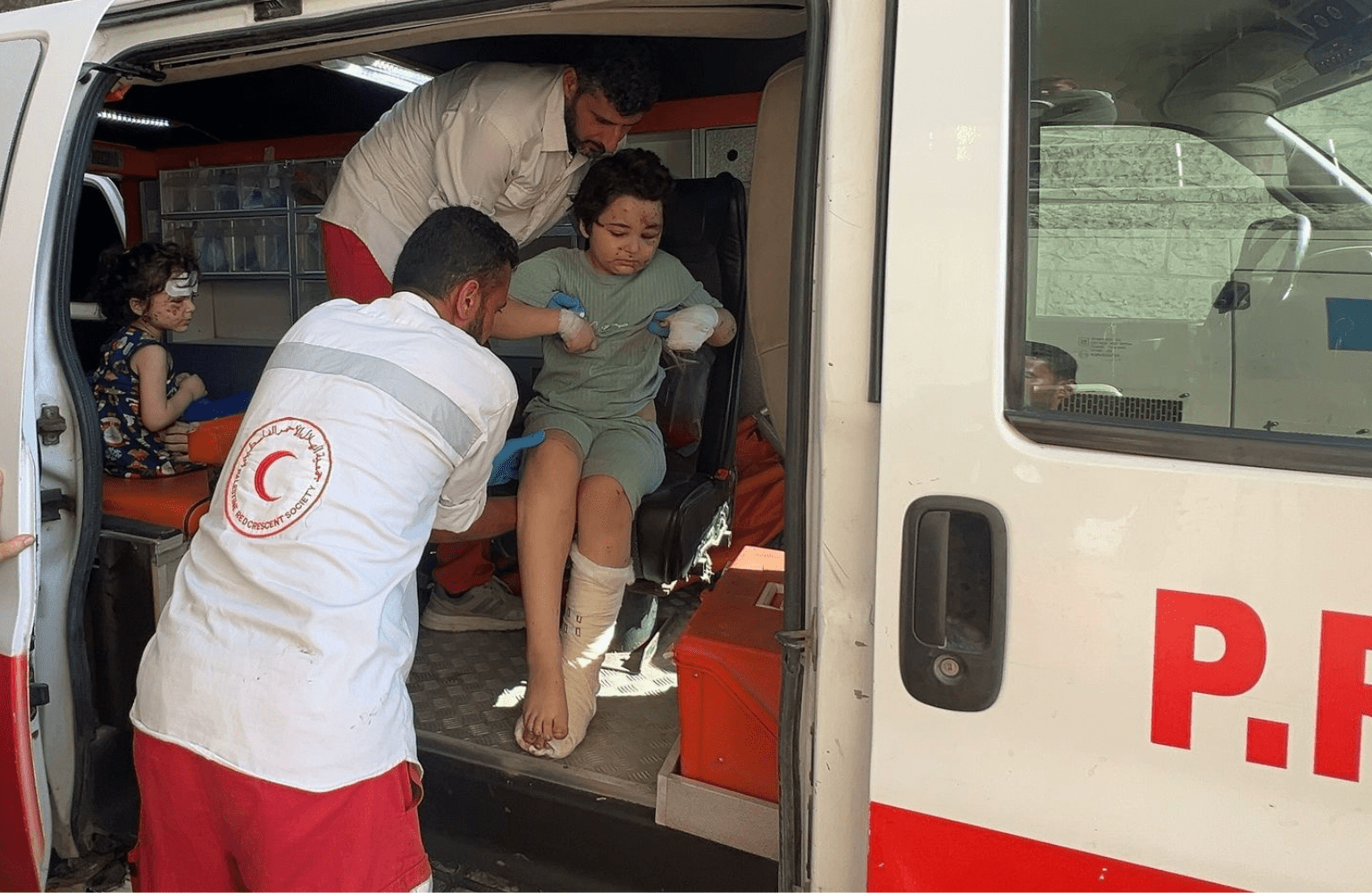
8-year-old Kareem and his 4-year-old sister Julia are being evacuated with their family from Gaza City to Al Aqsa Hospital in the southern Gaza Strip due to the lack of medical supplies.

Israeli forces have been scaling up military operations in northern Gaza, especially in Gaza City and Jabaliya. On 27 June, an airstrike hit the home of an MSF surgeon and data analyst in Gaza City. The couple were wounded along with their 3 children.

After being rescued from underneath the rubble, our colleagues and their 3 children were taken to Al Shifa hospital, but it was so overwhelmed with patients from several mass casualties and had no room or capacity to provide the necessary treatment to the whole family.

The family of five were forced to move between 3 hospitals: Al-Shifa, Al-Quds and Al-Aqsa. They were forced to evacuate from the north to the centre of the Strip. Gaza’s health system is so devastated, no single facility can provide all the specialised treatment required.

Israeli forces’ relentless attacks & targeting of medical facilities mean the facilities that remain cannot provide every aspect of the treatment patients require for some injuries. Patients, including children like 9-year-old Khalil, 8-year-old Kareem and 4-year-old Julia, now endure multiple transfers to get the care they need

While they were receiving treatment in Al Aqsa hospital compound, the facility was struck. This was the 12th time this hospital has been attacked. Attacks on hospitals must stop now.

Facebook
Twitter
LinkedIn
WhatsApp
Print

West Bank: Five months of displacement, crisis and annexation

West Bank: Five months of displacement, crisis and annexation

1 July, Jerusalem – More than 40,000 people in the northern West Bank remain forcibly displaced, cut off from their homes and left with very limited access to basic services and healthcare five months after the launch of the Israeli military operation ‘Iron Wall’. This large-scale military campaign has seen Israeli forces raid and violently empty well-established refugee camps in northern West Bank. Médecins Sans Frontières (MSF) warns that people are facing deteriorating health and living conditions, as the Israeli forces are still causing widespread destruction, and occupying the three refugee camps of Jenin, Tulkarem and Nur Shams – preventing any return and barring access.

After five months, the military operation continues. The camps remain sealed off, with Israeli soldiers actively preventing anyone from entering. Families are still in limbo, and we’re worried that humanitarian needs will keep escalating.
Simona Onidi, MSF Project Coordinator in Jenin and Tulkarem

To mark this grim milestone, MSF is releasing a new advocacy briefing note, Five Months Under Iron Wall, highlighting the human toll of prolonged displacement in the West Bank. The note draws on MSF’s field presence, operational data, and nearly 300 interviews conducted in mid-May across 17 locations where MSF works in northern West Bank, with forcibly displaced refugees from the three camps.

Findings show that displacement-affected communities face growing instability and unmet needs such as access to healthcare and to regular food and water. Nearly half of the people spoken to have been forcibly displaced three or more times in four months, while nearly three out of four are unsure if they can stay where they currently are. Over a third report feeling unsafe where they currently reside. Mental health needs are also mounting, especially among women and children, as repeated displacement, uncertainty, and being violently displaced compound distress.

“We live in a constant state of fear. Israeli forces frequently patrol the area near where I’m staying. My family and I keep our bags packed at all times, ready to flee if we’re displaced again.” – Displaced woman from Nur Shams Refugee Camp.

MSF’s findings also reveal a disturbing pattern of violence and obstruction targeting displaced residents attempting to return to their homes in the camps, with over 100 incidents of indiscriminate violence reported. This includes shootings, assault, and detentions and is affecting people of all ages and genders. Some families found their homes burned, looted, or occupied; others were explicitly threatened and told never to come back. Returns are heavily restricted, with only limited time granted or access denied altogether.

“When I came back to my home in the camp, it had been burned down — and my neighbour had been killed.” – Displaced man from Tulkarem Refugee Camp.

 One in three people could not reach a doctor when needed – mainly due to cost, distance, or lack of transport. Nearly half spoken to report inconsistent access to food and water, and 35 per cent of those with chronic illnesses are unable to get regular medication.

In response to the unfolding crisis, MSF set up mobile medical teams which run in more than 40 public sites, displacement shelters in Jenin and Tulkarem and basic health care centres run by Ministry of Health facilities, offering basic health care services as well as mental health support and health promotion activities.

The Iron Wall military operation is neither the beginning nor the end of the violence endured by Palestinians in the West Bank. This latest escalation comes on top of an already dire situation that has been steadily deteriorating, particularly since October 2023. As MSF’s February 2025 report Inflicting Harm and Denying Care shows, the West Bank has long been the site of repeated violations against civilians and medical organisations, and the current humanitarian crisis in the northern governorates cannot be understood in isolation from the broader context of coercive, violent measures and annexation.

What we’re seeing in the northern West Bank is not just a humanitarian emergency; it’s a man-made crisis, prolonged by design, and worsening by the day. Humanitarian assistance is insufficient and inconsistent, organisations must step up their response to provide people with shelter, medical care, mental health support, and protection. We also call for an end to the Israeli military operations and lethal use of force, leading to death and injuries, and for displaced communities to be allowed to return safely and with dignity.
Simona Onidi, MSF Project Coordinator in Jenin and Tulkarem
Facebook
Twitter
LinkedIn
WhatsApp
Print

Gaza: Deadly Israeli-US supply distribution scheme must be dismantled and siege lifted

Gaza: Deadly Israeli-US supply distribution scheme must be dismantled and siege lifted

27 June, Gaza – The Israeli-US food distribution scheme in Gaza, launched one month ago, is degrading Palestinians by design, forcing them to choose between starvation or risking their lives for minimal supplies. With over 500 people killed and nearly 4,000 wounded while seeking food, this scheme is slaughter masquerading as humanitarian aid and must be immediately dismantled. Médecins Sans Frontières (MSF) calls on the Israeli authorities and their allies to lift the siege on food, fuel, medical, and humanitarian supplies and to revert to the pre-existing principled humanitarian system, coordinated by the UN.

This disaster has been orchestrated by the Israeli-US proxy operating under the name Gaza Humanitarian Foundation (GHF). The way supplies are distributed forces thousands of Palestinians, who have been starved by an over 100 day-long Israeli siege, to walk long distances to reach the four distribution sites and fight for scraps of food supplies. These sites hinder women, children, the elderly, and people with disabilities from accessing aid and people are killed and wounded in the chaotic process. Yet each renewed atrocity now happens with barely a shrug, let alone condemnation, from an international community seemingly resigned to its role in allowing and perpetuating a campaign consistent with patterns of genocide. This cannot be allowed to continue.

“The four distribution sites, all located in areas under the full control of Israeli forces after people had been forcibly displaced from there, are the size of football fields surrounded by watch points, mound of earth and barbed wire. The fenced entrance gives only one access point in or out,” says Aitor Zabalgogeazkoa, MSF emergency coordinator in Gaza. “GHF workers drop the pallets and the boxes of food and open the fences, allowing thousands in all at once to fight down to the last grain of rice.

“If people arrive early and approach the checkpoints, they get shot. If they arrive on time, but there is an overflow and they jump over the mounds and the wires, they get shot,” says Zabalgogeazkoa. “If they arrive late, they shouldn’t be there because it is an ‘evacuated zone’, they get shot.”

Every day, MSF teams see patients who have been killed or wounded trying to get food at one of these sites.

A lot of people were getting directly shot at. This is not aid – it's a death trap. They were going to kill us one by one. We were hungry, we were just trying to feed our children. What else can I do? A bag of lentils costs around 30-40 shekels [€6 – €10]. We do not have that kind of money. Death has become cheaper than survival.
Hani Abu Soud, a community member at Al-Mawasi primary healthcare centre

As the distributions have continued, medical teams have noticed a stark increase in the number of patients with gunshot wounds. In the MSF field hospital in Deir Al-Balah the number of patients with gunshot wounds increased by 190 per cent the week of 8 June, compared to the week before. The still barely functioning hospitals in Gaza are devastated; running on minimal supplies of pain relief, anaesthetic and blood. Fully functioning hospitals would struggle to cope with such a high number of trauma patients flooding emergency rooms every day.

Injured patients seek help at basic healthcare clinics or field hospitals, since larger hospitals better equipped to provide treatment for violent trauma have been damaged by Israel’s attacks on healthcare facilities, with many no longer functioning. The MSF clinic in Al Mawasi, which is not typically equipped to treat trauma patients, has received 423 people wounded from the distribution sites since 7 June.  Ten or more patients with violent injuries arrive from distribution sites each day. These injuries require immediate lifesaving treatment, like blood transfusions or surgery, that our medical teams cannot provide in a basic healthcare clinic. Patients are referred to the few remaining hospitals still functioning like Nasser hospital, but with healthcare so scarce, MSF has received reports of people wounded at aid distribution sites dying from their injuries before they can receive treatment.

Ashraf was being treated at Al Mawasi basic healthcare clinic. With no food in the tent he shared with his family, seventeen-year-old Ashraf went to a distribution site on 23 June. 

I told him it was too dangerous. He said he wanted to get something for his sister. Thirty minutes later he called me, crying for help. He had been shot. This ‘aid’ is soaked in blood.
Hanan, Ashraf’s mother

Aid must not be controlled by a warring party to further its military objectives. The Israeli authorities have used a deliberate tactic of food deprivation against Palestinians in Gaza. They have weaponised food supply by denying it to people, then by limiting it to a trickle, in a complete violation of international humanitarian law. Humanitarian principles exist to enable the facilitation of aid to those who need it most, with dignity. Aid must be delivered at scale, consistent with these principles. The people of Gaza are in vital and immediate need of the re-establishment of a genuine aid system, and a sustained ceasefire, for their very survival.

Facebook
Twitter
LinkedIn
WhatsApp
Print

West Bank: Israeli grip tightened during recent war with Iran

West Bank: Israeli grip tightened during recent war with Iran

23 June, Jerusalem – As international focus shifts to the escalating conflict between Israel and Iran, Israeli forces have ramped up their activities in the West Bank. Increased military operations in Jenin, Nablus, and Tulkarem governorates, along with additional troop deployments, have led to heightened restrictions on Palestinians. Médecins sans Frontières (MSF) warns that these actions exacerbate the already dire situation for Palestinians in the West Bank, who face significant barriers to accessing healthcare and essential services, especially since October 2023. MSF urges an immediate halt to measures that contribute to forced displacement and a system of annexation, including prolonged military presence, movement restrictions, demolitions, excessive use of force, and denial of basic services. 

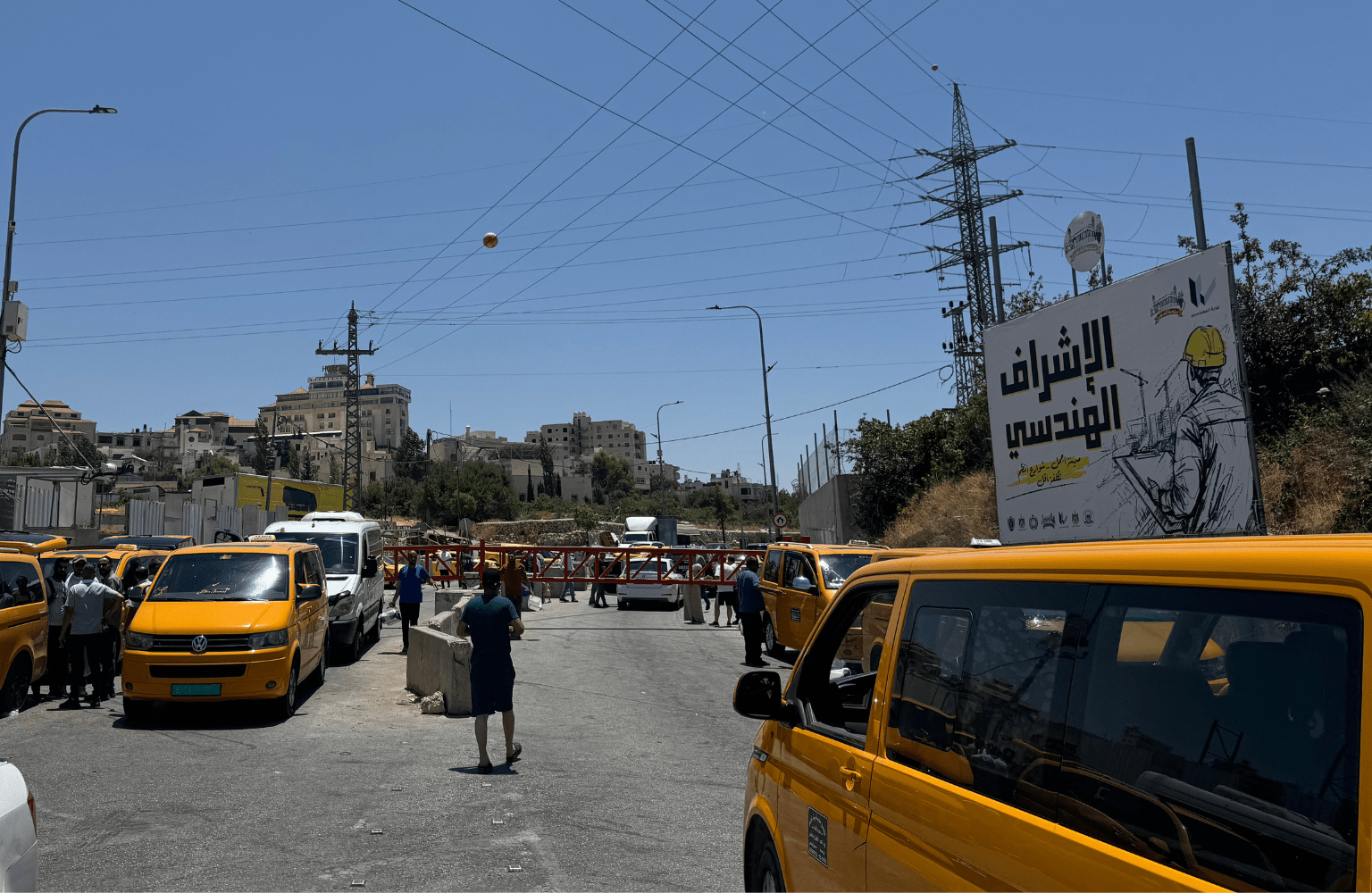
On 13 June, the day the escalations started, the Israeli authorities blocked all major Israeli checkpoints and road gates entrances to Hebron for four days. This forced people seeking medical care to cross between areas on foot, forcing critically ill people to walk long distances, taking the risk of being shot at, or being prevented from crossing at all.  

On June 13 the Israeli forces raided my village in Tulkarem, they took over two residential buildings and turned them into military barracks, displacing the people who were living there. Since then, they have been patrolling the village regularly, conducting investigations, interrogations, arrests, searches, and detentions.
Karim*, MSF Staff Member

MSF has suspended mobile clinics in Hebron and Nablus that provide mental health, sexual reproductive care, and basic healthcare due to these checkpoint closures and security concerns from the intensified military operations. In Jenin and Tulkarem, mobile clinics had to adapt working hours, running on some days, not others, because of Israeli forces presence in nearby villages. This has forced patients to rely on phone consultations.  

On 14 June, I tried to take my brother from Bethlehem to a medical appointment in Hebron - a trip that should take 25 minutes. But due to the new Israeli restrictions, all main entrances and exits were closed. It took us three hours, and in the end, despite being very ill, he had to walk through a closed checkpoint on foot, like many others, which is not safe.
Oday Al-Shobaki, Communications Officer

Military operations and violent raids by the Israeli army have been going on for years in the West Bank. 2022 saw a then-record number of Palestinian deaths due to violence by Israeli forces or settlers. Since October 2023, Israeli forces have increased the number of coercive measures and use of extreme physical violence against Palestinians in the occupied West Bank including severe movement restrictions, military raids, and systemic barriers to essential services.  

In January 2025, the Israeli forces began the ‘Iron Wall’ military operation in northern West Bank, which is still ongoing. Violently emptying well-established camps and preventing any return, more than 42,000 people have been forcibly displaced and left without stable homes and with limited access to food, water, and medical care. 

This latest wave of restrictions and violence over the last week, seems to be an opportunity for Israeli forces to entrench control, deepen the fragmentation of Palestinian communities and further the system that the International Court of Justice has described as amounting to racial segregation and apartheid.

We urge third states to move beyond words of condemnation and put real pressure on Israeli authorities to end excessive force and lift movement restrictions blocking access to essential services and humanitarian aid, scaling up support for displaced and isolated communities across the West Bank.
Simona Onidi, Project Coordinator, Jenin and Tulkarem

*Name changed.  

Facebook
Twitter
LinkedIn
WhatsApp
Print

Gaza: Deliberate shortages of food, medicine and fuel by Israeli authorities

Gaza: Deliberate shortages of food, medicine and fuel by Israeli authorities

Gaza, 19 June 2025 – Palestinians are perpetually on the verge of losing access to essential medical care and clean water due to deliberate actions by Israeli authorities. This policy restricts the entry of medical supplies and fuel to the bare minimum and at their whim. While this strategy creates the illusion of aid flowing into the Strip, it effectively prevents the humanitarian response from reaching even the minimum required for a population entirely reliant on assistance. The Israeli authorities must end their collective punishment of the people in Gaza and immediately allow the consistent entry of sufficient medical supplies and fuel.

Over the past week we have seen large influxes of wounded patients, many of whom have suffered traumatic injuries. At Médecins Sans Frontières’ (MSF’s) field hospital in Deir Al-Balah, central Gaza, the number of patients with gunshot wounds increased by 190 per cent compared to the week before. Clinics, such as Khan Younis clinic and Deir Al-Balah clinic, saw their highest weekly intake to date. Following three months of total blockade and despite Israel’s claims to have opened supply corridors, MSF’s supplies are running critically low due to continuing restrictions imposed on entering goods.

We are missing everything, medical consumables like gauze, medications and food for our patients. This also includes therapeutic food for people with malnutrition, especially children.
Katja Storck, Nursing Activity Manager in Khan Younis

Along with crucial medical supplies, the dangerously low level of fuel is a big concern for people in Gaza as it powers the desalination plants where much of the clean water comes from. Palestinians across the Strip have already seen their access to water drop significantly. Without fuel, millions of people will be trapped with no safe drinking water. Equally, fuel powers the entire healthcare system: medical equipment, air conditioning, elevators, oxygen concentrators, ventilators, and cold-chain storage for medicines and vaccines. Even ambulances will be grounded, preventing the transport of critically ill and wounded people.

Newborns in neonatal intensive care units are often too small to breathe on their own — they need ventilators and oxygen to survive. But recently lack of fuel has caused electricity at Al-Helou Maternity hospital in northern Gaza to cut out several times, shutting off ventilators and oxygen and putting babies’ lives at immediate risk.
Amy Low, Medical Team Leader in Gaza City

Yesterday, the UN managed to retrieve 280,000 litres of fuel from the stocks which are stuck in a no-go area in Rafah, after the Israeli authorities denied 12 previous requests. As fuel stocks got so low, the teams at Al-Helou, where MSF teams work in the maternity ward, had to temporarily shut down elevators in the hospital to ration stocks.  

The charade of only allowing medical and fuel supplies at the very last-minute ahead of a looming disaster is nothing but a band aid on a gushing wound. The weaponisation of aid must end. No militarised scheme developed by a warring party, like the one we are witnessing with the Gaza Humanitarian Foundation, can replace the work of independent humanitarian agencies.
Aitor Zabalgogeazkoa, MSF Emergency Coordinator in Gaza

MSF teams are witnessing patterns consistent with genocide in Gaza. Mass killings, the destruction of vital civilian infrastructure, and severe restrictions on fuel supplies and the delivery of aid are deliberate actions. Israel is systematically dismantling the conditions necessary for Palestinian life.

Facebook
Twitter
LinkedIn
WhatsApp
Print

In search of belonging: a Palestinian refugee’s story

In search of belonging: a Palestinian refugee’s story

My name is Muhammad Sunallah, and I am a Palestinian refugee in Lebanon.

I was born and raised in the Ain El-Hilweh Palestinian refugee camp located in Saida, southern Lebanon. Established following the Nakba in 1948, it’s one of 12 Palestinian refugee camps in the country. It might be the largest one, but it always felt too small. The concrete walls surrounding it block the view of the ‘outside world’.

Like millions of refugees around the world, I did not choose to become a refugee. In 1948, my grandparents were forced to leave Deir El-Asad in Acre, heading for an unknown destination. My father was a young child, and my mother was just an infant. “In three days, the situation will improve, and you will return,” my great grandmother told my grandfather. Why have those three days turned into 77 years?

I, like other Palestinian refugees, have gone through identity crises morphed by accumulating traumas, the first of which stems from growing up away from our homeland. From a young age I knew I was Palestinian, but I didn’t know what that actually meant. I have never seen Palestine, I have never stepped on its soil, I have never played in its neighbourhoods. My internal wounds grew bigger when I realised that every “I have never” in these statements was realistically “I will never”. What is a refugee who does not have a homeland to return to?

Growing up, I wanted to become a doctor and help people who needed medical care. But I soon faced the harsh reality that as a refugee I could not practice medicine in this country. Choosing that path would mean I had leave Lebanon, which I was not willing to do. So, I decided to become a nurse.

When I joined MSF in 2011, my appreciation for nursing as a profession doubled. I never expected I would be able to say that I have been working in the humanitarian field for 14 years, but the days have passed quickly while serving people most in need of health care who may have limited access to it.

I initially worked with MSF inside Ain El-Hilweh camp for many years, during which our activities took many shapes. Much like other Palestinian camps in the country, Ain El-Hilweh hosts Syrian refugees who fled the war that started in 2011. In 2015, I moved to MSF’s project in south Beirut, where we ran two clinics in the Shatila and Bourj El-Barajneh Palestinian refugee camps. In 2023, I moved to the Beirut project, where we established a clinic for migrant workers who face challenges accessing health care.

In 2017 and 2023, several armed clashes broke out in Ain El-Hilweh camp. MSF launched emergency responses in both years, which I joined to support my community. I’ve also taken part in several emergency vaccination campaigns supporting Ministry of Health efforts. In 2017, we vaccinated children against measles. In 2020, we vaccinated people against COVID-19, and against cholera in 2022.

In 2020, we also witnessed the Beirut Port explosion, yet another trauma in the country that shook me just as it shook the city. MSF’s emergency response included providing primary health care, dressing wounds, ensuring people with non-communicable disease had their medication, mental health services, and donating clean water, drinking water and hygiene kits. At that point, I was no longer just a refugee supporting refugees.

In September 2024, Israel escalated its war in Lebanon, which required an emergency response yet again. But this response was not like prior ones; it was much larger as the deadly war retraumatised many Lebanese people, migrants, and refugees alike. MSF went from operating one mobile medical team to 22 teams across Lebanon. We worked hard to provide health care and medication to the displaced wherever they were, in shelters, overcrowded apartments, or even on the streets.

This latest emergency response lasted for two months, but the war did not stop with the declaration of a ceasefire. We are still witnessing Israel bombing in south Lebanon and the southern suburb of Beirut, and Israeli forces are still in Lebanon. We are still supporting people who were displaced and have not found homes or even villages to return to. It pains me greatly for Lebanon to suffer from Israel’s war that steals lives, hope, and memories, just as is happening in Palestine.

I may not know who I am to Lebanon, but I’m certain of what Lebanon is to me. After spending 39 years in this country, it is no longer the closest thing to home: It has become home. It is a homeland I sing for, a homeland I feel a sense of belonging and loyalty to.

My family members who emmigrated from Lebanon always ask me why I don’t leave it like they did, and I always answer them that this country needs me just as I need it. My mission is to serve the Lebanese society, which includes Lebanese people, migrants, and refugees—the Palestinian and Syrian.

I am raising my 7-year-old son as though he’s a dual citizen, Palestinian on his father’s side and Lebanese on his mother’s side. But the bitter reality is that my son lacks both citizenships because his mother can’t pass it down to him. No matter how much I try to protect him from the traumas that are passed down through Palestinian generations, trauma is inevitable. But we find ways to cope, in search of belonging. We persevere, and we thrive.

On World Refugee Day, I say: my name is Muhammad Sunallah, and I am a husband, a father, a nurse, and a humanitarian worker. But I am who I am today because I am a refugee.
Facebook
Twitter
LinkedIn
WhatsApp
Print

Gaza: EU governments’ hypocrisy fuelling Palestinians’ suffering

Gaza: EU governments’ hypocrisy fuelling Palestinians’ suffering

Brussels – 16 June 2025 – The hypocrisy and inaction of the European Union and its Member States have allowed Israel to freely continue its massacre of Palestinians in Gaza with total impunity, said Médecins Sans Frontières/Doctors Without Borders (MSF) in a press conference in Brussels today. MSF calls for impartial needs-based aid to be facilitated into the Gaza Strip at scale, the protection of civilians, and the immediate restoration of a sustained ceasefire; European governments must act decisively to expedite this

For more than 20 months, Israeli authorities and forces have inflicted a punishing campaign, including large-scale forced displacement, ethnic cleansing against Palestinians in Gaza. On a daily basis, our teams witness patterns consistent with genocide through deliberate actions by Israeli forces – including mass killings, the destruction of vital civilian infrastructure, and blockades choking off access to food, water, medicines, and other essential humanitarian supplies. Israel is systematically destroying the conditions necessary for Palestinian life. Gaza’s homes, hospitals, markets, water networks, roads, and power grids have been demolished, not by disregard but by design.
The European Union (EU) and European governments have the political, economic, and diplomatic means to exert real pressure on Israel to stop this assault and open Gaza’s border crossings to unhindered humanitarian aid. These are not theoretical instruments. They can be effectively mobilised in defence of international law and to protect civilians.

However, up to this point, the EU and its member states appear to have abdicated their political leadership to do so. Worse, recent statements European States have made, critical of how the war is being waged, highlights their hypocrisy as they continue to supply the weapons being used to kill, maim, and burn people who end up in our hospitals.

The war in Gaza is one of the most egregious, deadly and ruthless wars waged on a people of our time. It is an orchestrated massacre of Palestinian people. It is purposeful ethnic cleansing. Stopping this requires political courage, legal responsibility, and moral commitment. The scale of suffering in Gaza demands more than empty rhetoric.
Christopher Lockyear, MSF Secretary General

Aid has been weaponised, used as leverage, conditioned, or blocked entirely. Since the Gaza Humanitarian Foundation launched its activities on 27 May, as part of the US-Israeli scheme to instrumentalise aid, hundreds of Palestinians have been treated in hospitals, and scores have been killed, after being shot at these aid distribution sites while waiting to receive the basic necessities for survival.

“The imposed system of aid delivery is not only a failure, but it is dehumanising and dangerous,” says Lockyear. “It exposes thousands of Palestinians to unnecessary risks, leading to bloodshed that can be avoided if humanitarian organisations are allowed to provide aid impartially and safely, at the necessary scale that is so desperately need in Gaza.”

Today, Nasser hospital, southern Gaza’s main referral hospital for thousands of patients in the area, is barely able to continue working, due to repeated evacuation orders and movement restrictions on staff and patients. In recent weeks, MSF teams admitted over 500 patients requiring medical care to the hospital, while supporting the hospital’s medical staff to respond to repeated mass casualty influxes from constant bombings and attacks.

“Humanitarian organisations have set up makeshift hospitals to fill the gap, but they can in no way replace regular hospitals,” says Lockyear. “The remaining hospitals must be protected, and the entry of aid facilitated. Failure to do so will cost yet more lives.”

MSF, like many organisations, has repeatedly called for an immediate and unconditional ceasefire, unfettered humanitarian access, and respect for international humanitarian law – including the protection of medical staff and facilities.

Several governments continue to express concerns about the horrific situation in Gaza, but their statements that invoke concern with adherence to IHL are shrouded in hypocrisy as they continue to send the arms that kill and maim the children we treat.

What people are experiencing in Gaza is beyond unbearable: it must stop now. As this military onslaught against a besieged people rages on, the hypocrisy of EU states who speak but don’t act, is more obvious by the day.
Christopher Lockyear, MSF Secretary General

Since October 2023, MSF staff and patients in Gaza have been forced to leave at least 18 different health facilities and have endured 50 violent incidents, which include airstrikes against hospitals, tank shells being fired at agreed deconflicted shelters, ground offensives into medical centres, and convoys fired upon. Eleven of our colleagues have been killed.

Facebook
Twitter
LinkedIn
WhatsApp
Print